Artwork
Brooklyn Bridge
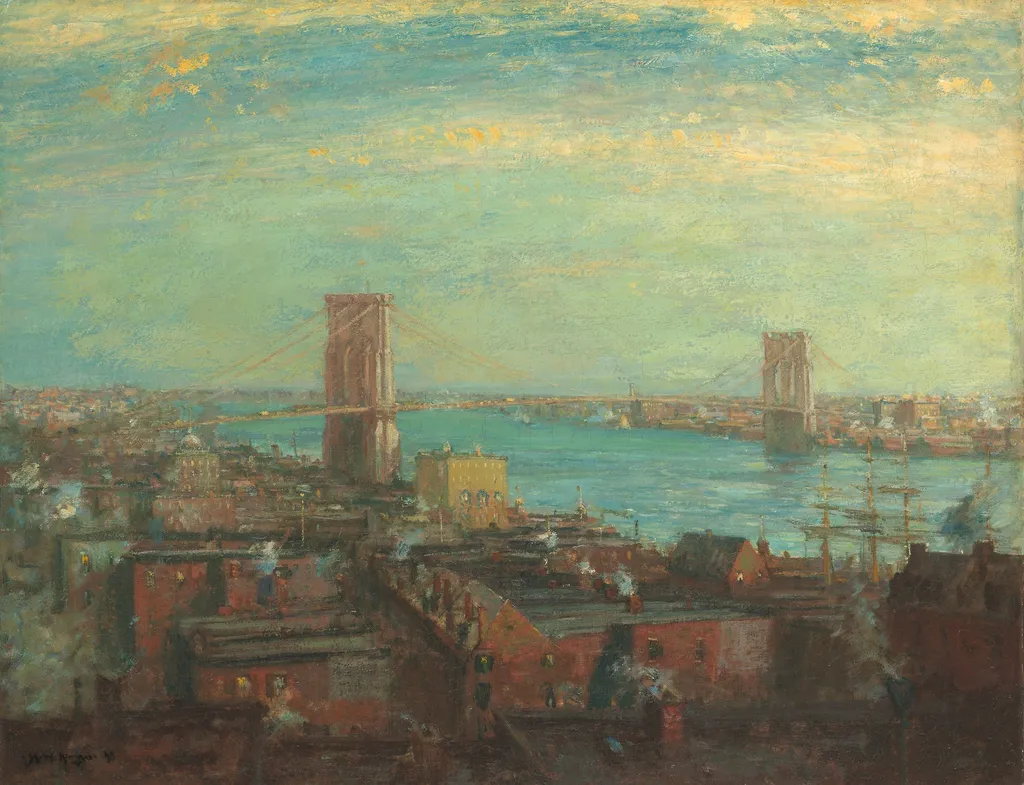
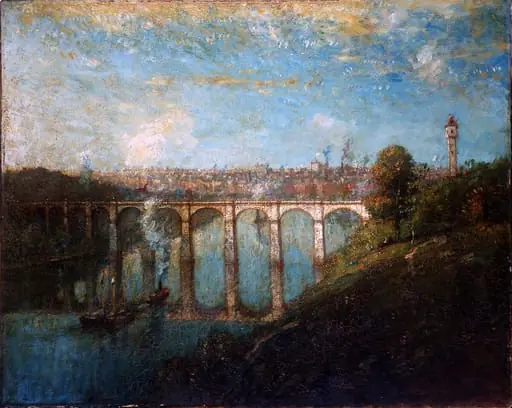
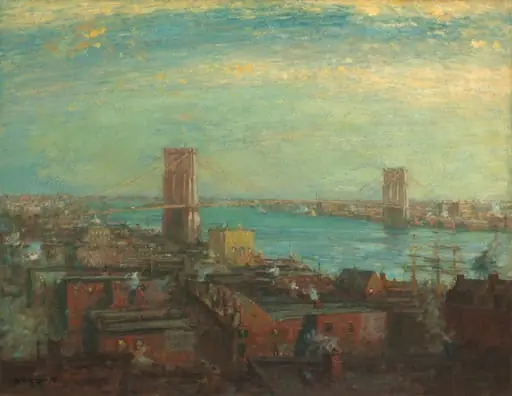
Brooklyn Bridge is an oil painting by the American Impressionist artist Henry Ward Ranger. It dates from 1900 and is held in the collection of the Art Institute of Chicago.
About this work
Overview
Brooklyn Bridge is a 1900 oil painting by Henry Ward Ranger, depicting the iconic structure as a serene cityscape. Characterized by visible brushstrokes and a muted color palette, the work blends elements of American Impressionism with Ranger's signature Tonalist approach.
Subject & Meaning
The painting captures the Brooklyn Bridge in a distant, contemplative manner, emphasizing atmosphere over detail. The composition conveys a sense of calm, reflecting Ranger's focus on evoking emotional resonance through landscape.
Technique & Style
Ranger employed a subdued palette with predominant browns, grays, and soft blues, typical of Tonalist aesthetics. Visible brushstrokes and an emphasis on light's effect on the scene align with American Impressionist influences, though the overall mood remains subdued.
History & Provenance
Created in 1900, Brooklyn Bridge is now part of the Art Institute of Chicago's collection. Ranger's stature as a National Academician (elected in 1906) underscores the work's significance within early 20th-century American art movements.
Context
While the painting touches on urban themes, its tranquil depiction of the bridge contrasts with the era's typical portrayals of bustling city life, instead reflecting Ranger's Tonalist penchant for serene, light-infused landscapes.
Own this work as a print
Artist & collection
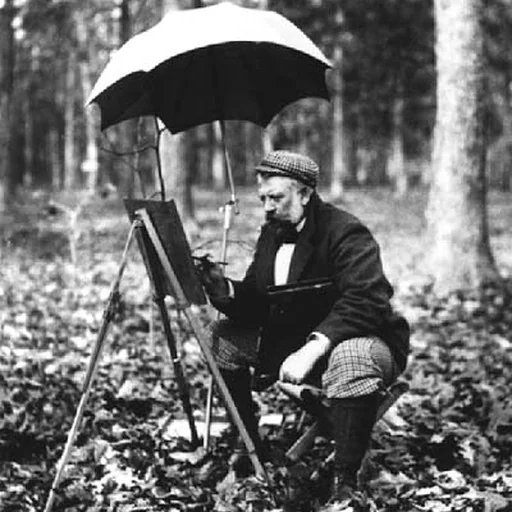
Artist
Henry Ward Ranger (January 29, 1858 – November 7, 1916) was an American artist. Born in western New York State, he was a prominent landscape and marine painter, an important Tonalist, and the leader of the Old Lyme Art…