Artwork
Iron-Gate Square
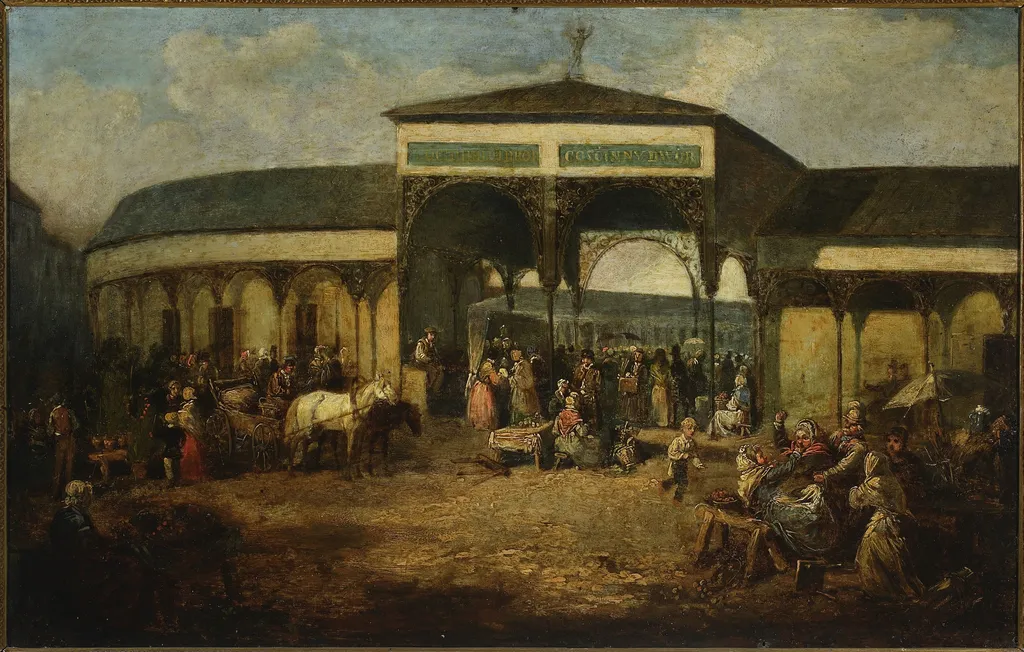
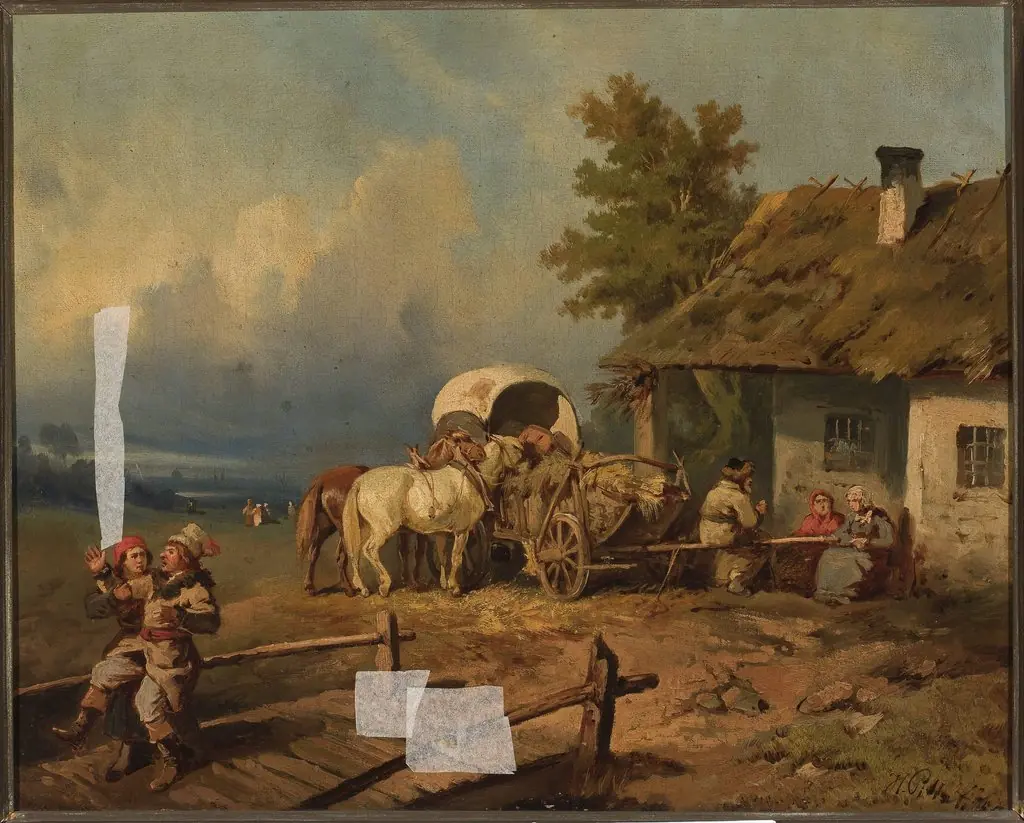
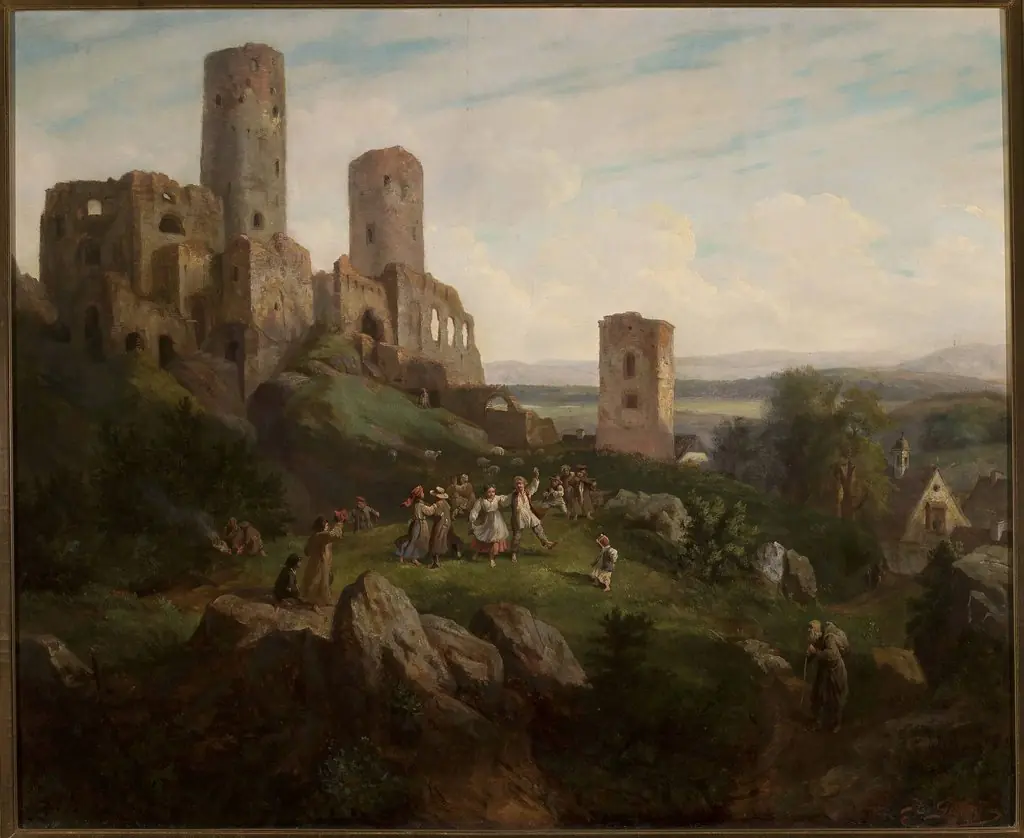
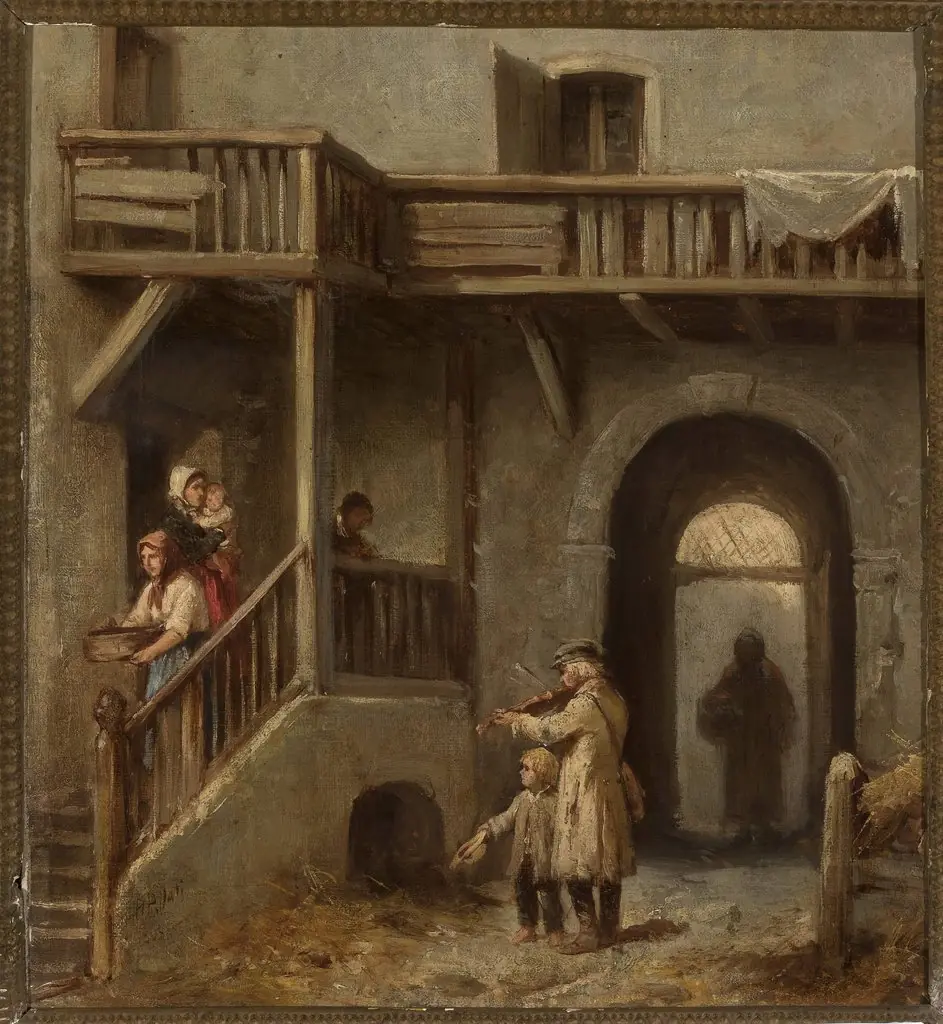
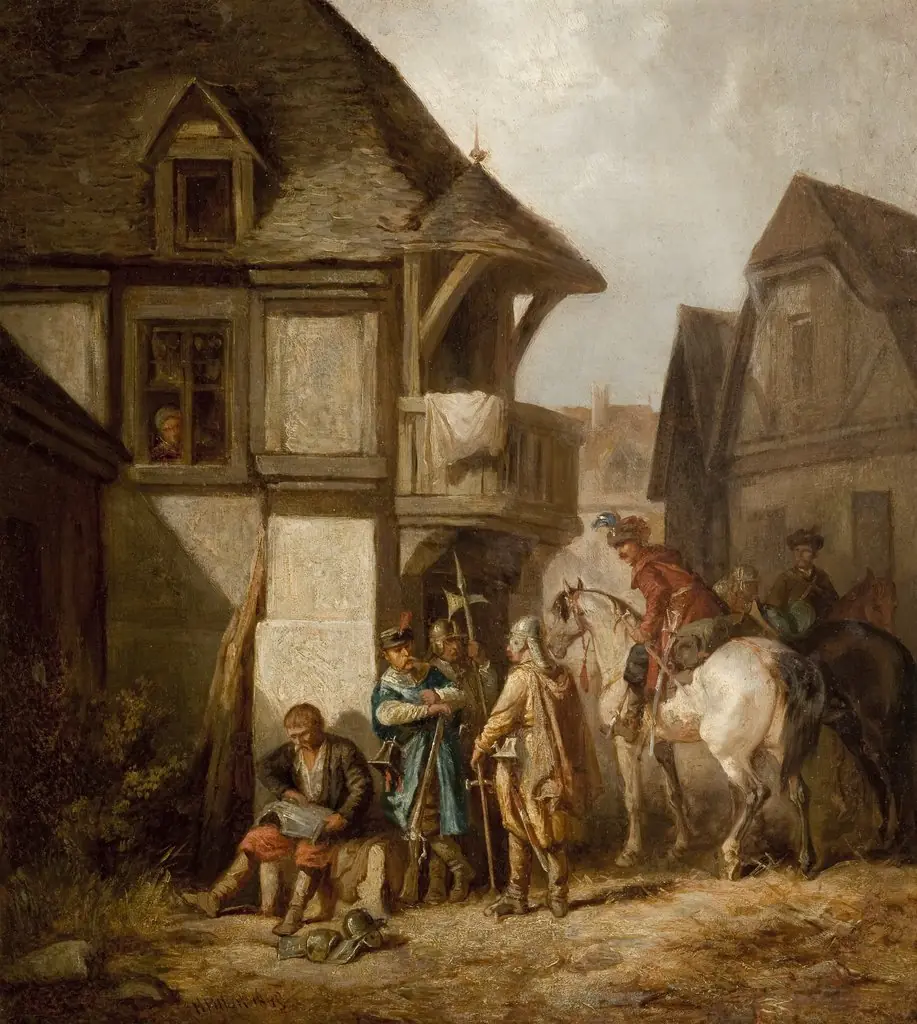
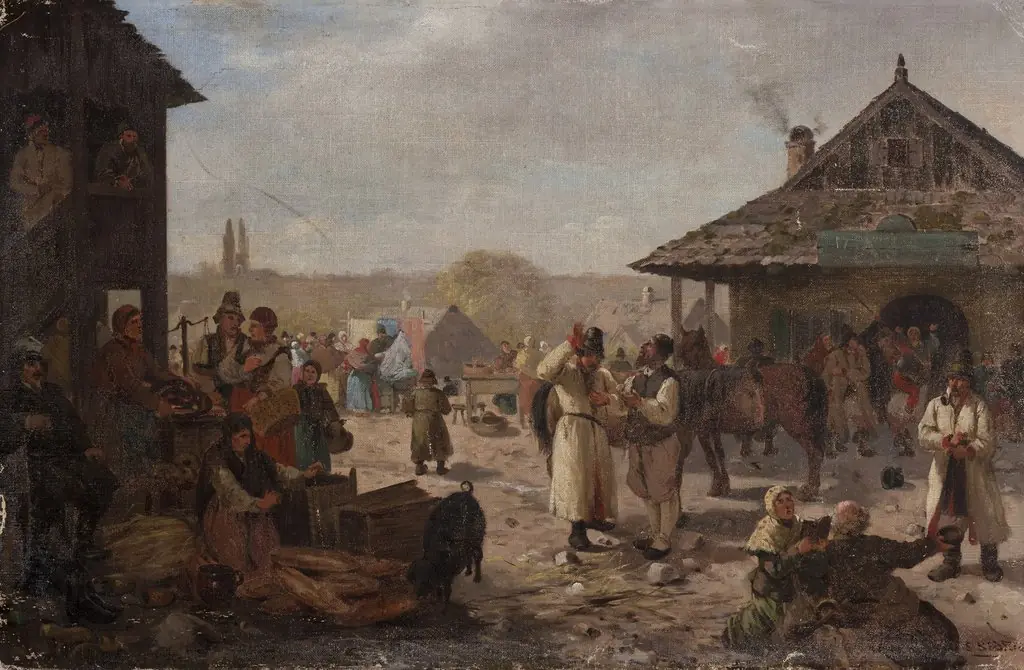
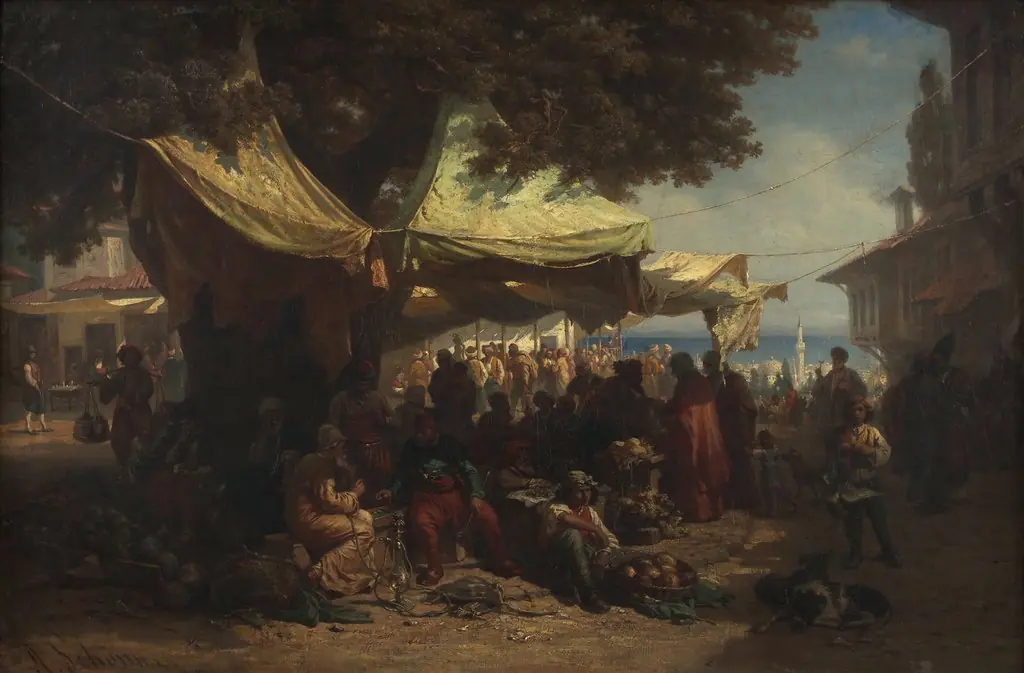
Iron-Gate Square is an unspecified painting by the Realist artist Henryk Pillati. It dates from 1853 and is held in the collection of the National Museum in Warsaw.
About this work
Overview
Painted in 1853 by Polish artist Henryk Pillati, *Iron-Gate Square* captures a public space in Warsaw during a period of social and urban transformation.
Painted in 1853 by Polish artist Henryk Pillati, *Iron-Gate Square* captures a public space in Warsaw during a period of social and urban transformation. Though trained in Classical traditions, Pillati turned his attention to everyday urban scenes, aligning with emerging Realist tendencies in mid-19th-century art. The work is part of a broader effort to document civic life through careful observation rather than idealized narrative.
Subject & Meaning
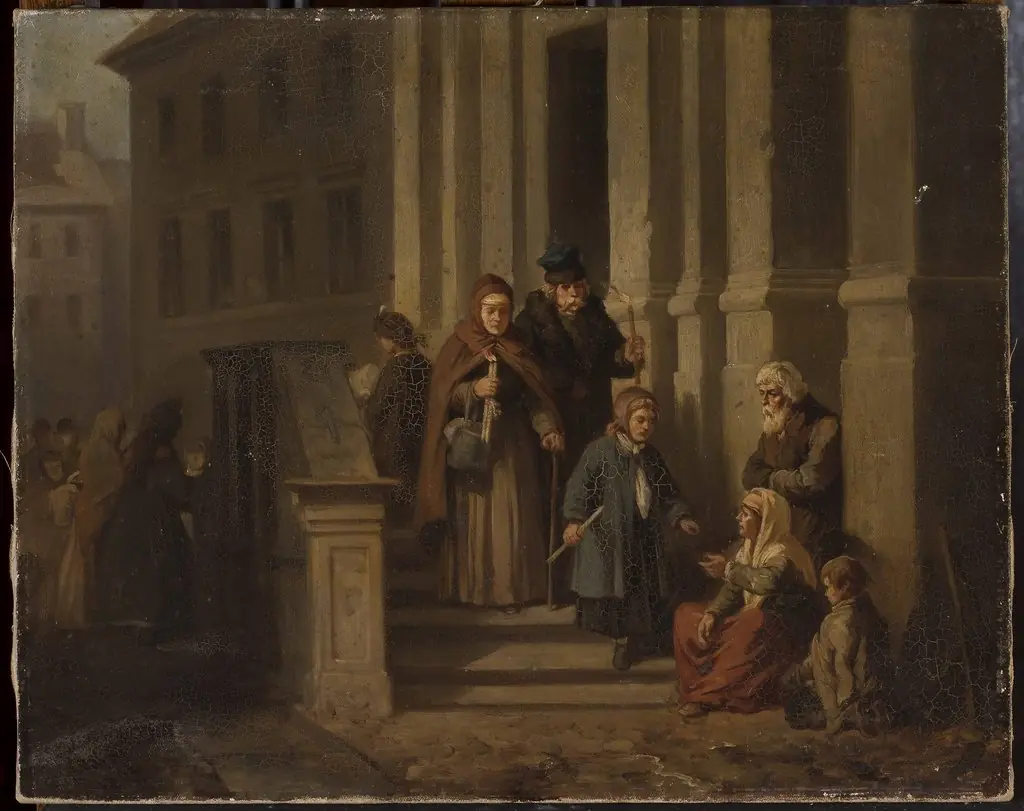
The painting portrays the bustling activity of Iron-Gate Square, a known hub of commerce and movement in Warsaw. Figures go about daily routines—vendors, pedestrians, and carriage drivers—without theatrical emphasis. The scene avoids romanticism, instead presenting the square as a lived-in environment, suggesting an interest in the rhythms of ordinary urban existence rather than grand historical events.
Technique & Style
Pillati employed precise draftsmanship and controlled perspective, rooted in Classical training, to structure the composition. Details of clothing, architecture, and gesture are rendered with illustrative clarity, yet the overall tone remains restrained. The palette is muted, favoring earth tones and soft light, reinforcing the painting’s documentary quality over dramatic effect.
History & Provenance
Created in 1853, the painting entered the collection of the National Museum in Warsaw, where it has remained since. Its preservation reflects institutional interest in documenting Polish urban culture during the Partitions. No significant alterations or reattributions are recorded, and it has been consistently identified as Pillati’s work in museum archives.
Context
In the 1850s, Warsaw was under Russian control, and public spaces like Iron-Gate Square served as sites of both daily life and subtle resistance. While official art often promoted imperial narratives, artists like Pillati turned to local scenes as quiet acts of cultural affirmation. His focus on civic architecture and common people aligned with broader European Realist currents, even under political constraints.
Legacy
*Iron-Gate Square* stands as an early example of Polish Realism in painting, bridging academic technique with attention to contemporary life. Though Pillati is better known for illustrations, this work contributes to a visual record of Warsaw’s pre-industrial urban fabric. It remains a reference point for studies of 19th-century Polish civic identity and the quiet emergence of social realism in regional art.
Artist & collection
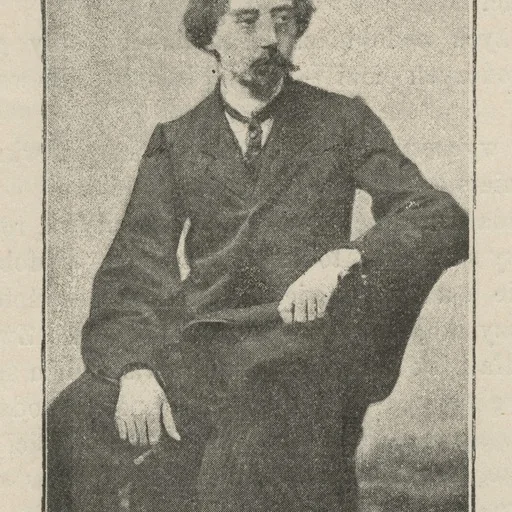
Artist
Henryk Pillati (19 January 1832 – 16 April 1894) was a Polish illustrator, caricaturist and history painter, in the Classical style.