Artwork
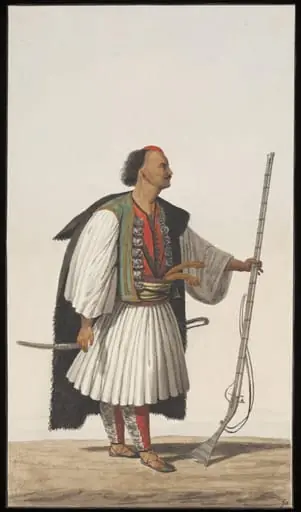
Albanian Soldier
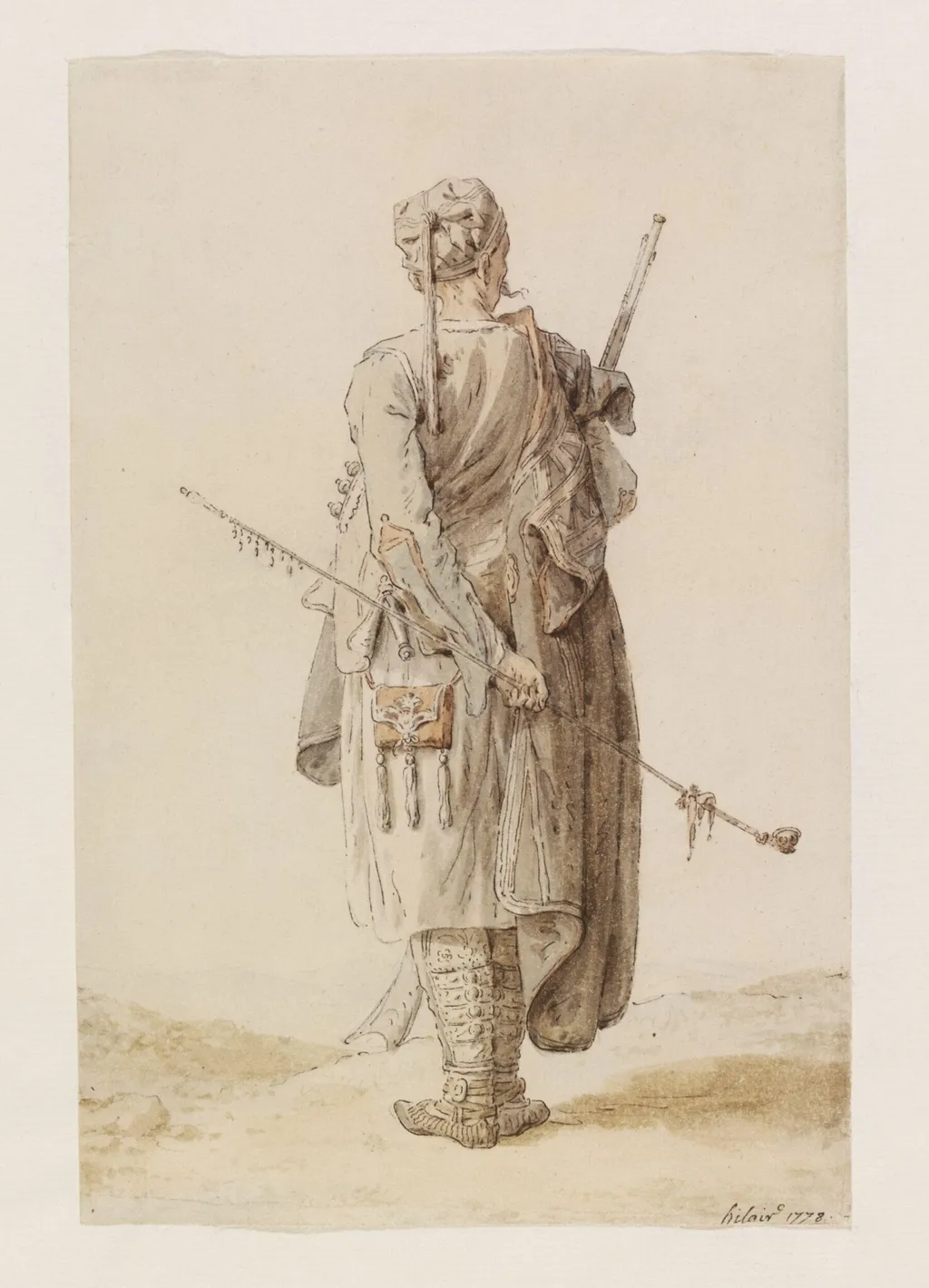
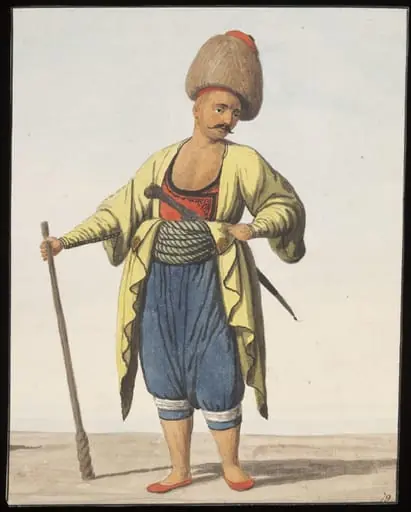
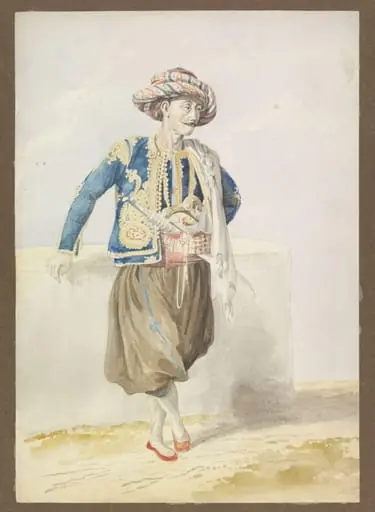
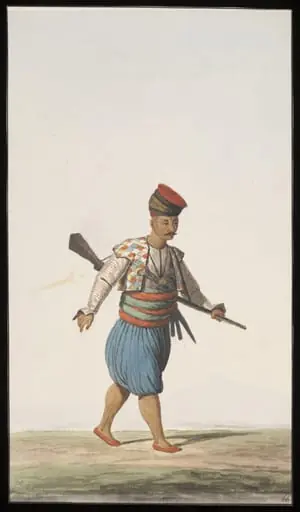
Albanian Soldier is a watercolor work on paper by the Rococo painting artist Jean-Baptiste Hilaire. It dates from 1778 and is held in the collection of the Victoria and Albert Museum.
About this work
His drawings appeared in a book called Voyage Pittoresque de la Grèce in 1782.
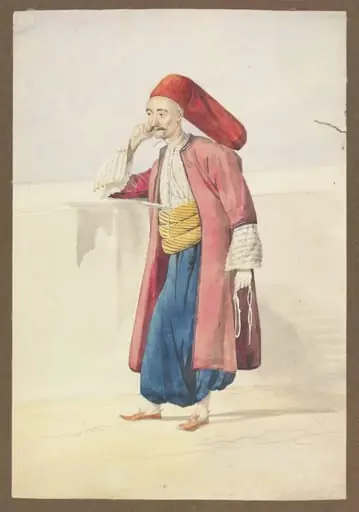
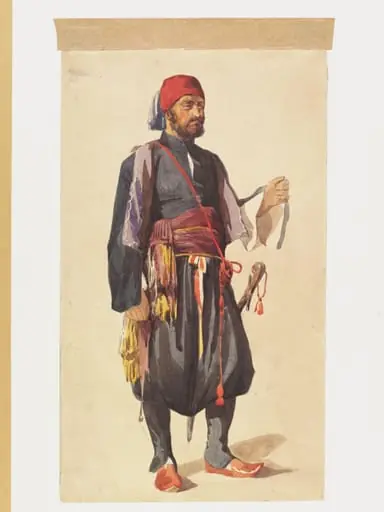
Hilaire made this watercolor in 1778 during travels in Turkey and Greece. It shows an Albanian soldier in fine detail. The coat, cap, and bag are all carefully painted with thin watercolor washes.
Hilaire studied under Jean-Baptiste Le Prince. He later worked for the French ambassador in Istanbul. His drawings appeared in a book called Voyage Pittoresque de la Grèce in 1782.
Look next at work by the same artist.
Overview
Created in 1778 during travels through the Ottoman territories, this watercolour depicts an Albanian soldier observed firsthand by the French artist Hilaire. Executed with precision, the work belongs to a series of ethnographic studies made for the French ambassador to Istanbul, reflecting a broader European interest in documenting regional dress and military culture during the late 18th century.
Subject & Meaning
The figure represents an Albanian warrior, a group widely regarded in European circles as formidable and distinct within the Ottoman military structure. Hilaire emphasizes both the elaborate civilian attire—tasselled cap, embroidered satchel, patterned leggings—and the subtle presence of a long musket, hinting at the soldier’s dual identity as both a local inhabitant and armed combatant, though other weapons remain implied rather than shown.
Technique & Style
Hilaire employed fine pen lines to define contours, layered with delicate watercolour washes to render texture and colour without heavy opacity. His method, learned under Jean-Baptiste Le Prince, prioritized accuracy over dramatic effect. Details such as the cornel-wood tobacco pipe and woven fabric patterns are rendered with observational rigor, aligning the work with scientific illustration traditions of the period.
History & Provenance
Hilaire produced this work during his 1776–1779 journey through Greece and Turkey, accompanying the Comte de Choiseul-Gouffier. The image later contributed to the ambassador’s 1782 publication, Voyage Pittoresque de la Grèce, which compiled visual records of the region. The watercolour remains a primary example of Hilaire’s role as a documentarian for French diplomatic and scholarly interests in the Eastern Mediterranean.
Context
In the late 18th century, European travellers and diplomats increasingly sought to record the diverse peoples of the Ottoman Empire, often romanticizing their martial reputation. Albanians, noted for their distinctive dress and independence, became frequent subjects. Hilaire’s work reflects this trend, serving as both ethnographic record and visual testimony shaped by contemporary European curiosity and colonial gaze.
Legacy
Hilaire’s watercolours, including this one, helped shape Western visual understanding of Balkan and Anatolian cultures during the Enlightenment. Though not widely exhibited today, his illustrations remain referenced in studies of Ottoman ethnography and 18th-century travel art, preserving a detailed, if filtered, record of regional life through the lens of a meticulous observer.
Artist & collection