Artwork
A Shaykh with his Son[?] on Mules, with their Sais [groom]
![A Shaykh with his Son[?] on Mules, with their Sais [groom], by S. Bossi, watercolor, 1820](https://artifactworldgallery.com/img/s-bossi--a-shaykh-with-his-son-on-mules-with-their-sais-groom--240d85ba529e2bf3-w1024.webp)
A Shaykh with his Son[?] on Mules, with their Sais [groom] is a watercolor work on paper by the Orientalist artist S. Bossi. It dates from 1820 and is held in the collection of the Victoria and Albert Museum. A Shaykh with his Son[?
About this work
Overview
A Shaykh with his Son[?] on Mules, with their Sais is a watercolour created circa 1820, attributed to S. Bossi based on stylistic affinities with his contributions to Edward Joshua Cooper’s *Views in Egypt and Nubia*.
Subject & Meaning
The watercolour portrays a serene everyday scene of a shaykh, possibly accompanied by his son, both mounted on mules, with a barefoot groom (sais) walking alongside, conveying a sense of quiet, mundane life.
Technique & Style
The artwork features soft, muted colours and loose, expressive lines, imbuing the scene with calmness. Notable details include the plain yet red-cloth-adorned mules’ saddles, and the distinct, simple attire of the three figures.
History & Provenance
Attributed to S. Bossi, the piece is linked to his work for Cooper’s *Views in Egypt and Nubia* (1824–27), based on travels in Egypt and Nubia (1820–1821). Specific provenance details are not provided.
Context
Created during a period of European artistic fascination with Middle Eastern and North African subjects, this watercolour reflects the orientalist tendencies prevalent among 19th-century European artists.
Legacy
While not individually renowned, the piece contributes to the broader legacy of 19th-century orientalist watercolours, offering insights into both the artistic styles of the time and European perceptions of Middle Eastern life.
Artist & collection
Artist
S. Bossi left a small but striking group of watercolours from the early 1820s that show daily life in Egypt under Ottoman rule. Three works in this set pair riders with their grooms—one shaykh and his son on mules,…

![A Mounted Mamluk with his Sais [Groom], by S. Bossi](https://artifactworldgallery.com/img/s-bossi--a-mounted-mamluk-with-his-sais-groom--93e3f53d48765120-w320.webp)
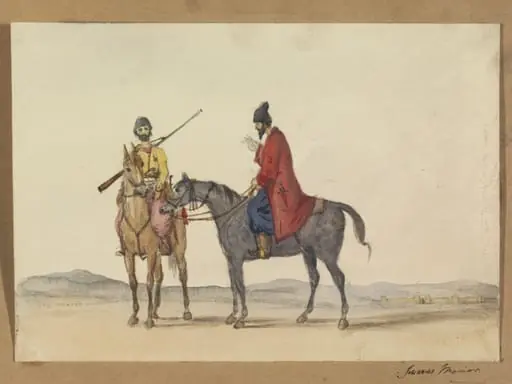 Two Persian Horsemen
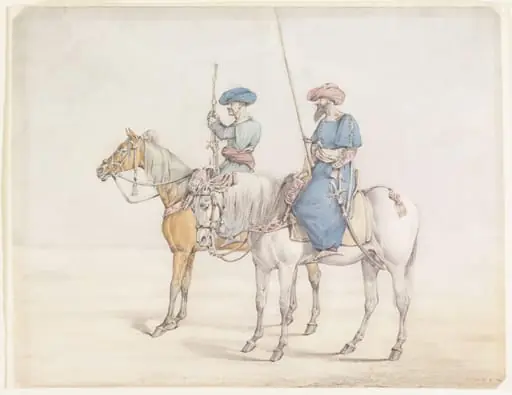 Two armed figures on horseback, probably Mamluks
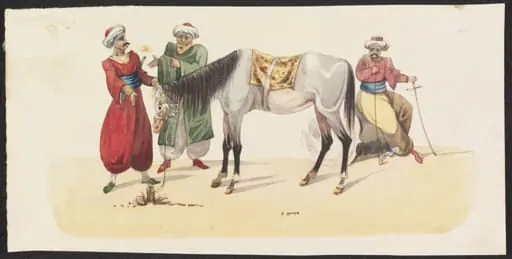 The hard Bargain
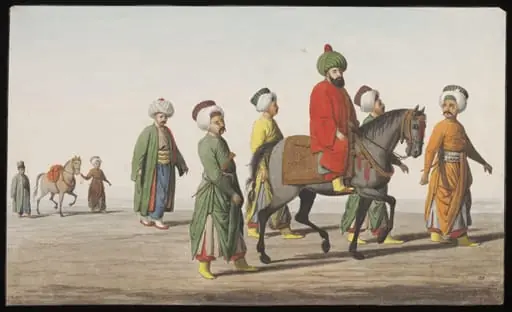 Kaymakam, or Govenor of Istanbul
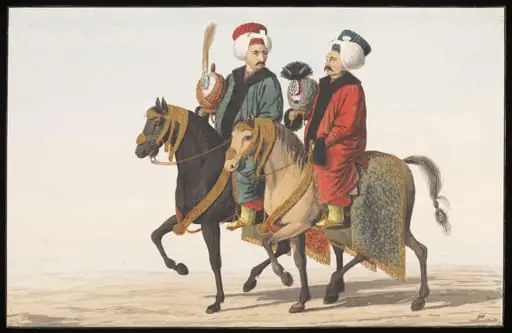 Two Royal Turban-Bearers on horseback
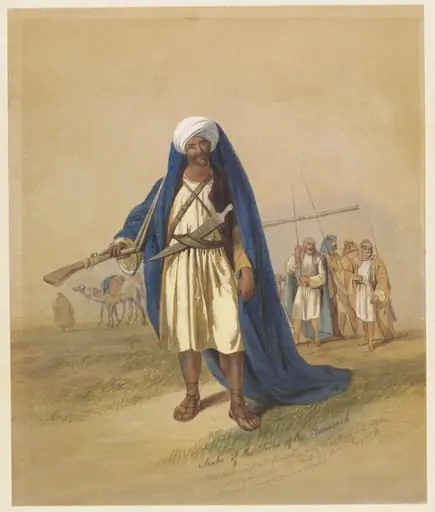 Arabs of the Tribe of the Benisaid
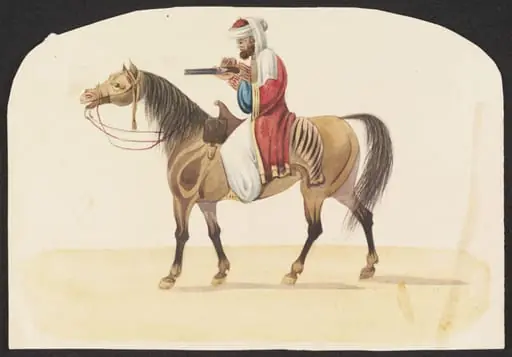 Mounted horseman loading gun
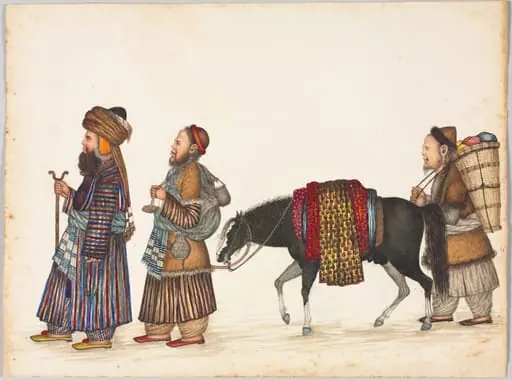 A Family of Tartars
![Mounted crusader [?] holding discussion with standing man, by Unknown](https://artifactworldgallery.com/img/unknown--mounted-crusader-holding-discussion-with-standing-man--9b99697bca24a72f-w320.webp) Mounted crusader [?] holding discussion with standing man
Mounted crusader [?] holding discussion with standing man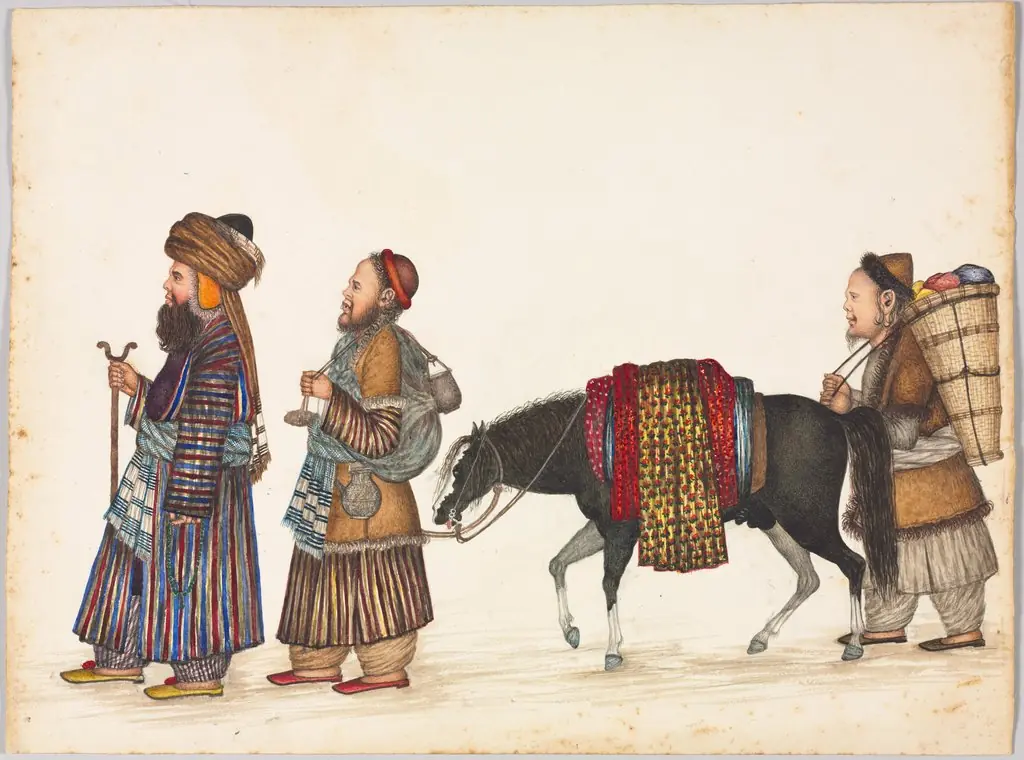 A Family of Tartars
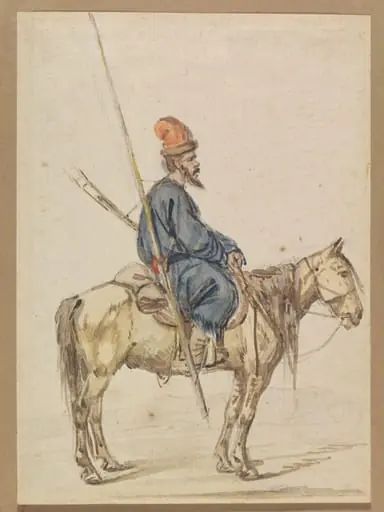 Armed horseman, possibly Russian