Artwork
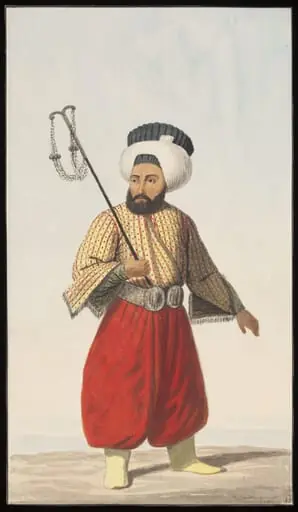
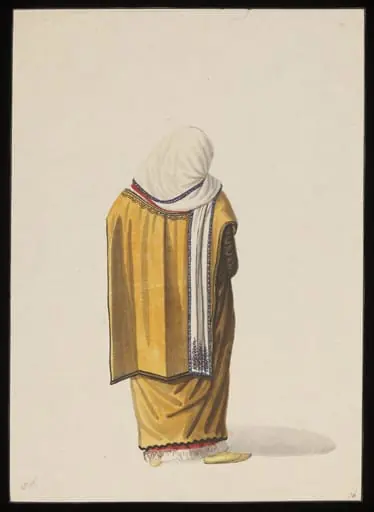
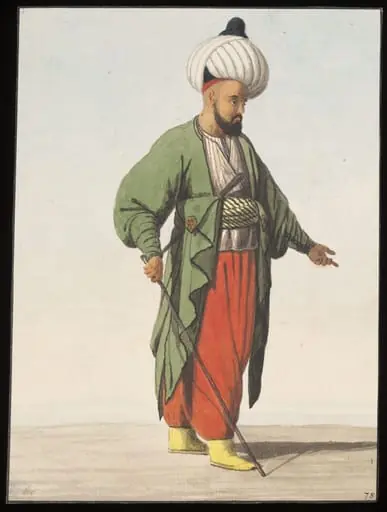
Arnavut, or Albanian
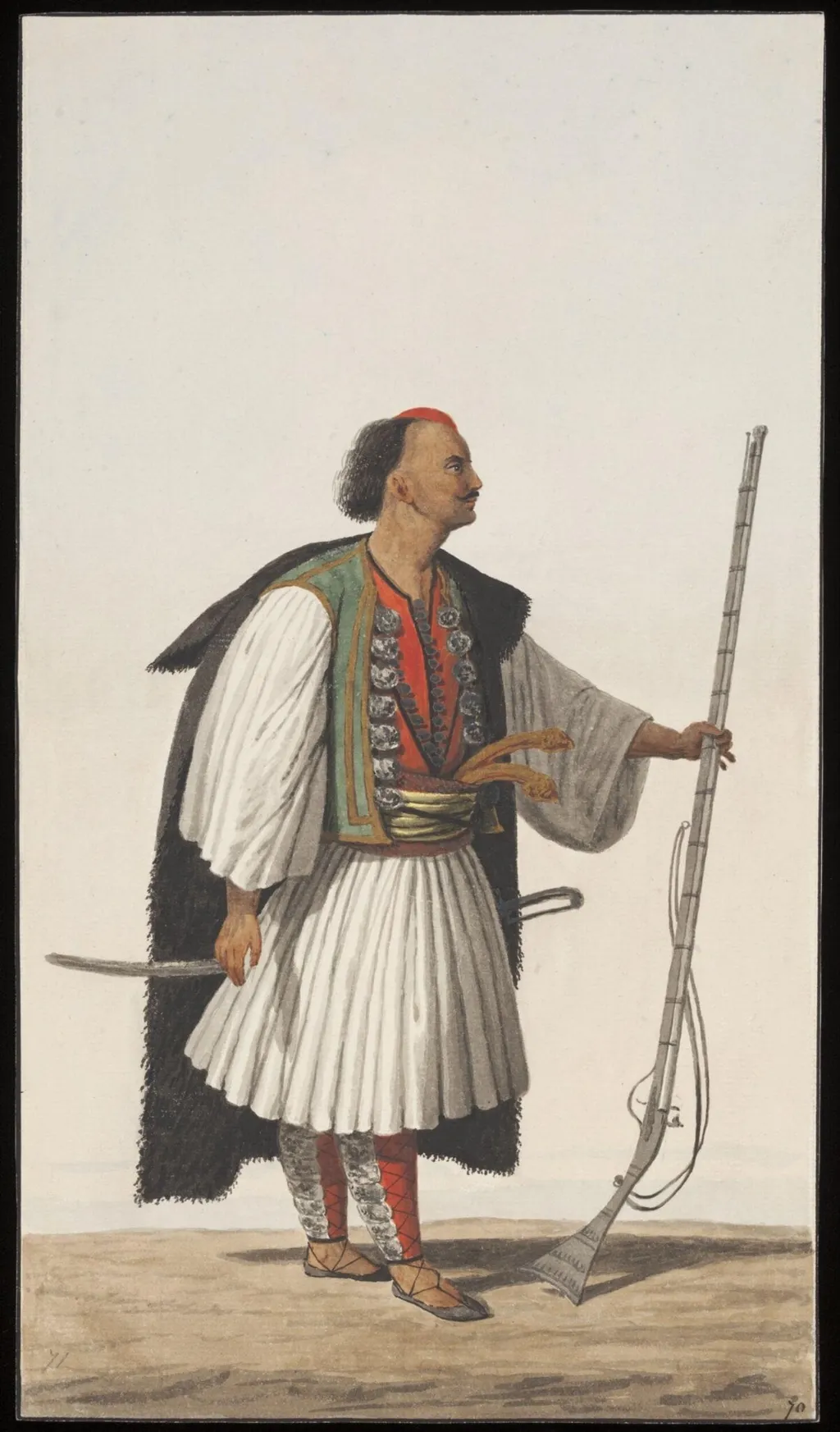
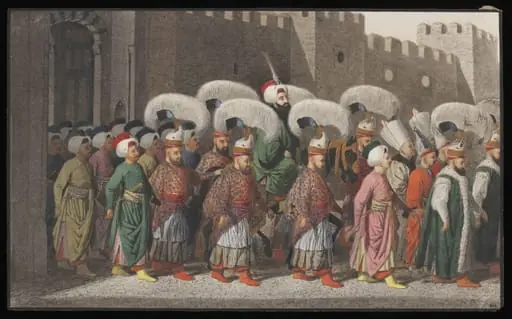
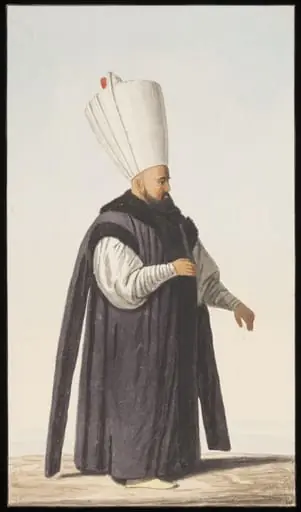
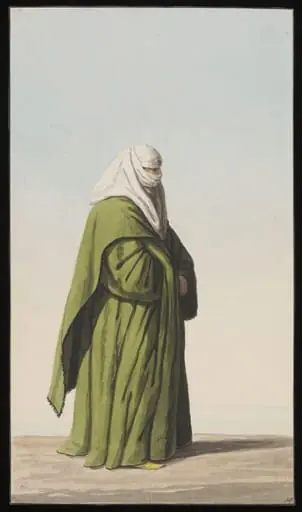
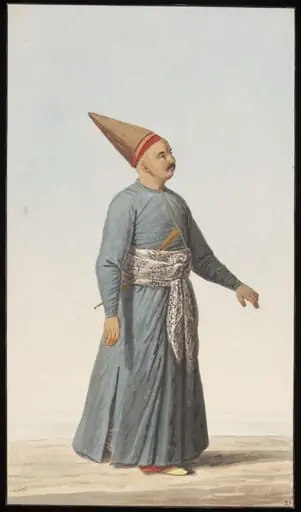
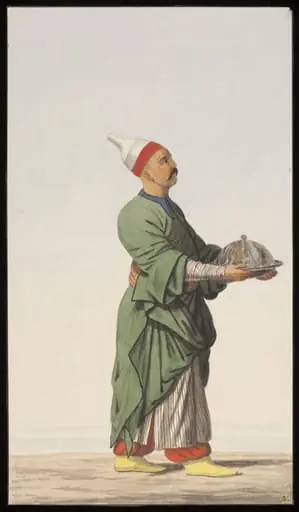
Arnavut, or Albanian is a watercolor work on paper by the Romanticist artist Anonymous Greek artist. It dates from 1809 and is held in the collection of the Victoria and Albert Museum. This watercolour is part of a larger collection commissioned by British diplomat Stratford Canning during his early years in Istanbul.
About this work
Overview
The artist remains unidentified, though scholars suggest ties to the workshop of Konstantin Kapidagli, a known figure in Ottoman visual culture at the time.
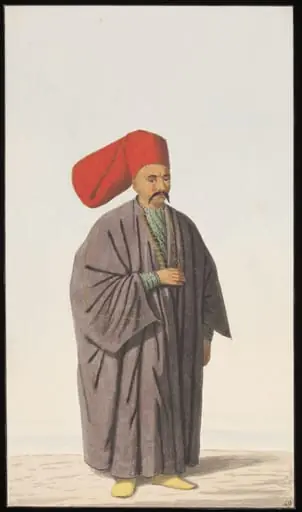
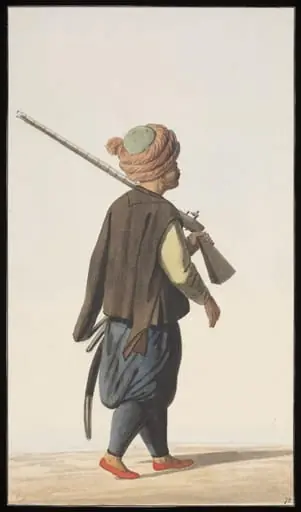
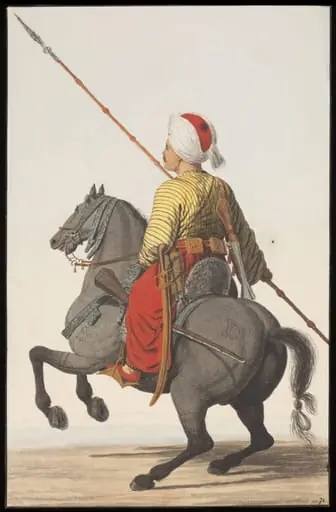
This watercolour is part of a larger collection commissioned by British diplomat Stratford Canning during his early years in Istanbul. Created around 1810, the series documents Ottoman urban life, architecture, and customs through detailed visual records. The artist remains unidentified, though scholars suggest ties to the workshop of Konstantin Kapidagli, a known figure in Ottoman visual culture at the time.
Subject & Meaning
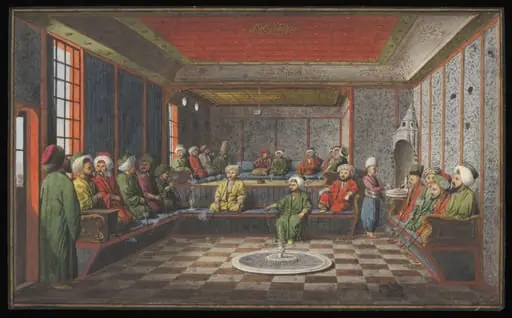
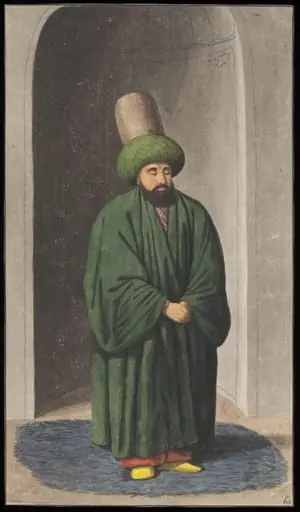
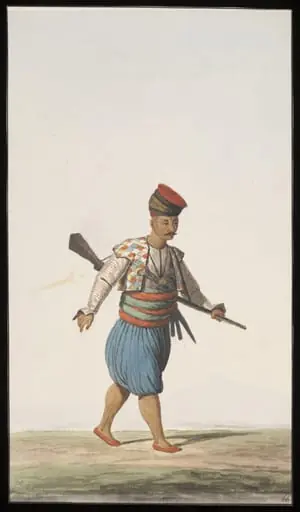
The image captures everyday scenes and structures of the Ottoman Empire as observed by a foreign diplomat. Rather than idealized or exoticized views, the series presents a systematic record of buildings, dress, and public spaces, reflecting Canning’s interest in ethnographic accuracy. These works functioned as both personal documentation and diplomatic intelligence, offering insight into a society unfamiliar to European audiences.
Technique & Style
The watercolour blends Ottoman traditions of vivid, layered pigments with European linear perspective and spatial depth. Brushwork is precise, with attention to architectural detail and surface texture. The use of bodycolour enhances opacity and luminosity, a technique common among local artisans, while the composition follows Western conventions of framing and scale, suggesting a hybrid artistic approach.
History & Provenance
The drawings were assembled during Canning’s tenure in Istanbul from 1808 onward. After his return to Britain, the collection remained in his family until 1895, when his daughter Charlotte donated the full set to the Victoria and Albert Museum. Earlier, the young architect Charles Cockerell, who visited the embassy in 1810, made copies of some views, now held in the British Museum, confirming the series’ circulation among British intellectuals.
Context
Canning’s commission coincided with a broader European fascination with the Ottoman Empire, driven by diplomatic, commercial, and scholarly interests. While many Western travelers produced sketches, few employed local artists to create such an extensive, technically sophisticated record. This series stands out for its collaboration between a foreign patron and an Ottoman-trained artist, offering a rare non-European perspective on Ottoman life.
Legacy
The collection remains a key visual archive of early 19th-century Istanbul, valued for its observational fidelity and technical synthesis of Eastern and Western practices. Though the artist’s name is lost, the works contribute to understanding the role of local artisans in shaping cross-cultural documentation. Their preservation in a major British museum underscores their significance as historical records rather than mere curiosities.
Artist & collection

![A Pasha travelling with his escort[?], by Anonymous Greek artist](https://artifactworldgallery.com/img/anonymous-greek-artist--a-pasha-travelling-with-his-escort--01de32b8fcf30843-w320.webp)
![A Dervish[?], by Anonymous Greek artist](https://artifactworldgallery.com/img/anonymous-greek-artist--a-dervish--3c8916f5a95abb6a-w320.webp)