Artwork
Moonlight on the Androscoggin
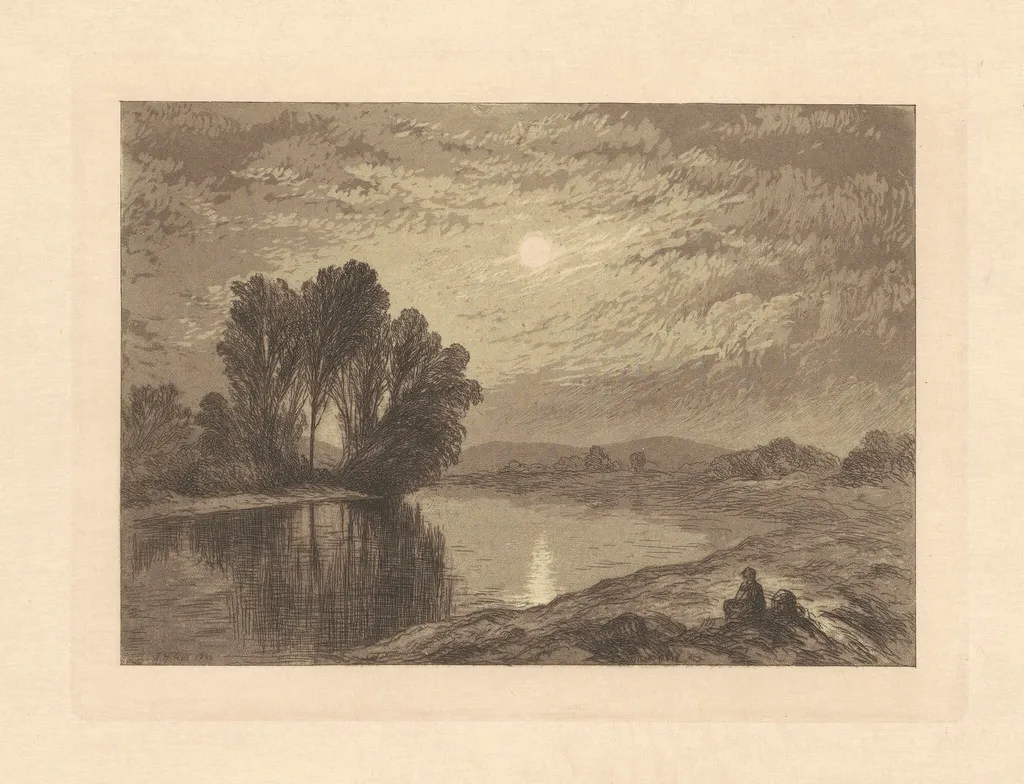
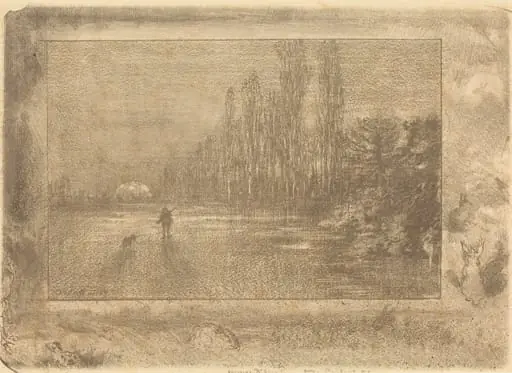
Moonlight on the Androscoggin is an ink print by the Impressionist artist John Henry Hill. It dates from 1866 and is held in the collection of the National Gallery of Art.
About this work
Overview
Moonlight on the Androscoggin, executed in 1866 by John Henry Hill, is a black-and-gray print that combines etching with aquatint on wove paper. The work presents a nocturnal river scene illuminated by moonlight, with a solitary figure seated on the bank. Its tonal range and compositional balance convey a quiet, contemplative atmosphere.
Subject & Meaning
The image portrays a river coursing through a landscape under a subdued lunar glow. Moonlight reflects gently on the water’s surface, while a lone figure on the shore introduces a human element that emphasizes solitude and calm. The composition invites reflection on the relationship between nature’s quietude and human presence.
Technique & Style
Hill employed traditional intaglio methods, using etched lines to define forms and aquatint to achieve broad tonal washes. The interplay of crisp incised details with soft, velvety areas creates depth and texture, guiding the eye from the foreground figure to the shimmering river and the distant horizon.
History & Provenance
Created in the post‑Civil War period, the print reflects Hill’s interest in American scenery during a time of expanding artistic exploration of the nation’s landscapes. It remains documented as part of Hill’s body of work that frequently employed etching and aquatint to capture natural subjects.
Own this work as a print
Artist & collection

 Summer by the Lakeside
 Deer Hunt (La chasse au cerf)
 The New Moon
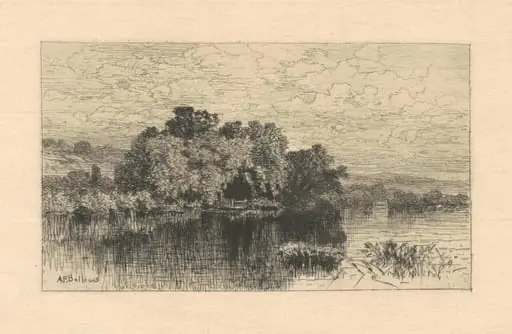 Mill Pond at Windsor, Connecticut
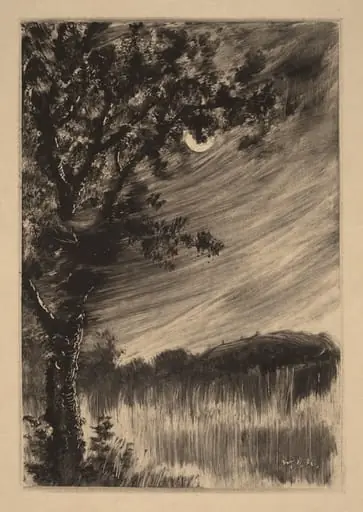 Moonlit Landscape with Tree at the Left
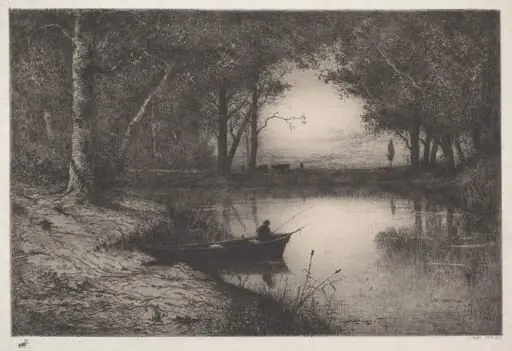 Pêcheur en Canot, au bord d'une Rivière (Fisherman in a Boat)
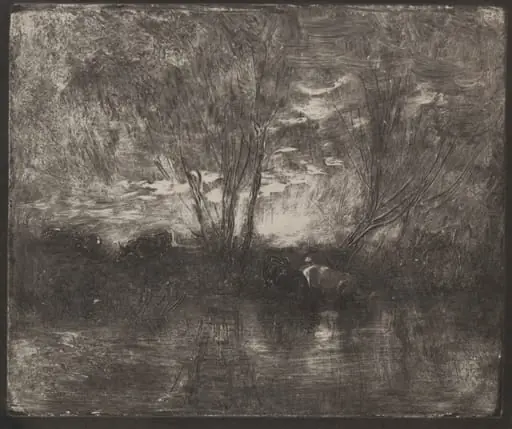 Cows at a Watering Place
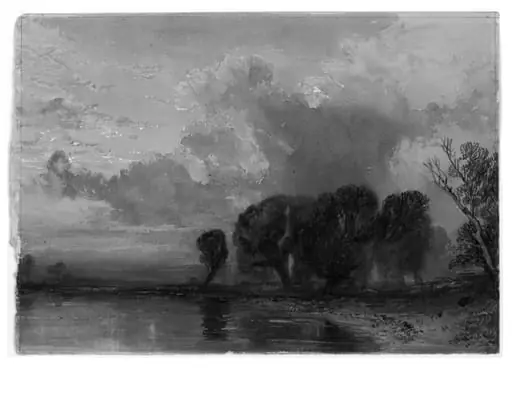 Streatham Common
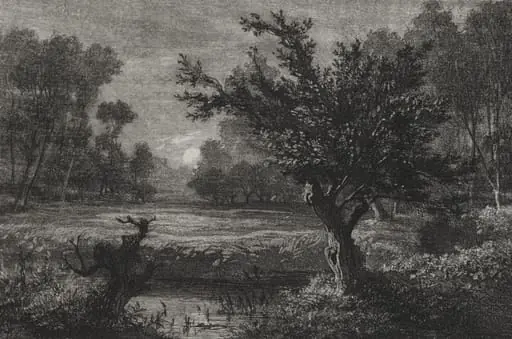 Moonrise in the Andilly Valley
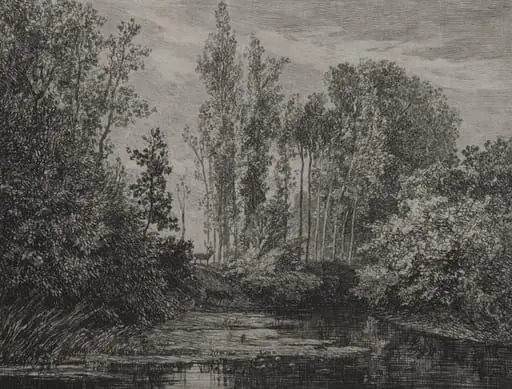 Stags at the water's edge
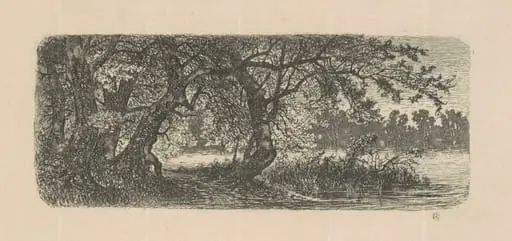 Water Elms
 Le Petit Chasseur (Little Hunter)