Artwork
Figures in the Woods
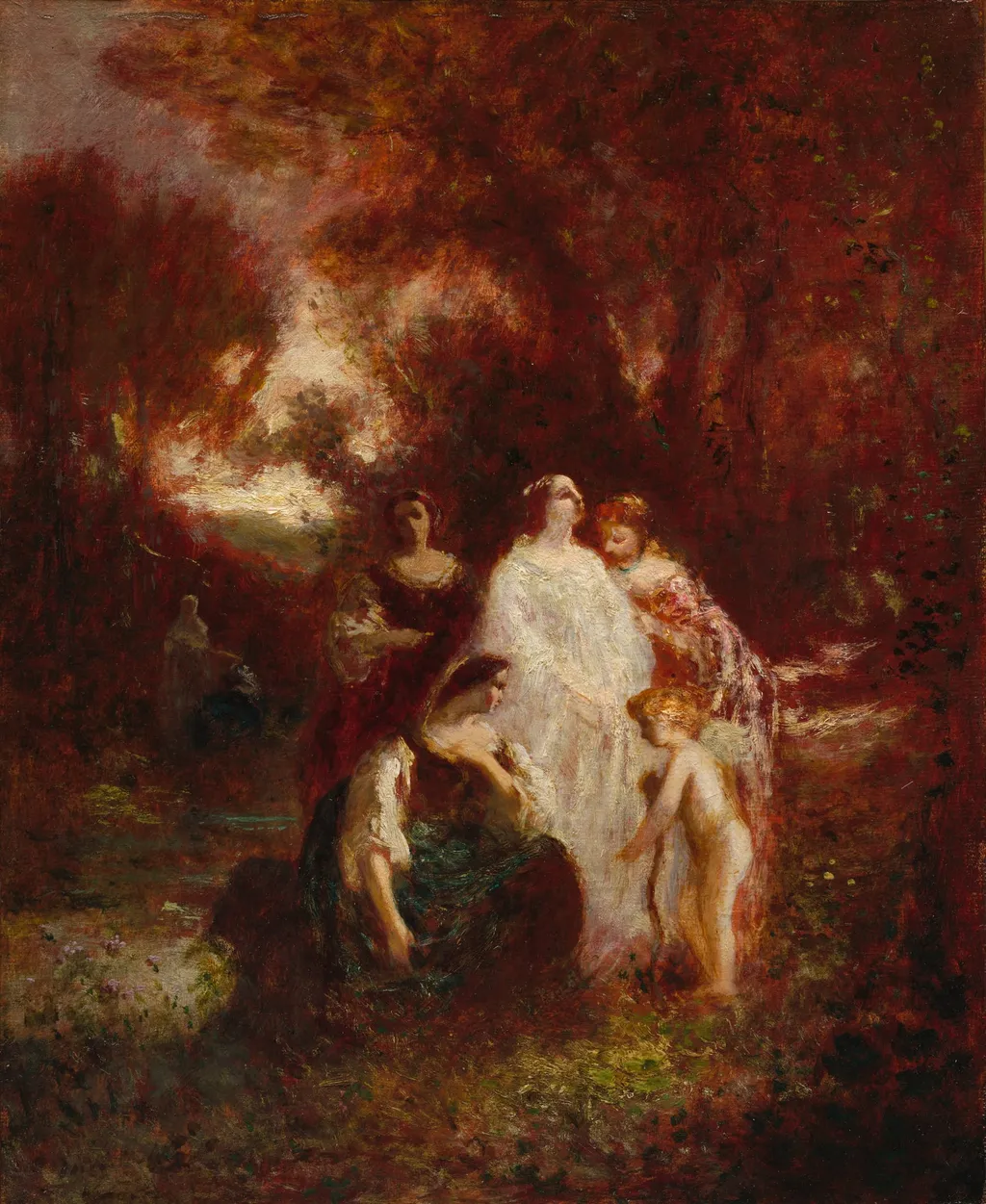
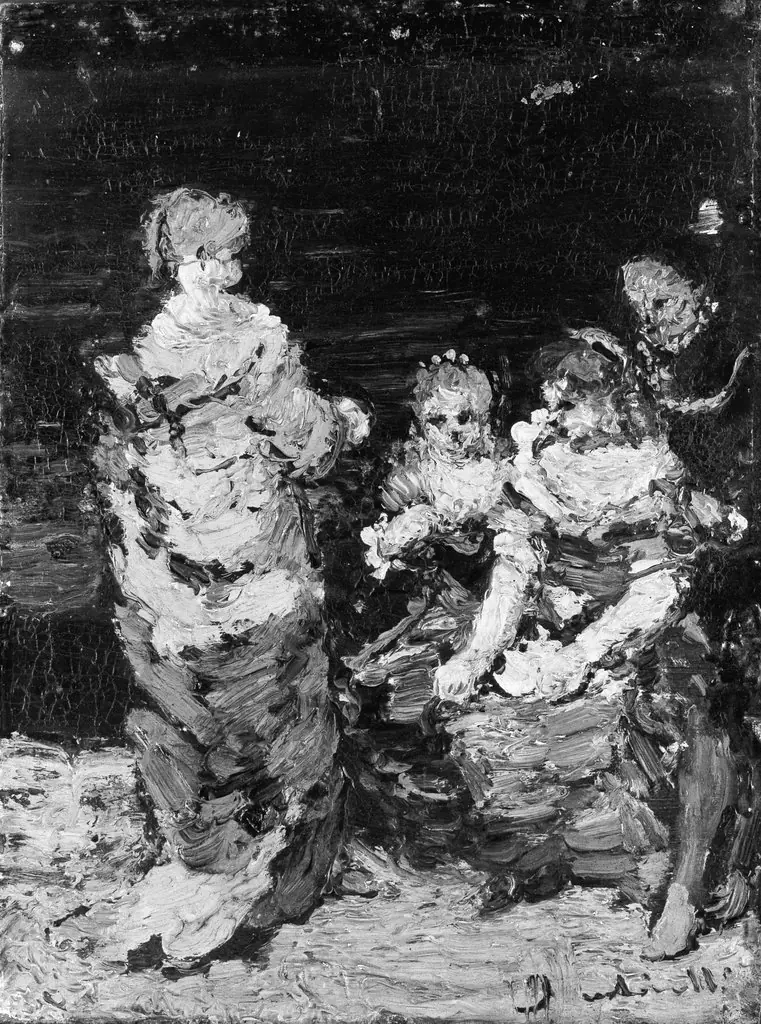
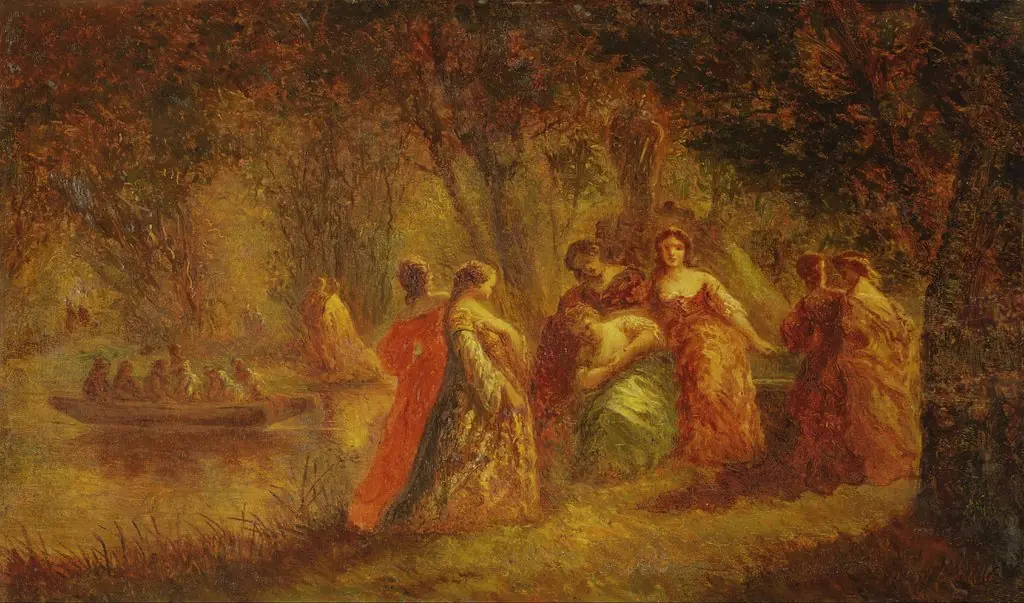
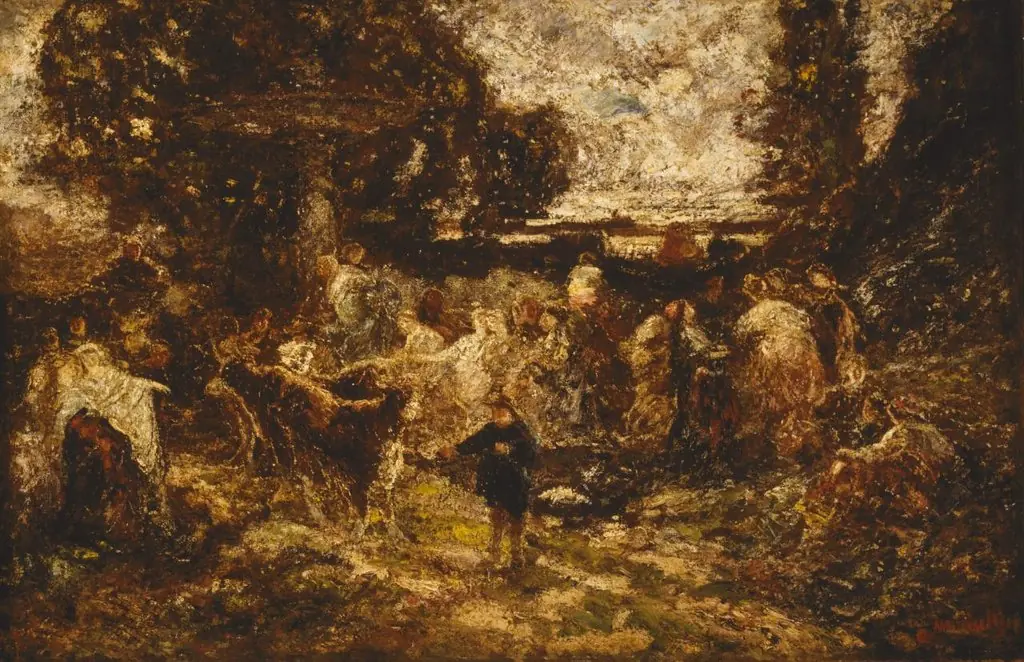
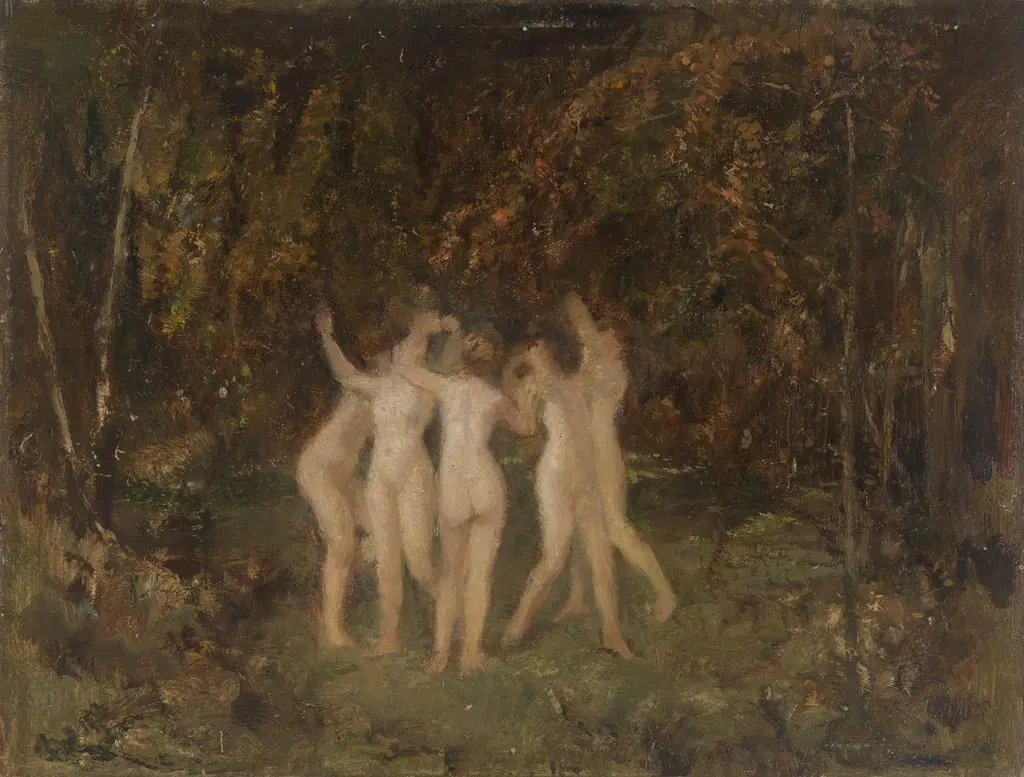
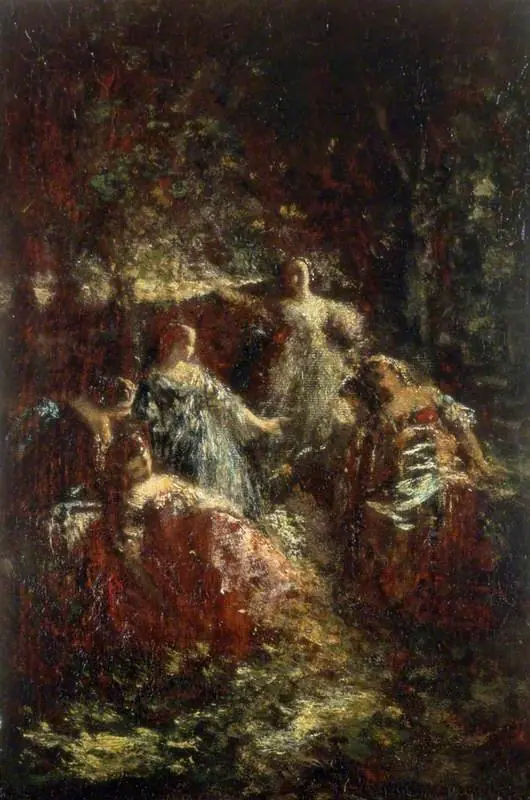
Figures in the Woods is an unspecified painting by the French Romanticist artist Adolphe Joseph Thomas Monticelli. It dates from 1860 and is held in the collection of the Cleveland Museum of Art.
About this work
Overview
The work resides in The Cleveland Museum of Art and exemplifies Monticelli’s distinctive approach to landscape and figure painting.
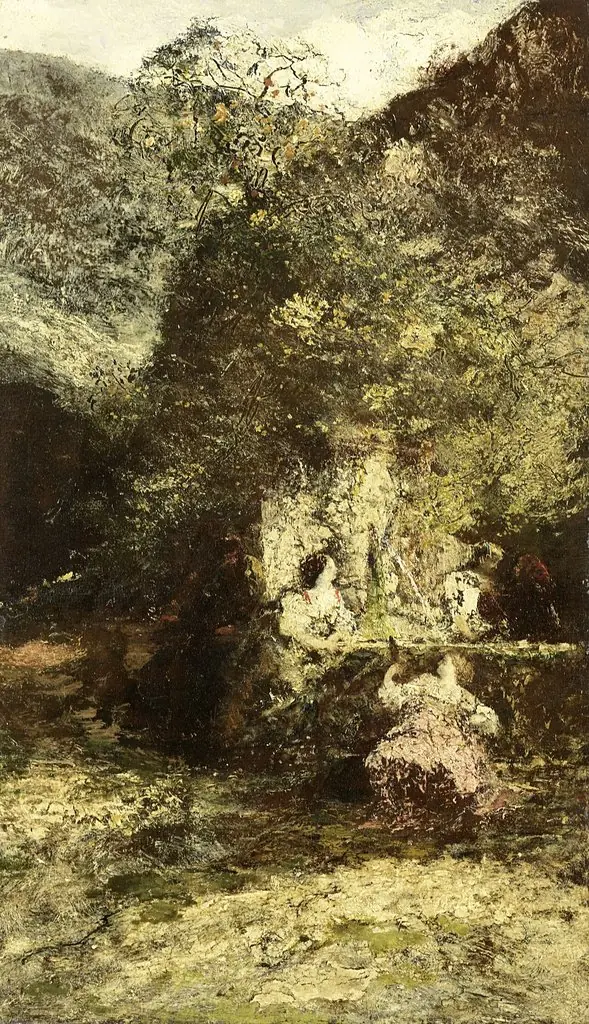
Painted around 1860 by Adolphe Monticelli, Figures in the Woods is a genre scene depicting three figures in a dense woodland. The work resides in The Cleveland Museum of Art and exemplifies Monticelli’s distinctive approach to landscape and figure painting. Its unrefined surface and bold application of paint distinguish it from the polished styles common in mid-19th-century academic art, anticipating later developments in expressive brushwork.
Subject & Meaning
Three figures—a woman holding a child and two others—stand quietly within a shadowed forest. Their light garments contrast with the dark, tangled undergrowth, suggesting a moment of stillness amid nature’s obscurity. The child’s gaze back toward the group introduces a subtle narrative tension, though the scene resists clear storytelling. The emphasis lies in mood rather than event, evoking introspection and the quiet presence of human figures within an overwhelming natural environment.
Technique & Style
Monticelli applied paint thickly and impulsively, using heavy impasto to build texture across the canvas. The forest background is rendered in dense, swirling strokes of red-brown, creating a sense of atmospheric depth without defined form. The figures, though loosely rendered, emerge through contrast and gesture rather than detail. This tactile, almost sculptural handling of paint departed from contemporary norms, prioritizing emotional resonance over precision.
History & Provenance
The painting was likely completed during Monticelli’s time in southern France, where he developed his signature style away from Parisian academic circles. It entered The Cleveland Museum of Art’s collection in the 20th century, following earlier ownership by private collectors in Europe. Its journey reflects a gradual recognition of Monticelli’s work outside the mainstream, particularly among artists and patrons drawn to his unconventional methods.
Context
In the 1860s, French painting was dominated by academic realism and emerging Impressionism. Monticelli’s work occupied a marginal space: neither fully aligned with the Salon’s ideals nor the plein-air precision of the Impressionists. His expressive brushwork and emotional intensity resonated more with later Post-Impressionists like Van Gogh, who admired his boldness. This painting reflects a personal, intuitive response to nature, distinct from prevailing trends.
Legacy
Though overlooked in his lifetime, Monticelli’s technique influenced a generation of artists seeking alternatives to academic discipline. Figures in the Woods stands as an early example of paint as emotional carrier rather than mere representation. Its rough surfaces and atmospheric ambiguity prefigure the expressive freedoms of 20th-century modernism, securing its place as a quiet precursor to later innovations in painterly language.
Artist & collection
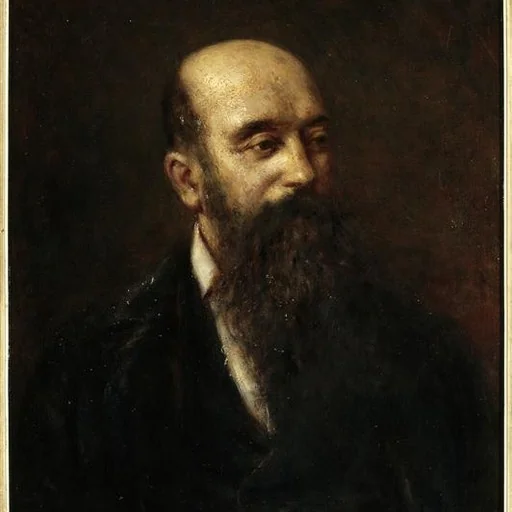
Artist
Adolphe Joseph Thomas Monticelli
Adolphe Joseph Thomas Monticelli (October 14, 1824 – June 29, 1886) was a French painter of the generation preceding the Impressionists.