Artwork
Comte Lepic
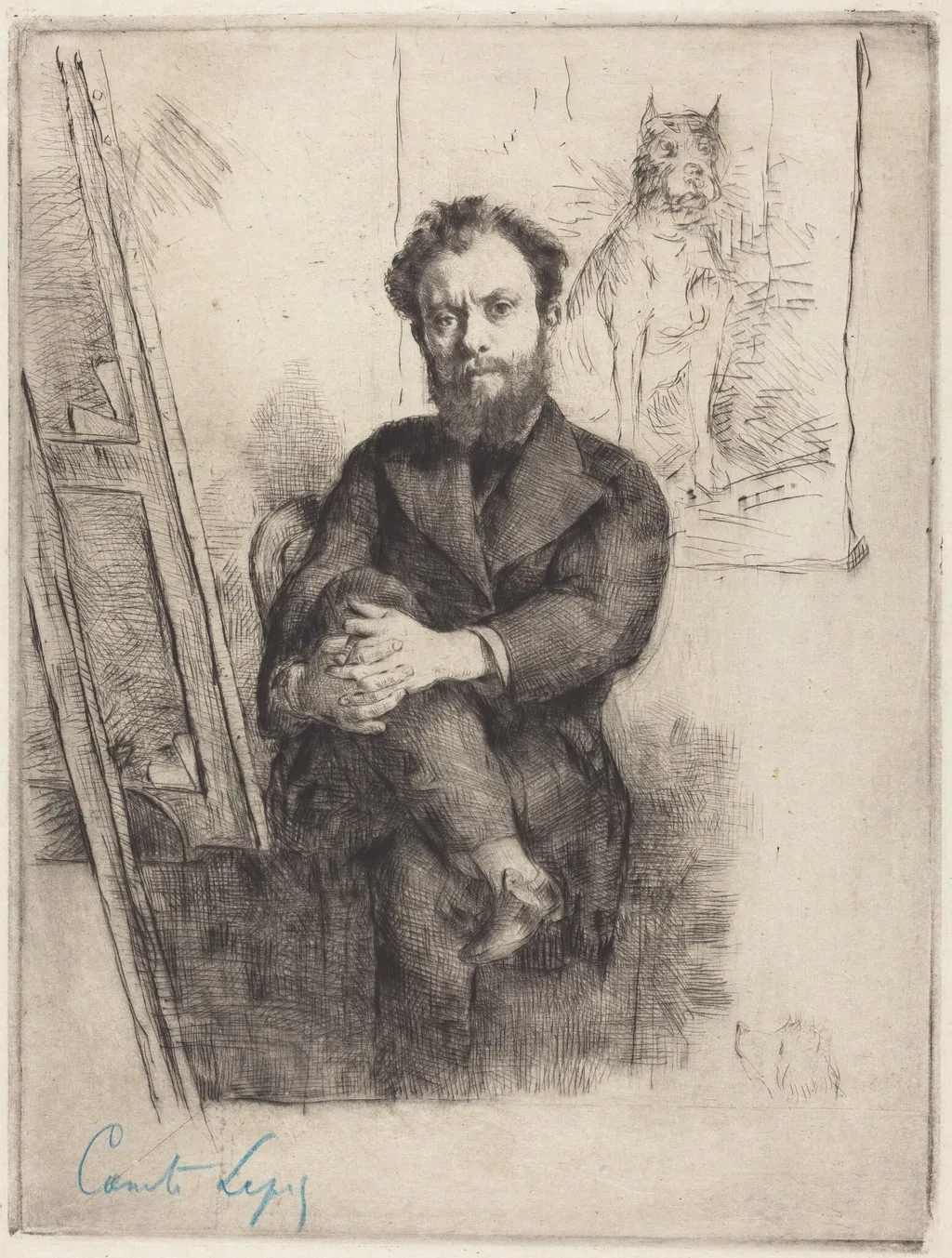
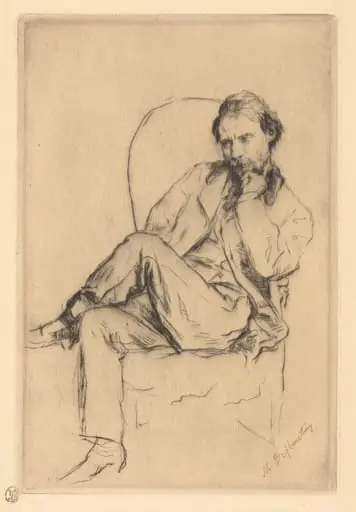
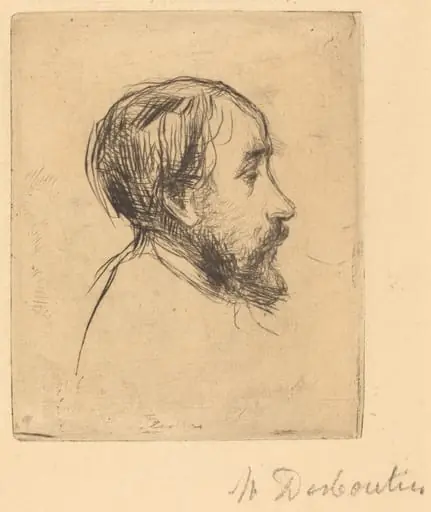
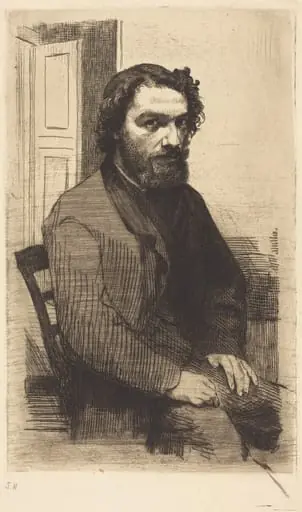
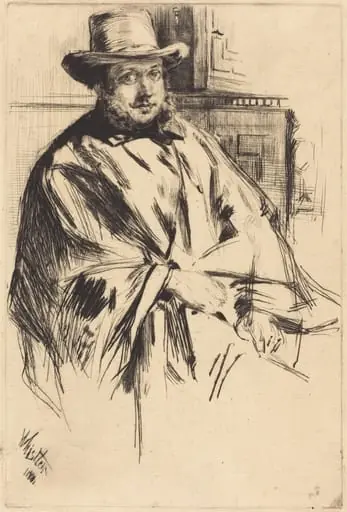
Comte Lepic is an ink print by the Impressionist artist Marcellin-Gilbert Desboutin. It dates from 1876 and is held in the collection of the National Gallery of Art.
About this work
Overview
The signature, faintly inscribed in the corner, confirms the subject’s identity but not the work’s status as a completed piece.
Created in 1876 by Marcellin-Gilbert Desboutin, this drypoint print depicts Comte Lepic seated in a long coat, hands clasped. Rendered on thin Chinese paper, the work carries the immediacy of a spontaneous study. The scratchy, irregular lines suggest rapid execution, emphasizing gesture over finish. The signature, faintly inscribed in the corner, confirms the subject’s identity but not the work’s status as a completed piece.
Subject & Meaning
The figure, Comte Lepic, is portrayed in a quiet, introspective pose, his beard and folded hands conveying stillness. Behind him, an easel with a draped canvas hints at his role as an artist or patron of the arts. A stiffly posed dog to the right adds a quiet, almost incidental presence. The composition avoids narrative, focusing instead on the quiet dignity of a moment observed.
Technique & Style
Desboutin employed drypoint, scratching directly into the plate with a sharp tool to create dense, fuzzy lines. The texture is deliberately uneven, with overlapping strokes that suggest movement and haste. The use of Chinese paper, thin and absorbent, amplifies the ink’s soft blur, reinforcing the sketchlike quality. The absence of shading or refinement points to an emphasis on immediacy over polish.
History & Provenance
The print was made during Desboutin’s active years in Paris, where he moved among artists and intellectuals. Lepic, a known figure in artistic circles, was likely a friend or acquaintance. The work remained in private hands for much of its early history, with no documented exhibition record until the 20th century. Its survival as a single impression underscores its status as a personal, not commercial, endeavor.
Context
In the 1870s, many French artists turned to printmaking as a means of informal expression, distinct from academic painting. Drypoint, with its tactile immediacy, appealed to those seeking directness. Desboutin’s approach here aligns with contemporaries like Degas and Manet, who valued the sketch as a record of perception over finished composition.
Legacy
Though never widely reproduced, this print exemplifies the quiet, introspective side of 19th-century printmaking. It reflects a broader shift toward valuing the artist’s hand and the ephemeral moment. Today, it is studied for its technical economy and its role in understanding how artists documented personal encounters outside formal commissions.
Artist & collection