Artwork
Lauffenbourgh on the Rhine
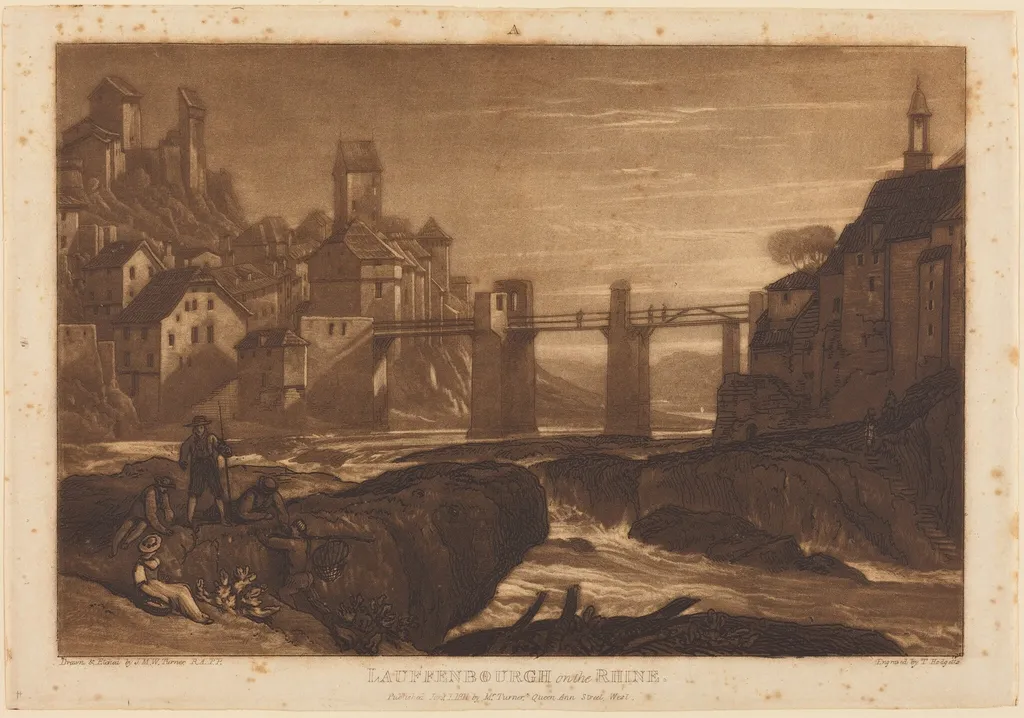
Lauffenbourgh on the Rhine is an ink print by the Romanticist artist Thomas Hodgetts. It dates from 1811 and is held in the collection of the National Gallery of Art.
About this work
Overview
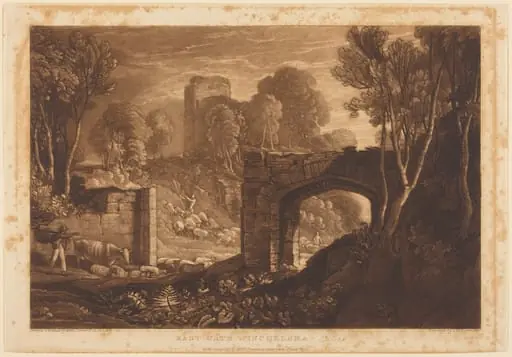
Created in 1811 by Thomas Hodgetts, this print depicts the riverside town of Lauffenbourg on the Rhine. Combining etching and mezzotint techniques, it captures the quiet atmosphere of a modest settlement nestled against a hillside. A narrow bridge spans the water, while clustered buildings rise behind it. A solitary figure walks along the shore, adding a subtle human presence to the scene.
Subject & Meaning
The dark sky and textured river suggest a moment of stillness, perhaps early morning or late evening.
The scene presents a tranquil, unidealized view of a working riverside community. The dark sky and textured river suggest a moment of stillness, perhaps early morning or late evening. The figure with a walking stick implies quiet daily life, not grandeur. The composition emphasizes the town’s integration with its natural setting, reflecting a documentary interest in regional topography rather than narrative drama.
Technique & Style
Hodgetts employed etching for fine linear details and mezzotint for rich tonal gradations. The river’s surface is rendered with rough, angular strokes, conveying movement and texture, while the buildings are defined by soft, overlapping shadows. Light is suggested through subtle contrasts rather than direct highlights, creating a muted, atmospheric effect that enhances the scene’s quiet realism.
History & Provenance
The print was produced in 1811 during a period of growing interest in topographical prints in Britain. Hodgetts, known for his landscape and architectural subjects, likely made this work as part of a series documenting European riverscapes. Its survival in institutional collections suggests it was valued for its accuracy and craftsmanship rather than commercial appeal.
Context
In the early 19th century, detailed topographical prints served both scholarly and recreational purposes, often accompanying travel accounts or serving as records of place. Lauffenbourg, a small German town, would have held little fame, making Hodgetts’s choice notable. His focus on unremarkable sites reflects a broader shift toward observing everyday landscapes with precision and restraint.
Legacy
Though not widely reproduced or celebrated in its time, the print remains a quiet example of early 19th-century British printmaking’s engagement with continental Europe. It contributes to a body of work that valued observational accuracy over dramatic effect, offering insight into how artists documented the ordinary landscapes of their era.
Artist & collection


 The Bridge and Goats
 Bonneville
 Picturesque Sketches in Spain: Remains of a Roman Bridge on the Guadalquiver, Cordova
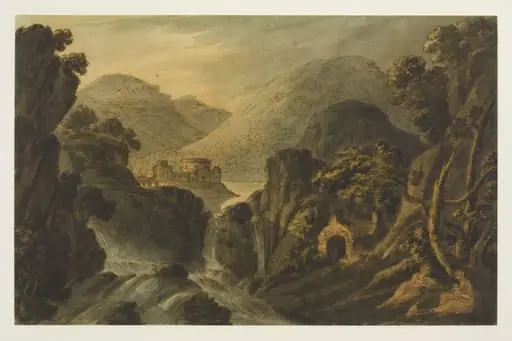 Classical landscape with cascade
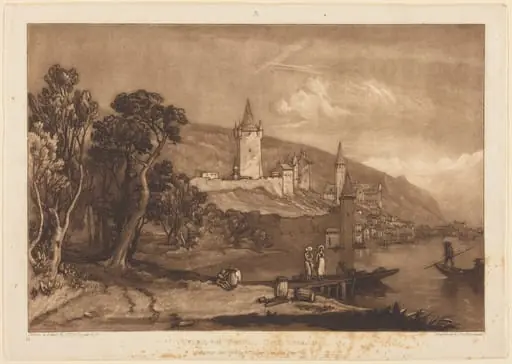 Ville de Thun
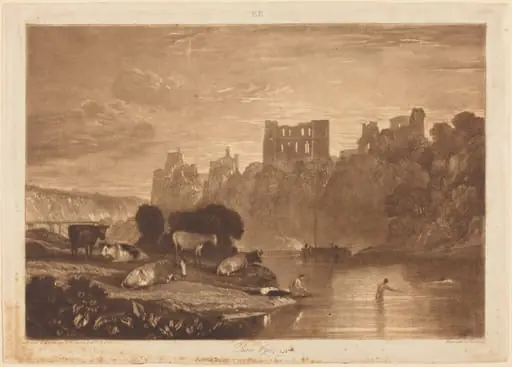 River Wye
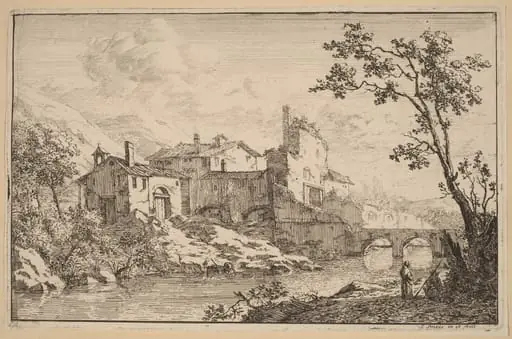 Houses at the Side of a River
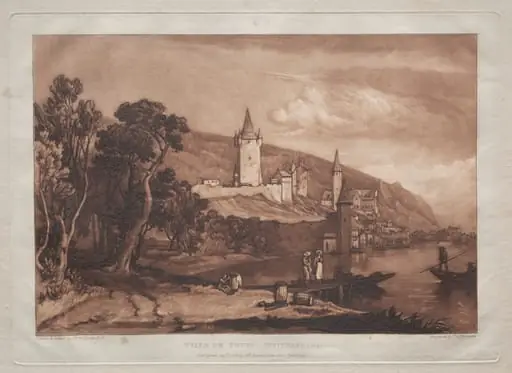 Ville de Thun
 View of the Ponte Quattro Capi and the Island of the Tiber
 Sketches at Home and Abroad: General View of Trento
 Viterbo
 East Gate, Winchelsea