Artwork
East Gate, Winchelsea
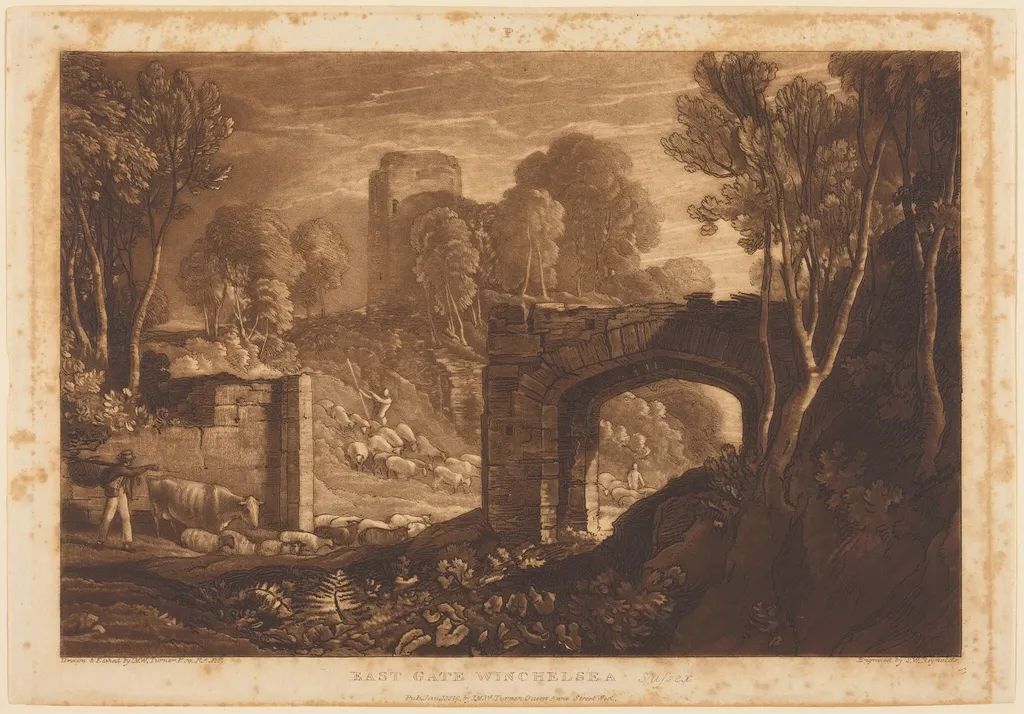
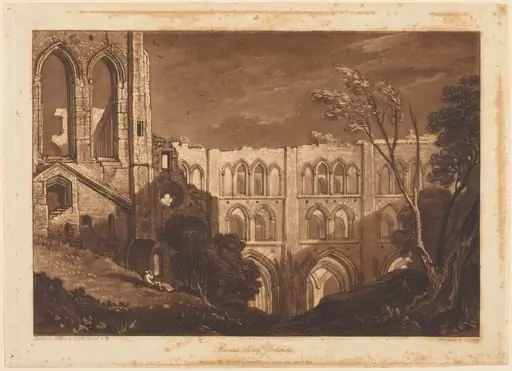
East Gate, Winchelsea is an ink print by the Romanticist artist Joseph Mallord William Turner. It dates from 1819 and is held in the collection of the National Gallery of Art.
About this work
Overview
The composition balances quiet pastoral elements with a looming atmospheric tension, achieved through nuanced tonal contrasts rather than bold lines.
Created in 1819, East Gate, Winchelsea is a print by J.M.W. Turner combining etching and mezzotint techniques. It depicts a rural landscape in Sussex, centered on the remnants of a medieval gateway. The composition balances quiet pastoral elements with a looming atmospheric tension, achieved through nuanced tonal contrasts rather than bold lines. The work belongs to Turner’s series of topographical prints documenting English sites in transition.
Subject & Meaning
The scene portrays the eastern entrance to the once-walled town of Winchelsea, now reduced to partial stone ruins. A solitary shepherd and his flock graze near crumbling masonry, suggesting abandonment and the passage of time. The stormy sky above contrasts with the calm below, evoking a sense of quiet decay and nature’s reclamation. The image reflects Turner’s interest in historical layers embedded in the English landscape.
Technique & Style
Turner employed etching for fine linear details and mezzotint for rich, velvety gradations of tone. The technique allowed him to model light and shadow with subtlety, enhancing the mood without narrative clarity. The sky is rendered in deep, smoky blacks, while the stone walls and grasses emerge through delicate halftones. This method prioritizes atmosphere over precision, aligning with Romantic sensibilities in landscape representation.
History & Provenance
The print was produced as part of Turner’s series illustrating English towns and landmarks, commissioned for publication. It was likely issued in the early 1820s alongside other views of Sussex. Early impressions were distributed to subscribers of Turner’s topographical works. The print’s survival in multiple institutional collections suggests its early reception as a significant record of regional heritage.
Context
In the early 19th century, Winchelsea had declined from a medieval port to a quiet village, its walls largely in ruin. Turner’s depiction aligns with a broader cultural interest in antiquity and the picturesque during the Romantic era. His choice to focus on modest, decaying structures rather than grand monuments reflects a shift in aesthetic values toward quiet, contemplative history.
Legacy
East Gate, Winchelsea exemplifies Turner’s ability to infuse ordinary landscapes with emotional depth through technical mastery. It influenced later printmakers who sought to convey mood through tonal variation rather than detail. The work remains a key example of how etching and mezzotint could capture the subtleties of light and decay, shaping 19th-century British print culture.
Artist & collection
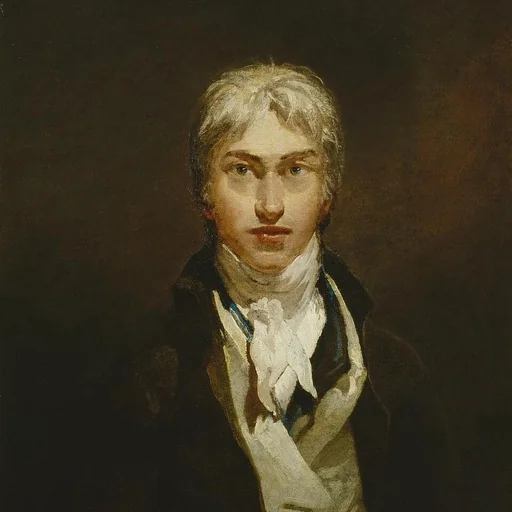
Artist
Joseph Mallord William Turner was born in 1775 at Maiden Lane, Covent Garden, where his father kept a barber and wig-making shop.