Artwork
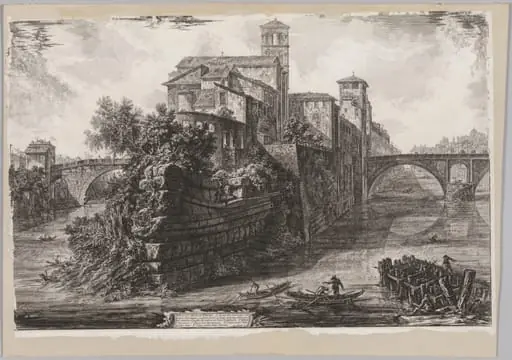
View of the Ponte Quattro Capi and the Island of the Tiber
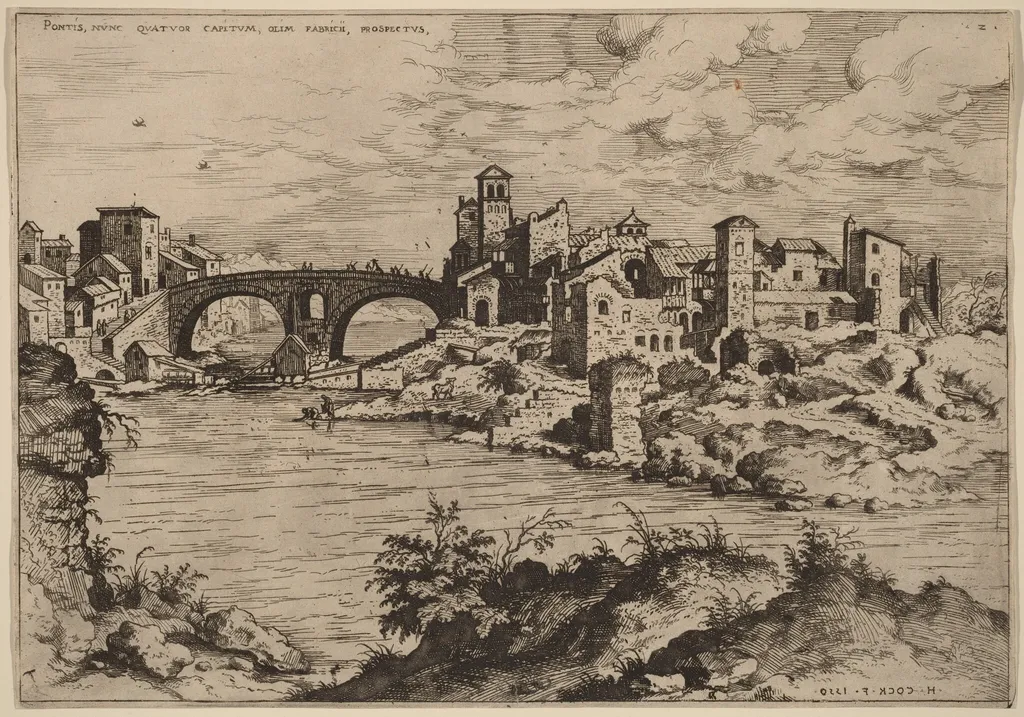
View of the Ponte Quattro Capi and the Island of the Tiber is an ink print by the Renaissance artist Hieronymus Cock. It dates from 1550 and is held in the collection of the National Gallery of Art.
About this work
Overview
Created around 1550, this etching by Hieronymus Cock captures a precise view of Rome’s Ponte Quattro Capi and the Tiber Island.
Created around 1550, this etching by Hieronymus Cock captures a precise view of Rome’s Ponte Quattro Capi and the Tiber Island. Executed on laid paper, the work belongs to a broader wave of topographical prints emerging in mid-16th-century Europe. Cock, based in Antwerp, was more renowned as a publisher than as an artist, yet this piece exemplifies the detailed urban documentation his workshop produced for an international audience interested in distant cities.
Subject & Meaning
The scene centers on a stone bridge spanning the Tiber, with the island’s clustered buildings rising along its banks. Figures move along the bridge and near small boats, suggesting daily life in the riverine landscape. The Latin inscription identifies the location, reinforcing the print’s function as a record of place rather than a romanticized view. It reflects Renaissance curiosity about accurate representation of real urban environments, particularly those of classical antiquity.
Technique & Style
Cock employed etching to render fine, controlled lines that define textures: the ripple of water, the weathered stone of the bridge, and the irregular surfaces of buildings. The composition is tightly framed, with attention to architectural detail and spatial depth. The monochrome palette enhances the clarity of form, while the delicate line work conveys both structure and atmosphere without embellishment, typical of topographical prints of the period.
History & Provenance
The print was produced through Cock’s Antwerp publishing house, which distributed thousands of prints across Europe. While the specific provenance of this impression is undocumented, it likely circulated among scholars, travelers, and collectors drawn to Roman antiquities. As part of a larger body of work—over 1,100 prints attributed to his workshop—it served as both artistic output and commercial product in an emerging print market.
Context
In the mid-1500s, interest in Roman ruins and topography surged among northern Europeans, fueled by humanist scholarship and travel. Cock’s prints responded to this demand by translating architectural sites into accessible, reproducible images. Unlike idealized landscapes, this etching prioritizes accuracy, aligning with a growing trend toward empirical observation in visual culture, bridging art and cartography.
Legacy
Though Cock’s individual prints are rarely celebrated today, his role in systematizing print production helped standardize the dissemination of visual knowledge. This etching, like others from his workshop, contributed to the development of the cityscape as a distinct genre. It preserved a moment in Rome’s urban fabric, influencing later topographical artists and serving as a reference for historical geography.
Own this work as a print
Artist & collection
Artist
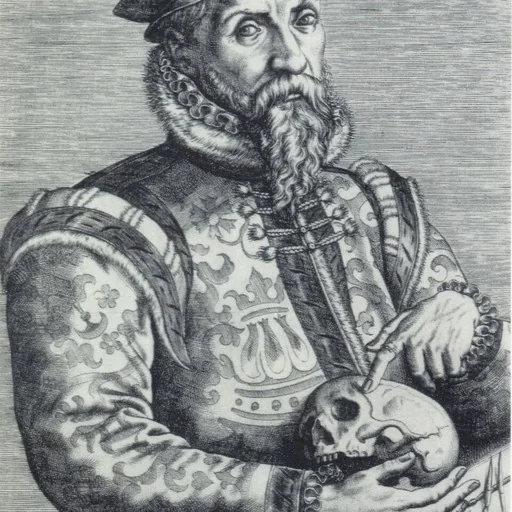
Hieronymus Cock, or Hieronymus Wellens de Cock, (1518 – 3 October 1570) was a Flemish painter and etcher as well as a publisher and distributor of prints.

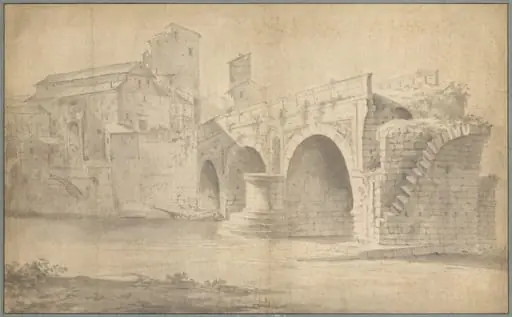 View of the Ponte Rotto, Rome
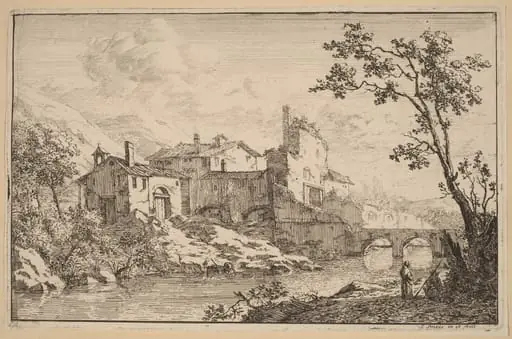 Houses at the Side of a River
 Views of Rome: The The Isola Tiberina
 The Ponte Molle
 The Ponte Molle
 The Ponte Molle
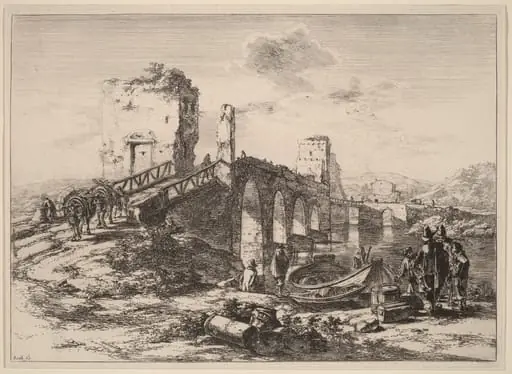 The Ponte Molle
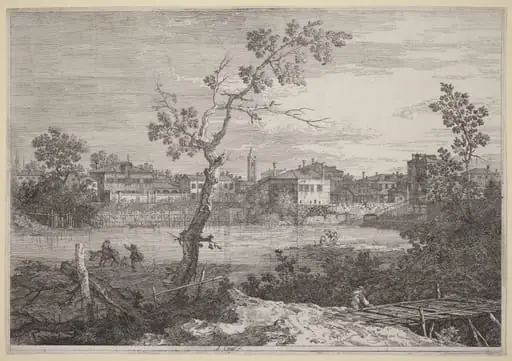 View of a Town on a River Bank
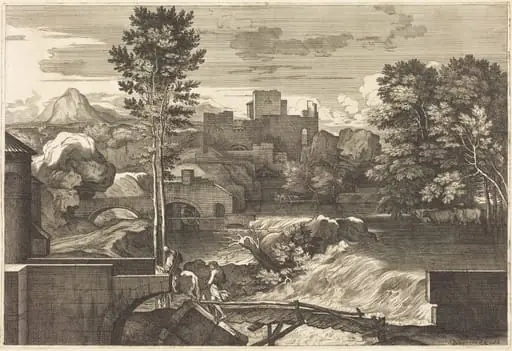 Landscape with Two Figures on a Bridge
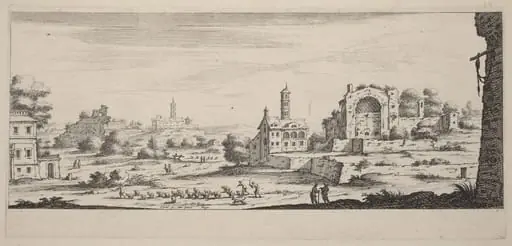 Veuë de temple de Soleil à Rome (View of the Sun Temple in Rome)
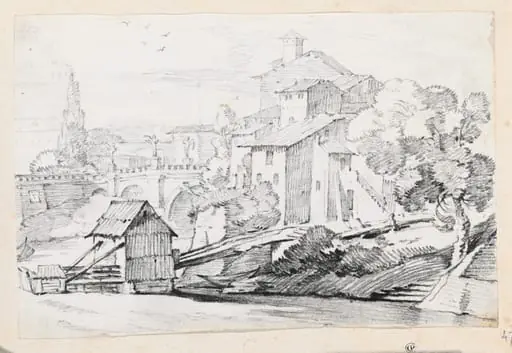 The Ponte Sant'Angelo and Houses on the East Bank of the Tiber
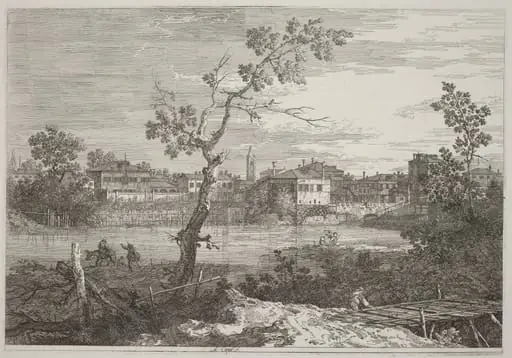 View of a Town on a River Bank