Artwork
Plate 29: Pink Rose and Rosebud
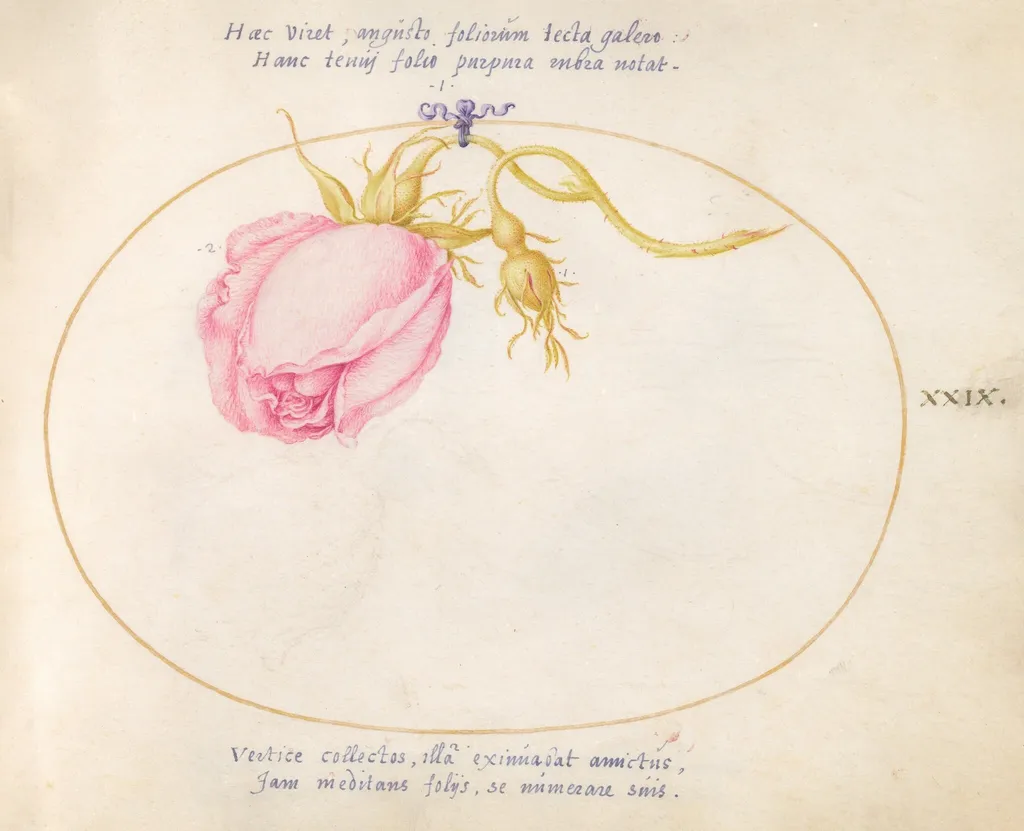
Plate 29: Pink Rose and Rosebud is a gouache drawing by the Renaissance artist Joris Hoefnagel. It dates from 1594 and is held in the collection of the National Gallery of Art. Created circa 1594, this miniature combines watercolor and gold pigment on a parchment support.
About this work
Overview
Created circa 1594, this miniature combines watercolor and gold pigment on a parchment support. It portrays a single pink rose accompanied by a tightly coiled bud, the stem looping with small leaves, all enclosed within a circular frame edged in gold on a light‑brown background.
Subject & Meaning
The image focuses on a cultivated rose, emphasizing its delicate petals and the nascent bud, a study that highlights the transient beauty of flowering plants. The surrounding Latin inscription serves a decorative function rather than conveying narrative content.
Technique & Style
Hoefnagel applied successive translucent washes, building the rose’s form through glazing that renders soft, luminous petals. Gold paint outlines the circular border and adds a subtle sheen, while fine brushwork defines the stem’s curls and leaf venation, reflecting a meticulous, almost scientific observation.
History & Provenance
Joris Hoefnagel, a Flemish artist noted for natural‑history illustration, produced this work toward the end of the manuscript illumination tradition. It exemplifies his contribution to the emergence of floral still‑life motifs in northern Europe during the late sixteenth century.
Context
The piece belongs to a broader corpus of botanical drawings that served both aesthetic and documentary purposes, aligning with contemporary interests in cataloguing plant species and the decorative arts of illuminated books.
Artist & collection

Artist
Joris Hoefnagel or Georg Hoefnagel (1542 – 24 July 1601) was a Flemish painter, printmaker, miniaturist, draftsman and merchant.

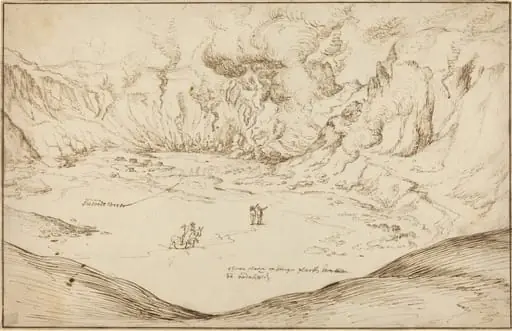 Forum Vulcani: The Hot Springs at Pozzuoli
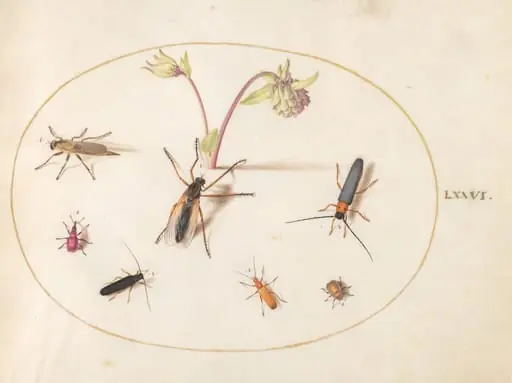 Plate 76: Insects with a Pink and Cream Columbine
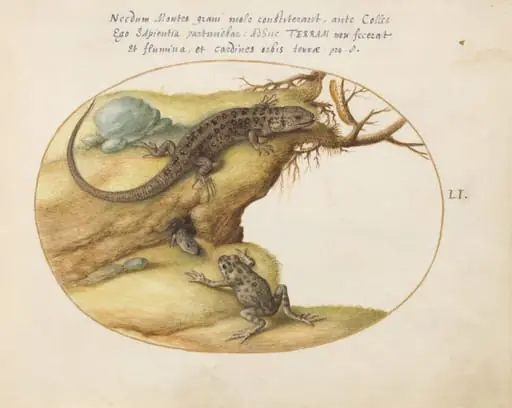 Plate 51: Two Sand Lizards, a Common Parsley Frog(?), and a Caterpillar
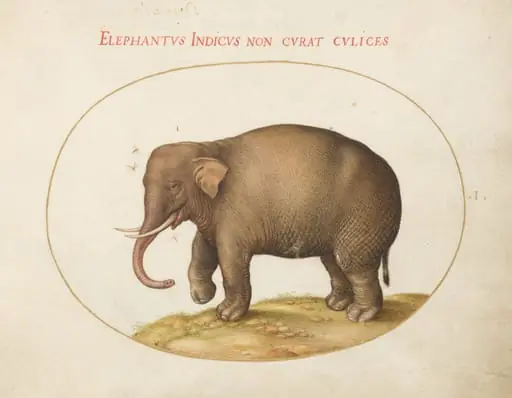 Plate 1: Elephant with Insects
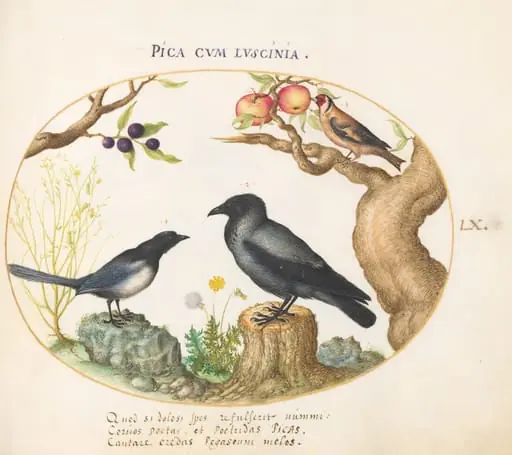 Plate 60: Magpie, Crow, and Goldfinch
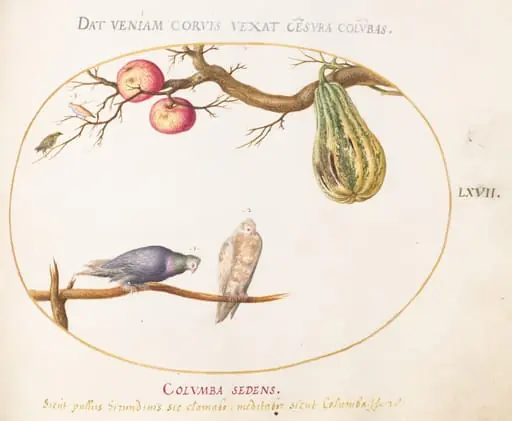 Plate 67: Two Doves beneath a Gourd and Apples
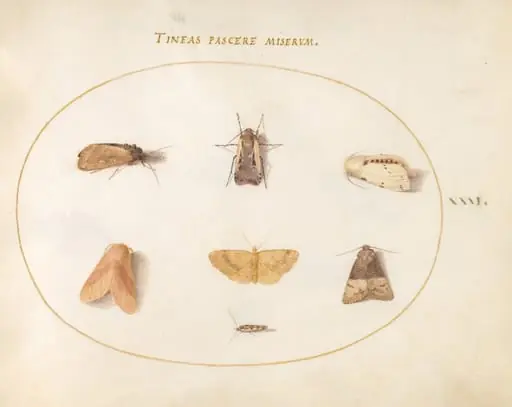 Plate 31: Seven Moths
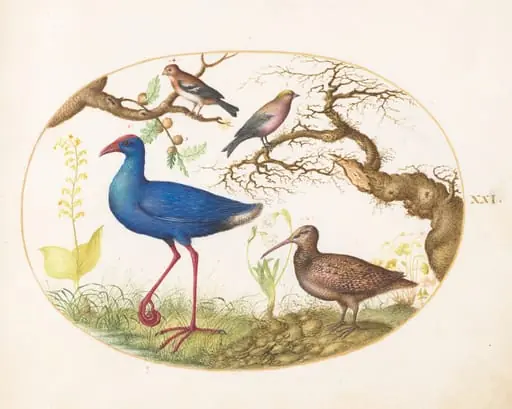 Plate 21: Swamp Hen and Woodcock with a Streaked Rosefinch, a Finch, and Oak Galls
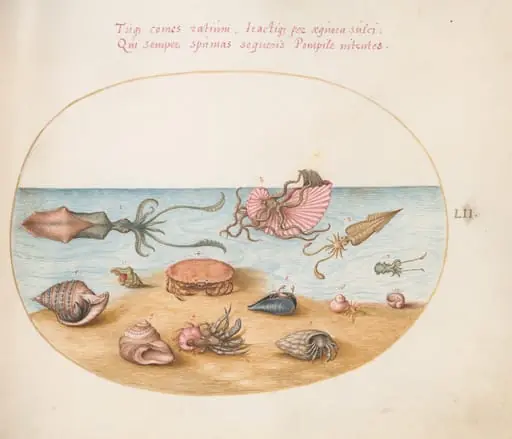 Plate 52: An Argonaut, Squid, Hermit Crabs, Shells, and a Crab
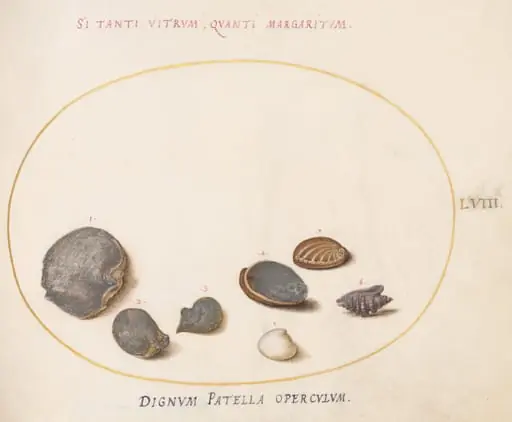 Plate 58: Shells, including Abalone(?)
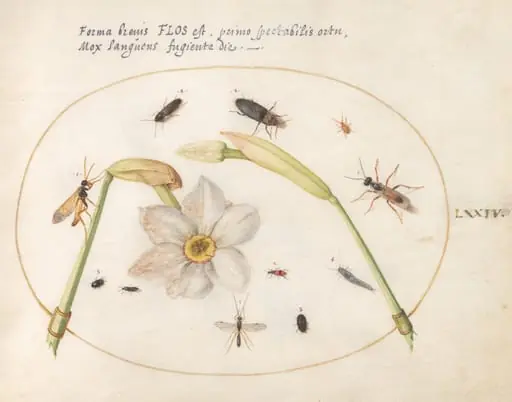 Plate 74: Insects with White Daffodils
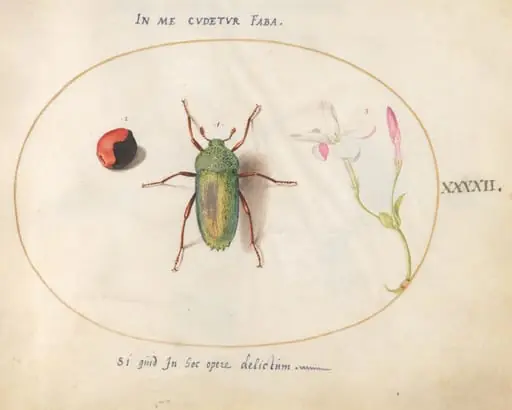 Plate 42: Jewel Beetle with a Rosary Pea and a Flower (Oleander?)
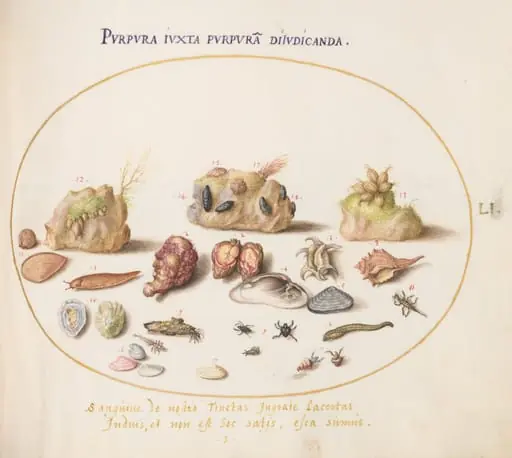 Plate 51: Murex Mollusks, Shells, Hermit Crabs, a Slug, Insects, and Other Sea Life
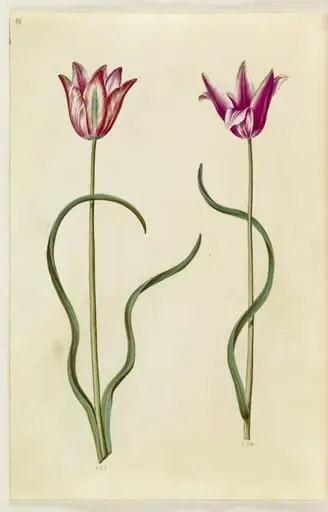 Tulipa clusiana (clusius-tulipan)
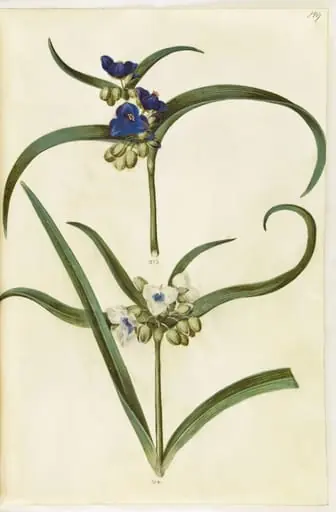 Tradescantia virginiana eller Tradescantia ohiensis (?) (blomsterjøde)
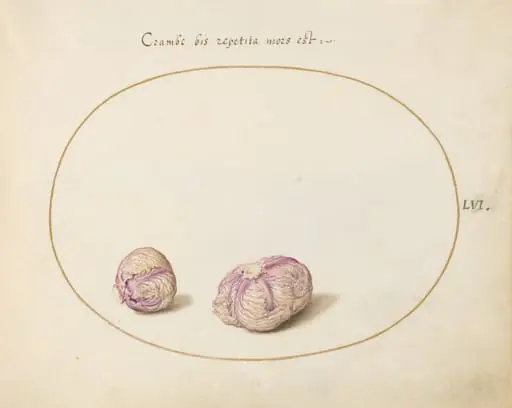 Plate 56: Two Heads of Cabbage
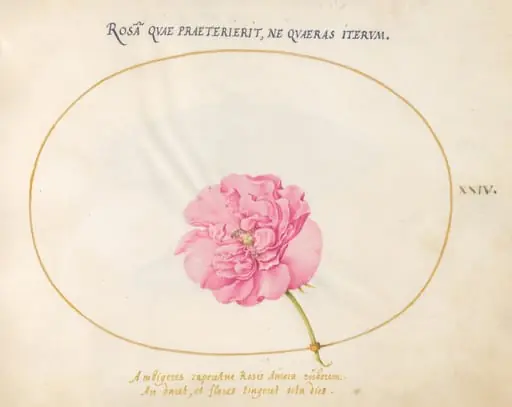 Plate 24: Pink Rose