Artwork
Plate 29: Two Monkeys, an "Arctopithecus"(Sloth?) and Fruit
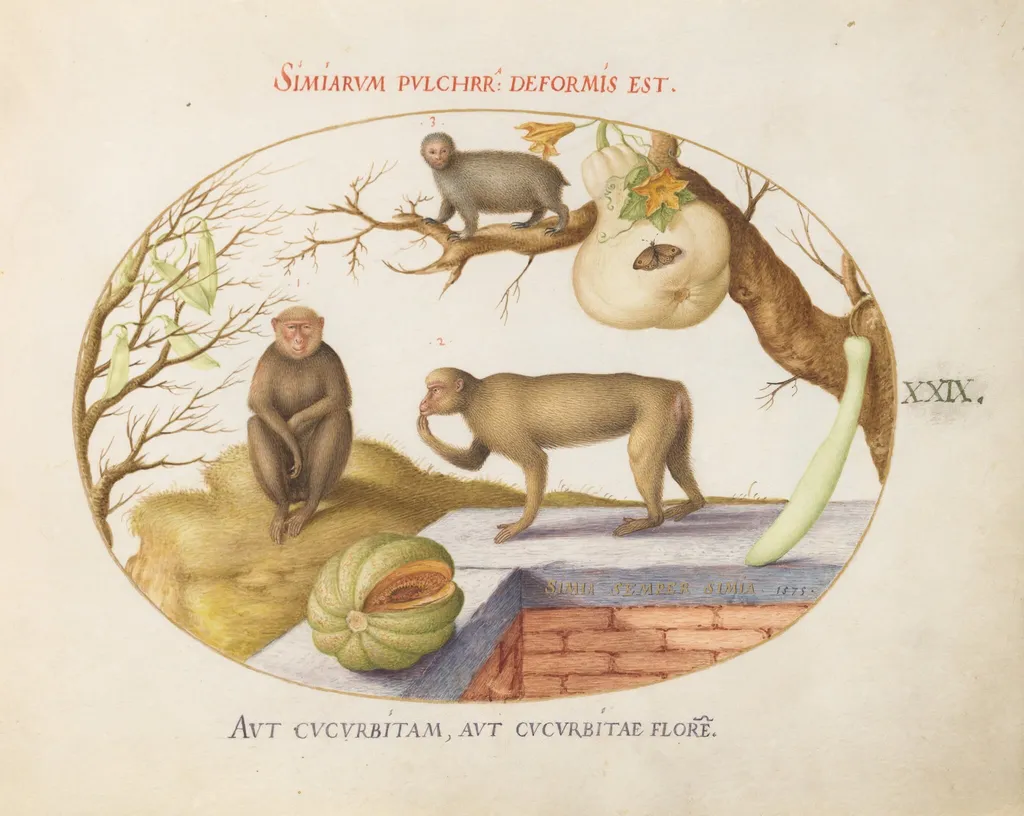
Plate 29: Two Monkeys, an "Arctopithecus"(Sloth?) and Fruit is a gouache drawing by the Renaissance artist Joris Hoefnagel. It dates from 1575 and is held in the collection of the National Gallery of Art. Created in 1575, this miniature watercolor on parchment combines pigment and gold to depict a lively grouping of primates and fruit.
About this work
Overview
Created in 1575, this miniature watercolor on parchment combines pigment and gold to depict a lively grouping of primates and fruit. The composition is circular, presenting four monkeys amid foliage, a large gourd containing a butterfly, and a split gourd on the ground, all set against a stylized watery landscape with rocks and plants.
Subject & Meaning
The scene juxtaposes the naturalistic rendering of the monkeys with whimsical elements, such as the butterfly trapped inside the gourd. A Latin inscription crowns the image, translating to “Monkeys are beautiful and ugly,” suggesting a reflective or moralizing commentary on the dual nature of the animals.
Technique & Style
Hoefnagel employed fine watercolor washes layered with delicate gold highlights to accentuate fur texture and the glossy surface of the gourds. The use of glazing builds depth, while the precise line work reflects the artist’s background in manuscript illumination and natural history illustration.
History & Provenance
The work is part of a larger illustrated manuscript by Joris Hoefnagel, a Flemish painter and draftsman noted for his contributions to early naturalistic drawing and the development of floral still‑life in northern Europe. The plate was produced during his active period as a court artist and collector of exotic specimens.
Context
In the late sixteenth century, European interest in exotic fauna grew alongside expanding trade routes. Hoefnagel’s detailed observation of animals, combined with decorative gold, mirrors contemporary scientific curiosity and the decorative traditions of illuminated books.
Legacy
The plate exemplifies an early synthesis of scientific illustration and artistic embellishment, influencing later natural history artists who sought to balance accuracy with aesthetic appeal. Its blend of observation, humor, and ornamentation marks a notable point in the evolution of European wildlife depiction.
Artist & collection

Artist
Joris Hoefnagel or Georg Hoefnagel (1542 – 24 July 1601) was a Flemish painter, printmaker, miniaturist, draftsman and merchant.

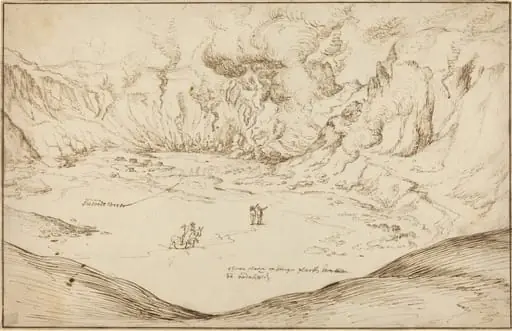 Forum Vulcani: The Hot Springs at Pozzuoli
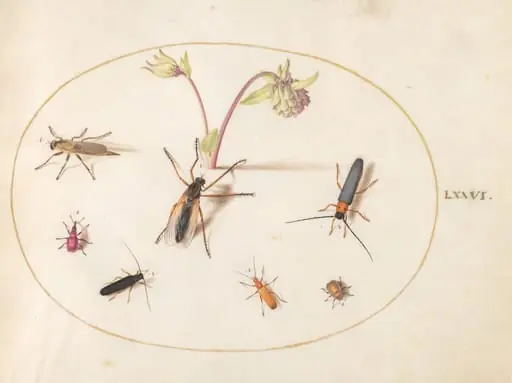 Plate 76: Insects with a Pink and Cream Columbine
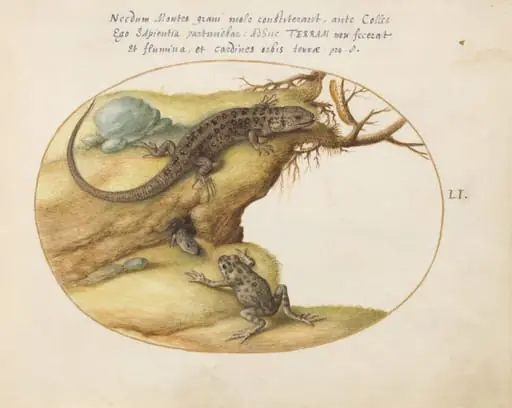 Plate 51: Two Sand Lizards, a Common Parsley Frog(?), and a Caterpillar
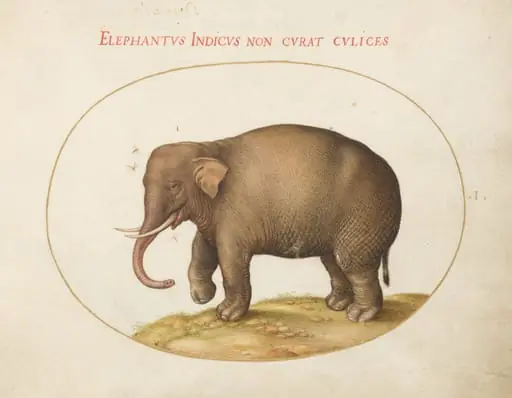 Plate 1: Elephant with Insects
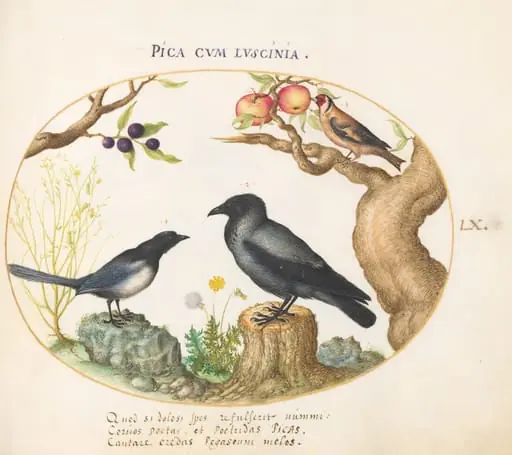 Plate 60: Magpie, Crow, and Goldfinch
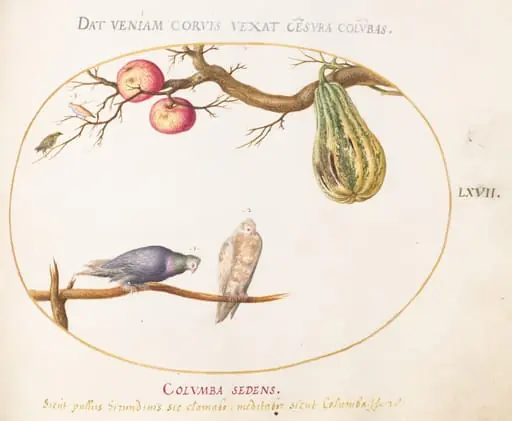 Plate 67: Two Doves beneath a Gourd and Apples
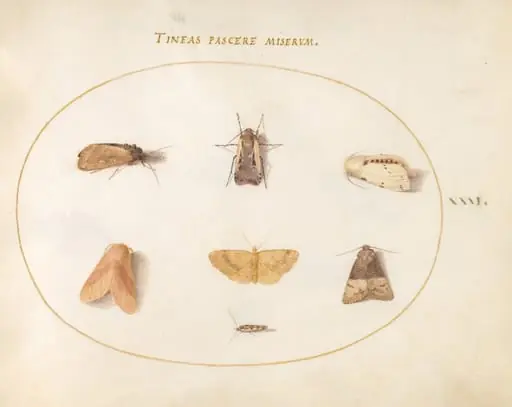 Plate 31: Seven Moths
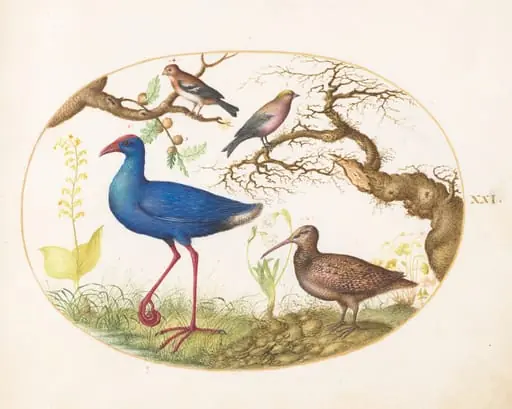 Plate 21: Swamp Hen and Woodcock with a Streaked Rosefinch, a Finch, and Oak Galls
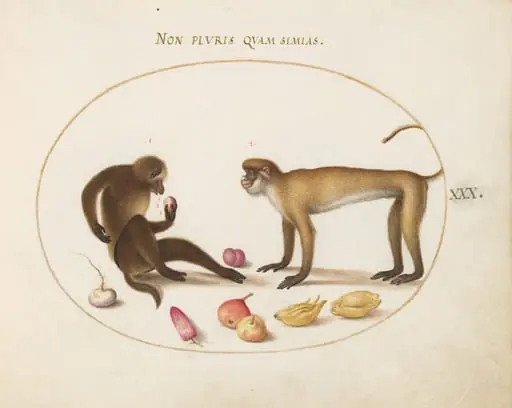 Plate 30: Two Monkeys
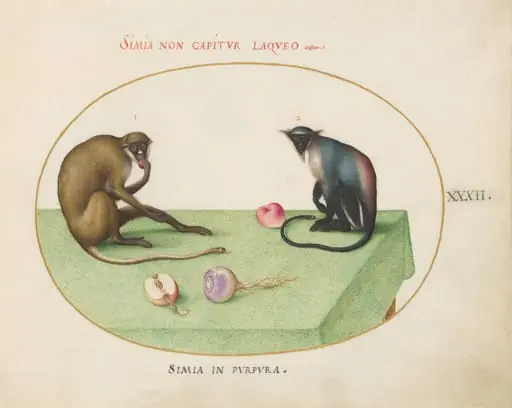 Plate 32: Two Monkeys on a Table
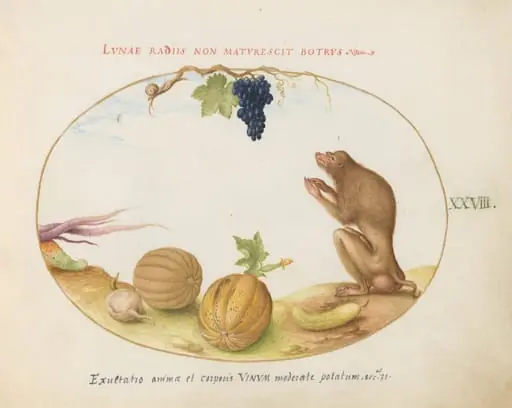 Plate 28: A "Tartarine" (Barbary Macaque?) with Fruit and a Snail
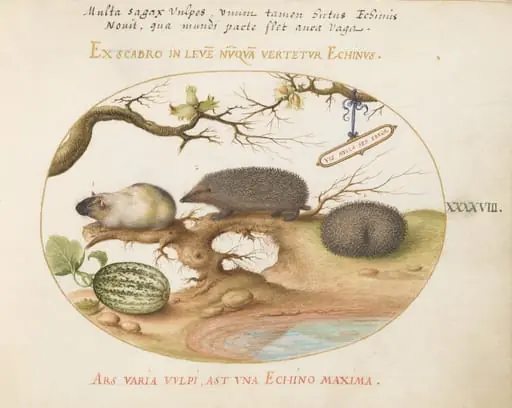 Plate 48: Guinea Pig and Hedgehogs with Melon and Cobnuts
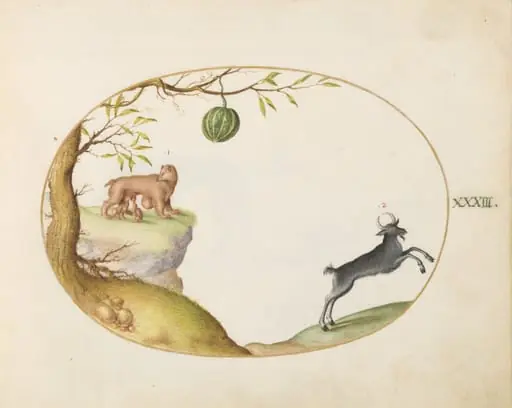 Plate 33: A "Simivulpa" (Opossum?) and an Ibex
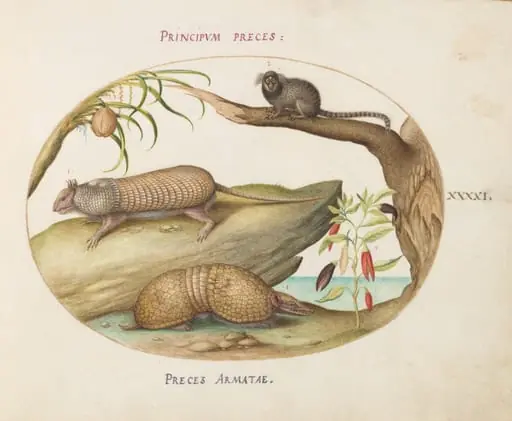 Plate 41: Two Types of Armadillos with a Marmoset, a Coconut Palm, and a Pepper Plant
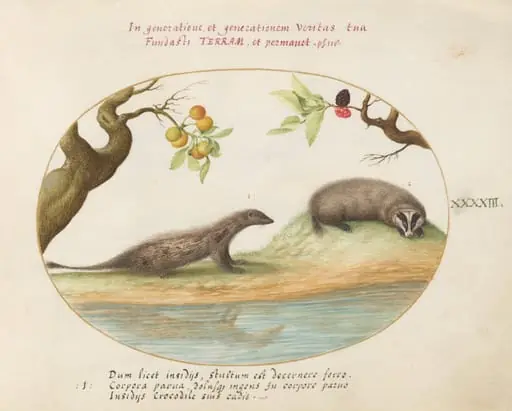 Plate 43: Mongoose and Badger with Fruit Trees
 Study of Birds and Monkeys
 Plate 50: An Avocet with Two Other Birds