Artwork
Plate 40: Salmon, Trout, and Freshwater(?) Fish
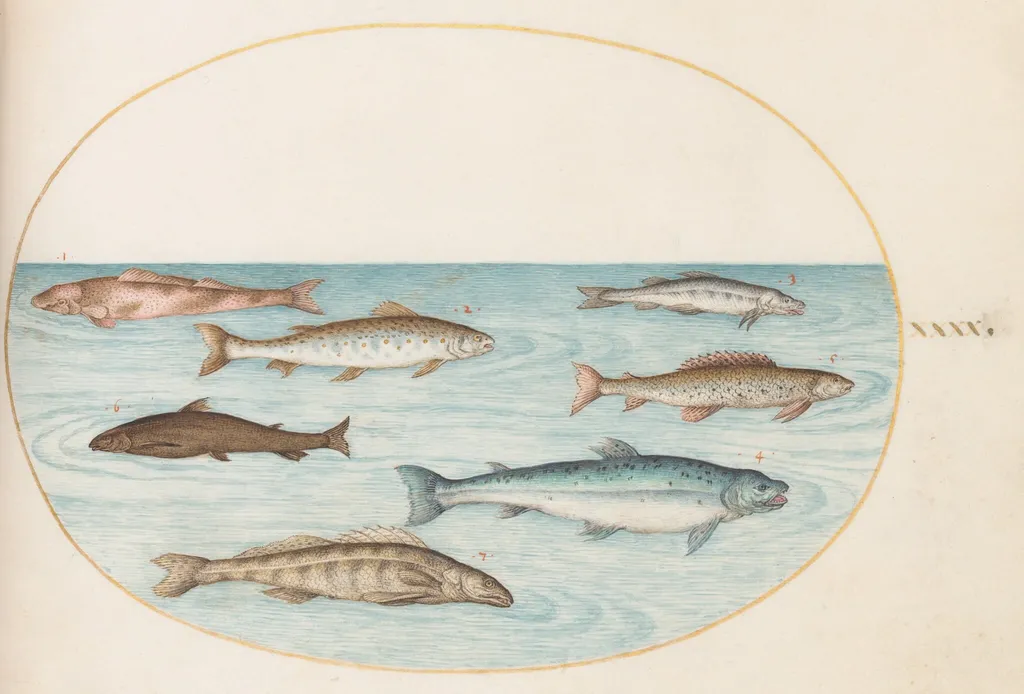
Plate 40: Salmon, Trout, and Freshwater(?) Fish is a gouache drawing by the Renaissance artist Joris Hoefnagel. It dates from 1594 and is held in the collection of the National Gallery of Art.
About this work
Overview
Created around 1594 by Joris Hoefnagel, this drawing depicts seven freshwater fish rendered in watercolor and gold paint on parchment.
Created around 1594 by Joris Hoefnagel, this drawing depicts seven freshwater fish rendered in watercolor and gold paint on parchment. Part of a larger series, it exemplifies the transition from medieval manuscript illumination to naturalistic observation. The work’s delicate execution and use of gold highlight its dual role as both scientific record and decorative object, bridging artistic tradition with emerging empirical study.
Subject & Meaning
The plate presents seven distinct fish species, including salmon and trout, rendered with careful attention to anatomical detail. Their placement in a shallow, rippling blue field suggests an aquatic environment without landscape context, focusing attention on form and variation. The inclusion of gold accents may reference both luxury and the luminous quality of water, reinforcing the fish as objects of both scientific interest and aesthetic contemplation.
Technique & Style
Hoefnagel employed thin layers of watercolor to build subtle tonal gradations, enhancing the translucency of scales and fins. Gold paint was applied sparingly to outline contours and highlight reflective surfaces, creating a soft glow against the pale parchment. The use of fine brushwork and glazing techniques allowed for precision without heaviness, reflecting a method rooted in manuscript illumination yet adapted for naturalistic study.
History & Provenance
This plate was produced during Hoefnagel’s later years, as he worked on natural history commissions for European patrons. It likely formed part of a codex intended for scholarly or aristocratic collections, where botanical and zoological illustrations were valued for their accuracy and beauty. Its survival in near-original condition underscores its preservation within elite private archives before entering institutional hands.
Context
In late 16th-century Europe, natural observation was gaining traction alongside artistic tradition. Hoefnagel’s work emerged at the intersection of these currents, contributing to the rise of still-life and biological illustration in the North. His images were neither purely scientific nor purely decorative but served as intermediaries, informing both collectors and emerging naturalists seeking visual references for the natural world.
Legacy
Hoefnagel’s detailed aquatic studies influenced later naturalists and illustrators who sought to document species with fidelity. His integration of gold and watercolor on parchment helped sustain the manuscript tradition even as print culture expanded. Though overshadowed by later scientific texts, his plates remain significant for their synthesis of artistry and observation, marking a pivotal moment in the visual recording of nature.
Artist & collection

Artist
Joris Hoefnagel or Georg Hoefnagel (1542 – 24 July 1601) was a Flemish painter, printmaker, miniaturist, draftsman and merchant.

 Forum Vulcani: The Hot Springs at Pozzuoli
 Plate 76: Insects with a Pink and Cream Columbine
 Plate 51: Two Sand Lizards, a Common Parsley Frog(?), and a Caterpillar
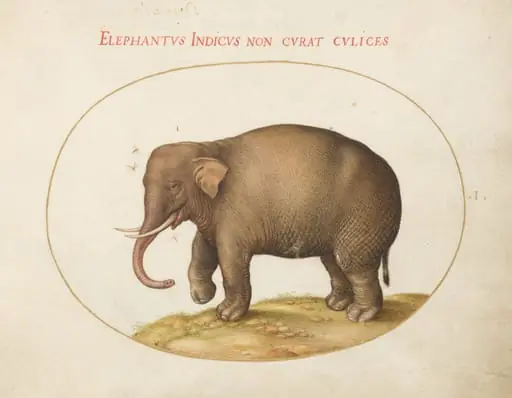 Plate 1: Elephant with Insects
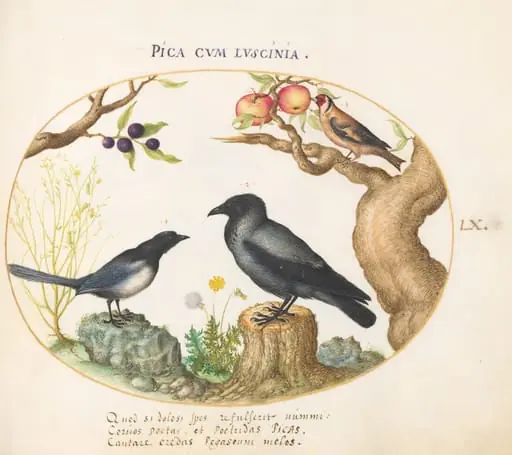 Plate 60: Magpie, Crow, and Goldfinch
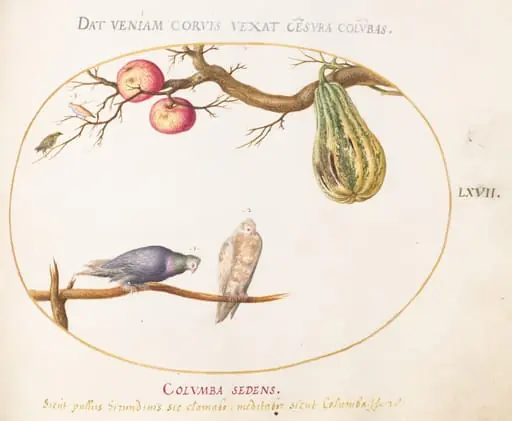 Plate 67: Two Doves beneath a Gourd and Apples
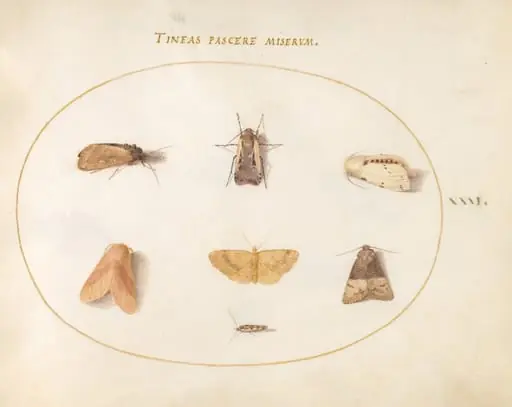 Plate 31: Seven Moths
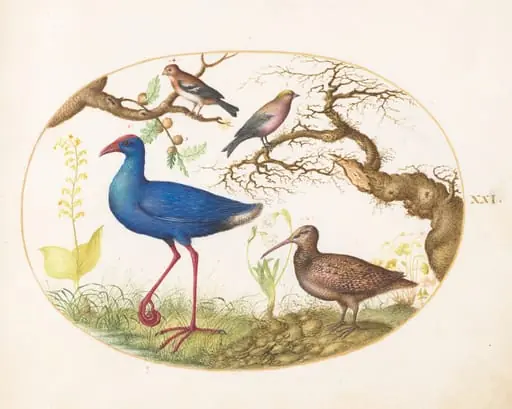 Plate 21: Swamp Hen and Woodcock with a Streaked Rosefinch, a Finch, and Oak Galls
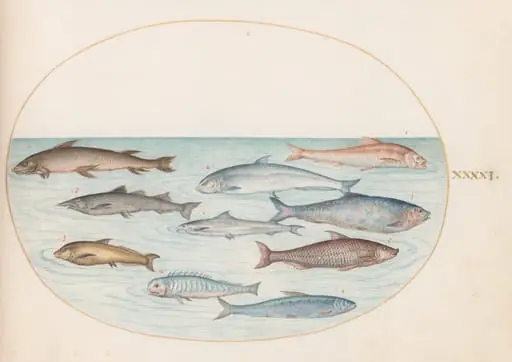 Plate 41: Whitefish(?) and Other Fish
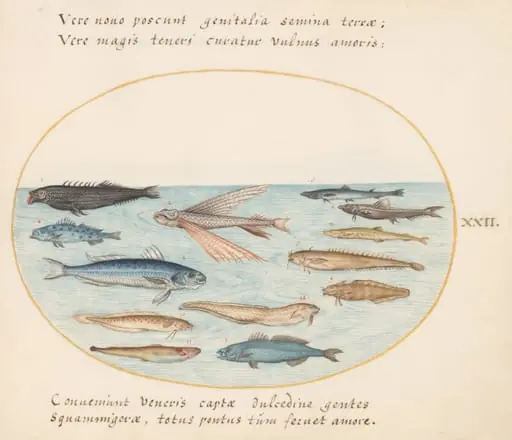 Plate 22: Mullet, Flying Fish, Eels, and Other Fish
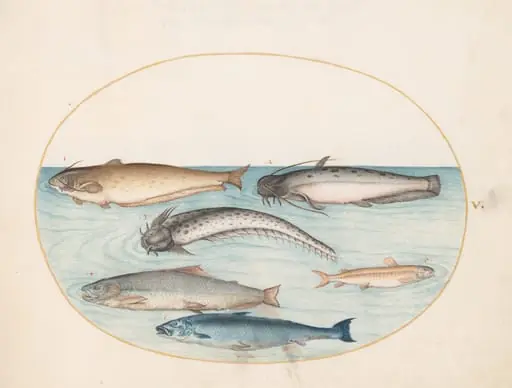 Plate 5: Three Catfish, a Salmon, and Two Other Fish
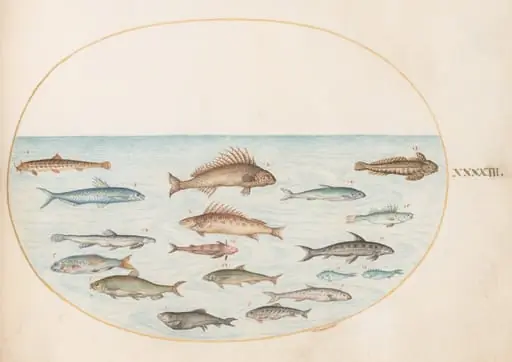 Plate 43: Fifteen Fish
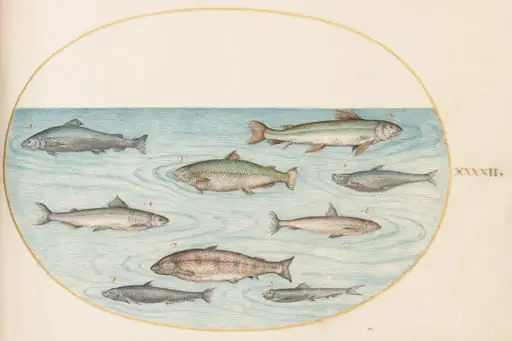 Plate 42: Nine Fish
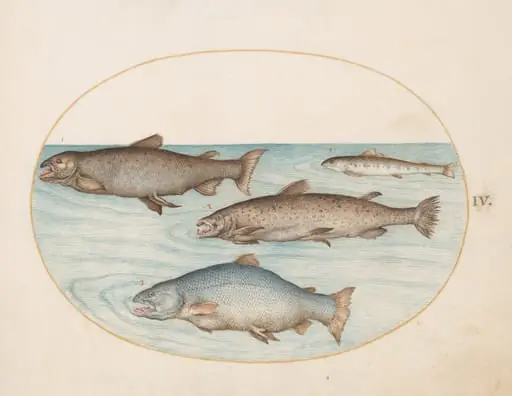 Plate 4: Four Salmon
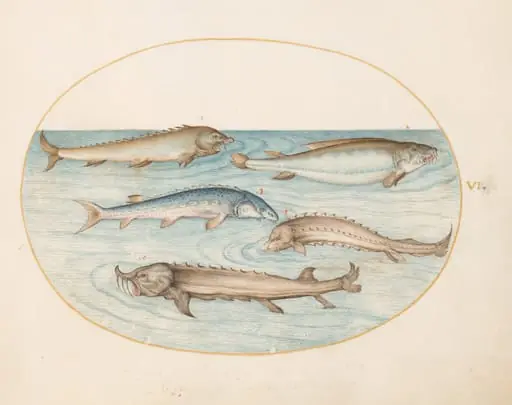 Plate 6: Five Catfish and Sturgeon(?)
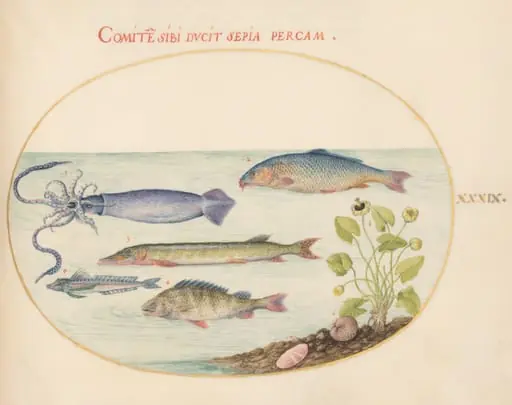 Plate 39: Squid, Gurnard, Pike, and Other Fish
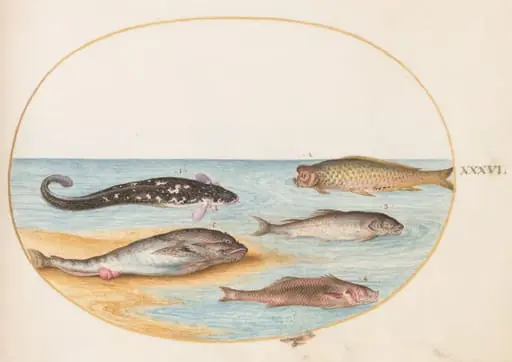 Plate 36: Five Fish, Including Carp(?)
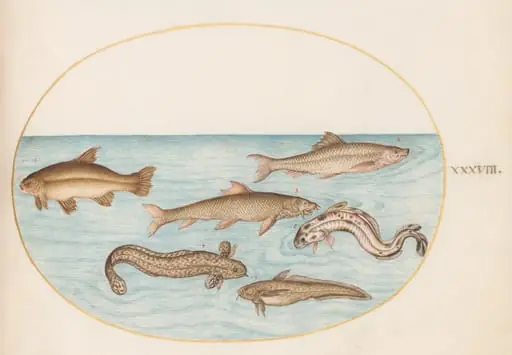 Plate 38: Burbot, Rockling, and Other Fish
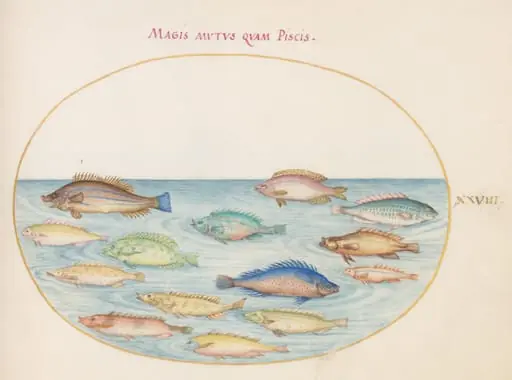 Plate 28: Sea Bream(?) and Other Fish
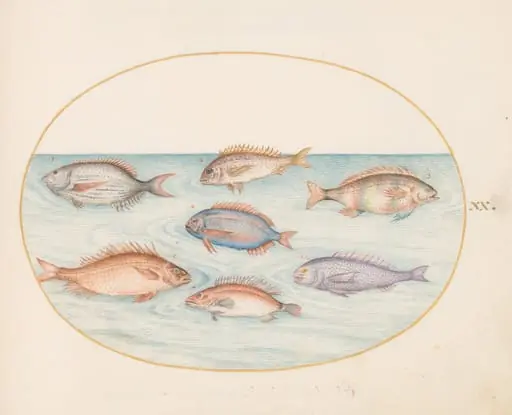 Plate 20: Sea Bream, Dentex, Sargo, and Other Fish