Artwork
Plate 49: Marmot, Hamsters, Rat, Field Mouse, Shrew, and a Coatimundi
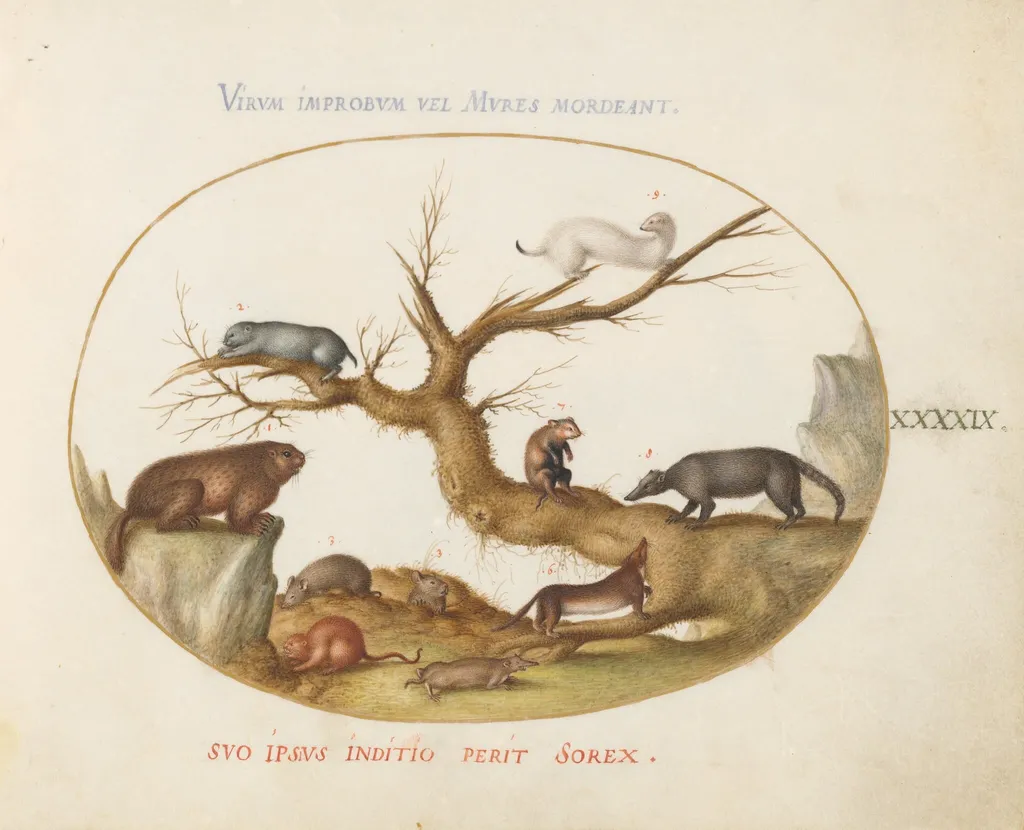
Plate 49: Marmot, Hamsters, Rat, Field Mouse, Shrew, and a Coatimundi is a gouache drawing by the Renaissance artist Joris Hoefnagel. It dates from 1594 and is held in the collection of the National Gallery of Art.
About this work
Overview
This 1594 watercolor and gold paint drawing on parchment, titled *Plate 49: Marmot, Hamsters, Rat, Field Mouse, Shrew, and a Coatimundi*, features six meticulously depicted small animals within a gilded frame, showcasing both artistic skill and scientific observation.
Subject & Meaning
Beyond a mere animal study, this piece is part of a larger, lavishly illustrated book commissioned for a wealthy collector, reflecting the intersection of scientific curiosity and luxury patronage in late 16th-century Europe.
Technique & Style
Hoefnagel employed watercolor with careful glazing techniques to achieve realistic color layering, complemented by the use of gold paint to frame the scene, bridging the traditions of manuscript illumination with emerging still-life practices.
History & Provenance
Created by Flemish artist Joris Hoefnagel around 1594, this work represents his contribution to the transitional period in northern European art from illuminated manuscripts to independent still-life paintings.
Context
Part of a broader trend in late 16th-century northern Europe, this work reflects the growing interest in natural history documentation, catered to the tastes of affluent collectors who valued both knowledge and aesthetic luxury.
Artist & collection

Artist
Joris Hoefnagel or Georg Hoefnagel (1542 – 24 July 1601) was a Flemish painter, printmaker, miniaturist, draftsman and merchant.

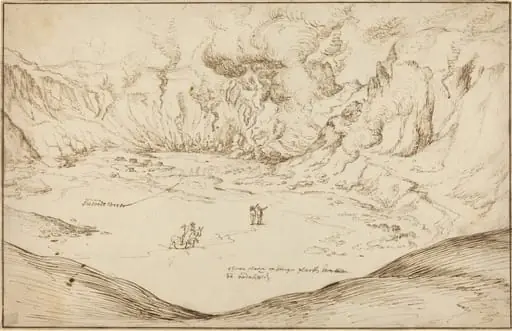 Forum Vulcani: The Hot Springs at Pozzuoli
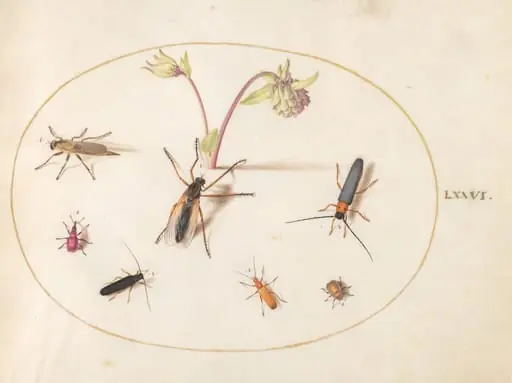 Plate 76: Insects with a Pink and Cream Columbine
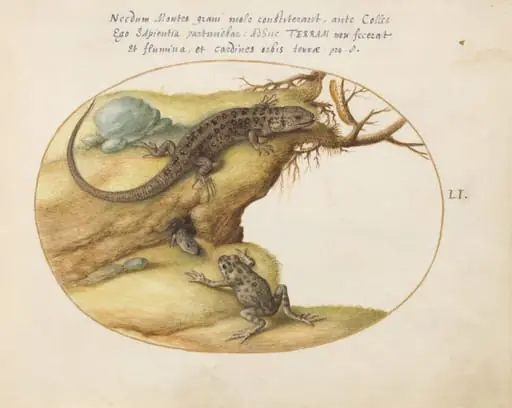 Plate 51: Two Sand Lizards, a Common Parsley Frog(?), and a Caterpillar
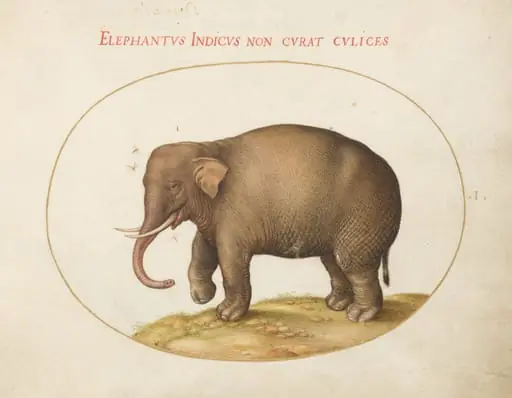 Plate 1: Elephant with Insects
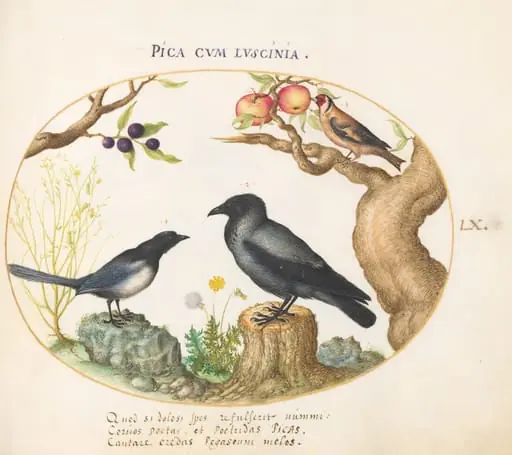 Plate 60: Magpie, Crow, and Goldfinch
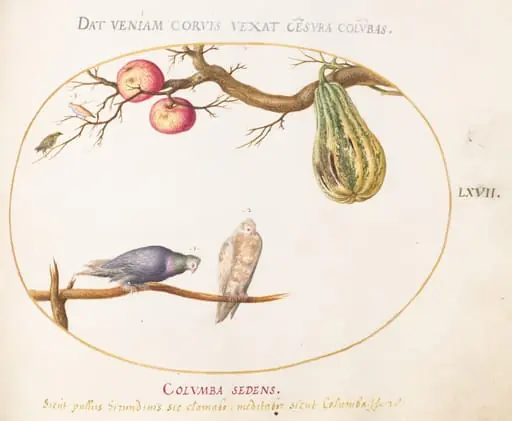 Plate 67: Two Doves beneath a Gourd and Apples
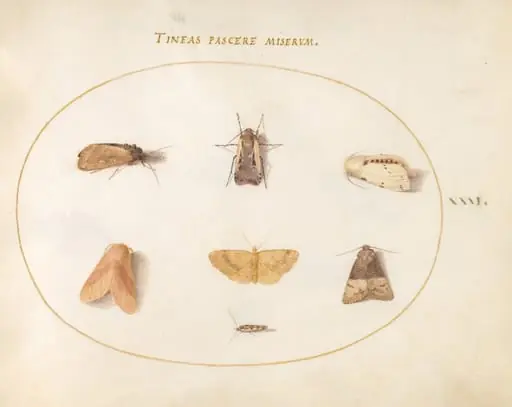 Plate 31: Seven Moths
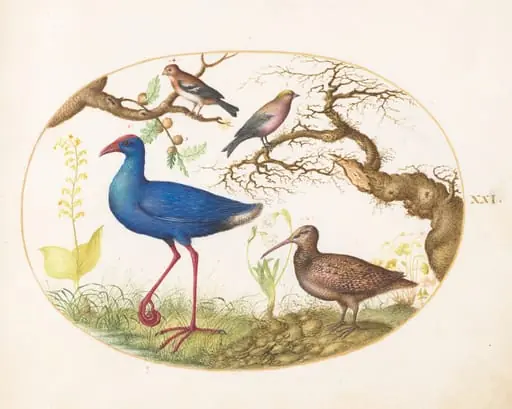 Plate 21: Swamp Hen and Woodcock with a Streaked Rosefinch, a Finch, and Oak Galls
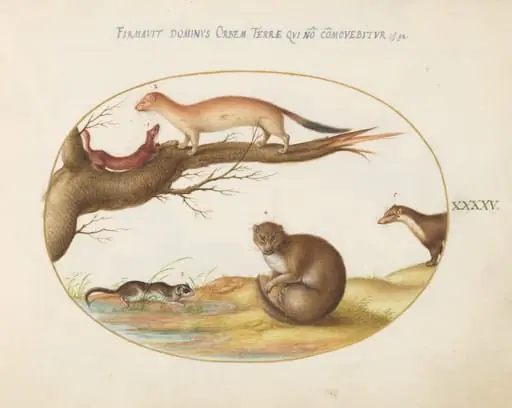 Plate 45: Weasels, a Ferret, and a "Nut Mouse"
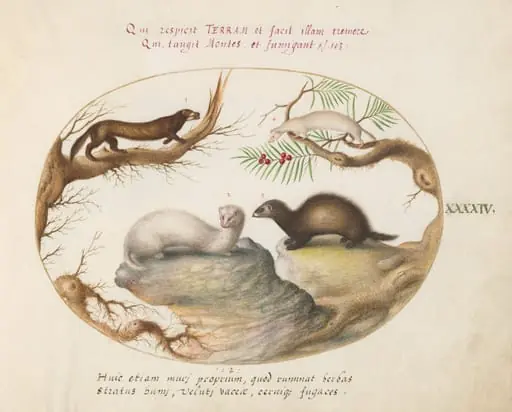 Plate 44: Polecat, Mink, and Ermine
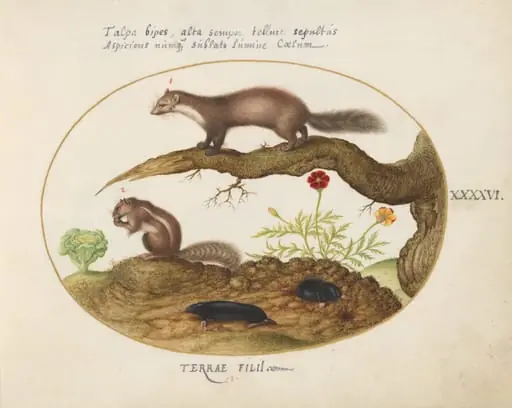 Plate 46: Stone Marten, Chipmunk, and Moles with a Marigold and Lettuce
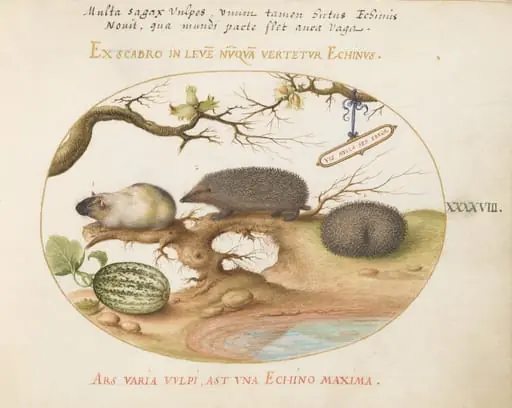 Plate 48: Guinea Pig and Hedgehogs with Melon and Cobnuts
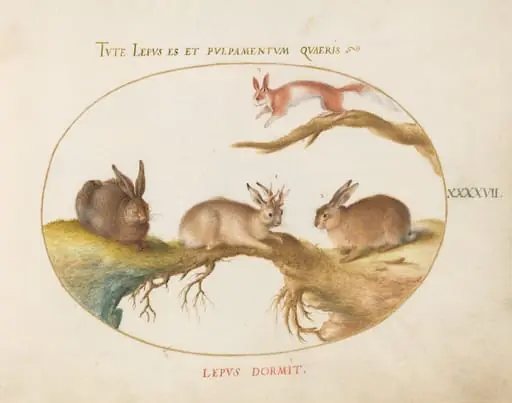 Plate 47: A Hare, "Jackalope," a Rabbit, and a Spotted Squirrel
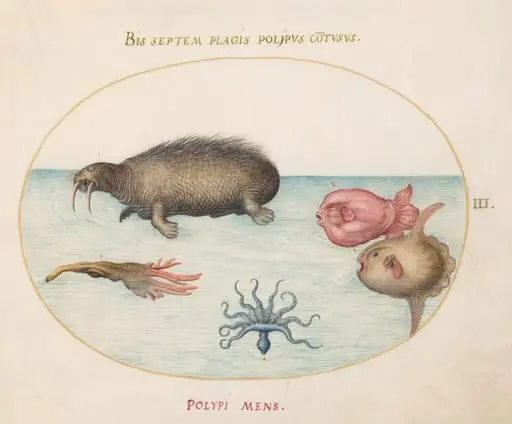 Plate 3: A Walrus, a Nine-Legged Octopus, and Ocean Sunfish
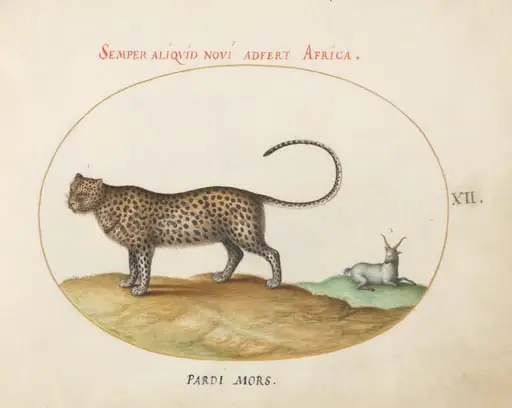 Plate 12: A Cheetah(?) and a Wild Sheep