Artwork
Plate 45: Weasels, a Ferret, and a "Nut Mouse"
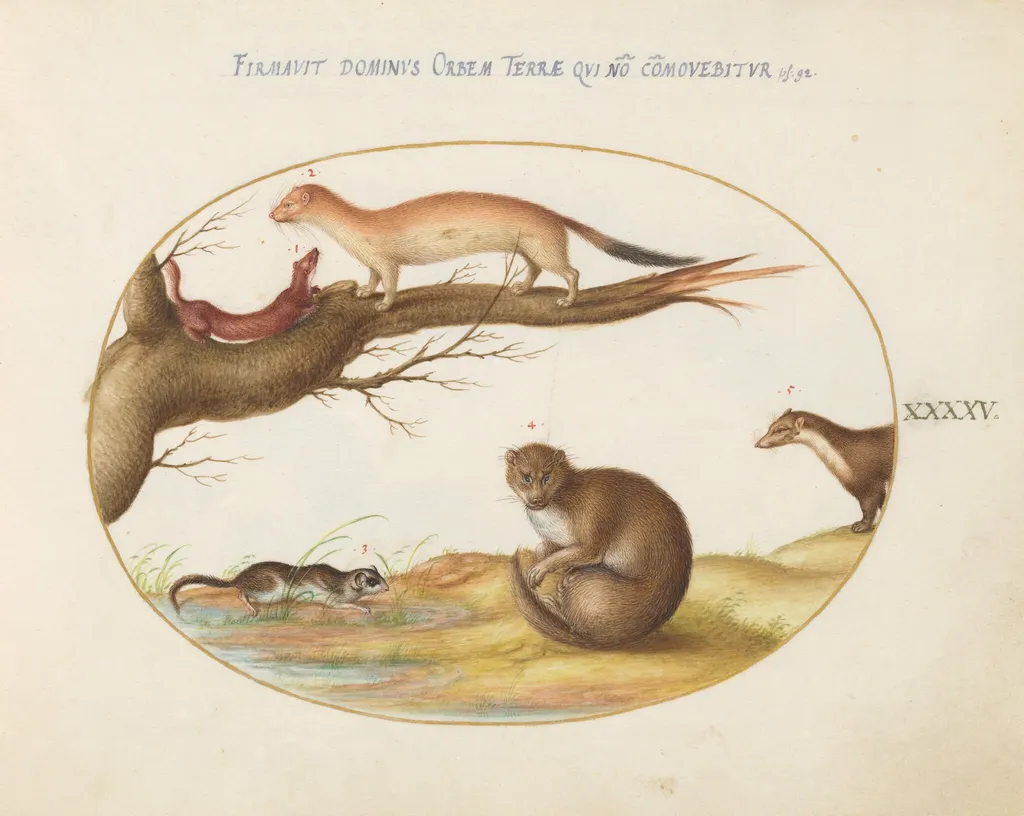
Plate 45: Weasels, a Ferret, and a "Nut Mouse" is a gouache drawing by the Renaissance artist Joris Hoefnagel. It dates from 1594 and is held in the collection of the National Gallery of Art.
About this work
Overview
It belongs to a tradition of illuminated natural history collections, where detailed depictions of flora and fauna served both aesthetic and scholarly purposes.
Created around 1594, this small watercolor and gold-painted parchment sheet is part of a larger manuscript compiled by Joris Hoefnagel. It belongs to a tradition of illuminated natural history collections, where detailed depictions of flora and fauna served both aesthetic and scholarly purposes. The use of gold leaf frames the scene like a miniature reliquary, elevating ordinary creatures into objects of contemplation.
Subject & Meaning
The plate portrays four small mammals: a weasel in motion, a ferret with arched back, and a gray mouse perched atop a cracked walnut shell. These animals, often considered pests or curiosities, are rendered with clinical attention, suggesting an interest in their anatomy and behavior. The inclusion of the walnut shell implies a narrative of natural interaction, possibly hinting at food sources or habitat, without anthropomorphizing them.
Technique & Style
Hoefnagel employed fine brushwork and translucent watercolor to capture fur texture and subtle shading, while gold paint outlines the composition like a gilded border. His technique reflects manuscript illumination traditions, yet the precision in animal anatomy anticipates scientific illustration. The absence of landscape or context focuses attention entirely on the creatures, emphasizing observation over decoration.
History & Provenance
This plate originated in a codex commissioned by or for a European collector interested in natural wonders. Hoefnagel worked during a transitional period when printed natural histories were emerging, yet hand-painted manuscripts retained prestige among elite patrons. The work likely circulated privately before entering institutional collections, preserving its fragile parchment and delicate pigments through centuries.
Context
In late 16th-century Europe, interest in natural phenomena surged as explorers returned with unfamiliar species. Artists like Hoefnagel filled a gap before photography, providing accurate visual records for scholars and collectors. His work bridges medieval illumination and early modern science, reflecting a culture that valued both beauty and empirical detail in the study of nature.
Legacy
Hoefnagel’s meticulous approach influenced later naturalists and illustrators in northern Europe, particularly in the development of still-life and zoological drawing. Though his manuscripts were once private treasures, they now serve as historical benchmarks for pre-scientific visual documentation. His integration of art and observation laid groundwork for the systematic study of animal life in the centuries that followed.
Artist & collection

Artist
Joris Hoefnagel or Georg Hoefnagel (1542 – 24 July 1601) was a Flemish painter, printmaker, miniaturist, draftsman and merchant.

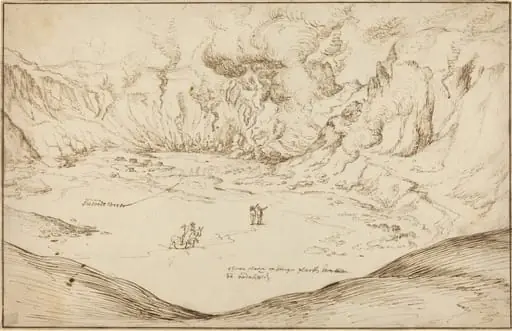 Forum Vulcani: The Hot Springs at Pozzuoli
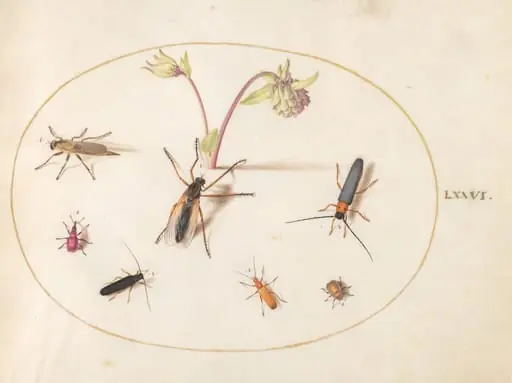 Plate 76: Insects with a Pink and Cream Columbine
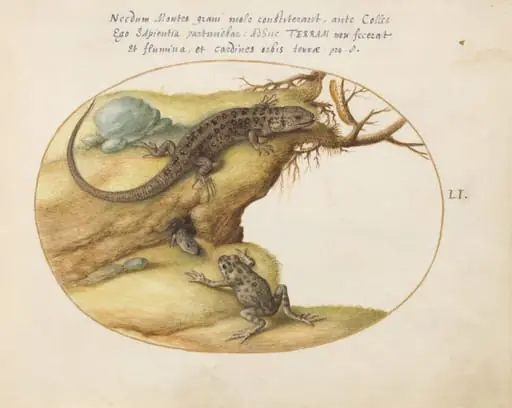 Plate 51: Two Sand Lizards, a Common Parsley Frog(?), and a Caterpillar
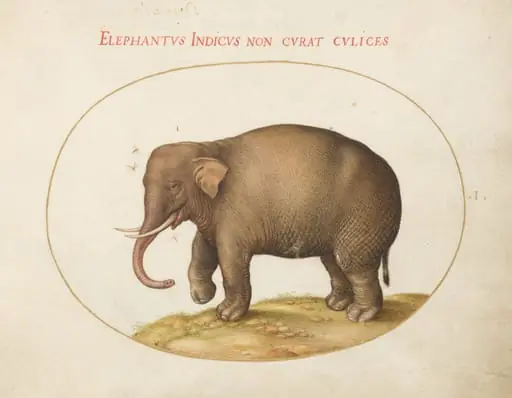 Plate 1: Elephant with Insects
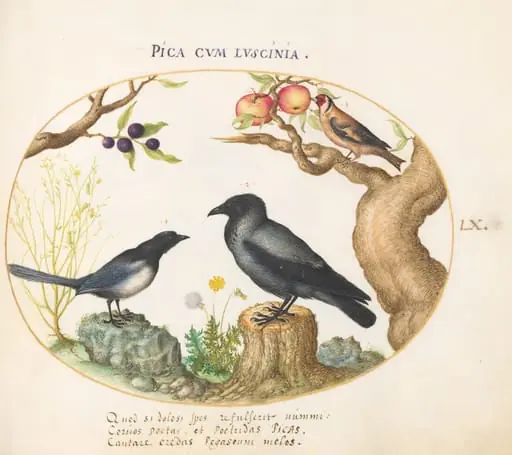 Plate 60: Magpie, Crow, and Goldfinch
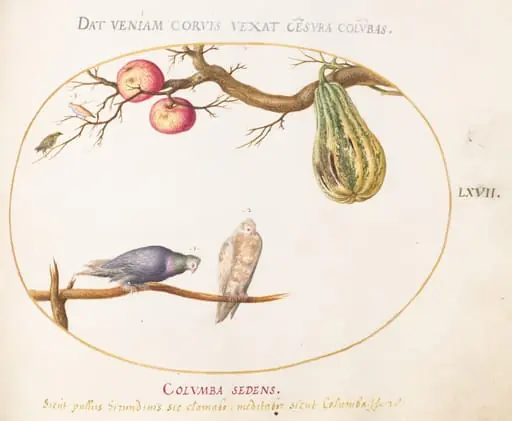 Plate 67: Two Doves beneath a Gourd and Apples
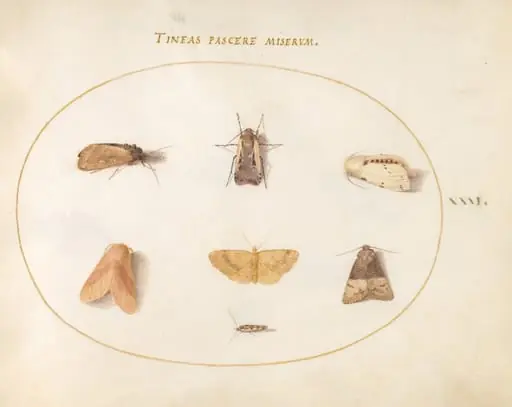 Plate 31: Seven Moths
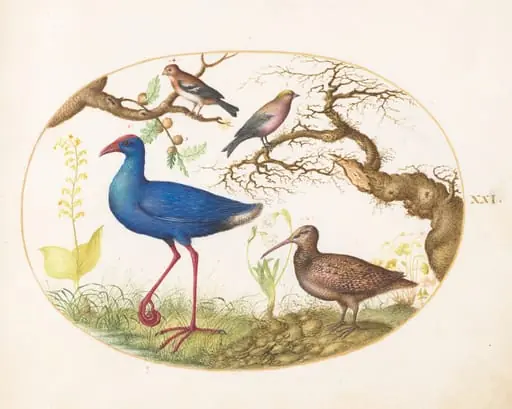 Plate 21: Swamp Hen and Woodcock with a Streaked Rosefinch, a Finch, and Oak Galls
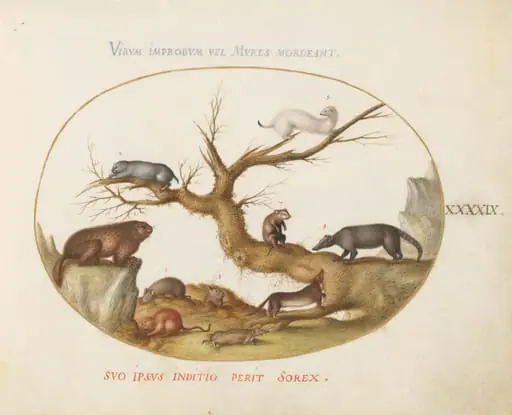 Plate 49: Marmot, Hamsters, Rat, Field Mouse, Shrew, and a Coatimundi
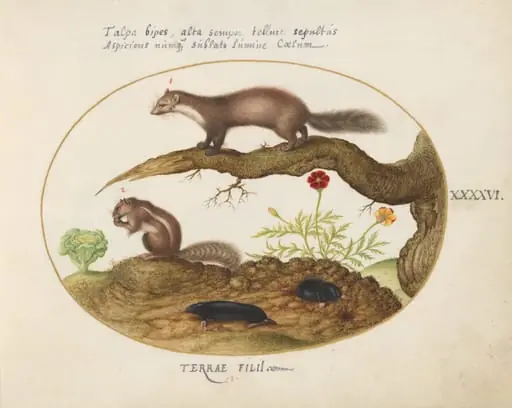 Plate 46: Stone Marten, Chipmunk, and Moles with a Marigold and Lettuce
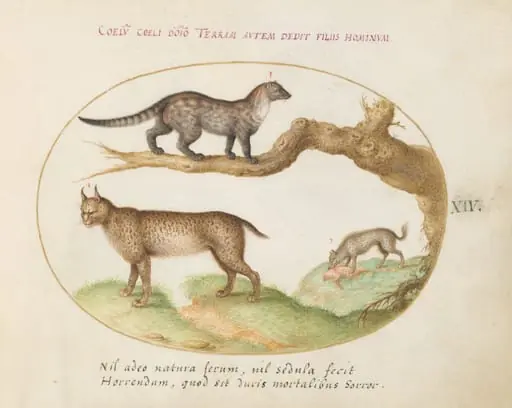 Plate 14: A Civet, a Lynx, and a Hyena Eating a Dog
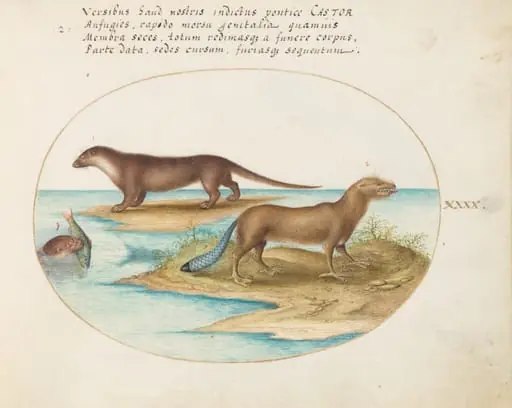 Plate 40: Two Otters and a Beaver
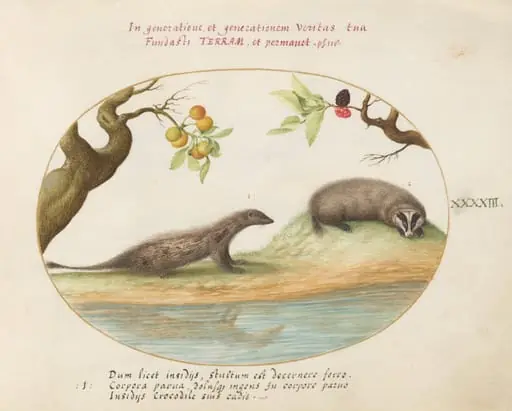 Plate 43: Mongoose and Badger with Fruit Trees
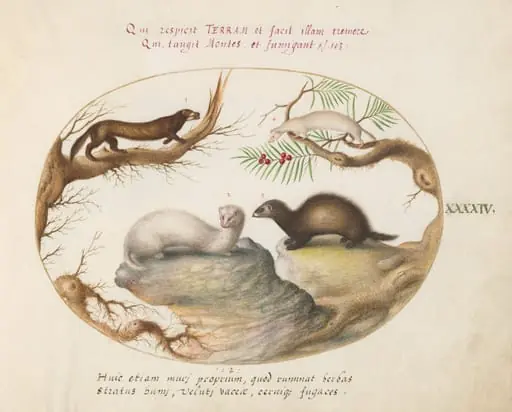 Plate 44: Polecat, Mink, and Ermine
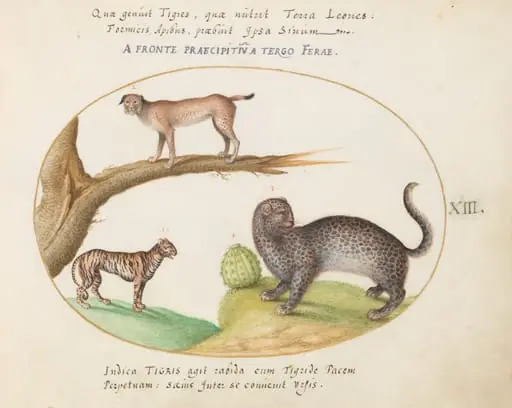 Plate 13: A Tiger, a Lynx, and a Jaguar(?)
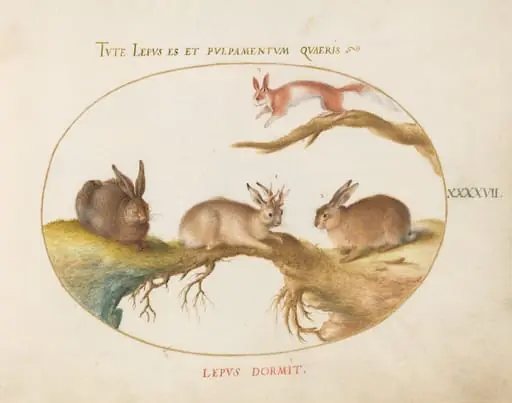 Plate 47: A Hare, "Jackalope," a Rabbit, and a Spotted Squirrel
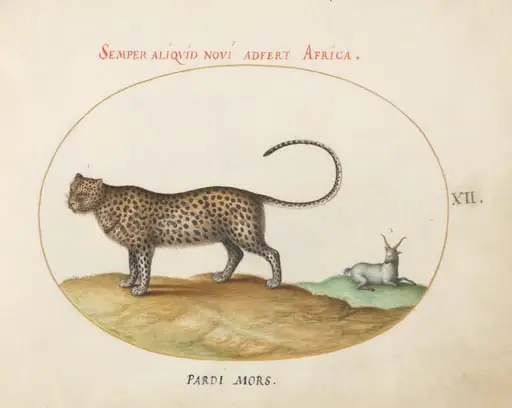 Plate 12: A Cheetah(?) and a Wild Sheep
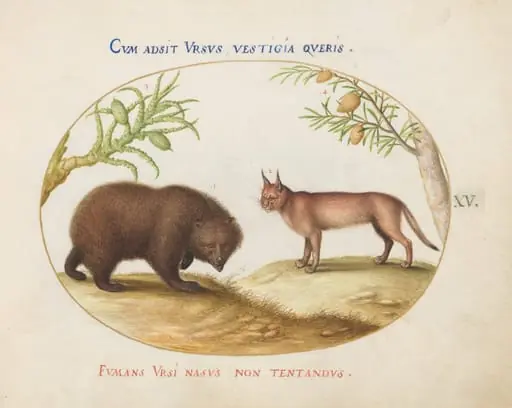 Plate 15: A Bear and a Lynx(?)
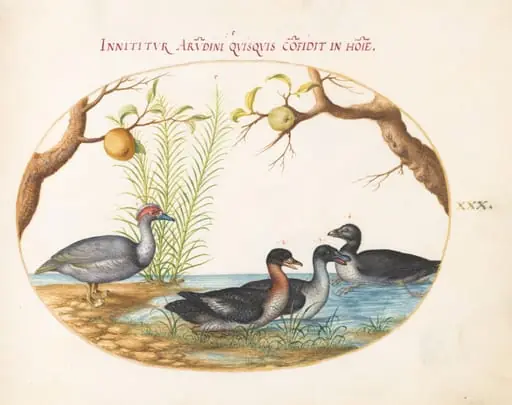 Plate 30: A Muscovy(?) Duck, a Four-Legged Duck, and Two Other Birds