Artwork
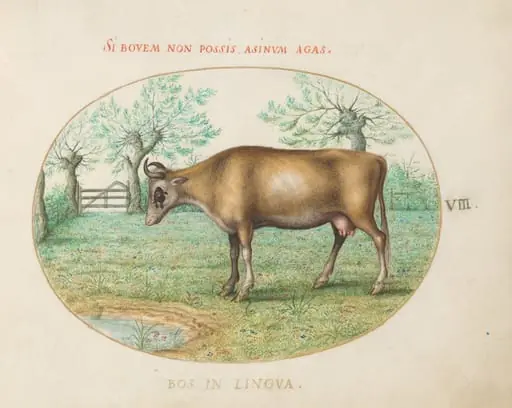
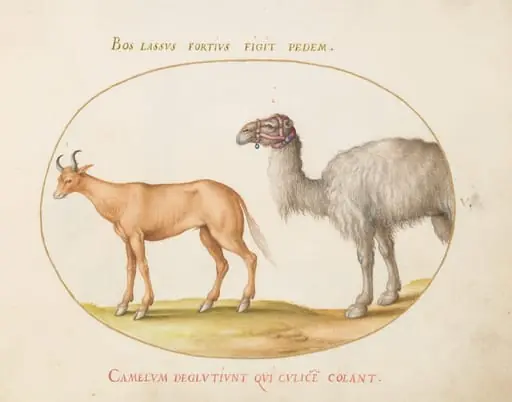
Plate 7: A Bull and a Horned Animal
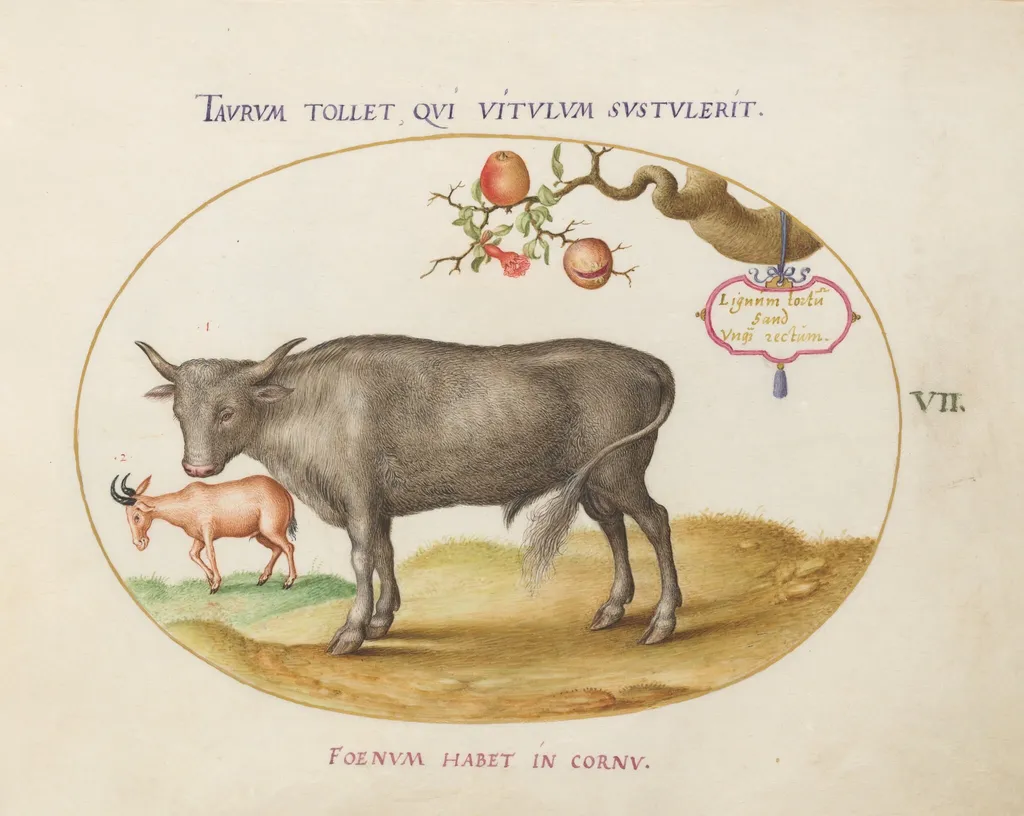
Plate 7: A Bull and a Horned Animal is a gouache drawing by the Renaissance artist Joris Hoefnagel. It dates from 1594 and is held in the collection of the National Gallery of Art.
About this work
Overview
It belongs to a series of naturalistic studies that reflect the transition from medieval manuscript illumination to early modern scientific illustration.
Created around 1594, Plate 7: A Bull and a Horned Animal is a watercolor and gold-painted drawing on parchment by Joris Hoefnagel. It belongs to a series of naturalistic studies that reflect the transition from medieval manuscript illumination to early modern scientific illustration. The use of parchment and precious materials signals its origin in a tradition of elite, hand-crafted visual records, rather than mass-produced prints.
Subject & Meaning
The plate depicts a bull alongside another horned creature, likely a wild ox or aurochs, rendered with careful attention to anatomical detail. Neither animal is placed in a narrative or symbolic context; instead, they are presented as observed specimens. This reflects Hoefnagel’s interest in documenting the natural world with precision, aligning with the growing scientific curiosity of the late Renaissance.
Technique & Style
Hoefnagel applied watercolor with fine brushwork to capture the texture of fur and hide, while gold paint highlights contours and musculature, adding luminosity without decorative excess. The restrained use of gold—expensive and labor-intensive—underscores the work’s function as a study rather than ornament. His technique merges the meticulousness of manuscript illumination with the observational rigor of natural history.
History & Provenance
The plate was produced during Hoefnagel’s later years, when he worked for the Habsburg court and contributed to imperial collections of natural specimens. It likely formed part of a larger manuscript or album intended for scholarly or aristocratic audiences. Its survival as a standalone sheet suggests it was later separated from its original context, possibly during the dispersal of collections in the 17th or 18th centuries.
Context
In late 16th-century northern Europe, artists like Hoefnagel bridged the gap between artistic tradition and emerging empirical science. His work coincided with the rise of natural history collections and illustrated encyclopedias. While still rooted in manuscript culture, his drawings contributed to a new visual language for documenting biodiversity, influencing later naturalists and illustrators.
Legacy
Hoefnagel’s detailed renderings of animals and plants helped shape the visual standards for natural history illustration in the early modern period. Though not widely known today, his approach influenced the transition from symbolic representation to observational accuracy. Plate 7 exemplifies how artistic skill served scientific inquiry, laying groundwork for the illustrated field guides that followed.
Artist & collection

Artist
Joris Hoefnagel or Georg Hoefnagel (1542 – 24 July 1601) was a Flemish painter, printmaker, miniaturist, draftsman and merchant.

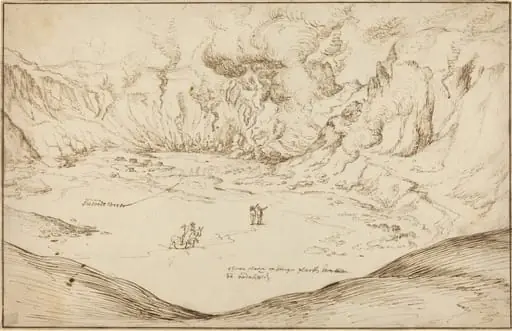 Forum Vulcani: The Hot Springs at Pozzuoli
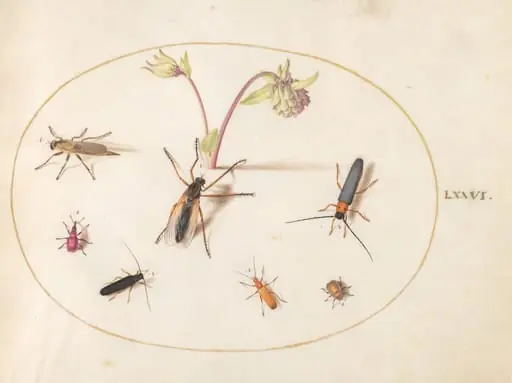 Plate 76: Insects with a Pink and Cream Columbine
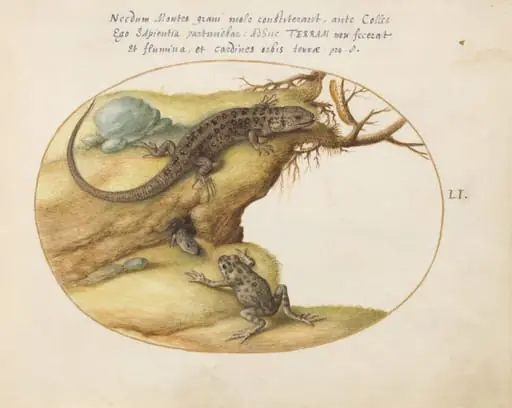 Plate 51: Two Sand Lizards, a Common Parsley Frog(?), and a Caterpillar
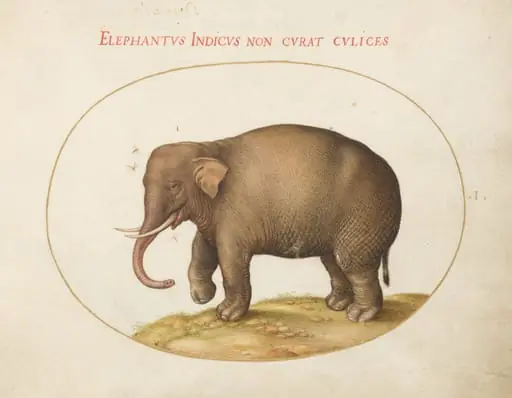 Plate 1: Elephant with Insects
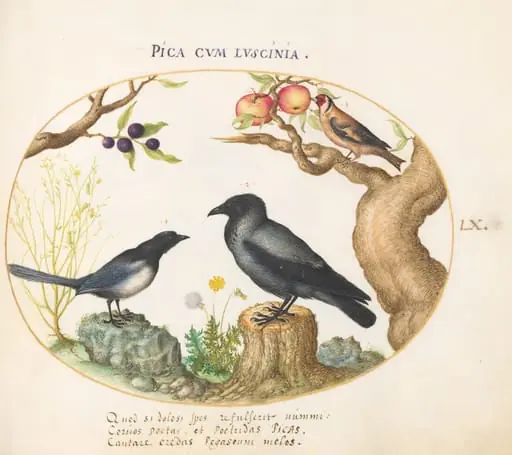 Plate 60: Magpie, Crow, and Goldfinch
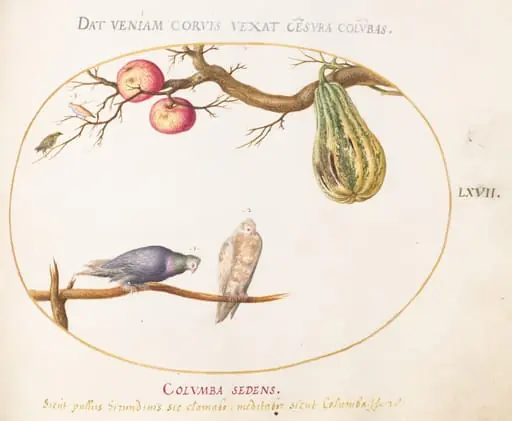 Plate 67: Two Doves beneath a Gourd and Apples
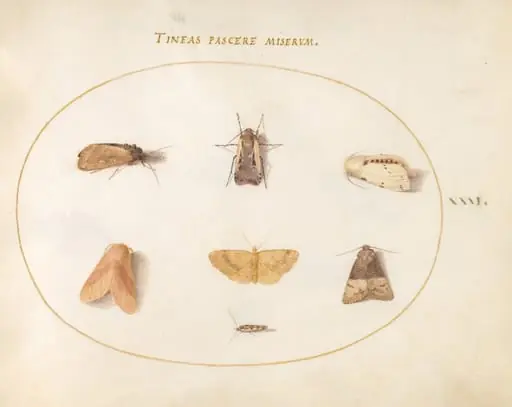 Plate 31: Seven Moths
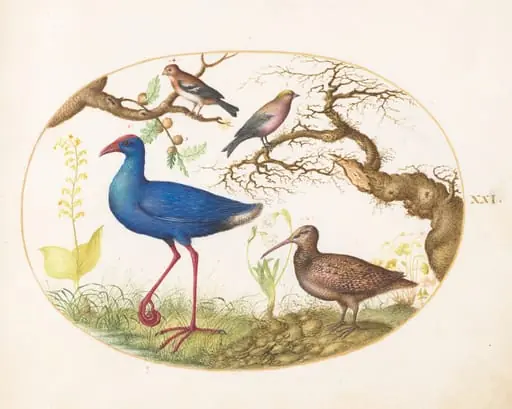 Plate 21: Swamp Hen and Woodcock with a Streaked Rosefinch, a Finch, and Oak Galls