Artwork
Plate 22: Blackhead Persian Sheep and a Sheep with a Long Tail, with a Cactus
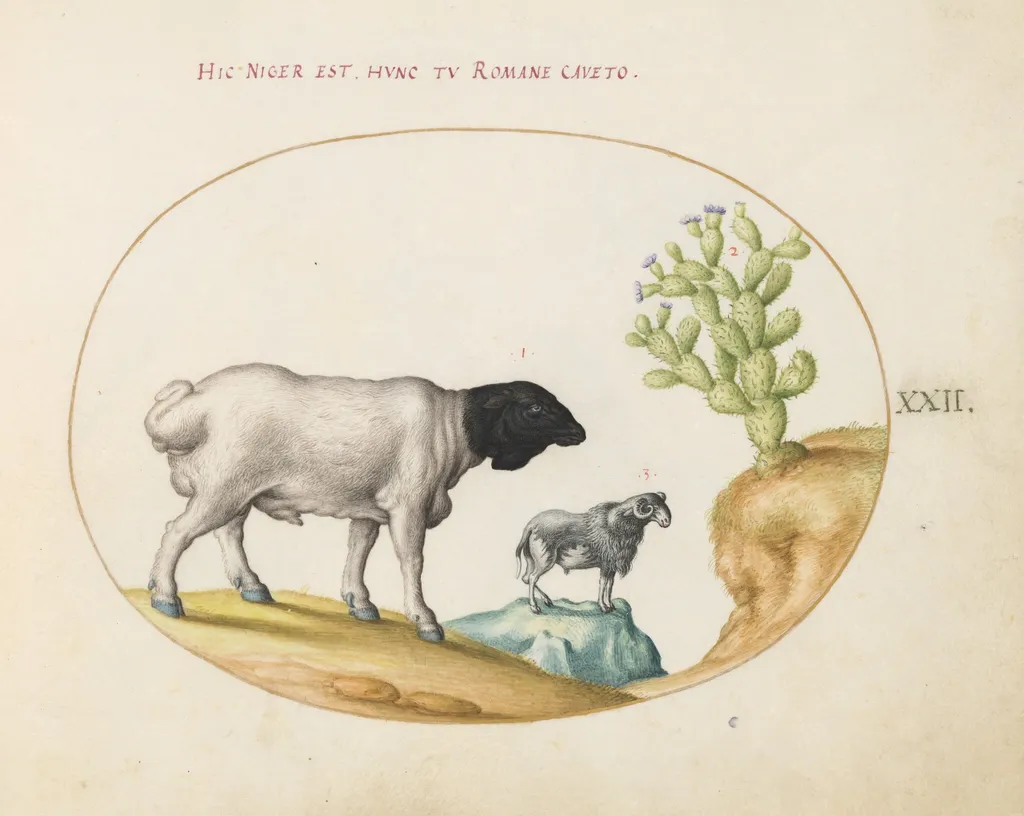
Plate 22: Blackhead Persian Sheep and a Sheep with a Long Tail, with a Cactus is a gouache drawing by the Renaissance artist Joris Hoefnagel. It dates from 1594 and is held in the collection of the National Gallery of Art. This work is a meticulously rendered study from a series of natural history illustrations.
About this work
Overview
This work is a meticulously rendered study from a series of natural history illustrations. Executed on parchment with watercolor and gold paint, it depicts two distinct sheep breeds alongside a cactus. The drawing exemplifies the intersection of scientific inquiry and artistic decoration characteristic of late 16th-century Flemish manuscript illumination.
Subject & Meaning
The image presents a Blackhead Persian sheep and a long-tailed sheep, species likely encountered through trade or colonial exploration. The inclusion of a cactus suggests an interest in exotic flora, reflecting the period’s expanding botanical and zoological knowledge. The composition balances scientific documentation with ornamental elegance, serving both educational and aesthetic purposes.
Technique & Style
Hoefnagel employed delicate watercolor washes and gold leaf to achieve a luminous effect on parchment. His approach combines precise anatomical observation with decorative flourishes, a hallmark of late Renaissance manuscript art. The work’s refined detailing and use of gold highlight the artist’s skill in merging naturalism with ornamental design.
History & Provenance
Created circa 1594, this plate originates from a larger series of natural history illustrations. Hoefnagel’s work as a manuscript illuminator positioned him among the last practitioners of this tradition. The drawing’s survival underscores its role in the transition from medieval illumination to early modern scientific illustration.
Context
The late 16th century saw growing European engagement with global biodiversity, driven by trade and exploration. Hoefnagel’s depictions of exotic animals and plants reflect this curiosity, bridging artistic and scientific disciplines. His work contributed to the development of still-life painting, influencing later Northern European artists.
Legacy
Hoefnagel’s illustrations mark a pivotal moment in the evolution of natural history art. By integrating scientific accuracy with decorative artistry, his work foreshadowed the rise of botanical and zoological illustration. This plate remains a testament to the Renaissance blending of empirical observation and artistic refinement.
Artist & collection

Artist
Joris Hoefnagel or Georg Hoefnagel (1542 – 24 July 1601) was a Flemish painter, printmaker, miniaturist, draftsman and merchant.

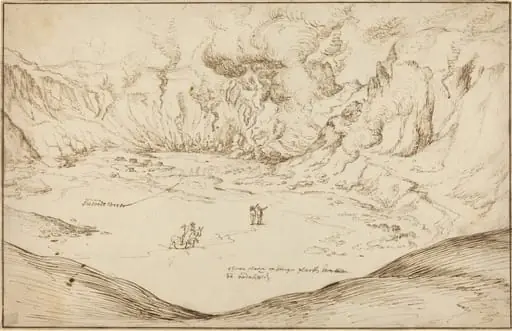 Forum Vulcani: The Hot Springs at Pozzuoli
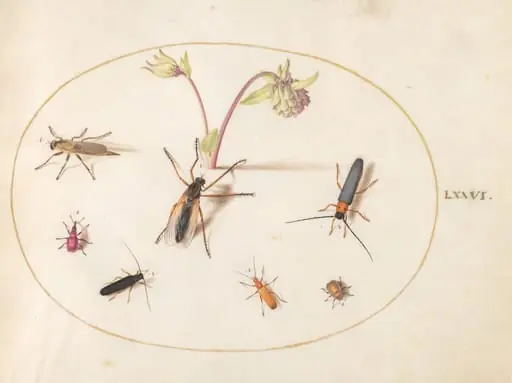 Plate 76: Insects with a Pink and Cream Columbine
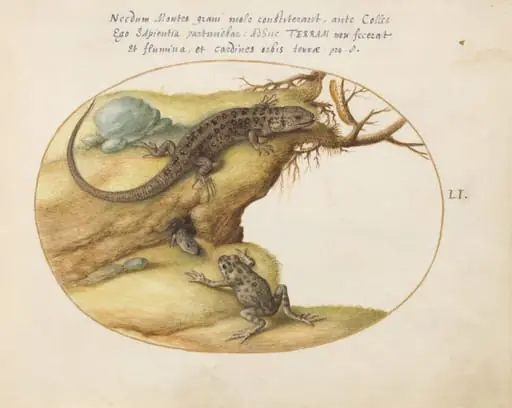 Plate 51: Two Sand Lizards, a Common Parsley Frog(?), and a Caterpillar
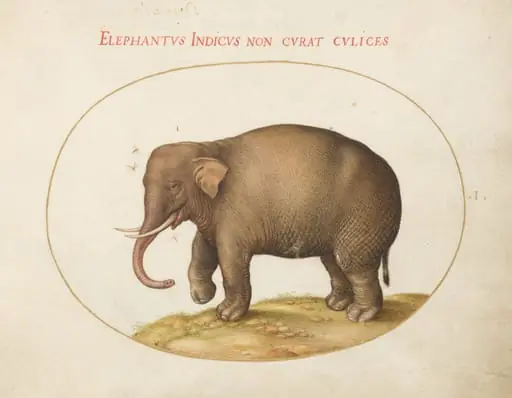 Plate 1: Elephant with Insects
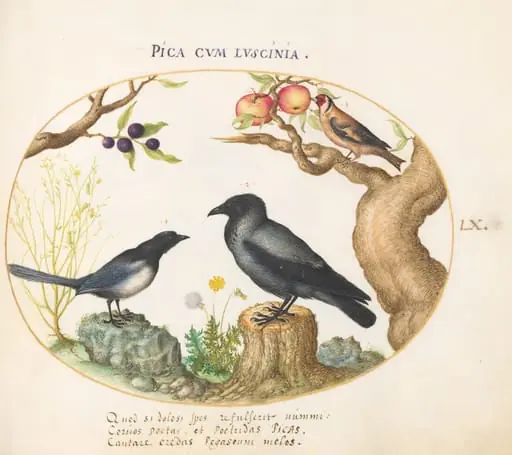 Plate 60: Magpie, Crow, and Goldfinch
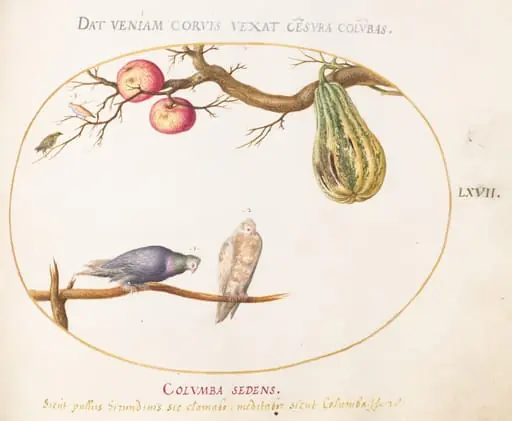 Plate 67: Two Doves beneath a Gourd and Apples
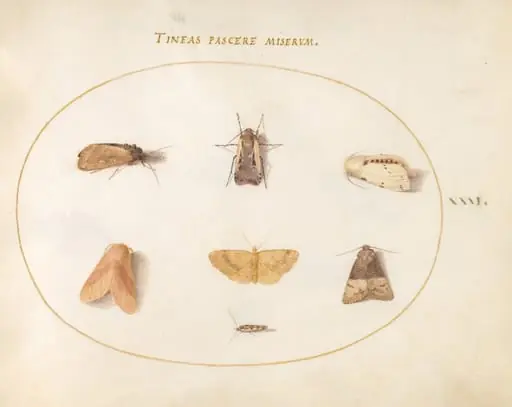 Plate 31: Seven Moths
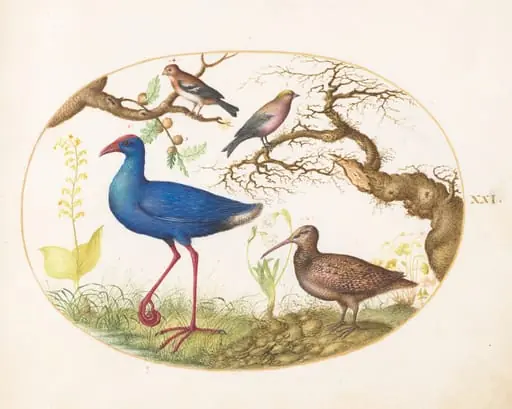 Plate 21: Swamp Hen and Woodcock with a Streaked Rosefinch, a Finch, and Oak Galls
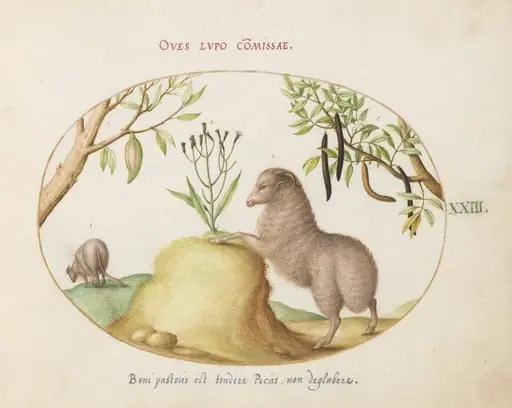 Plate 23: A Fat-Tailed Sheep, a Sheep with a Long Tail, a "Cassia purgatrix,"and Other Plants
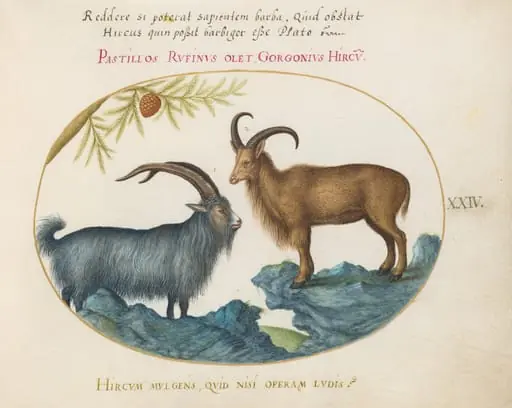 Plate 24: A Wild Goat and a Barbary Sheep(?)
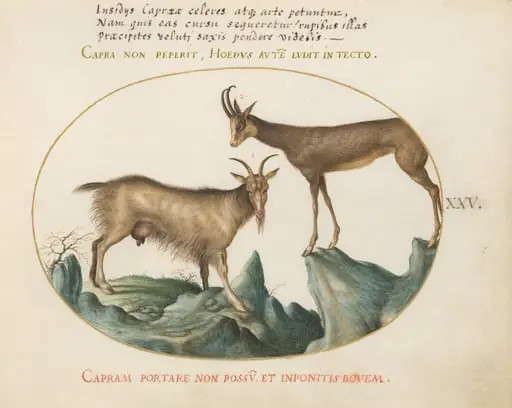 Plate 25: Two Wild Goats
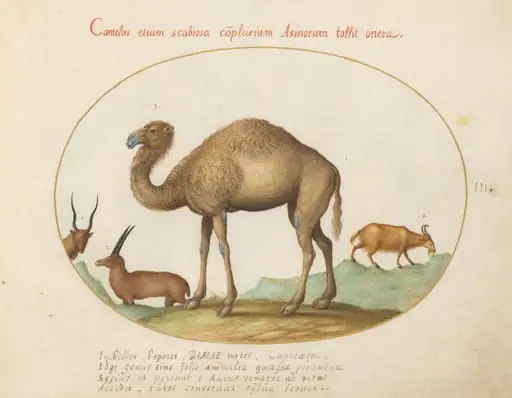 Plate 3: Camel, Ibex, and Goat
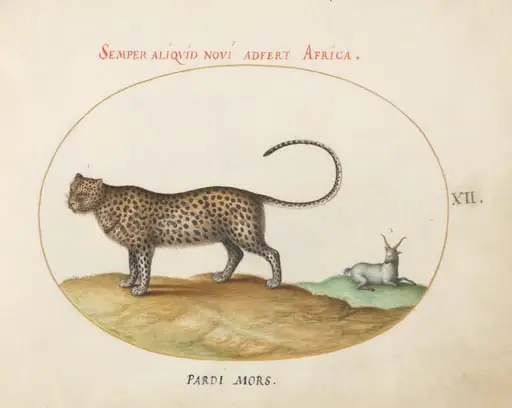 Plate 12: A Cheetah(?) and a Wild Sheep
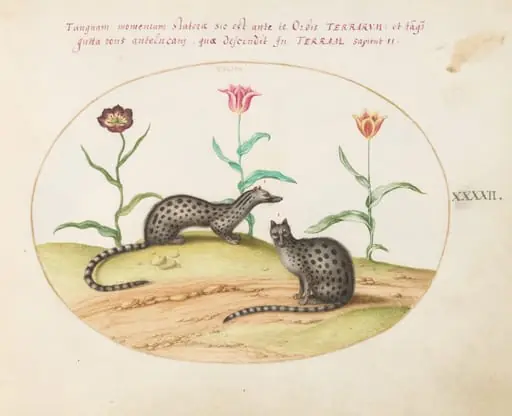 Plate 42: Two Genets or Civet Cats with Tulips
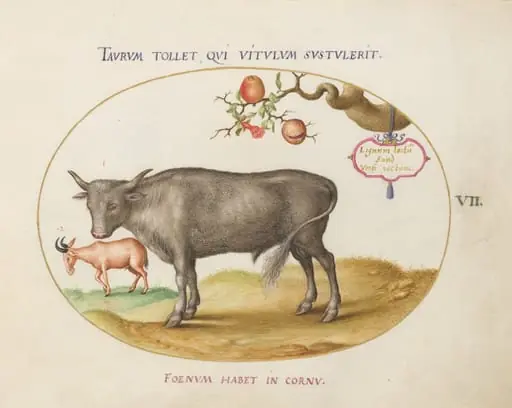 Plate 7: A Bull and a Horned Animal
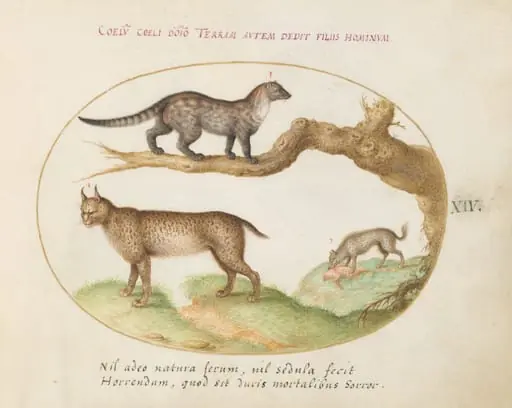 Plate 14: A Civet, a Lynx, and a Hyena Eating a Dog
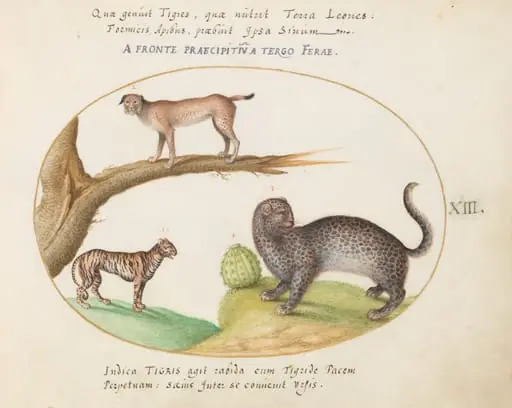 Plate 13: A Tiger, a Lynx, and a Jaguar(?)
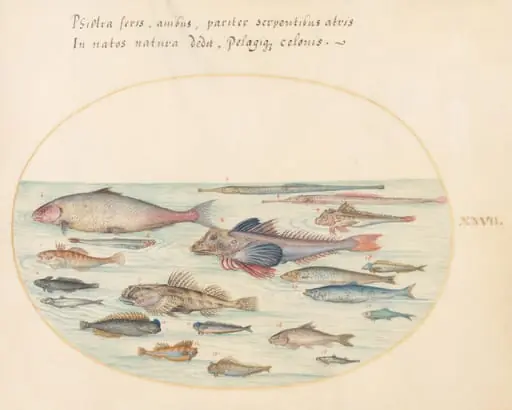 Plate 27: Blennies, Scorpion Fish, and Other Fish