Artwork
Keokuk, Chief of the Sacs and Foxes
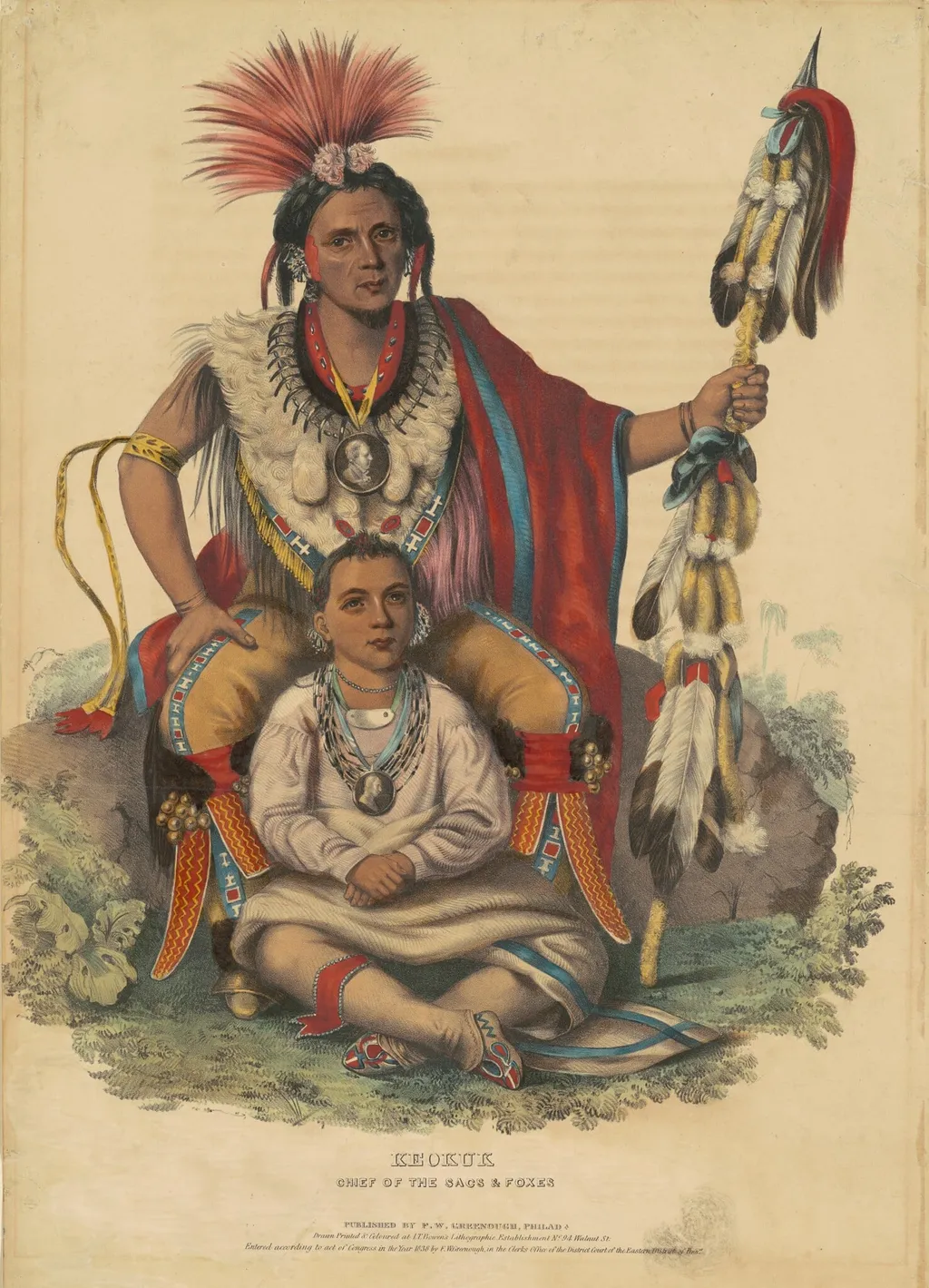
Keokuk, Chief of the Sacs and Foxes is an ink print by the Romanticist artist Alfred Hoffy. It dates from 1838 and is held in the collection of the National Gallery of Art.
About this work
Overview
Alfred Hoffy’s 1838 hand‑colored lithograph depicts Keokuk, the chief of the Sauk (Sacs) and Fox peoples, accompanied by a young boy.
Alfred Hoffy’s 1838 hand‑colored lithograph depicts Keokuk, the chief of the Sauk (Sacs) and Fox peoples, accompanied by a young boy. Rendered on wove paper, the image presents the chief in a vivid red robe trimmed in blue, crowned with an elaborate feathered headdress, while the child sits nearby in a simple white shirt and leggings. The muted background isolates the figures, emphasizing their presence.
Subject & Meaning
The work portrays Keokuk, a prominent leader noted for his diplomatic efforts with United States authorities, alongside a youthful attendant, perhaps a relative or protégé. The chief’s dignified pose, staff adorned with feathers and ribbons, and the boy’s attentive gaze suggest a transmission of cultural authority and the continuity of tribal leadership during a period of intense negotiation and change.
Technique & Style
Executed as a lithograph, the image was first printed in black and then hand‑colored, a common practice for producing affordable yet richly detailed images in the early nineteenth century. The composition’s emphasis on emotive expression, dramatic costume, and a softened landscape aligns it with Romantic sensibilities, which favored individual heroism and exotic subjects.
History & Provenance
Created in 1838, the print emerged amid growing American interest in Native American portraiture following the Indian Removal era. Hoffy, an English‑born lithographer active in New York, produced the work for a market of collectors and scholars seeking visual records of Indigenous leaders. The piece has since circulated in museum collections and private holdings, reflecting its role as a documentary artifact of its time.
Context
Keokium’s portrait coincides with a broader wave of Romantic fascination with the ‘noble savage’ archetype, a motif that both romanticized and simplified Native cultures for European‑American audiences. The lithograph’s detailed regalia contrasts with contemporary depictions that often reduced Indigenous figures to generic stereotypes, offering a more specific visual record of Sauk and Fox attire.
Legacy
While not a singularly celebrated artwork, the print contributes to the visual archive of early nineteenth‑century Native American portraiture. Its combination of lithographic reproduction and hand‑coloring demonstrates the period’s technological advances in image making, and it continues to serve as a reference for scholars examining representations of Indigenous leadership in Romantic America.
Artist & collection