Artwork
Tah-Ro-Hon, An Ioway Warrior
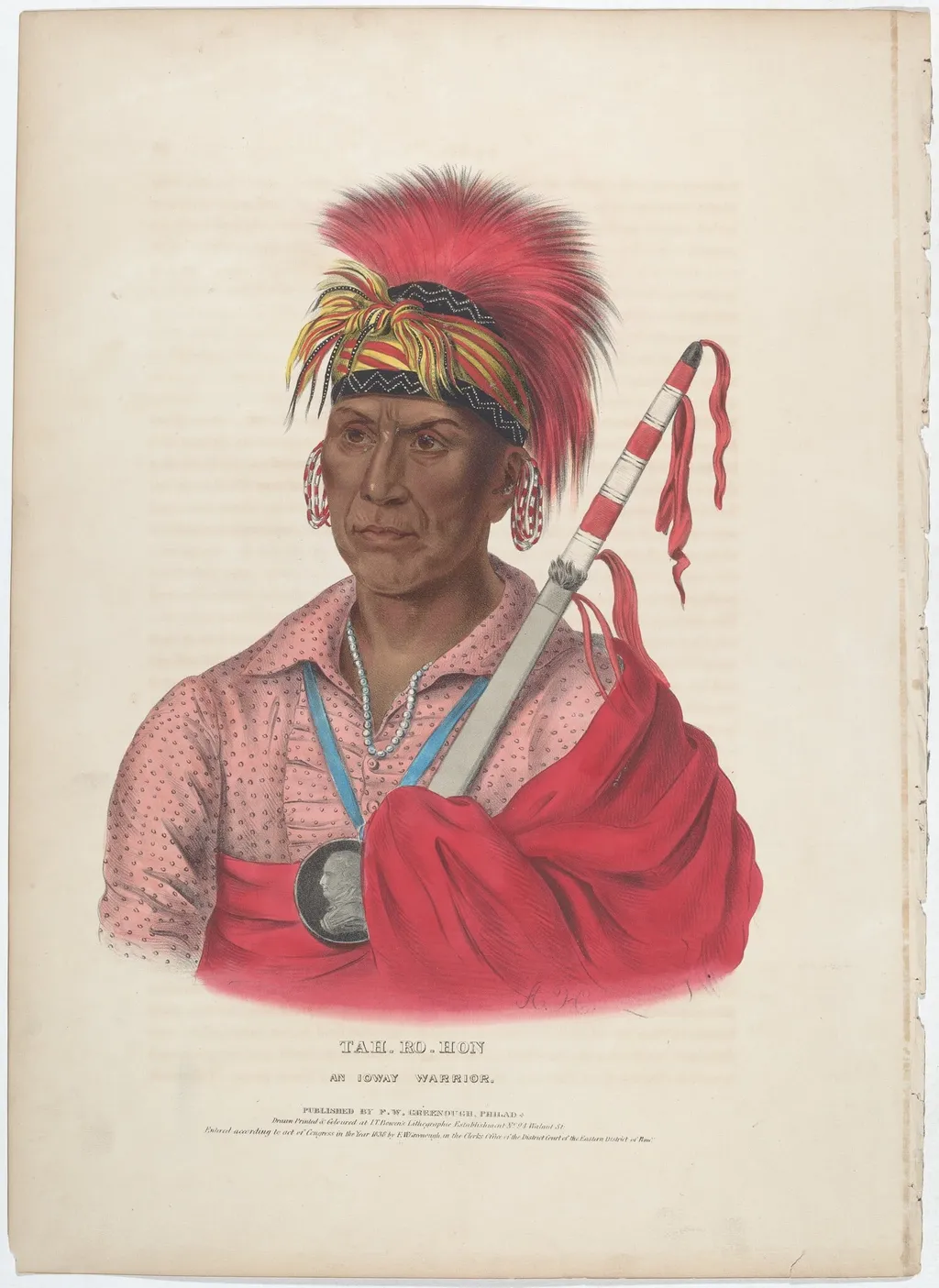
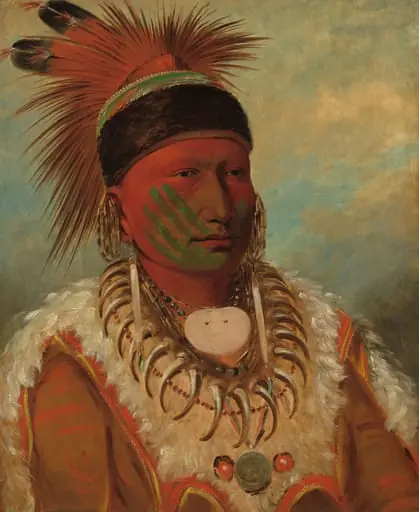
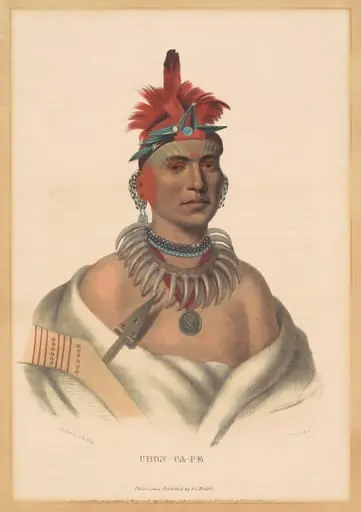
Tah-Ro-Hon, An Ioway Warrior is an ink print by the Romanticist artist Alfred Hoffy. It dates from 1838 and is held in the collection of the National Gallery of Art.
About this work
Overview
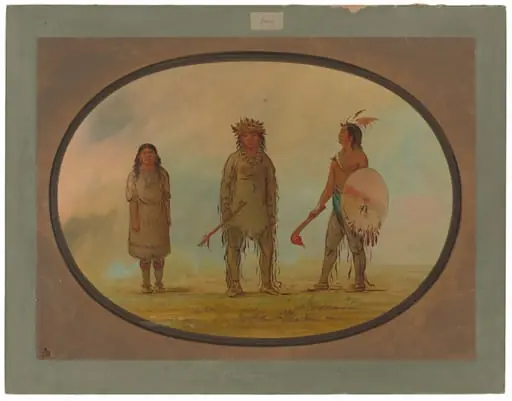
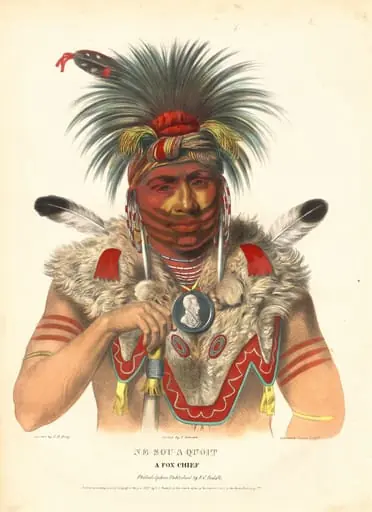
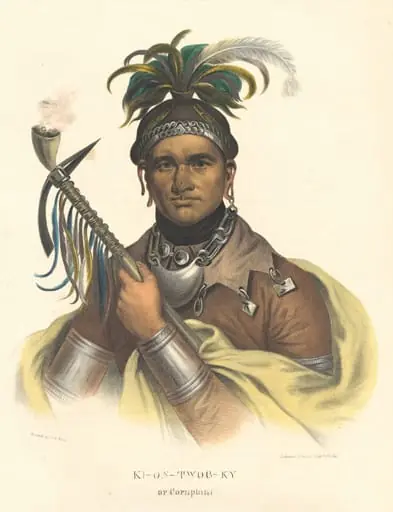
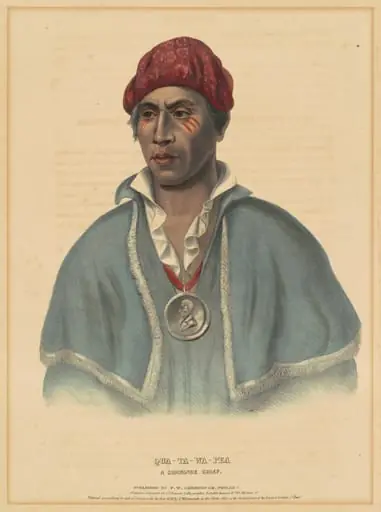
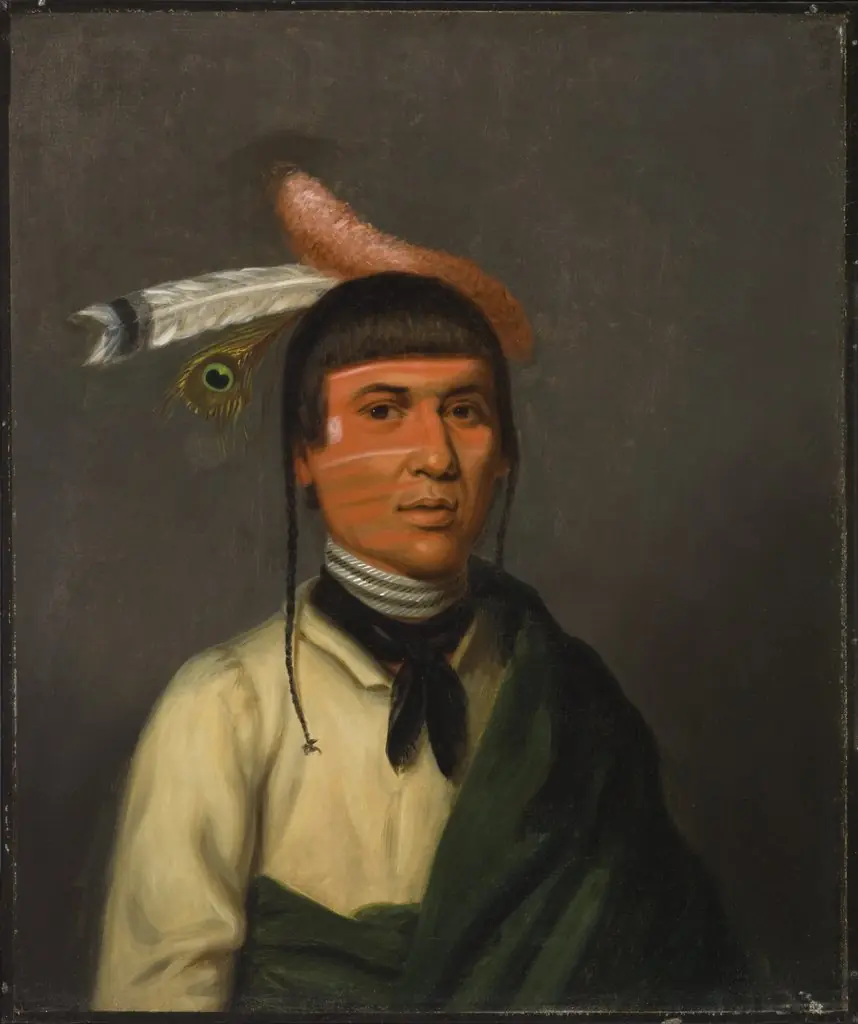
Alfred Hoffy’s hand‑colored lithograph, dated 1838, presents a portrait of a Native American figure identified as an Ioway warrior. Rendered on wove paper, the image captures the subject in a solemn pose, emphasizing his ceremonial attire and accoutrements. The work exemplifies early American printmaking that sought to document Indigenous peoples for a growing audience in the United States.
Subject & Meaning
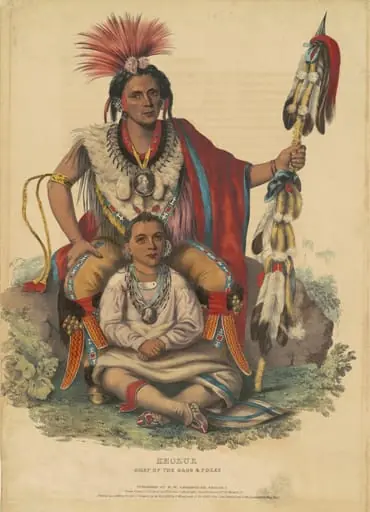
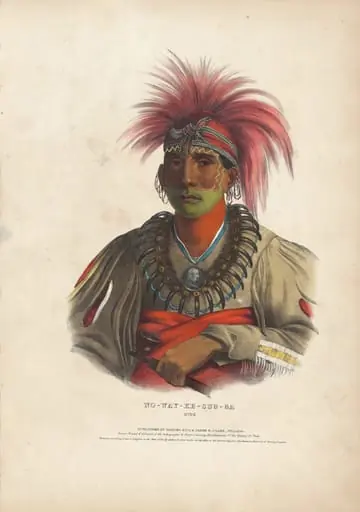
The central figure wears a pink shirt patterned with black dots, a red sash, and a feathered headdress topped with large earrings—elements traditionally associated with Ioway martial status. In his right hand he grips a long, striped staff bound with red cloth, a possible symbol of authority or ceremonial function. The composition foregrounds cultural identity through precise costume details.
Technique & Style
Created as a lithograph, the image was first drawn on a stone surface and then transferred to paper, allowing for fine line work.
Created as a lithograph, the image was first drawn on a stone surface and then transferred to paper, allowing for fine line work. Hoffy applied hand‑coloring after printing, using vivid pigments to highlight the shirt, sash, and headdress. The careful rendering of texture and pattern reflects the Romantic era’s interest in ethnographic subjects and the desire to convey realism within a decorative framework.
History & Provenance
The print emerged during a period of heightened curiosity about Native American societies, when artists and publishers produced illustrated accounts for eastern audiences. Hoffy, an English‑trained lithographer active in Philadelphia, contributed to this trend through a series of portraits of Indigenous individuals. The work has remained in museum collections as a representative example of 19th‑century ethnographic printmaking.
Context
In the 1830s, the United States was undergoing rapid westward expansion, and the Ioway people faced displacement and cultural disruption. Visual records like Hoffy’s lithograph served both documentary and commercial purposes, providing viewers with a stylized yet detailed glimpse of tribal dress and customs at a time when direct contact was limited.
Artist & collection