Artwork
A Chorus of Singers
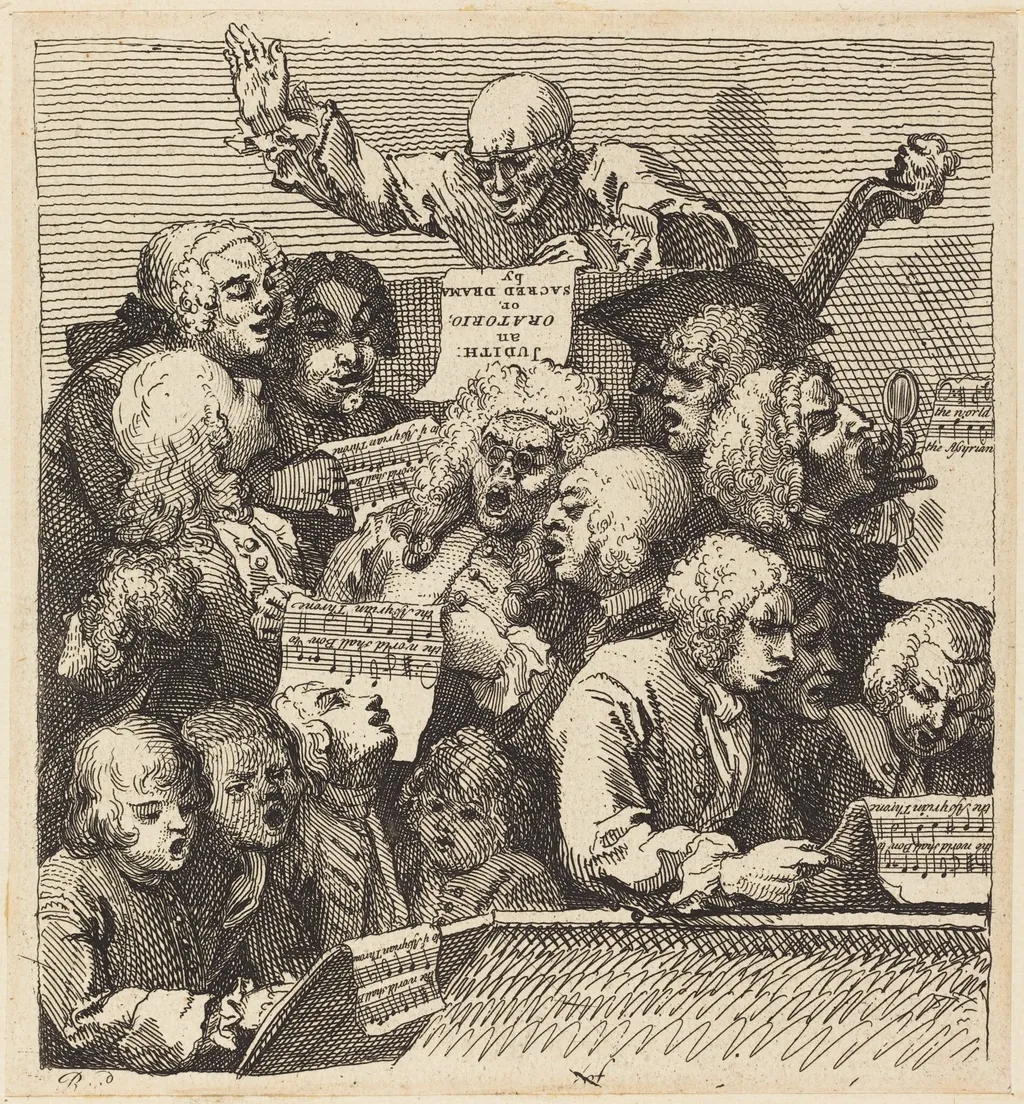
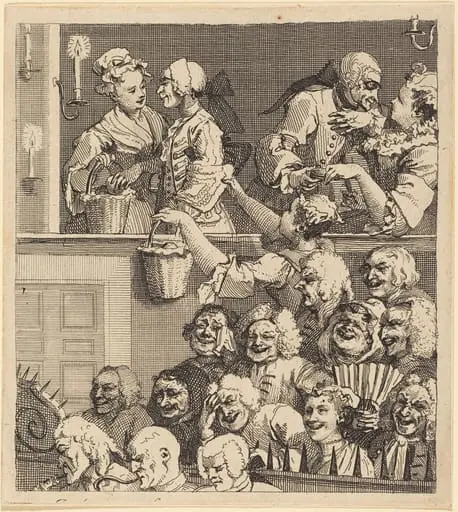
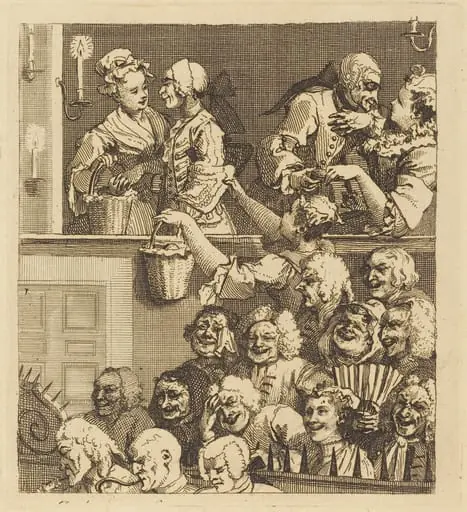
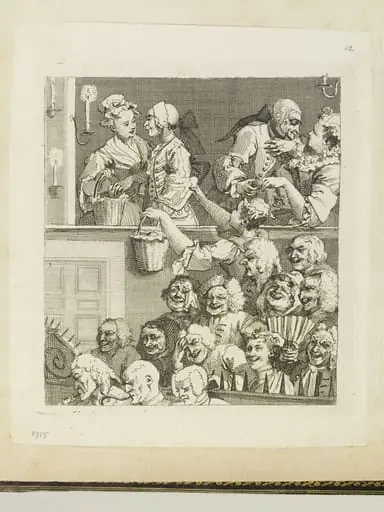
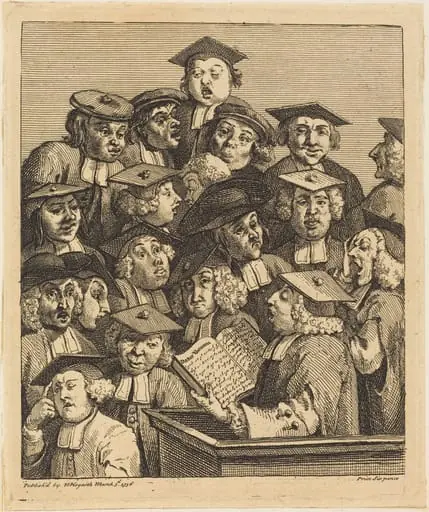
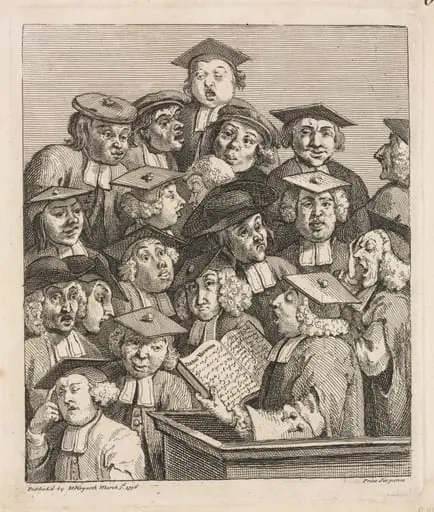
A Chorus of Singers is an ink print by the Baroque artist William Hogarth. It dates from 1732 and is held in the collection of the National Gallery of Art.
About this work
Overview
Created in 1732, *A Chorus of Singers* is an etching by the English artist William Hogarth. The print presents a densely packed group of vocalists, their heads tilted upward and hands raised, some clutching music sheets or instruments. The composition is rendered in stark black and white, emphasizing the crowded, almost disorderly atmosphere of the scene.
Subject & Meaning
Although the image depicts a literal gathering of singers, Hogarth intended it as an allegory. The tangled mass of bodies and overlapping clothing suggests a broader commentary on the tumult and excess of contemporary musical and theatrical culture, using the chaotic chorus as a visual metaphor for societal disorder.
Technique & Style
Hogard employed the traditional etching process, incising lines into a copper plate before printing. The technique allows for fine detail in the figures’ gestures while maintaining a loose, sketch‑like quality that conveys movement. The stark contrast of line and space, characteristic of Hogarth’s satirical style, reinforces the sense of congestion and noise.
History & Provenance
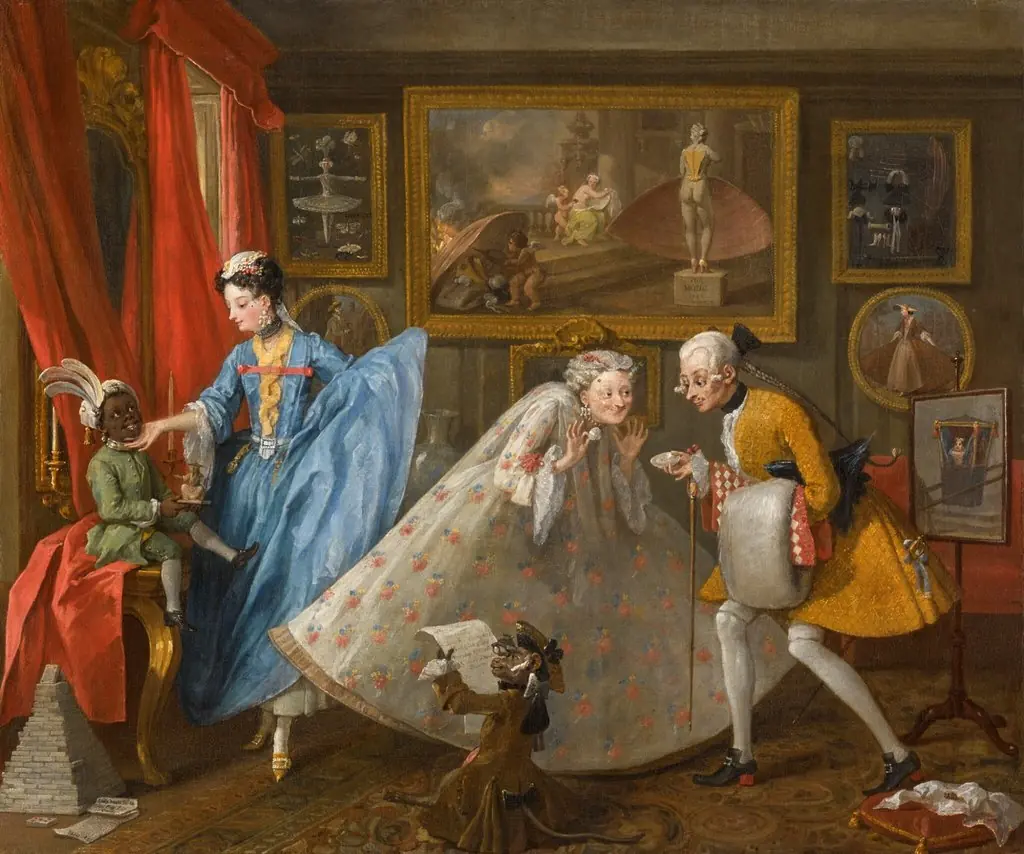
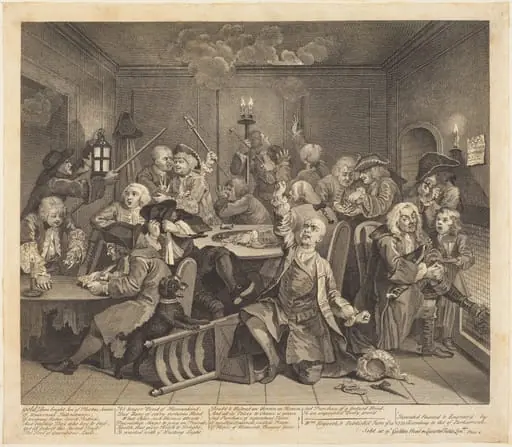
Born in London to a modest family, Hogarth trained as an engraver before gaining fame as a painter and satirist. *A Chorus of Singers* fits within his broader oeuvre, which includes narrative series such as *A Harlot’s Progress* and *Marriage A‑la‑Mode*. The print circulated among his contemporaries and contributed to his reputation as a visual commentator on 18th‑century English life.
Artist & collection
Artist
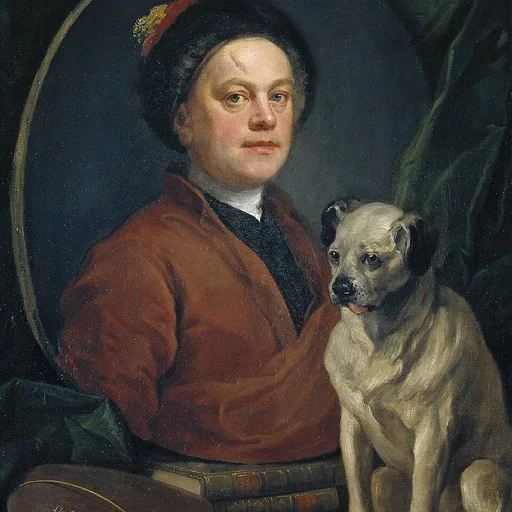
William Hogarth (; 10 November 1697 – 26 October 1764) was an English painter, engraver, satirist, cartoonist and writer.