Artwork
The Laughing Audience
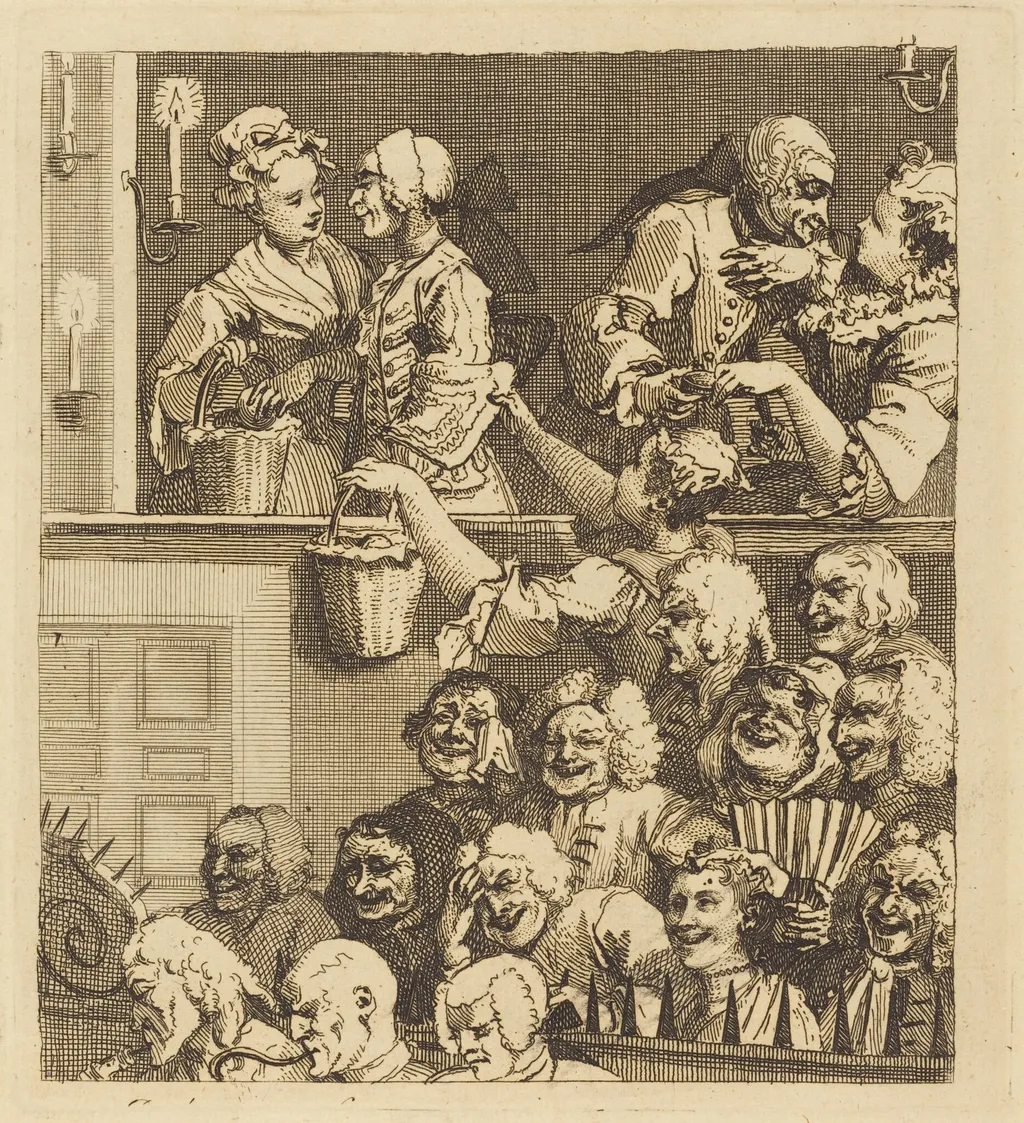
The Laughing Audience is an ink print by the Baroque artist William Hogarth. It dates from 1733 and is held in the collection of the National Gallery of Art.
About this work
Overview
Created in 1733, *The Laughing Audience* is an etching by William Hogarth that captures the varied reactions of a theater crowd to a performance.
Created in 1733, *The Laughing Audience* is an etching by William Hogarth that captures the varied reactions of a theater crowd to a performance. Unlike his narrative series, this work focuses on a single moment of collective spectacle. Hogarth uses the medium’s precision to render individual expressions within a dense, unified composition, highlighting the social dynamics of public entertainment in early 18th-century London.
Subject & Meaning
The scene portrays a diverse audience reacting to an unseen stage performance, with laughter, boredom, and astonishment distributed unevenly among the spectators. The contrast between the animated and the disengaged suggests a critique of theatrical spectacle and the performative nature of social behavior. Hogarth implies that public amusement often masks personal disconnection, revealing the theater as a mirror of societal fragmentation.
Technique & Style
Hogarth employed fine, controlled lines in etching to distinguish subtle facial expressions and postures within a tightly packed group. The darkened stage recedes into shadow, directing focus to the audience’s faces. His use of contrast and line weight creates rhythm and movement, transforming individual quirks into a dynamic ensemble. The technique allows for both detail and spontaneity, characteristic of his approach to social observation.
History & Provenance
Produced during Hogarth’s rise as a printmaker, the work emerged after the success of *A Harlot’s Progress* and before his later series on marriage and alcoholism. It was likely circulated as a standalone print, appealing to middle-class buyers interested in contemporary life. No definitive early ownership records survive, but its survival in multiple institutional collections attests to its enduring appeal among collectors of satirical prints.
Context
In 1730s London, theater attendance was a common social activity, and audiences were known for their vocal, sometimes unruly responses. Hogarth’s depiction aligns with contemporary accounts of rowdy performances and the growing commercialization of entertainment. The print reflects broader cultural anxieties about public behavior, class performance, and the authenticity of emotional display in an increasingly mediated society.
Legacy
Though less famous than his narrative series, *The Laughing Audience* exemplifies Hogarth’s ability to transform everyday scenes into psychological studies. The work influenced later satirists and caricaturists who sought to capture collective behavior with similar nuance. Its focus on the audience rather than the stage shifted attention to the social rituals of viewing, a theme later expanded in 19th-century genre painting and photography.
Artist & collection
Artist
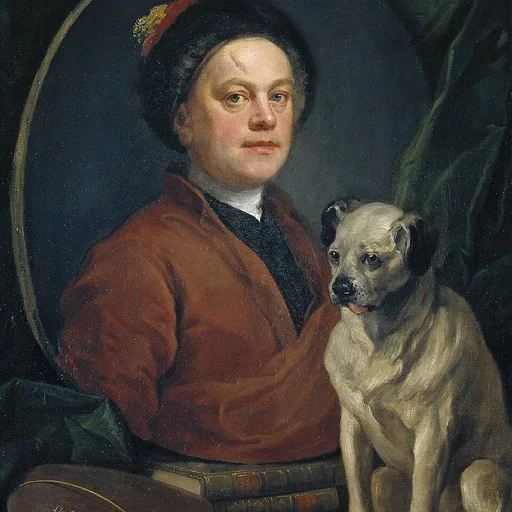
William Hogarth (; 10 November 1697 – 26 October 1764) was an English painter, engraver, satirist, cartoonist and writer.