Artwork
A Harlot's Progress: pl.4
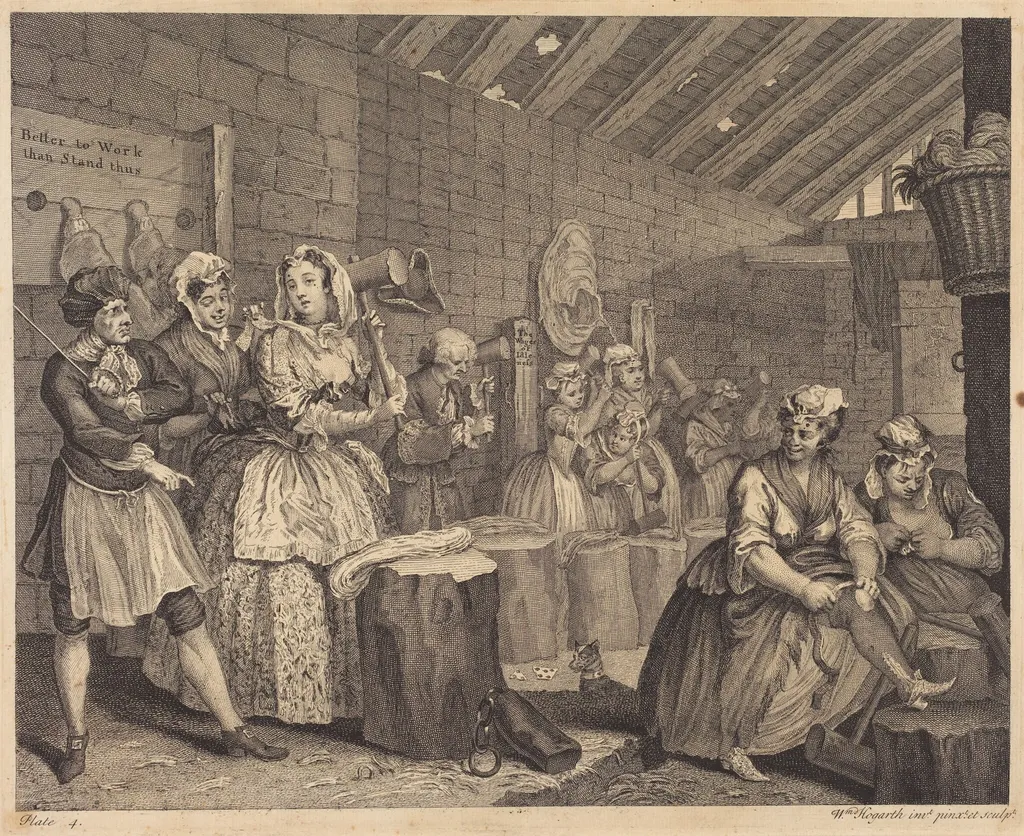
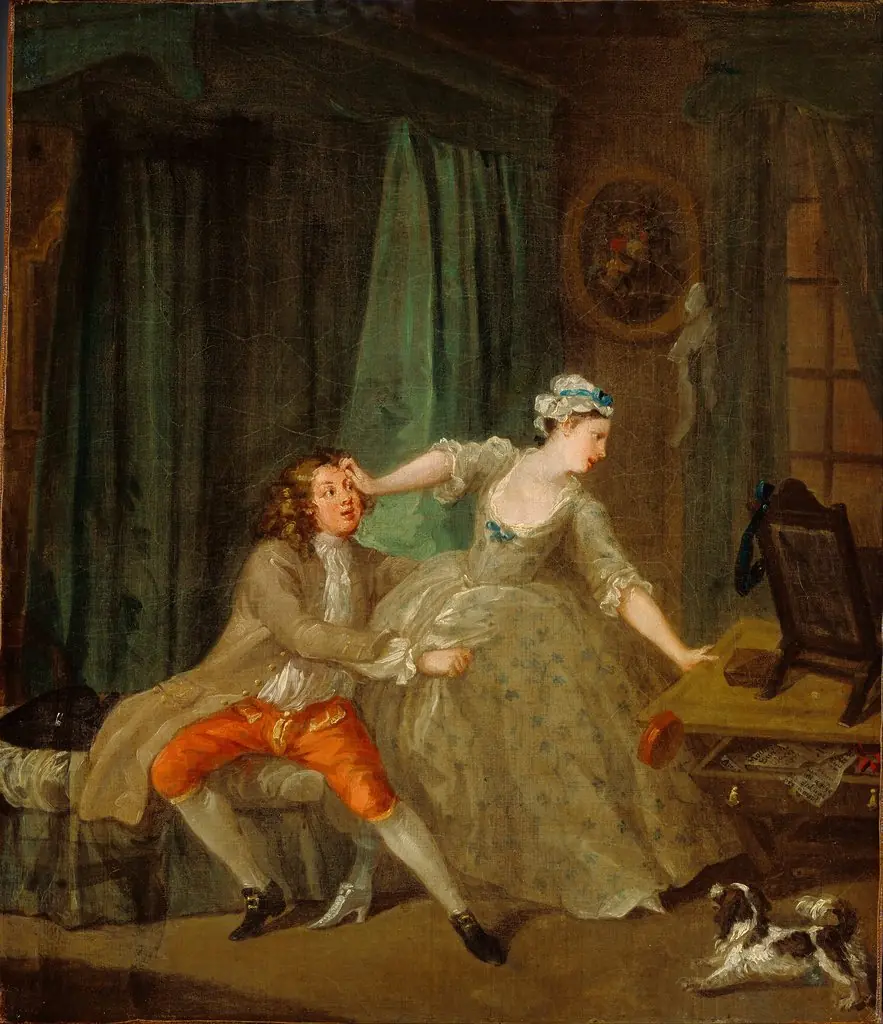
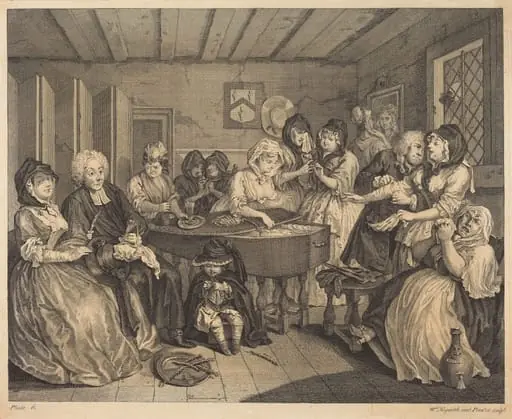
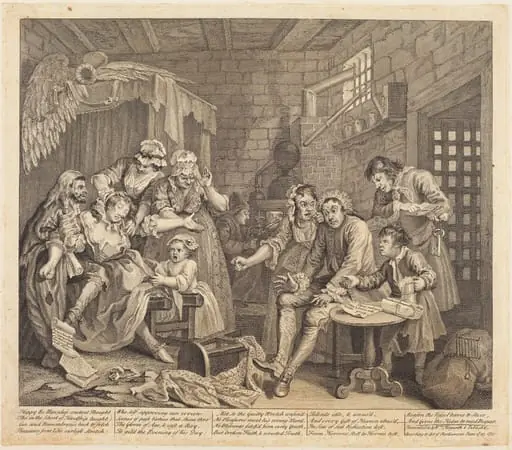
A Harlot's Progress: pl.4 is an ink print by the Baroque artist William Hogarth. It dates from 1732 and is held in the collection of the National Gallery of Art.
About this work
The painting is a commentary on the lives of women during the 18th century, highlighting their daily struggles and hardships.
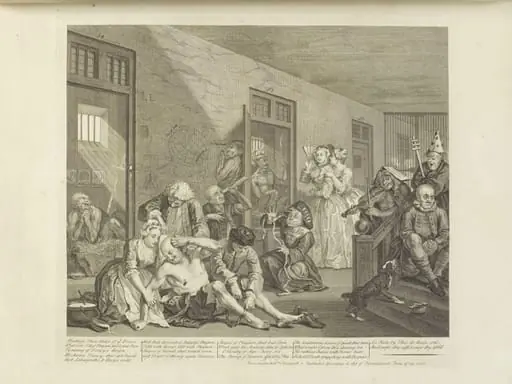
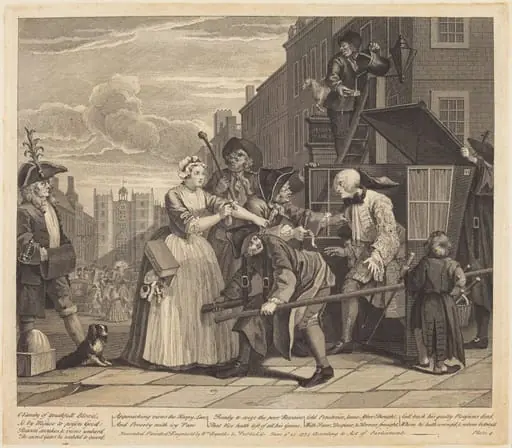
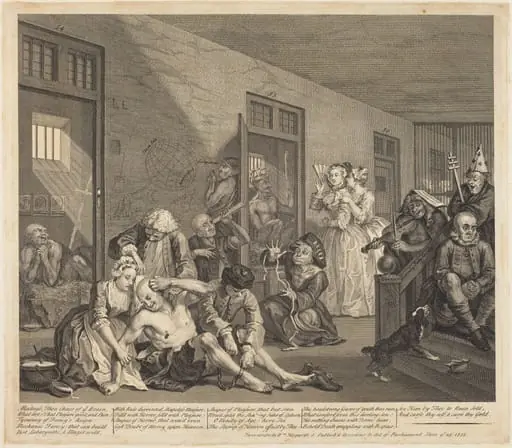
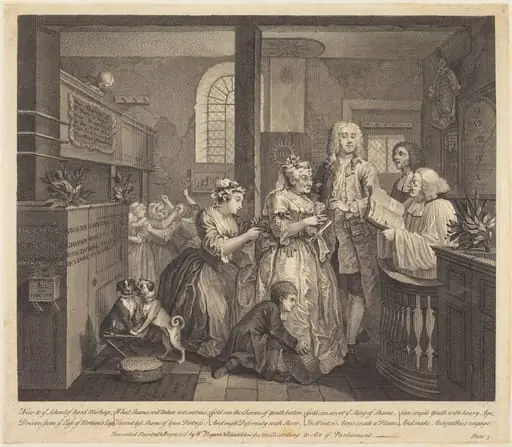
The painting shows a group of women in a room, some sitting and others standing. They are dressed in old-fashioned clothing, with some wearing hats and others holding objects like a sword and a basket. The room has a high ceiling with exposed beams and a brick wall with a sign that reads "Better to Work than Stand thus".
In the foreground, a woman sits on a bench, holding a sword and looking down at her lap. Another woman stands behind her, holding a basket and looking up at the ceiling. The women are all engaged in different activities, some working and others chatting or looking around the room.
The painting is a commentary on the lives of women during the 18th century, highlighting their daily struggles and hardships. It is a work by Hogarth, William.
Overview
William Hogarth’s fourth plate of *A Harlot’s Progress* (1732) is a printed image created by both etching and engraving. It forms part of a six‑picture series that traces a young woman’s descent from arrival in London to her ultimate ruin, presenting the narrative in a single, densely populated scene.
Subject & Meaning
The plate depicts an interior where several women occupy a modest room. One sits on a bench, sword in hand, while another stands nearby holding a basket. Their varied postures and activities—working, conversing, gazing upward—suggest the limited options and social pressures faced by women in eighteenth‑century urban life, underscoring the moral commentary of the series.
Technique & Style
Hogford combined the line work of engraving with the softer tonal qualities of etching, allowing both precise detail and atmospheric shading. The composition is crowded yet ordered, with clear delineation of figures against a brick wall and exposed beams, characteristic of Hogarth’s narrative clarity and his satirical visual language.
History & Provenance
The series was published in 1732 and quickly circulated as prints, reaching a broad audience in England and abroad. Original impressions remain in major museum collections, including the British Museum and the National Gallery of Art, reflecting the work’s continued relevance as a social document.
Context
Hogarth positioned the series within his self‑described “modern moral subjects,” a genre that merged storytelling with social critique. By portraying the protagonist’s downfall alongside the everyday activities of other women, the plate comments on the economic and moral vulnerabilities of the lower classes in Georgian London.
Artist & collection
Artist
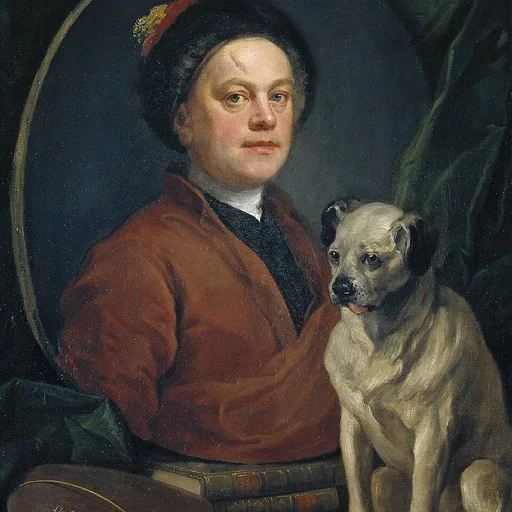
William Hogarth (; 10 November 1697 – 26 October 1764) was an English painter, engraver, satirist, cartoonist and writer.