Artwork
A Harlot's Progress: pl.2
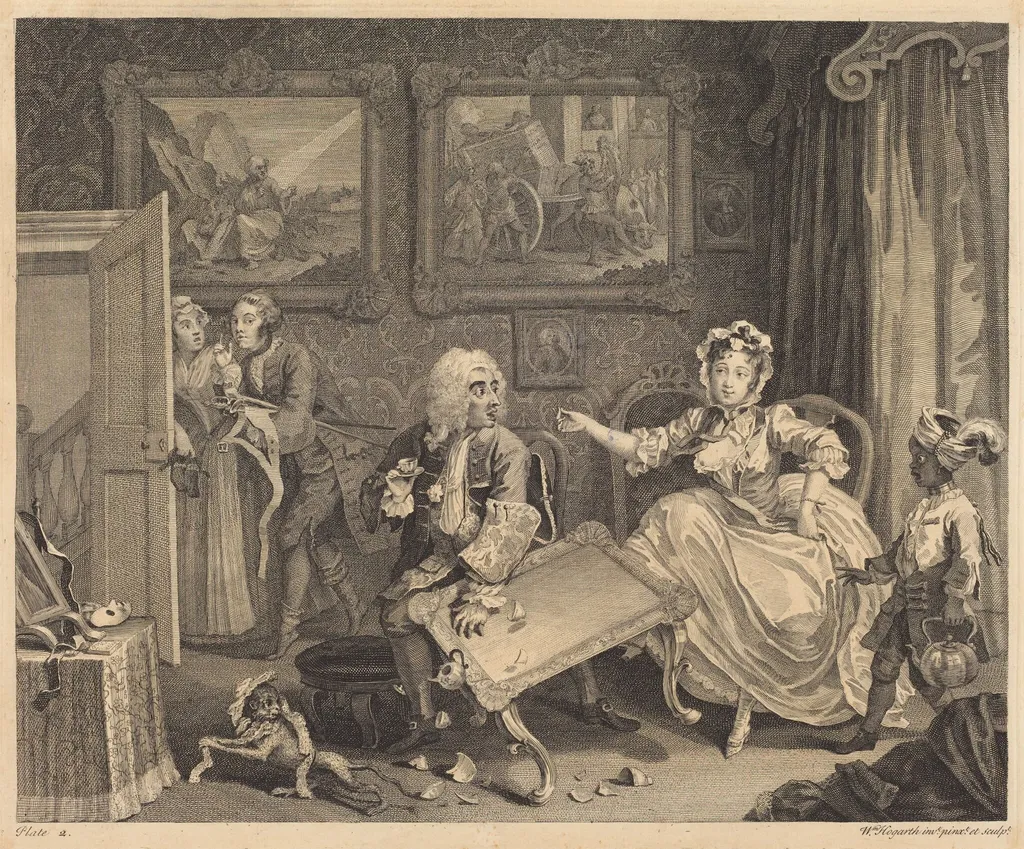
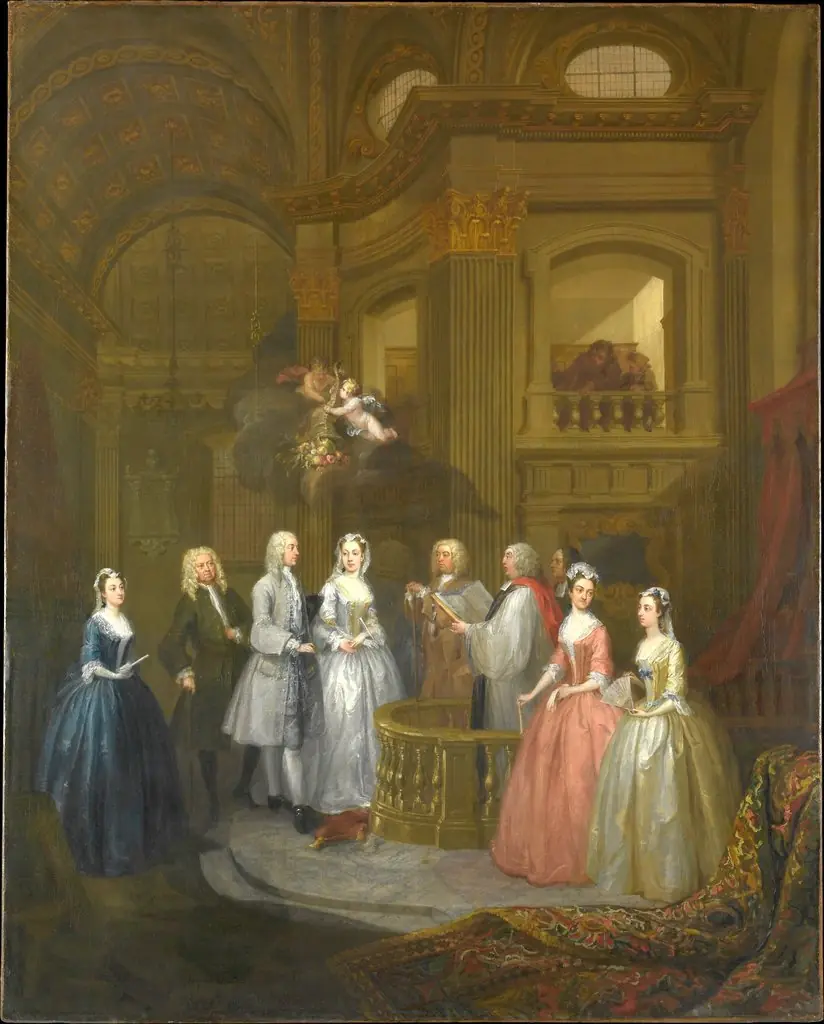
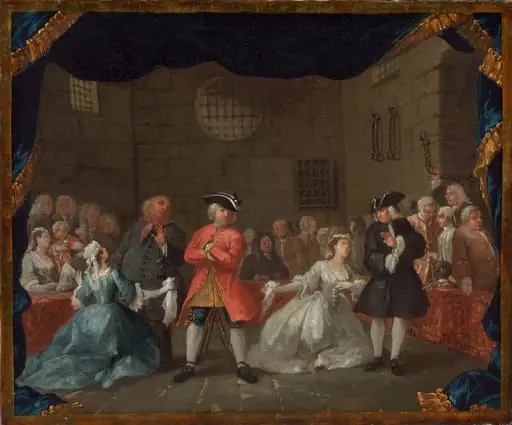
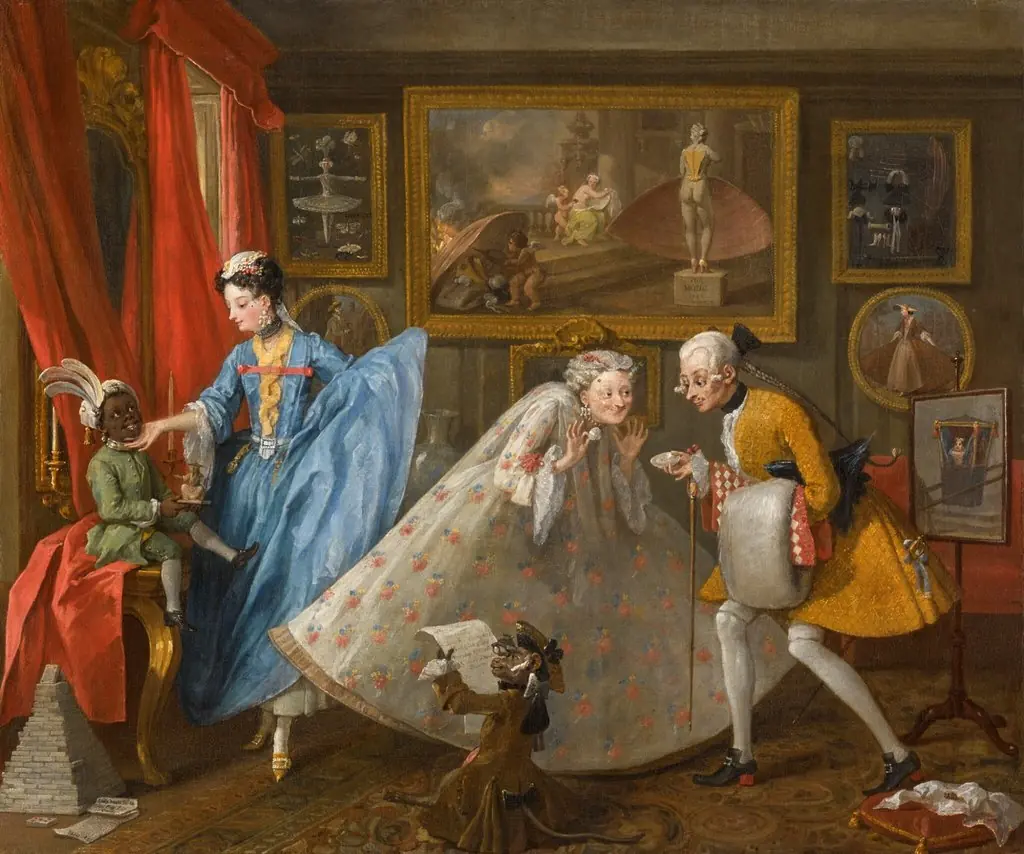
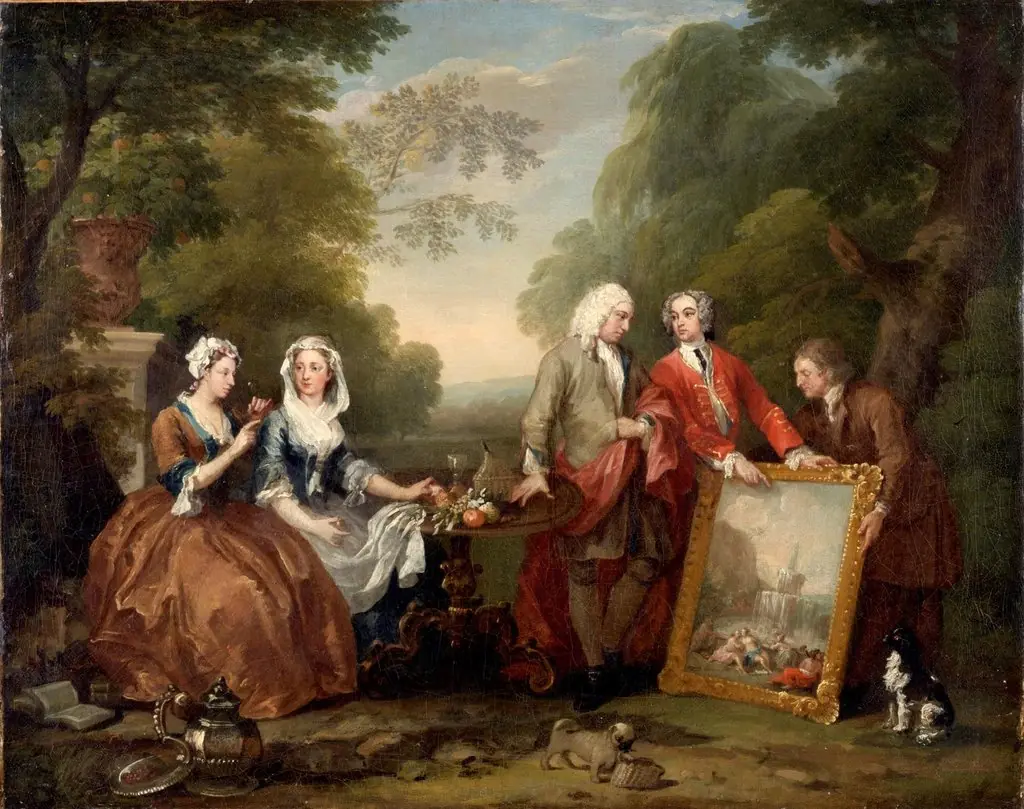
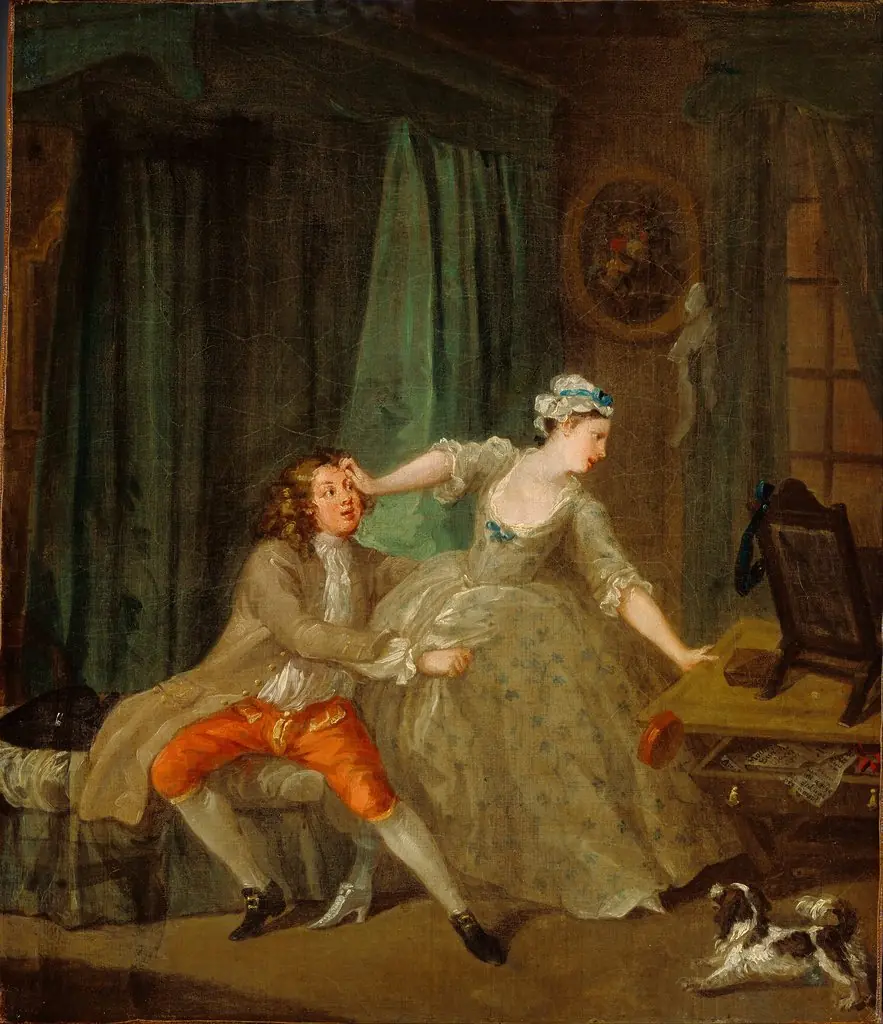
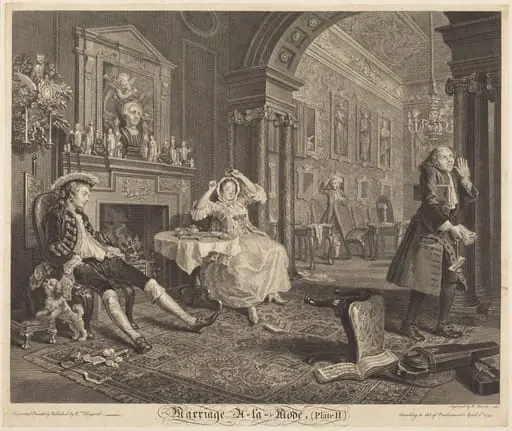
A Harlot's Progress: pl.2 is an ink print by the Baroque artist William Hogarth. It dates from 1732 and is held in the collection of the National Gallery of Art. A Harlot's Progress: pl.
About this work
Overview
A Harlot's Progress: pl. 2 is a print from a series of six etchings and engravings created by William Hogarth in 1732. It is part of a narrative sequence that explores themes of morality and social vice in 18th-century London.
Subject & Meaning
The print depicts a dramatic scene in an ornately decorated room, where a young woman, likely the harlot, is at the center of attention. She is surrounded by four others, reacting to an unseen event or object on the wall, conveying a moment of tension or conflict.
Technique & Style
Hogarth employed etching and engraving techniques to create detailed textures and shading, particularly evident in the rendering of fabrics and facial expressions. The use of these techniques allowed for a high level of intricacy and depth in the print.
Context
The print is part of Hogarth's 'modern moral subjects,' a series of works that used satire and narrative to comment on contemporary social issues. A Harlot's Progress specifically follows the downfall of a young woman in London, using sequential imagery to tell the story.
Artist & collection
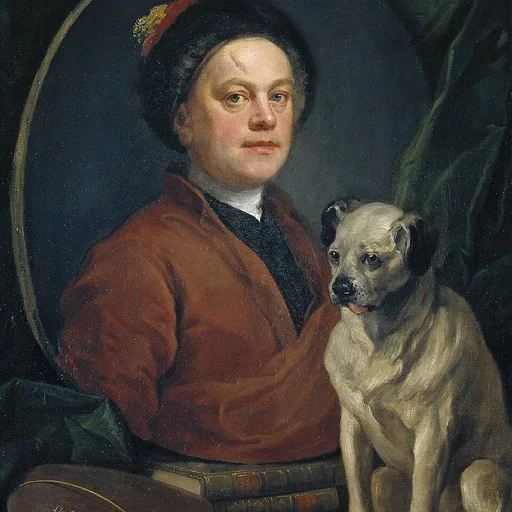
Artist
William Hogarth (; 10 November 1697 – 26 October 1764) was an English painter, engraver, satirist, cartoonist and writer.