Artwork
Analysis of Beauty: pl.2
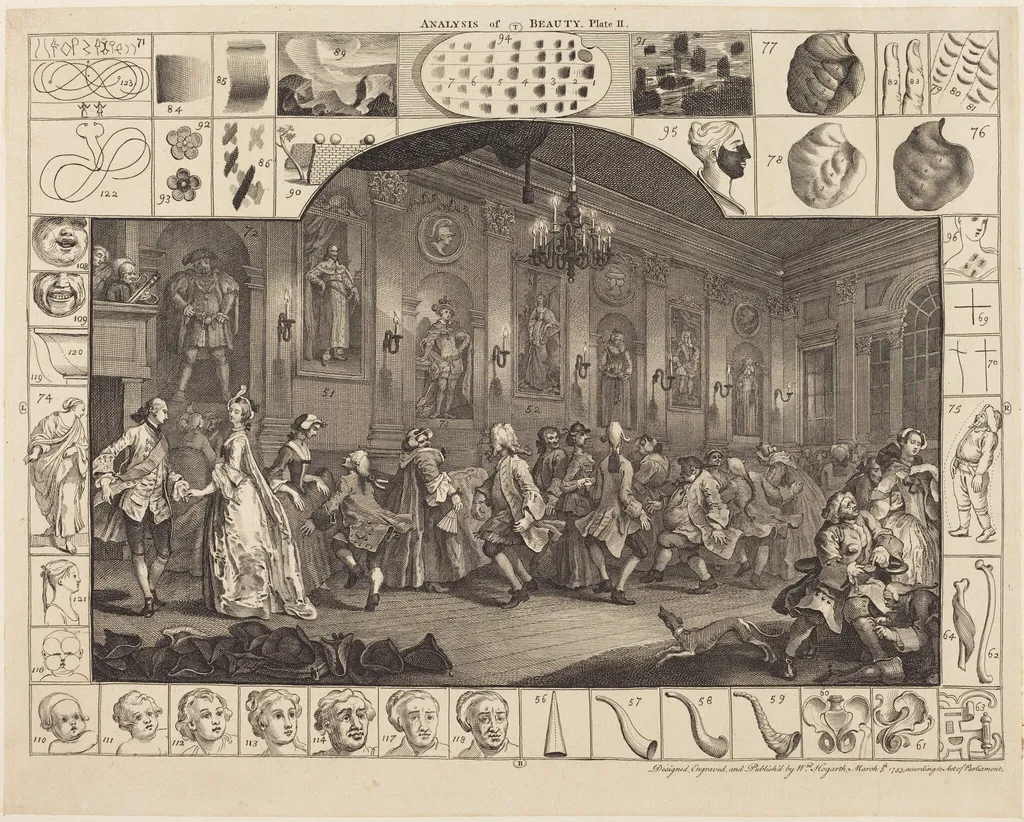
Analysis of Beauty: pl.2 is an ink print by the Romanticist artist William Hogarth. It dates from 1753 and is held in the collection of the National Gallery of Art.
About this work
Overview
It is one of several plates designed to accompany his written argument, translating abstract concepts into observable imagery.
William Hogarth’s *Analysis of Beauty: pl. 2*, published in 1753, is an etching and engraving produced as part of a theoretical treatise on aesthetic principles. Unlike his narrative series such as *A Harlot’s Progress*, this plate serves an analytical function, using visual composition to illustrate his ideas about line, form, and movement in art. It is one of several plates designed to accompany his written argument, translating abstract concepts into observable imagery.
Subject & Meaning
The print depicts a social gathering in an ornate interior, with figures engaged in varied activities—dancing, conversing, and observing. Hogarth uses this scene not to record a specific event, but to demonstrate how serpentine lines and dynamic arrangements create visual interest. The figures’ postures and spatial relationships exemplify his theory that the 'line of beauty'—a flowing, S-shaped curve—underlies pleasing composition in both nature and art.
Technique & Style
Hogarth employed etching and engraving to achieve fine detail and tonal contrast, characteristic of his printmaking practice. The intricate architectural elements—carved moldings, wall decorations, and window frames—are rendered with precision, while the figures are loosely sketched to emphasize motion. The composition avoids symmetry, favoring asymmetrical balance and rhythmic repetition of curves, aligning with his theoretical emphasis on variety and movement over rigid order.
History & Provenance
Created as Plate 2 in Hogarth’s 1753 treatise *The Analysis of Beauty*, the print was issued alongside the book to visually support his arguments. It was not intended as a standalone artwork but as an instructional tool for artists and patrons. Original impressions were distributed to subscribers and art academies, contributing to debates on aesthetics in 18th-century Britain. Its survival in institutional collections reflects its role in art education rather than private collecting.
Context
Hogarth’s work emerged during a period of intense debate over aesthetic standards in Britain, influenced by continental theories and rising interest in empirical observation. His rejection of rigid classical ideals in favor of naturalistic, dynamic forms positioned him against prevailing academic norms. The print reflects his broader project to democratize art theory, making it accessible through clear visual examples rooted in everyday life rather than mythological or historical subjects.
Legacy
Though not widely influential in formal art academies of the time, Hogarth’s visual approach to aesthetic theory anticipated later developments in the study of visual perception. His emphasis on movement and organic line influenced 19th-century critics and artists interested in expressive form. The print remains a key document in the history of art theory, valued for its synthesis of practical observation and intellectual inquiry rather than for stylistic innovation alone.
Artist & collection
Artist
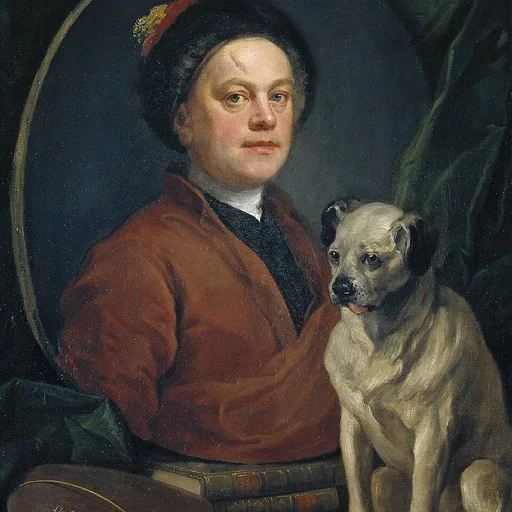
William Hogarth (; 10 November 1697 – 26 October 1764) was an English painter, engraver, satirist, cartoonist and writer.

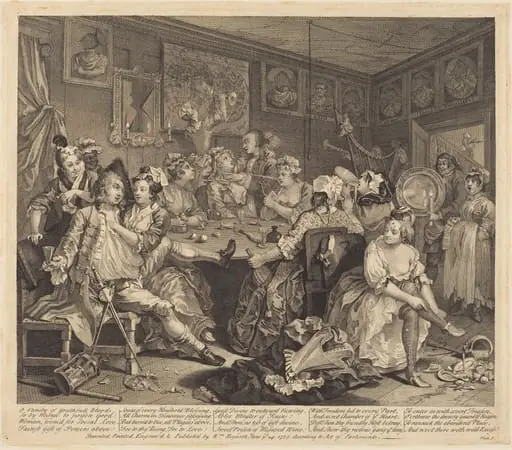 A Rake's Progress: pl.3
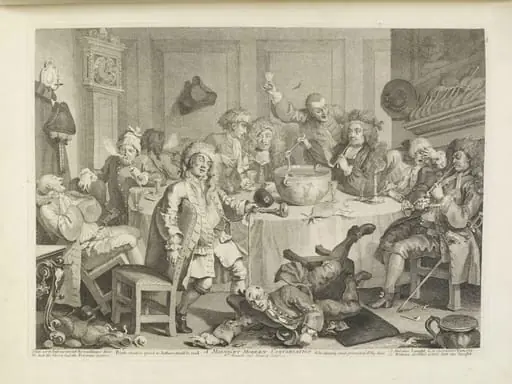 A Midnight Modern Conversation
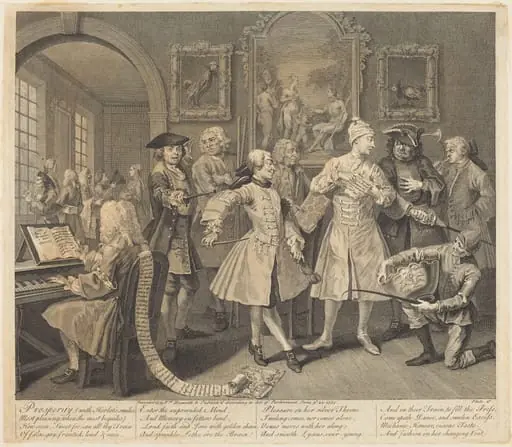 A Rake's Progress: pl.2
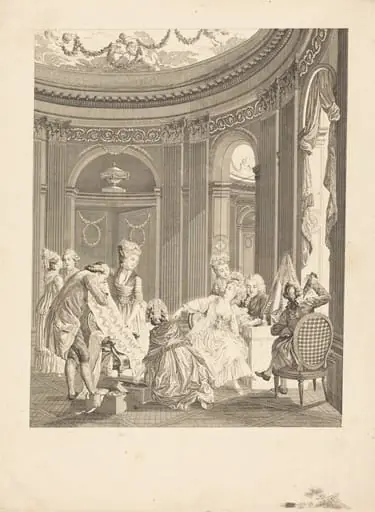 Qu'en dit l'Abbé?
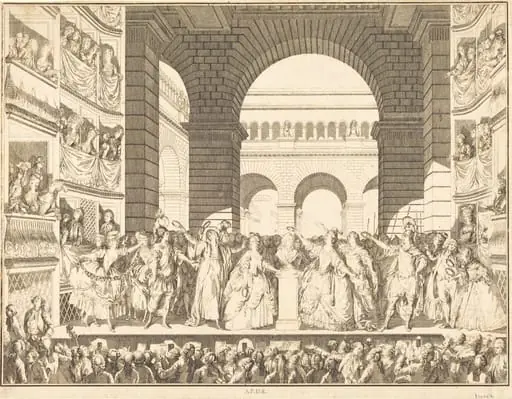 Couronnement de Voltaire (The Crowning of Voltaire)
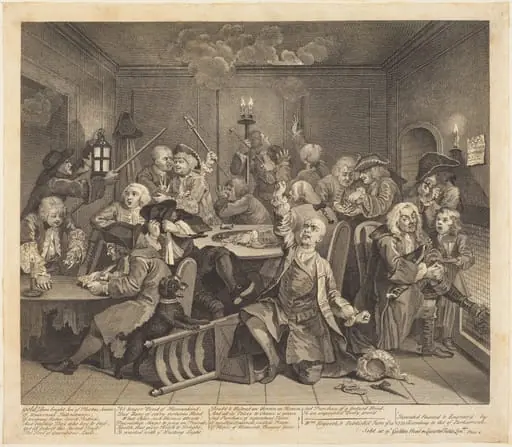 A Rake's Progress: pl.6
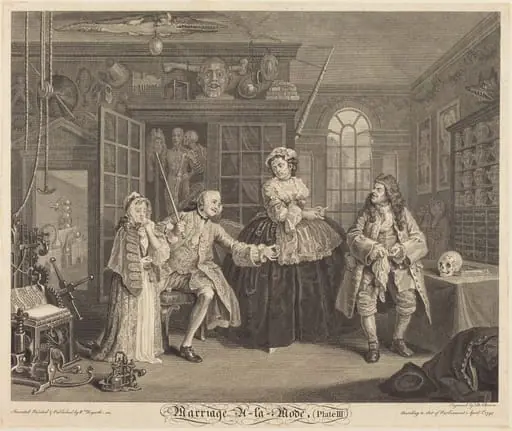 Marriage a la Mode: pl. 3
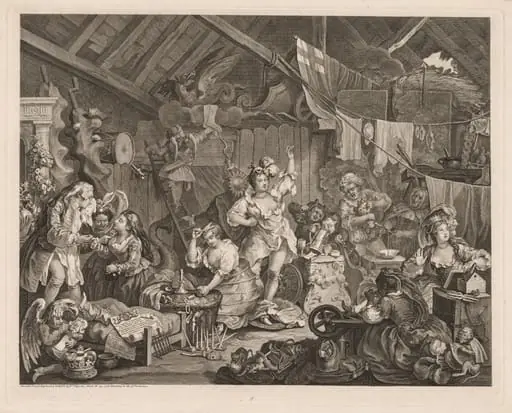 Strolling Actresses Dressing in a Barn
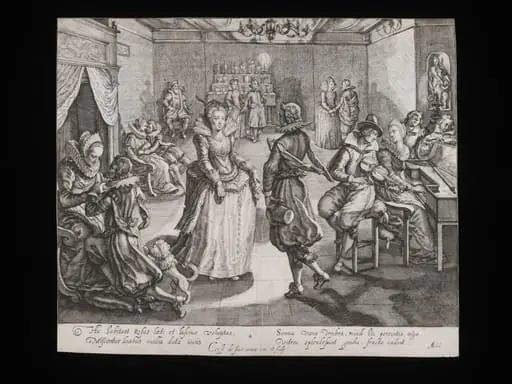 Feast in the house of the Rich Man
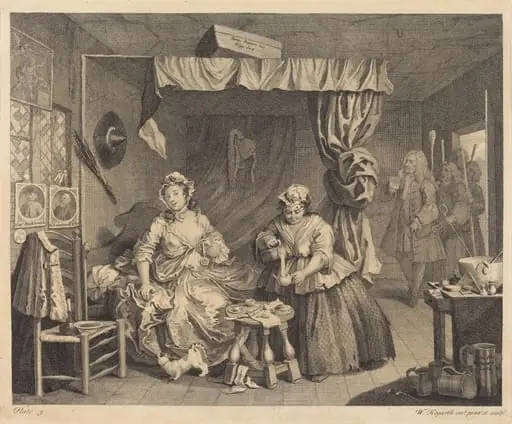 A Harlot's Progress: pl.3
 A Pleasure House
 Analysis of Beauty: pl.1