Artwork
Cunicularii, or The Wise Men of Godliman in Consultation
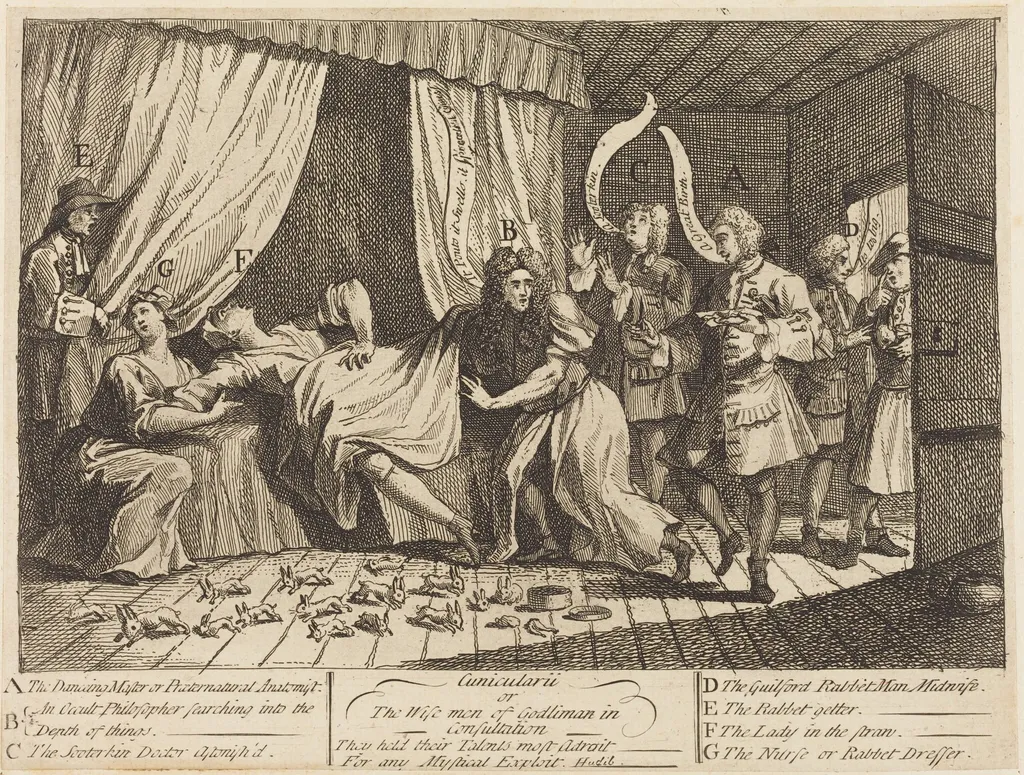
Cunicularii, or The Wise Men of Godliman in Consultation is an ink print by the Baroque artist William Hogarth. It dates from 1726 and is held in the collection of the National Gallery of Art.
About this work
Overview
Cunicularii, or The Wise Men of Godliman in Consultation, is a 1726 etching by William Hogarth, combining satire with social commentary in a chaotic indoor scene.
Subject & Meaning
The etching satirically depicts seven individuals in fervent discussion within a cluttered, dimly lit room. A man peers into a floor hole, while others gesticulate intensely. The scene likely allegorically critiques the pursuit of hidden secrets or excessive inquisitiveness.
Technique & Style
Hogarth employed sharp lines and nuanced shading to convey the frenetic atmosphere. The etching showcases his ability to merge humor with keen observational commentary, characteristic of his satirical approach.
History & Provenance
Created in 1726, this work reflects Hogarth's early career, which spanned portraiture, narrative prints, and political satire. It exemplifies his use of prints to critique societal follies, influencing later political illustration traditions.
Context
Within 18th-century England, this etching aligns with Hogarth's broader commentary on human behavior and societal ills, using satire to engage and critique his contemporaries.
Legacy
Cunicularii contributed to Hogarth's legacy as a pioneering satirist, whose printmaking techniques and sharp social commentary paved the way for future generations of political illustrators.
Artist & collection
Artist
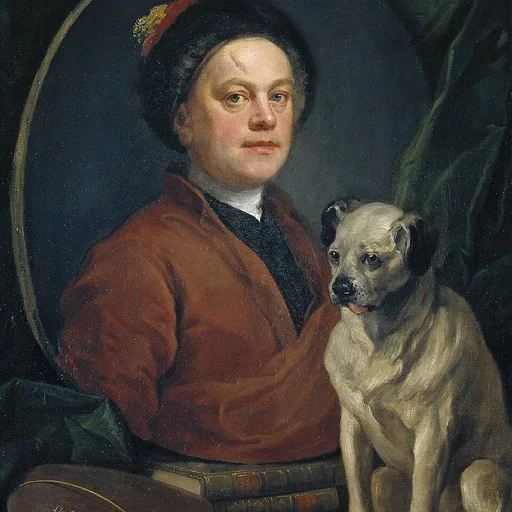
William Hogarth (; 10 November 1697 – 26 October 1764) was an English painter, engraver, satirist, cartoonist and writer.

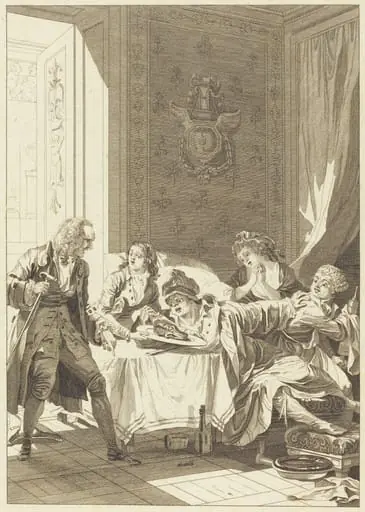 Le glouton
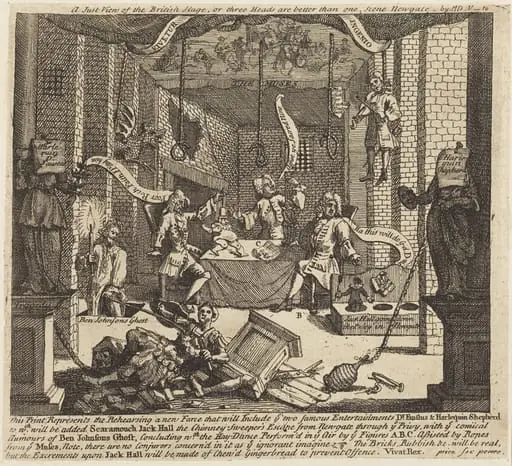 A Just View of the British Stage
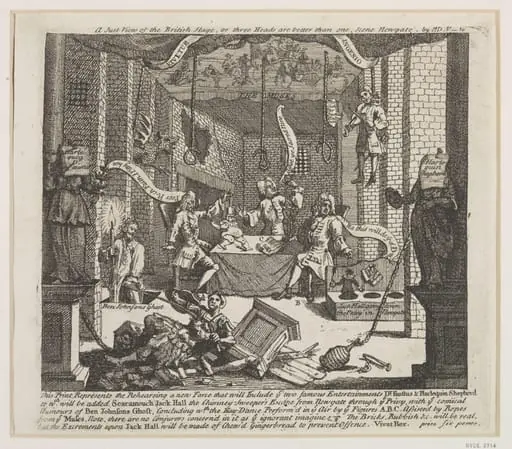 A Just View of the British Stage
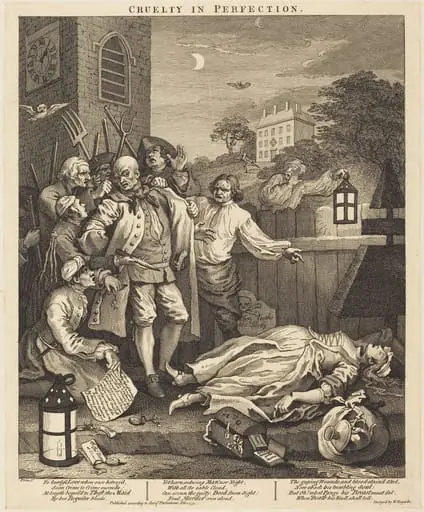 Cruelty in Perfection
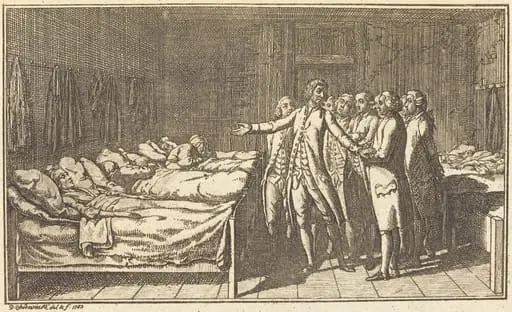 A Welcome Guest
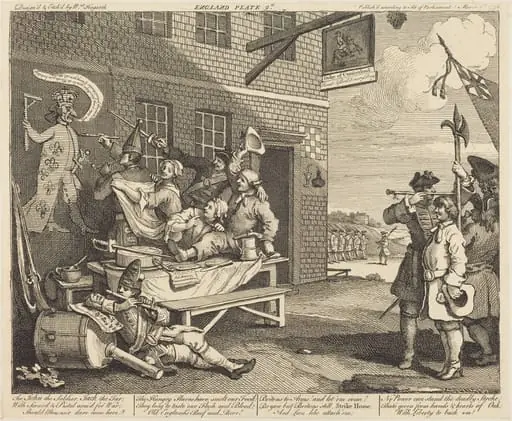 England
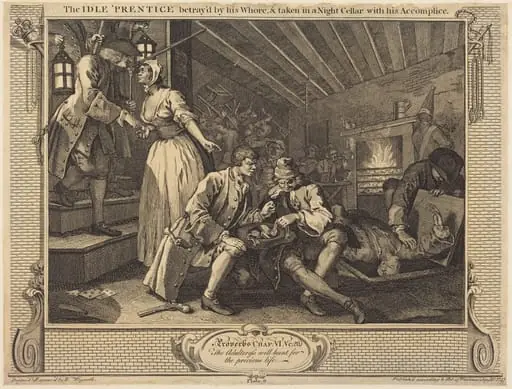 The Idle 'Prentice betray'd by his Whore, & taken in a Night Cellar with his Accomplice
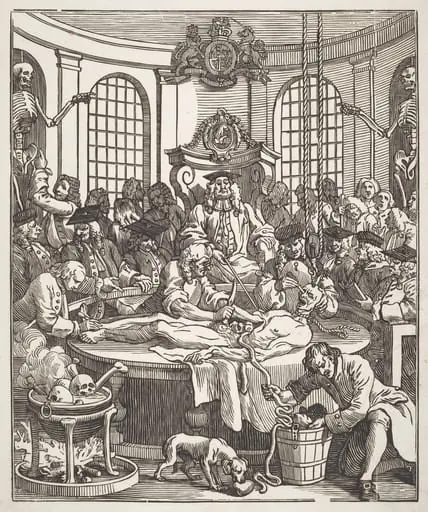 The Reward of Cruelty
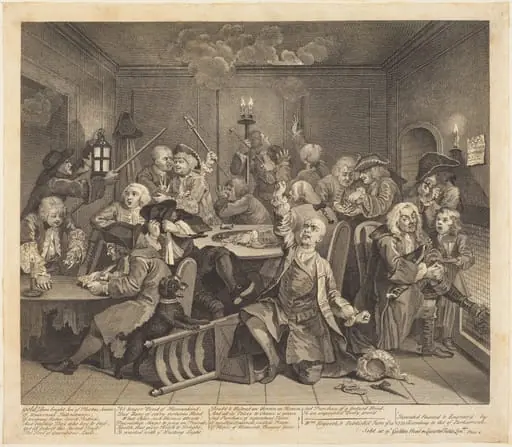 A Rake's Progress: pl.6
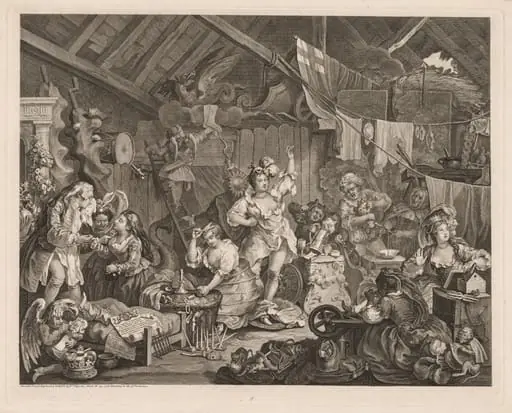 Strolling Actresses Dressing in a Barn
 Le seducteur
 Cruelty in Perfection