Artwork
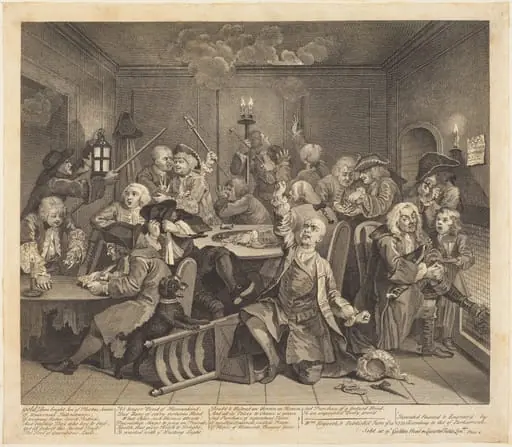
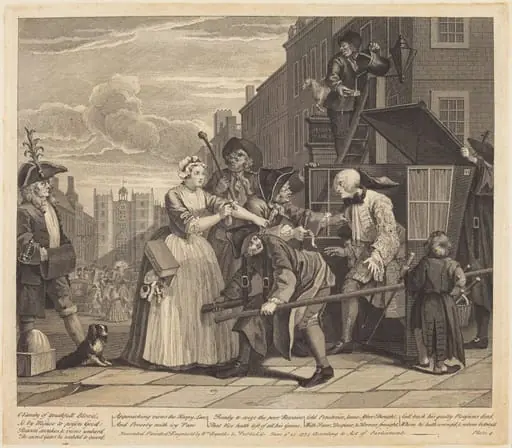
The Idle 'Prentice betray'd by his Whore, & taken in a Night Cellar with his Accomplice
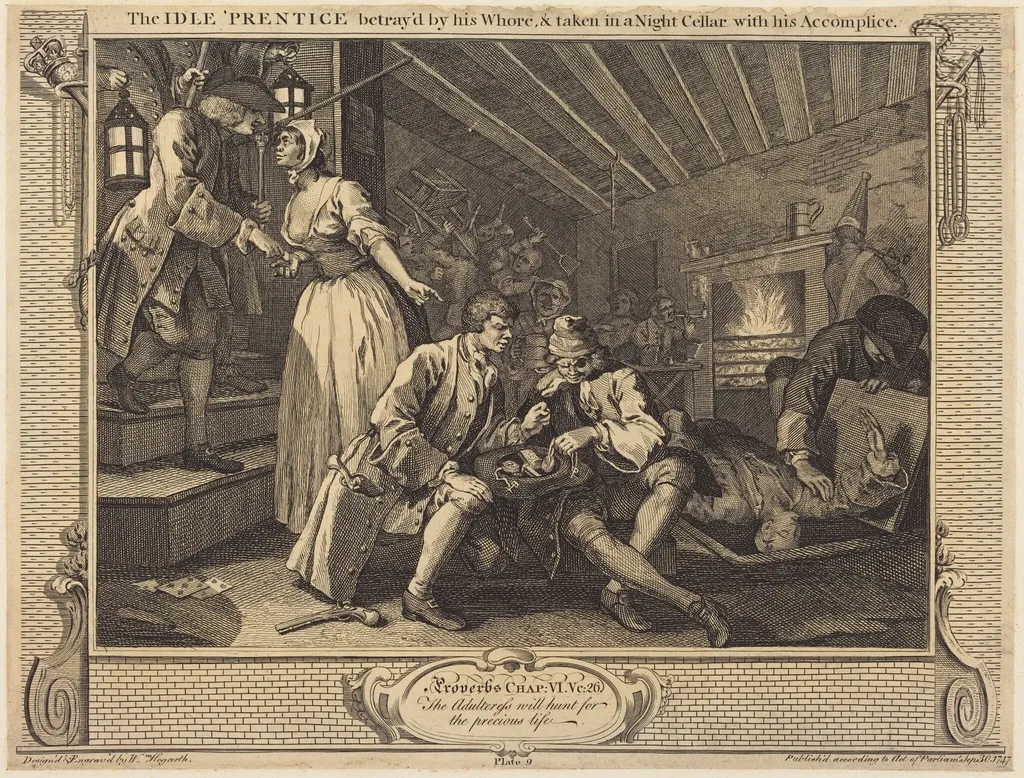
The Idle 'Prentice betray'd by his Whore, & taken in a Night Cellar with his Accomplice is an ink print by the Baroque artist William Hogarth. It dates from 1747 and is held in the collection of the National Gallery of Art.
About this work
Overview
Executed in etching and engraving, it illustrates the consequences of moral decay through a single, densely packed scene.
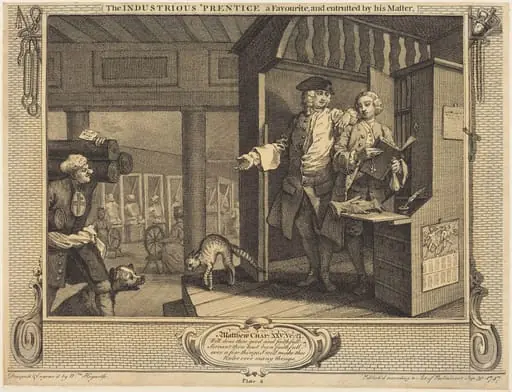
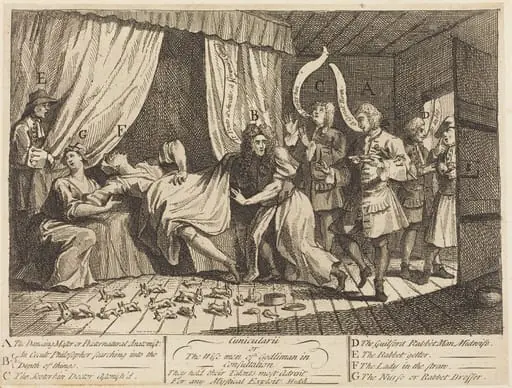
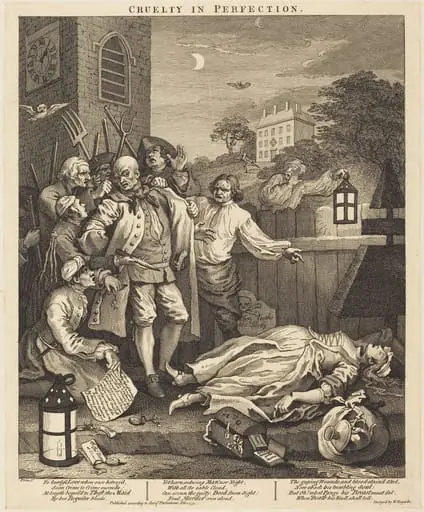
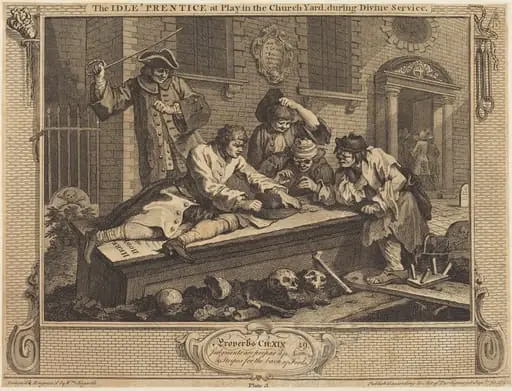
Created in 1747, this print is the final plate of William Hogarth’s six-part series *A Harlot’s Progress*. Executed in etching and engraving, it illustrates the consequences of moral decay through a single, densely packed scene. Unlike traditional history painting, Hogarth used sequential imagery to tell a cautionary tale aimed at the urban middle class, blending narrative clarity with sharp social critique.
Subject & Meaning
The scene portrays a former apprentice, now ensnared in crime, bound and helpless in a night cellar. A woman, his corrupting companion, gestures accusingly as another figure holds a lantern, illuminating the moment of capture. The title explicitly frames the event as punishment for idleness and poor associations, turning the tavern into a symbolic trap where vice leads to ruin.
Technique & Style
Hogarth employed fine etched lines and precise engraving to render texture and movement: the flicker of firelight on faces, the crumpled fabric of garments, the chaotic clutter of the room. His use of chiaroscuro heightens drama, while the crowded composition forces the viewer to scan every detail, reinforcing the moral weight of each figure’s role in the downfall.
History & Provenance
The print was issued as part of a serialized set published in 1732, with this final plate appearing in 1747 as a reissued version. Originally sold as affordable prints, they circulated widely among London’s literate public. Copies survive in major collections, including the British Museum and the Victoria and Albert Museum, attesting to their early popularity and enduring archival value.
Context
In mid-18th-century London, rising urbanization and moral anxiety fueled public interest in narratives of vice and redemption. Hogarth’s series responded to contemporary debates about poverty, prostitution, and the erosion of work ethic. By grounding his stories in recognizable settings and characters, he turned art into a tool for civic instruction, accessible beyond elite audiences.
Legacy
Hogarth’s sequential storytelling influenced later developments in graphic narrative and social realism. His integration of moral warning with visual detail set a precedent for illustrated journalism and political cartoons. Though his style was rooted in his time, the structure of his narratives—where environment reflects character—remains a touchstone in visual storytelling.
Artist & collection
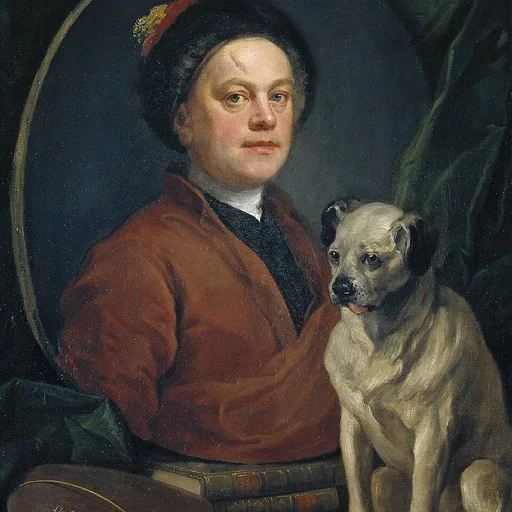
Artist
William Hogarth (; 10 November 1697 – 26 October 1764) was an English painter, engraver, satirist, cartoonist and writer.