Artwork
Evening
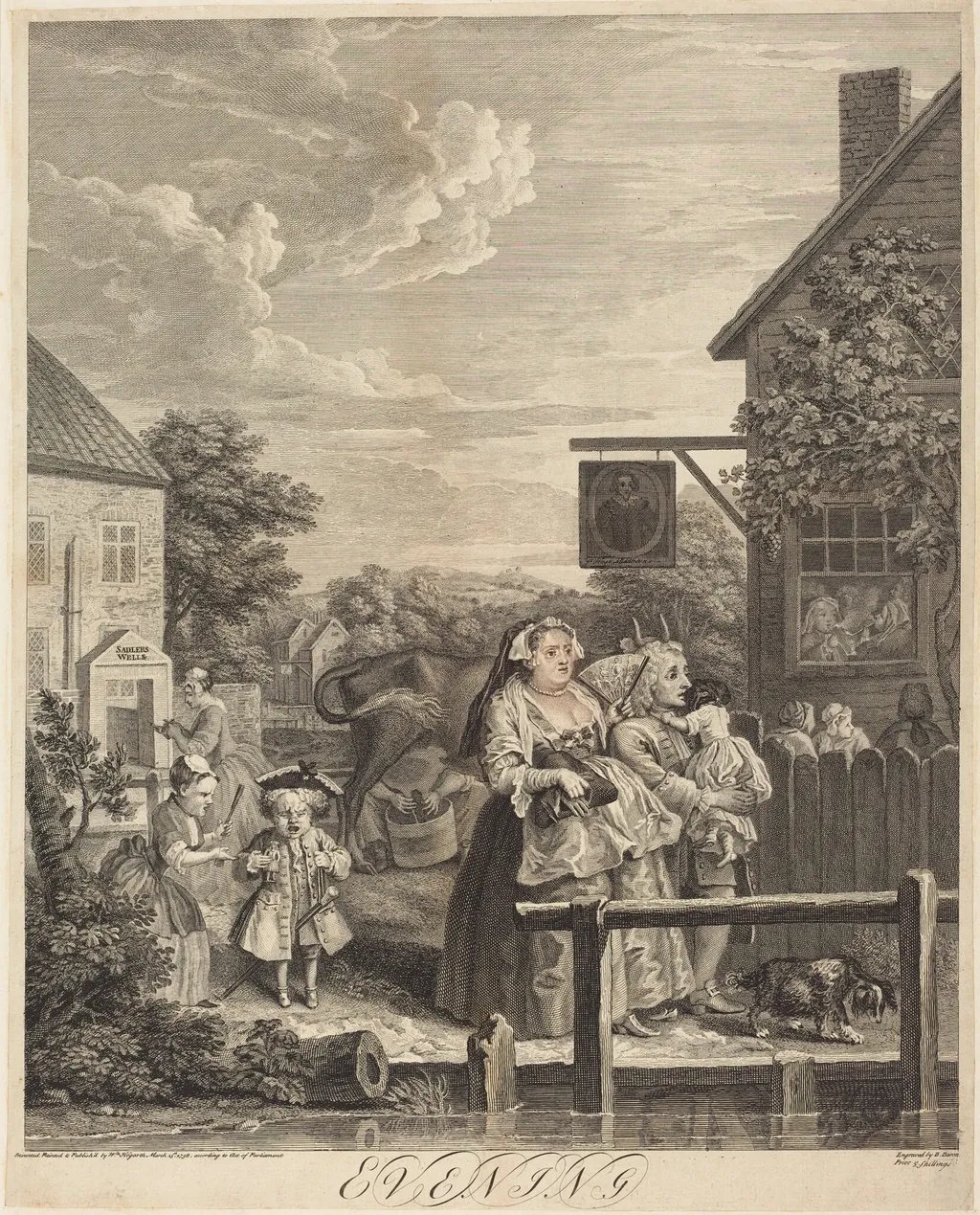
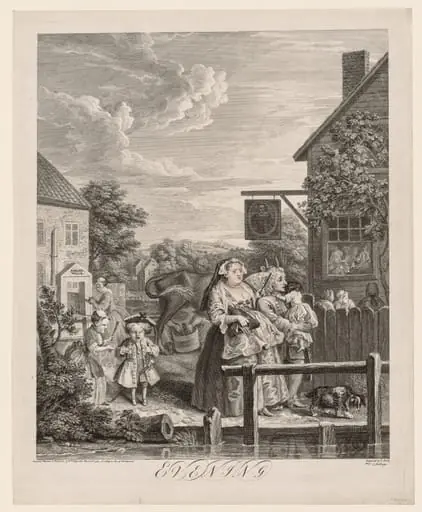
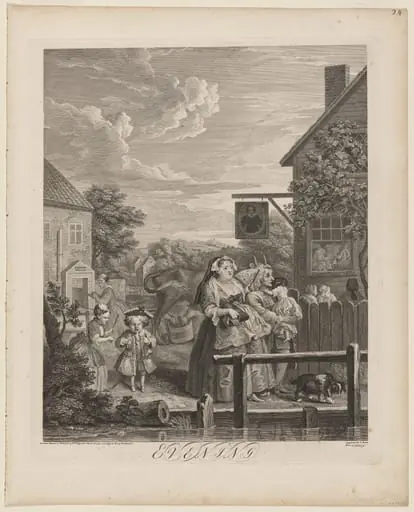
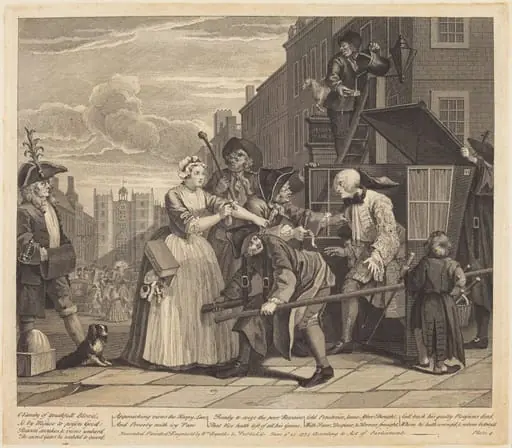
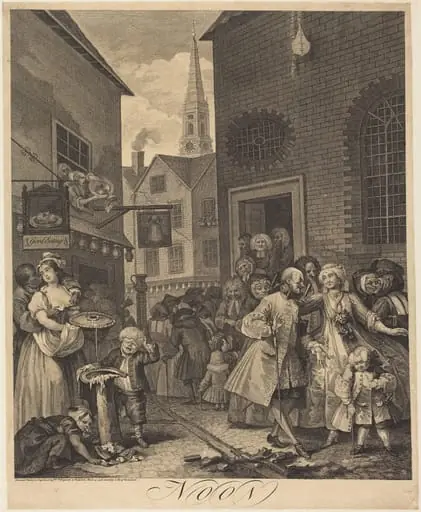
Evening is an ink print by the Baroque artist William Hogarth. It dates from 1738 and is held in the collection of the National Gallery of Art.
About this work
Overview
Executed in etching and engraving, it captures a moment of communal activity at dusk, contrasting with the disorder of earlier scenes.
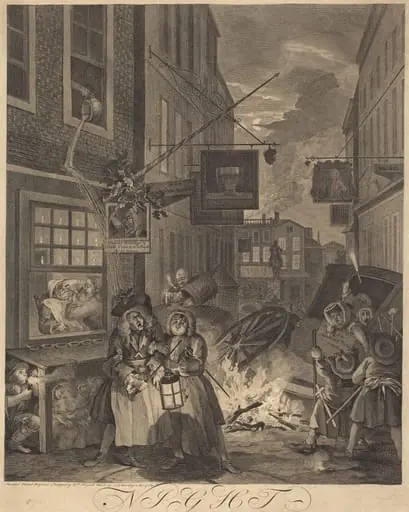
Evening is the fourth plate in William Hogarth’s 1738 series The Four Times of Day, a set of prints examining urban life in London through the lens of a single day. Executed in etching and engraving, it captures a moment of communal activity at dusk, contrasting with the disorder of earlier scenes. Hogarth used printmaking to reach a broad audience, turning everyday street scenes into vehicles for social commentary.
Subject & Meaning
The scene shows a group of townspeople gathered outside a modest home at twilight. A woman holds a child while another stands nearby, their interactions suggesting informal social bonds. A sign above the door, likely advertising a tavern or shop, anchors the setting in commercial life. The composition implies a fragile order—community cohesion amid the chaos of city living, a recurring theme in Hogarth’s moral narratives.
Technique & Style
Hogarth combined etching for fluid lines with engraving for precise detail, creating texture in clothing, architecture, and foliage. Light falls diagonally across the scene, modeling forms and drawing attention to the central figures. The background, with its muted sky and sparse trees, recedes softly, enhancing the sense of depth without romanticizing the setting. His draftsmanship prioritizes clarity over embellishment.
History & Provenance
Created in 1738, Evening was published as part of a series intended for mass distribution. Hogarth retained control over its reproduction, selling subscriptions directly to patrons to avoid unauthorized copies. The print quickly circulated among London’s middle class, reinforcing his reputation as a chronicler of urban mores. Original impressions are now held in major institutional collections.
Context
In 1730s London, rapid urbanization and shifting class dynamics fueled public interest in moral and social observation. Hogarth’s prints responded to this climate, offering visual critiques of behavior that official art often ignored. Unlike idealized historical scenes, his work embraced the gritty reality of street life, aligning with emerging Enlightenment values of empirical observation and civic reflection.
Legacy
Evening contributed to the legitimization of printmaking as a medium for serious social critique. Hogarth’s narrative approach influenced later artists and illustrators who sought to document everyday life with moral intent. The Four Times of Day series helped establish the precedent for sequential visual storytelling in British art, paving the way for graphic satire and social realism in the 19th century.
Artist & collection
Artist
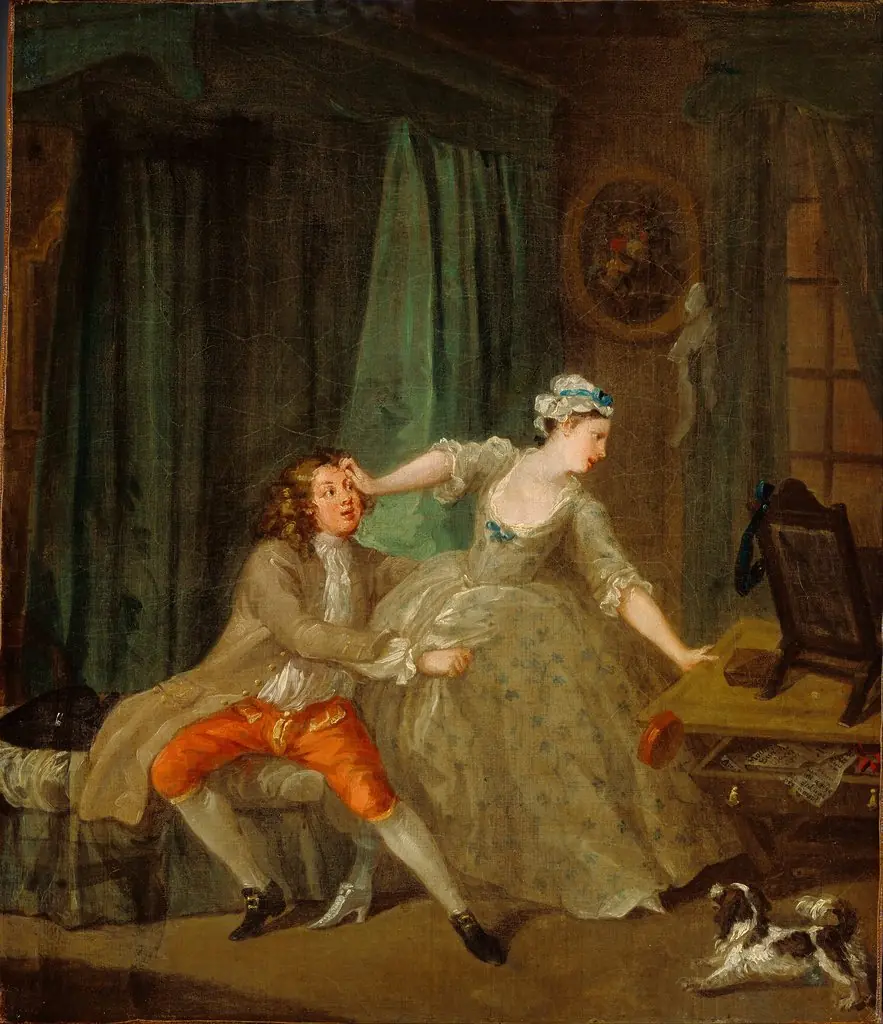
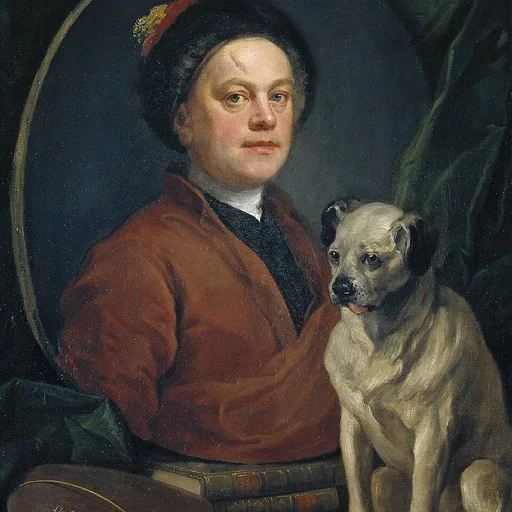
William Hogarth (; 10 November 1697 – 26 October 1764) was an English painter, engraver, satirist, cartoonist and writer.