Artwork
The Cockpit
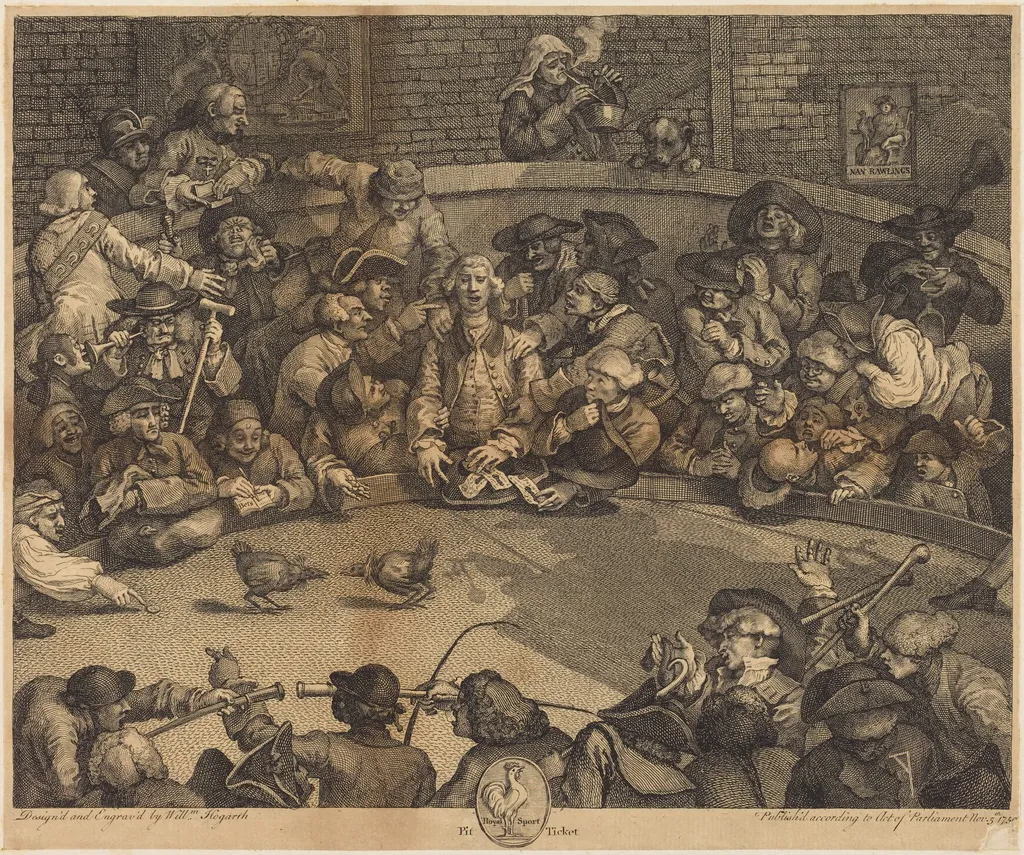
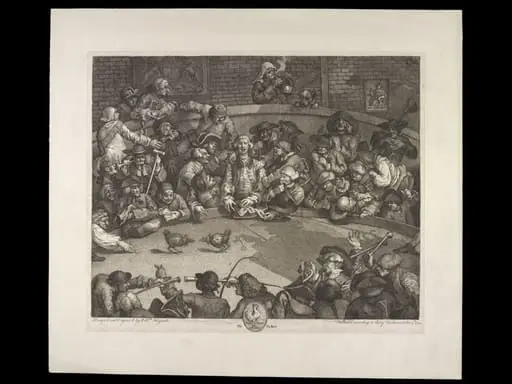
The Cockpit is an ink print by the Romanticist artist William Hogarth. It dates from 1759 and is held in the collection of the National Gallery of Art.
About this work
Overview
Created in 1759, *The Cockpit* is an etching and engraving by William Hogarth, part of his broader engagement with British social life through print.
Created in 1759, *The Cockpit* is an etching and engraving by William Hogarth, part of his broader engagement with British social life through print. Unlike his narrative series, this single plate captures a moment of public spectacle rather than a moral tale. It reflects Hogarth’s interest in the behaviors of ordinary people, rendered with precision and a critical eye. The work was produced during a period when printmaking allowed his images to reach a wide, non-elite audience.
Subject & Meaning
The scene centers on a cockfight, but the focus shifts to the spectators—crowded, animated, and emotionally charged. Amid the chaos, one figure stands out, possibly a ringmaster or commentator, drawing attention as the sole point of order. Hogarth uses the event as a metaphor for public spectacle and moral distraction, suggesting that the crowd’s frenzy mirrors broader societal indulgences. The title, *The Cockpit*, alludes both to the fighting ring and the theatricality of the gathering.
Technique & Style
Hogarth employed etching and engraving to achieve sharp, dense lines that compress the space and amplify the sense of disorder. Facial features are exaggerated—prominent noses, gaping mouths—to heighten the caricatured tone, a hallmark of his visual language. The layered textures of clothing and the overlapping bodies create a claustrophobic effect, reinforcing the scene’s tension. His control of line and tone gives the impression of movement and noise without color or shading.
History & Provenance
The print was issued as a standalone plate, likely sold individually or in collections of Hogarth’s satirical works. It was not part of a numbered series but aligned with his broader critique of public amusements. Copies circulated widely in 18th-century Britain, contributing to his reputation as a chronicler of urban life. No single original impression is known to be uniquely authoritative; multiple states exist, reflecting minor revisions during printing.
Context
Cockfighting was a popular pastime among all classes in 18th-century England, though increasingly criticized by reformers. Hogarth’s depiction does not condemn the sport outright but exposes the absurdity of the crowd’s obsession. The presence of musicians and the theatrical arrangement suggest a performance, linking the spectacle to the emerging culture of public entertainment. His work responds to debates about morality, leisure, and class behavior in London’s growing urban landscape.
Legacy
Though less famous than his narrative series, *The Cockpit* exemplifies Hogarth’s ability to distill complex social dynamics into a single image. It influenced later satirical printmakers who adopted his blend of realism and caricature. The work remains a reference for studying how visual art engaged with public morality and leisure in the Enlightenment era, offering insight into the mechanics of crowd behavior and the role of spectacle in society.
Own this work as a print
Artist & collection
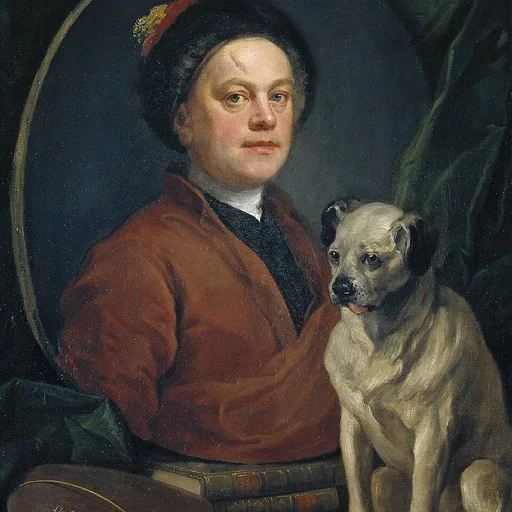
Artist
William Hogarth (; 10 November 1697 – 26 October 1764) was an English painter, engraver, satirist, cartoonist and writer.

 H Beard Print Collection
 A Midnight Modern Conversation
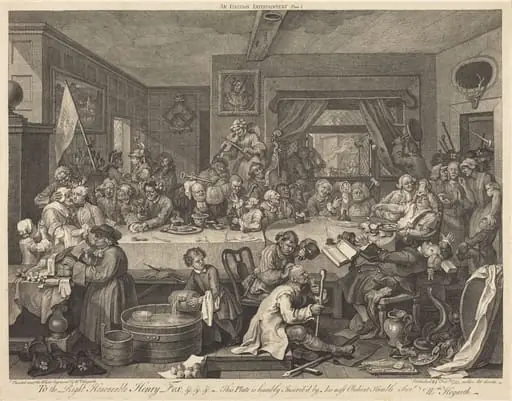 An Election Entertainment
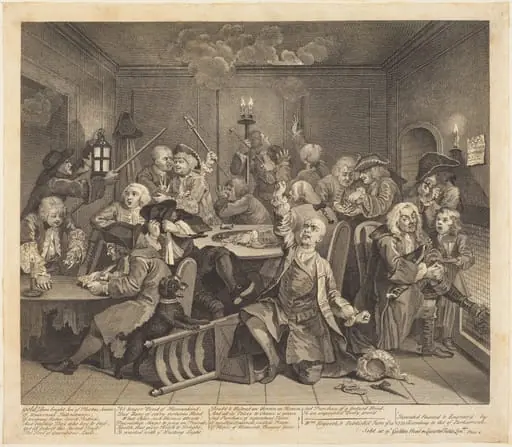 A Rake's Progress: pl.6
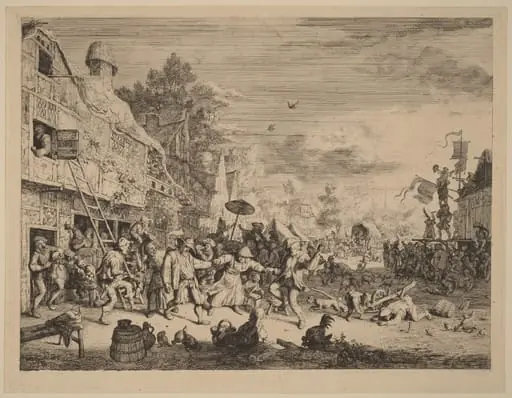 Village Festival
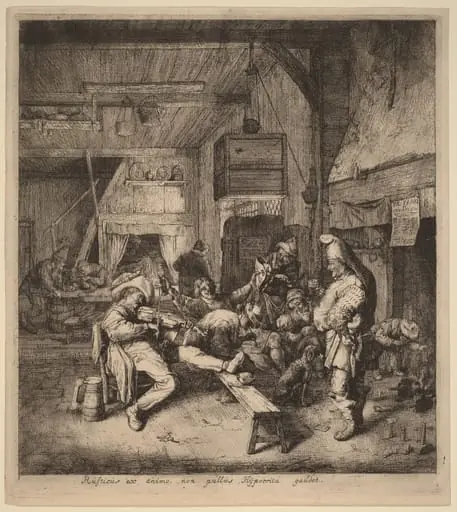 Violin Player Seated in a Tavern
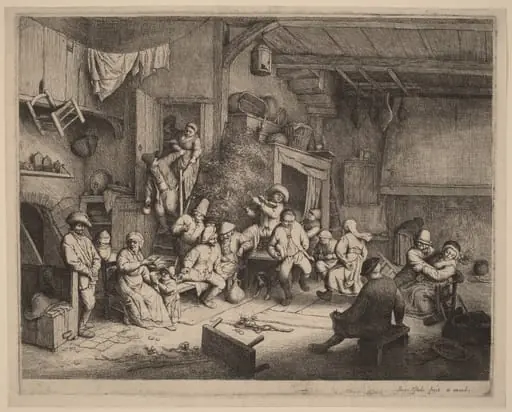 Peasants Feasting at an Inn
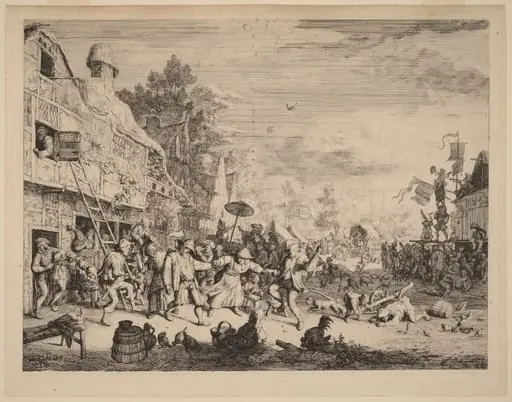 Village Festival
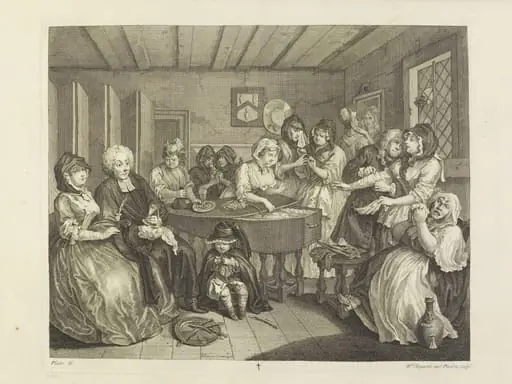 The Harlot's Progress
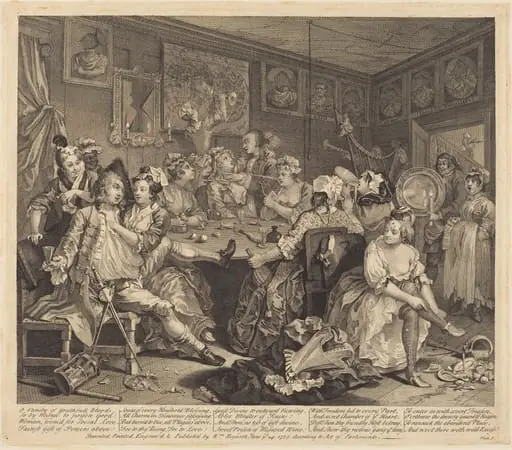 A Rake's Progress: pl.3
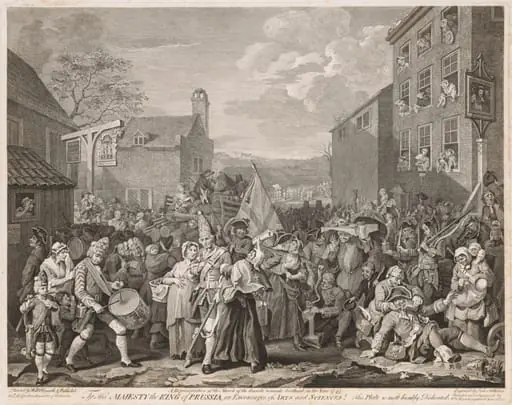 March to Finchley in the Year 1746 (After Hogarth)
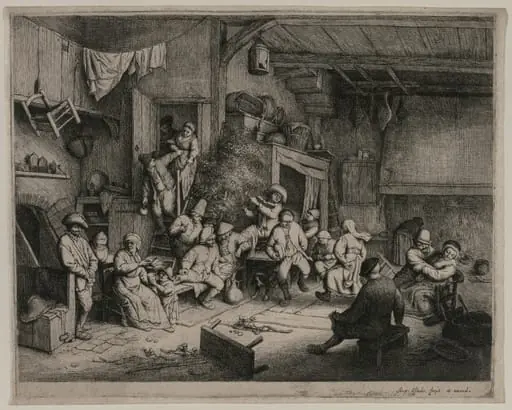 The Dance in the Inn