Artwork
March to Finchley in the Year 1746 (After Hogarth)
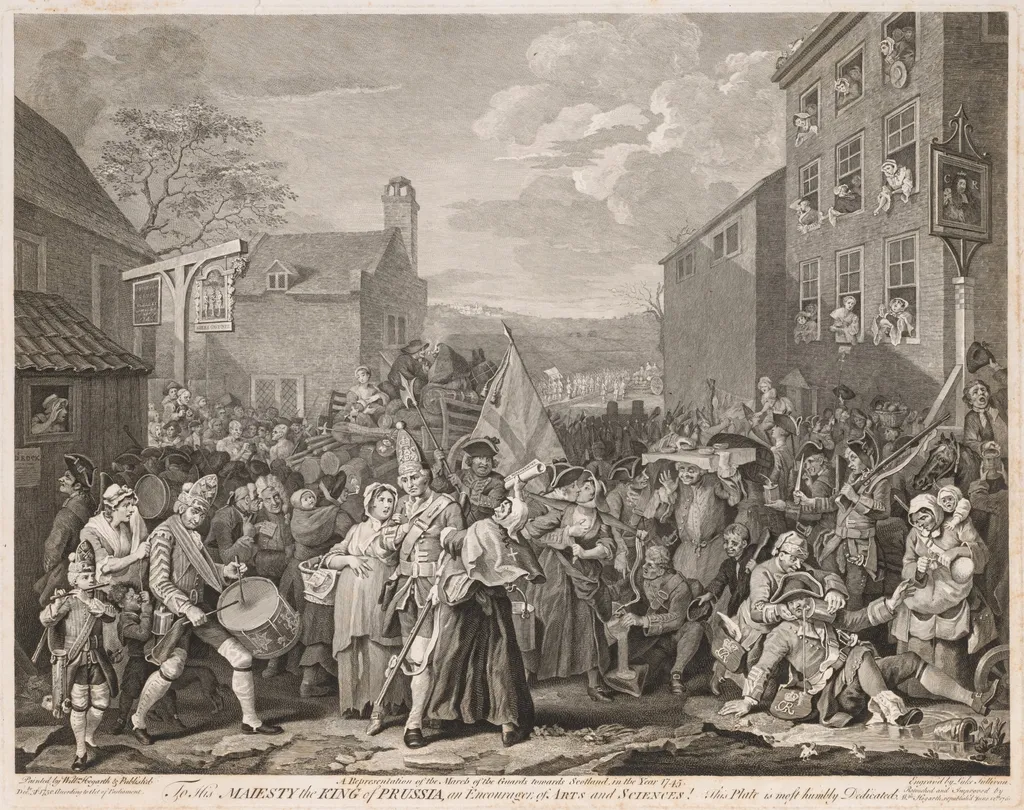
March to Finchley in the Year 1746 (After Hogarth) is a print by the Romanticist artist Luke Sullivan. It dates from 1750 and is held in the collection of the Cleveland Museum of Art.
About this work
Overview
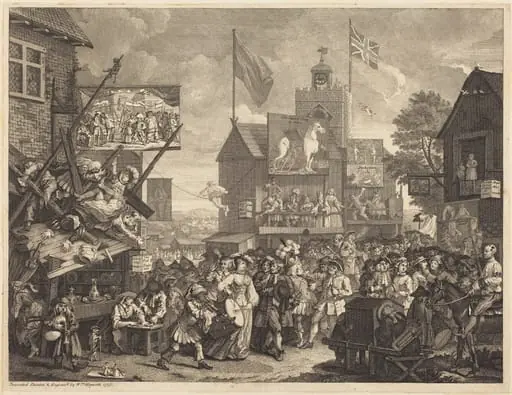
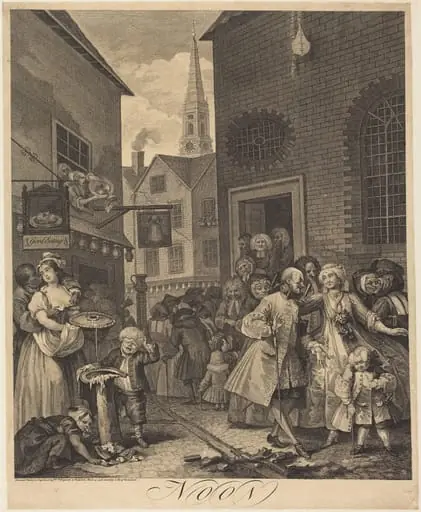
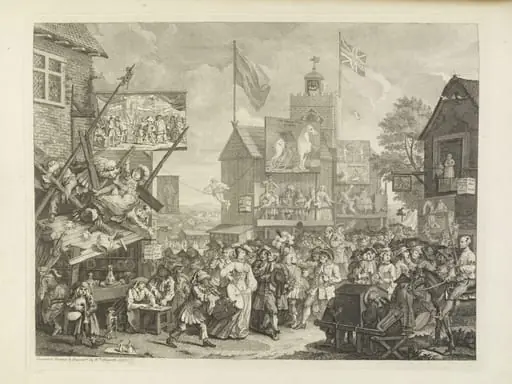
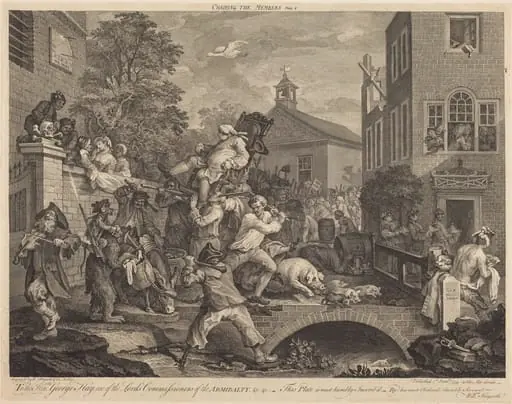
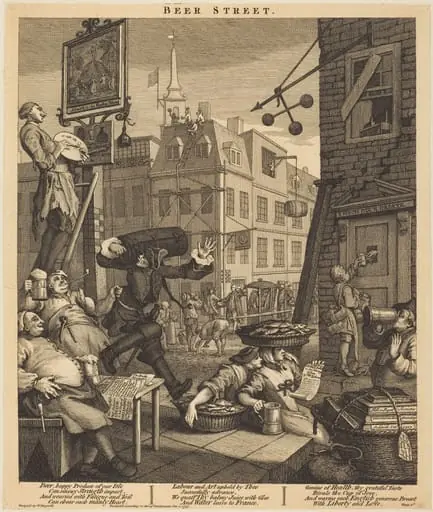
The scene is densely populated with figures engaged in varied, often absurd activities, reflecting the chaotic energy of urban life in mid-18th-century England.
Created in 1750 by Luke Sullivan, this print is a reinterpretation of William Hogarth’s satirical composition. It depicts a disorderly procession through a London street, capturing a moment of civic commotion rather than a formal military march. The scene is densely populated with figures engaged in varied, often absurd activities, reflecting the chaotic energy of urban life in mid-18th-century England.
Subject & Meaning
The print portrays a mock military march, likely referencing the government’s attempt to raise troops during the Jacobite uprising. Rather than glorifying discipline, it satirizes the disorder of conscripted civilians—soldiers in mismatched uniforms, civilians wielding weapons, and revelers spilling from taverns. The scene critiques the haphazard nature of recruitment and the blurring of military and civilian spheres.
Technique & Style
Sullivan employed fine line engraving to render a crowded, dynamic composition with sharp detail. Figures are rendered with exaggerated gestures and varied postures, creating a sense of movement and chaos. Architectural elements provide structure amid the frenzy, while the dense arrangement of bodies and objects reflects the influence of Hogarth’s narrative style, emphasizing observation over idealization.
History & Provenance
The print was produced shortly after Hogarth’s original, likely as a commercial reproduction to meet public interest in his satirical imagery. It entered the collection of The Cleveland Museum of Art through documented acquisitions in the 20th century. Its survival reflects the popularity of Hogarth-inspired prints in the decades following their creation, serving as both art and social commentary.
Context
In 1745–46, Britain faced internal rebellion and relied on hastily assembled militias. Public anxiety and skepticism toward military mobilization were widespread. Sullivan’s print taps into this cultural moment, using humor and exaggeration to reflect public unease. The scene mirrors contemporary broadsheets and satirical prints that questioned authority through visual wit.
Legacy
Though not as widely known as Hogarth’s originals, Sullivan’s print preserves the spirit of 18th-century British satire. It contributes to a broader visual record of how ordinary citizens were portrayed during times of political tension. Its continued presence in museum collections underscores its value as a document of social observation rather than heroic narrative.
Artist & collection