Artwork
The Stage-coach, or the Country Inn Yard
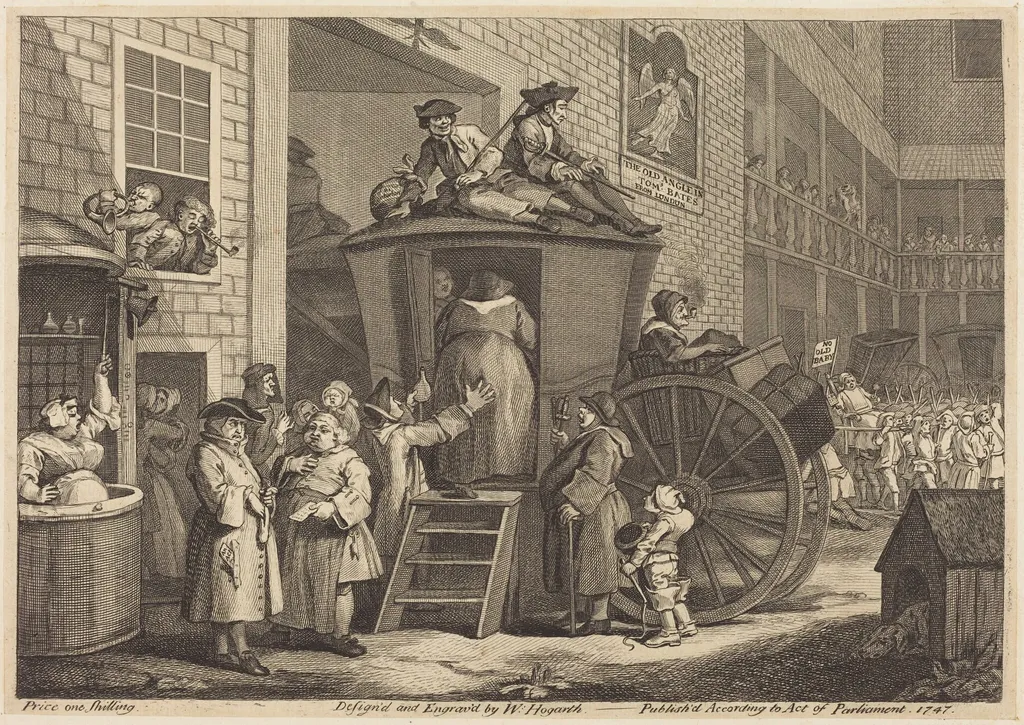
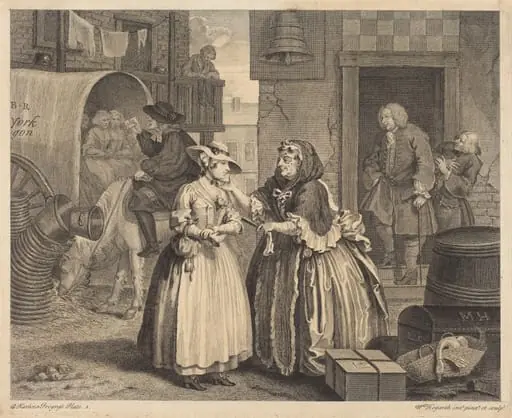
The Stage-coach, or the Country Inn Yard is an ink print by the Baroque artist William Hogarth. It dates from 1747 and is held in the collection of the National Gallery of Art.
About this work
Overview
The composition captures a moment of crowded activity, with travelers, inn‑keepers and onlookers intermingling amid carts, barrels and a lantern‑bearing boy.
William Hogarth’s 1747 print, titled *The Stage‑coach, or the Country Inn Yard*, presents a bustling courtyard of a coaching inn. The composition captures a moment of crowded activity, with travelers, inn‑keepers and onlookers intermingling amid carts, barrels and a lantern‑bearing boy. The scene is rendered in a combination of etching and engraving, allowing Hogford to populate the space with numerous figures and architectural details.
Subject & Meaning
The work portrays a lively exchange between the itinerant and the local, emphasizing the disorder and clamor of 18th‑century travel. Central figures—a woman on a stool gesturing, a man in a wide‑brimmed hat perched on a balcony, and a group of arguing men near a loaded cart—suggest a narrative of social interaction, commerce, and the occasional dispute that typified inn yards of the period.
Technique & Style
Hogarth employed both etching and engraving to achieve fine line work and varied tonal contrasts. The etched lines define the crowded architecture and figures, while the engraved passages sharpen edges and enhance texture, particularly in the rough timber of the inn and the intricate crowd. This dual method enables a dense visual field without sacrificing clarity of individual characters.
History & Provenance
Created in 1747, the print was issued as part of Hogarth’s series of social observations that circulated widely among the growing market for affordable prints. Original impressions were sold by the artist’s own print‑shop and later entered private collections before being acquired by several public institutions in the 19th century, where they remain reference pieces for studies of early modern British printmaking.
Context
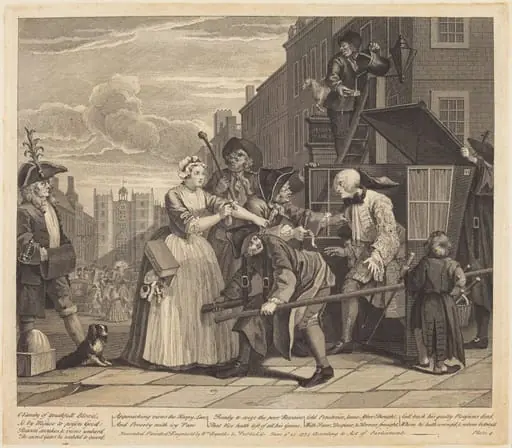
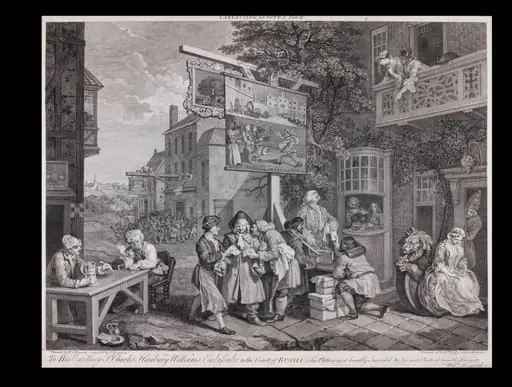
The image reflects Hogarth’s broader engagement with everyday English life, a theme also evident in his narrative series such as *A Harlot’s Progress* and *A Rake’s Progress*. By focusing on a commonplace setting rather than aristocratic portraiture, the print contributes to the Enlightenment‑era interest in documenting social habits, travel infrastructure, and the bustling public sphere of Georgian England.
Artist & collection
Artist
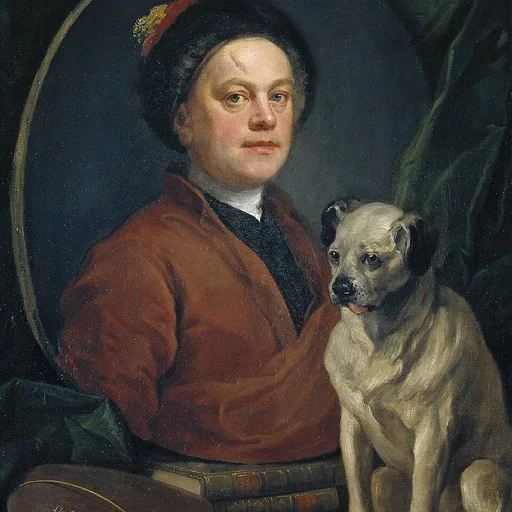
William Hogarth (; 10 November 1697 – 26 October 1764) was an English painter, engraver, satirist, cartoonist and writer.