Artwork
Gelderspach
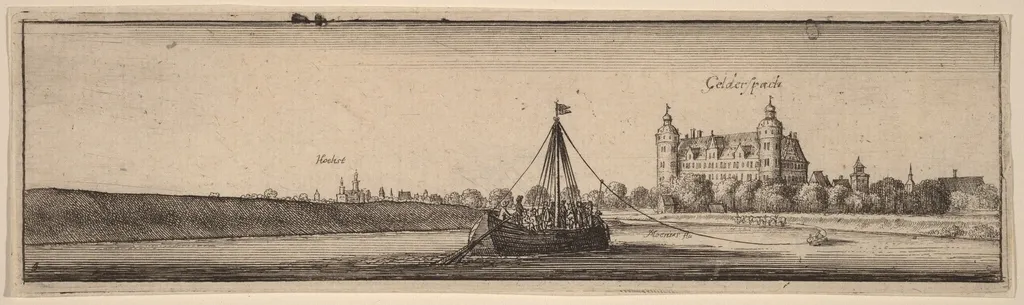
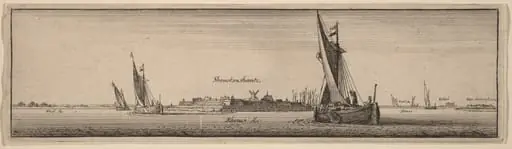
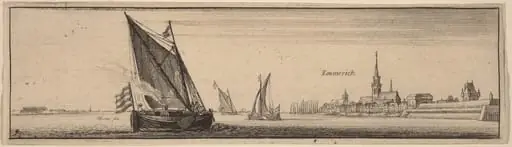
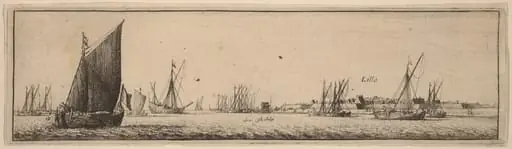
Gelderspach is an ink print by the Baroque artist Wenceslaus Hollar. It dates from 1634 and is held in the collection of the National Gallery of Art.
About this work
Overview
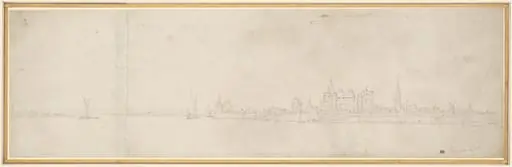
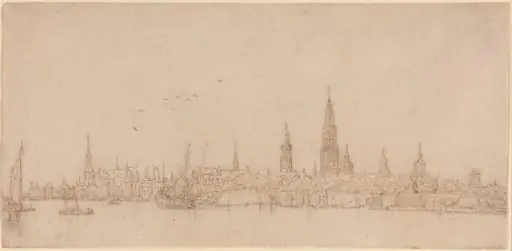
This print is an etching on laid paper by Wenceslaus Hollar, a Bohemian draftsman and printmaker who worked primarily in England. Created circa 1634, it represents one of numerous topographical studies Hollar produced during his career. The work captures the town of Geldern in western Germany, emphasizing its architectural and natural features through precise linear detail.
Subject & Meaning
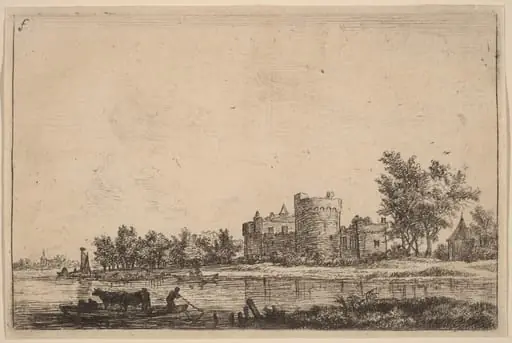
A small vessel ferries figures and goods across the water, while the opposite bank is dominated by a large castle with multiple towers and a raised flag.
The composition centers on Geldern, a fortified settlement along a river. A small vessel ferries figures and goods across the water, while the opposite bank is dominated by a large castle with multiple towers and a raised flag. Behind it, the town’s skyline includes domestic structures and a church spire, suggesting both civic and defensive functions. The scene reflects Hollar’s interest in documenting urban environments with accuracy.
Technique & Style
Hollar employed etching to render fine details, from rippling water to individual windows in the castle. The medium allowed him to build texture and depth through controlled lines, characteristic of his approach to landscape and city views. His method emphasizes clarity and precision, avoiding dramatic effects in favor of observational fidelity. The use of laid paper further defines the print’s material qualities.
History & Provenance
Produced during Hollar’s early period in London, the etching dates to around 1634, a time when he was establishing his reputation as a printmaker. Little is recorded about its early ownership, though it likely circulated among collectors of topographical prints. Hollar remained in England until his death in 1677, and his works were later absorbed into public and private collections of European art.
Context
Hollar’s output coincided with growing European interest in accurate representations of cities and landscapes. Prints like *Gelderspach* served both documentary and decorative purposes, appealing to patrons who valued geographic and architectural records. His work in England aligned with a broader demand for visual accounts of continental Europe, particularly among those who traveled or studied abroad.
Legacy
The etching exemplifies Hollar’s contribution to 17th-century printmaking, particularly his ability to merge technical skill with descriptive realism. While not among his most widely reproduced works, it reflects his broader influence on the depiction of urban and rural scenes. Later scholars have examined his prints for insights into historical landscapes, architecture, and the development of etching as an artistic medium.
Artist & collection
Artist
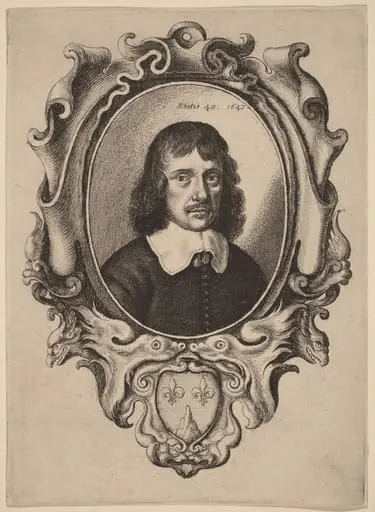
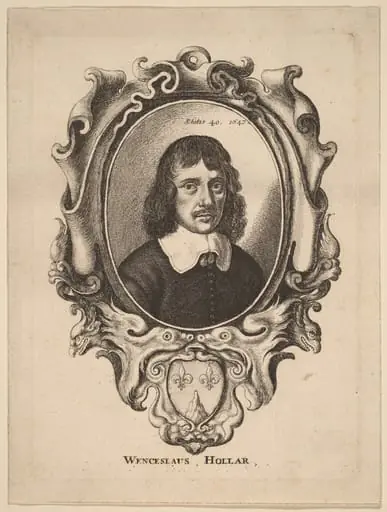
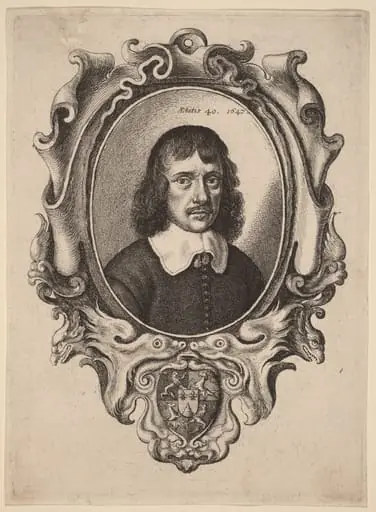
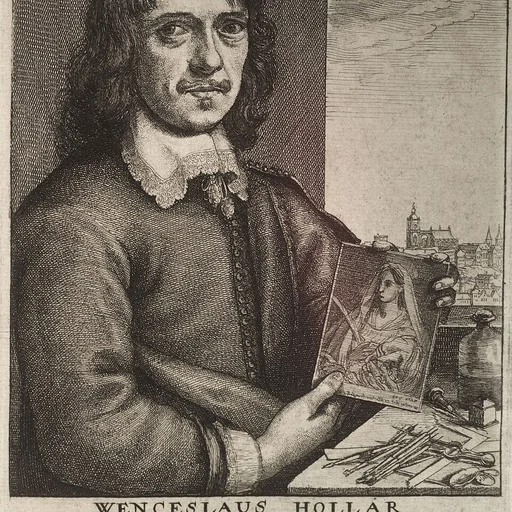
Wenceslaus Hollar (Czech: Václav Hollar (Czech pronunciation: ), German: Wenzel Hollar; 23 July 1607 – 25 March 1677) was a Czech engraver, etcher and painter.