Artwork
The Washing of Hands
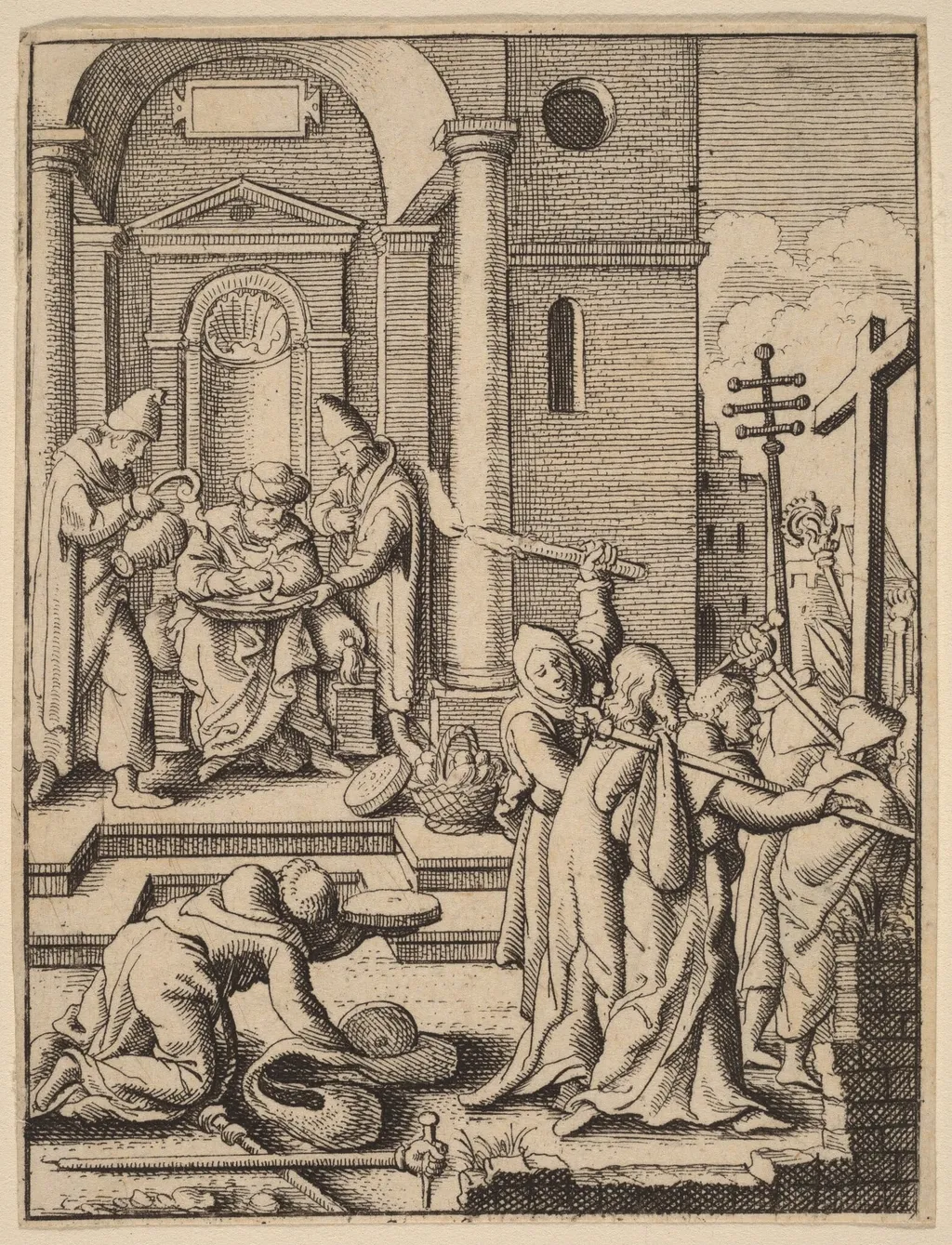
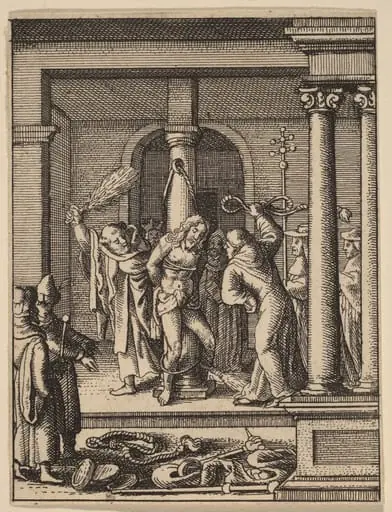
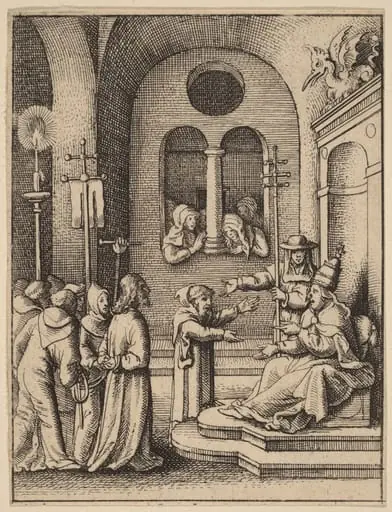
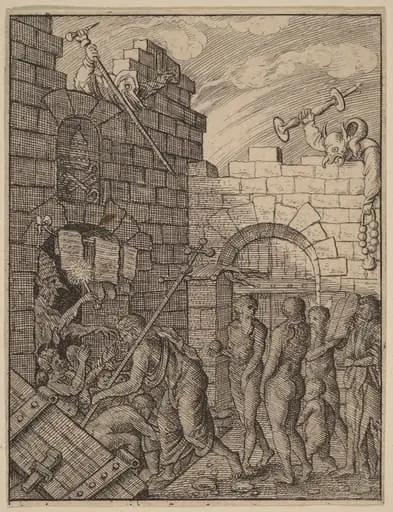
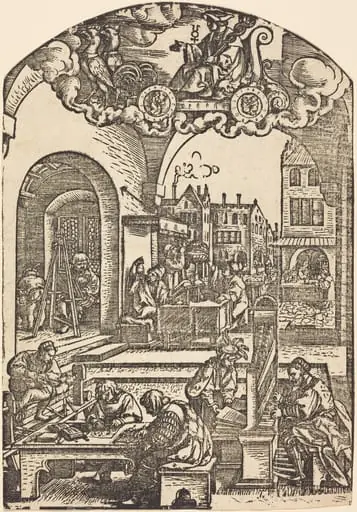
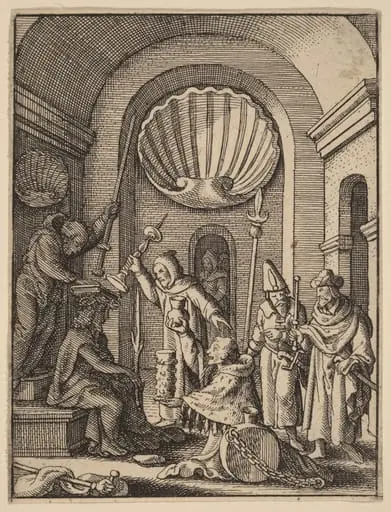
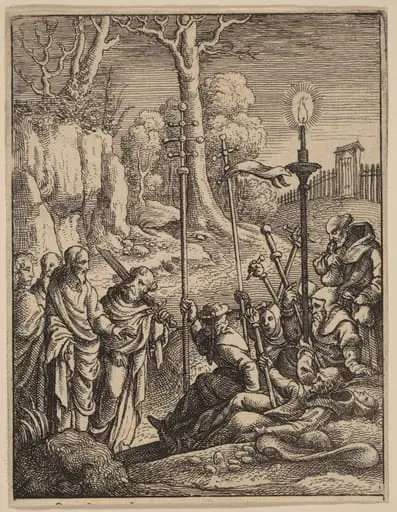
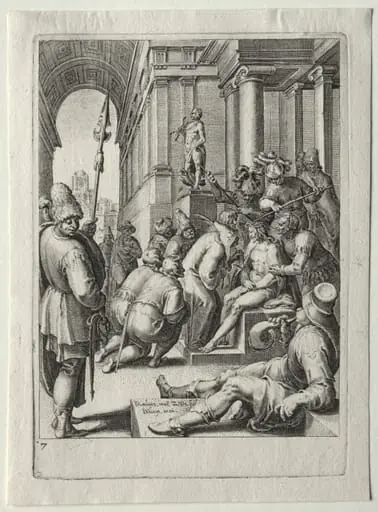
The Washing of Hands is an ink print by the Baroque artist Wenceslaus Hollar. It dates from 1642 and is held in the collection of the National Gallery of Art.
About this work
Overview
Created in 1642, *The Washing of Hands* is an etching by the Czech-born printmaker Wenceslaus Hollar, who spent the majority of his professional life in England after relocating there in the 1630s. The work presents a group assembled around a central figure performing a ritual hand‑washing, set against a backdrop of architectural forms and a cloudy sky.
Subject & Meaning
The composition centers on a robed individual, likely a religious authority, cleansing his hands in a large basin while attendants—some bearing a cross, others a basket—observe. The act functions as an allegorical reference to purification, suggesting moral or spiritual cleansing within a ceremonial or domestic context.
Technique & Style
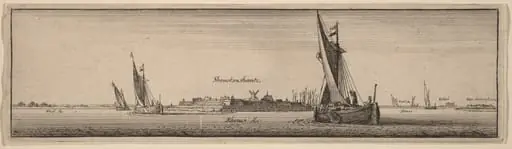
Executed in etching, Hollar employs fine line work to render texture and depth, distinguishing figures, garments, and architectural elements. The delicate incisions convey the weight of fabric and the atmospheric sky, reflecting the artist’s reputation for meticulous detail evident in his later cityscape and landscape prints.
History & Provenance
Hollar produced the print during his English period, a time when his reputation for precise engraving was solidifying. He died in London and was interred at St Margaret’s Church, Westminster. The etching remains a representative example of his early output before his later focus on expansive topographical subjects.
Artist & collection
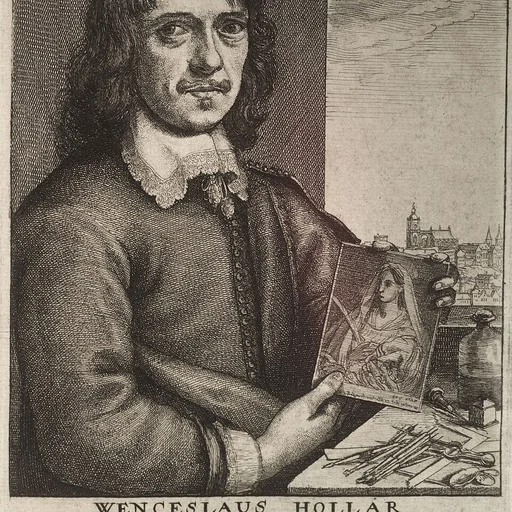
Artist
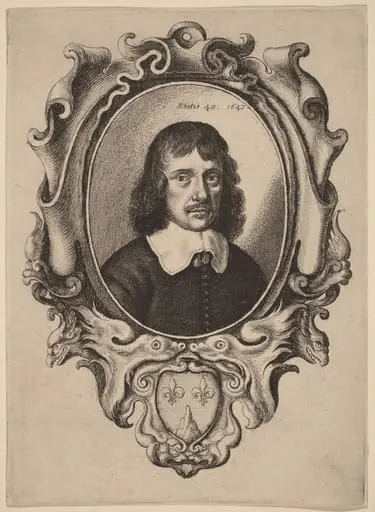
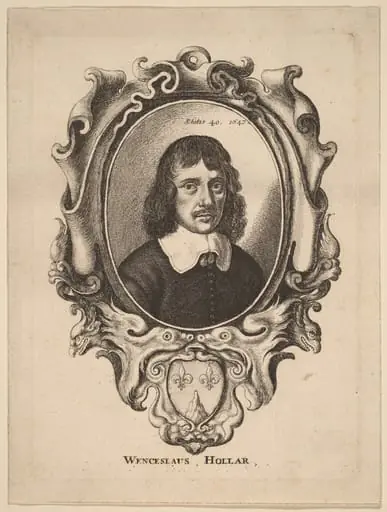
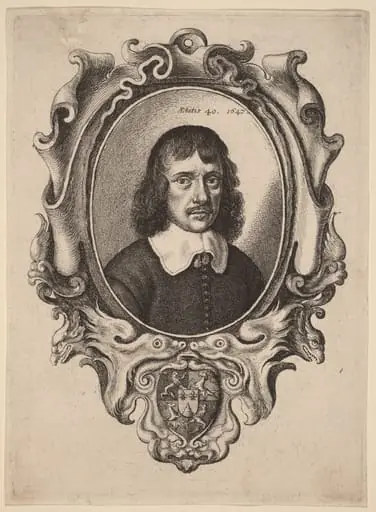
Wenceslaus Hollar (Czech: Václav Hollar (Czech pronunciation: ), German: Wenzel Hollar; 23 July 1607 – 25 March 1677) was a Czech engraver, etcher and painter.