Artwork
Passion Set: Christ Crowned with Thorns
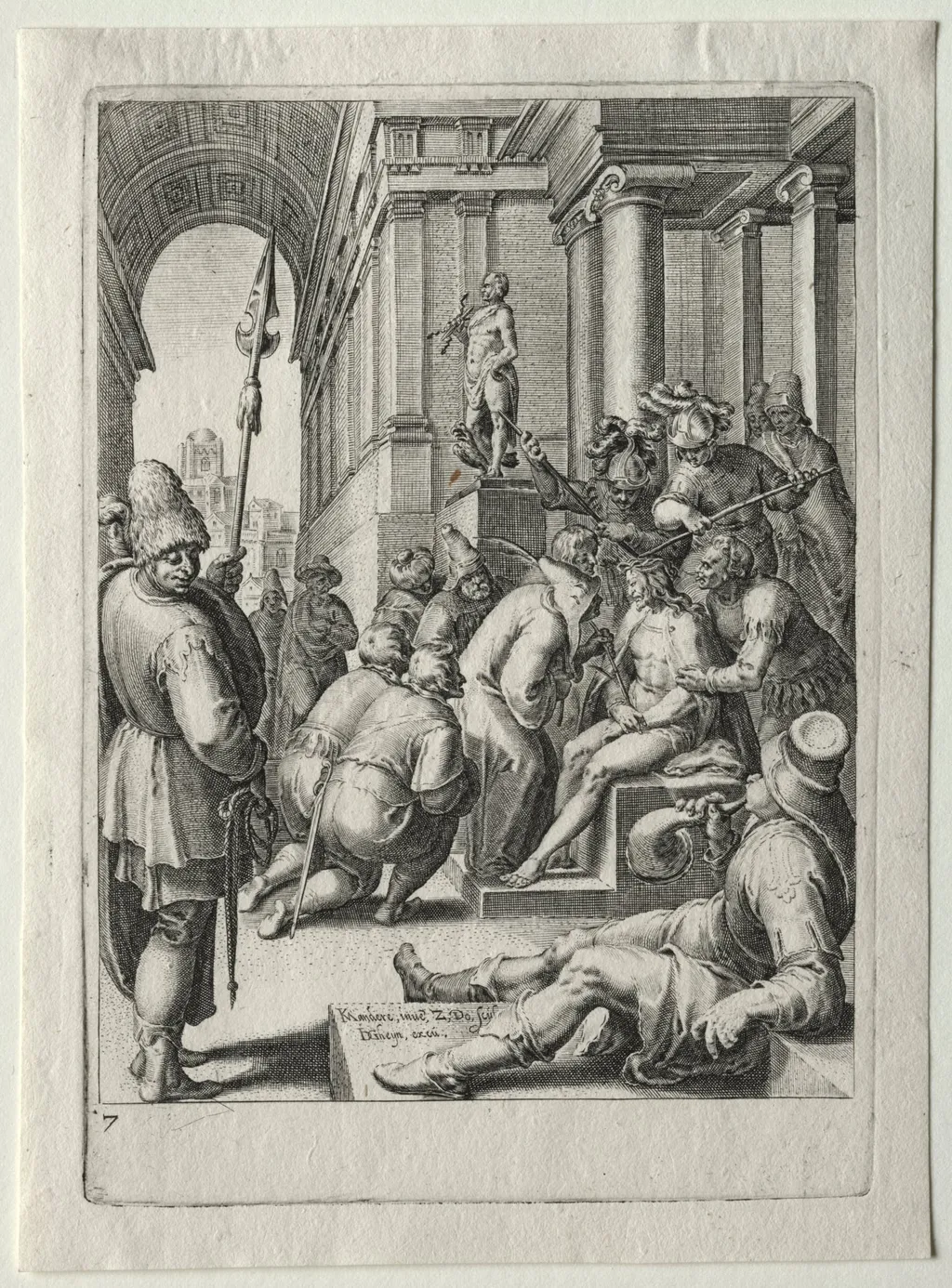
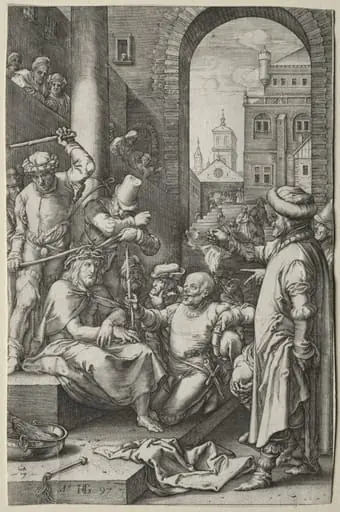
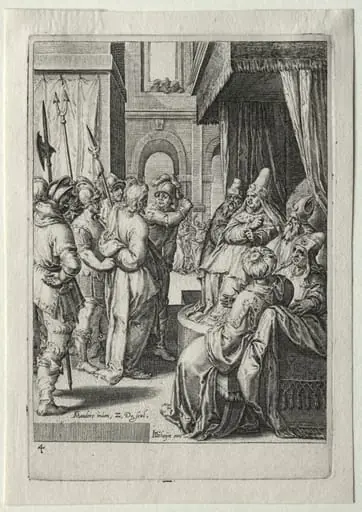
Passion Set: Christ Crowned with Thorns is a print by Zacharias Dolendo. It dates from 1597 and is held in the collection of the Cleveland Museum of Art.
About this work
Overview
Zacharias Dolendo, a Dutch engraver active in the late 1500s, produced this etching in 1597 as part of a series depicting scenes from the Passion of Christ.
Zacharias Dolendo, a Dutch engraver active in the late 1500s, produced this etching in 1597 as part of a series depicting scenes from the Passion of Christ. Known for his refined line work and compositional clarity, Dolendo distinguished himself among his contemporaries, including his brother Bartholomeus. The print is signed with his distinctive cipher and is currently held in the collection of The Cleveland Museum of Art, where it represents the religious print culture of the Dutch Golden Age.
Subject & Meaning
The scene captures Christ at the moment of being crowned with thorns, surrounded by a hostile crowd. His slumped posture and exposed body convey physical and emotional exhaustion, contrasting with the rigid armor and aggressive gestures of his tormentors. Above, a draped statue in an arched niche suggests divine observation or judgment, while the crescent-moon-tipped spear may allude to foreign authority or symbolic power. The composition emphasizes suffering amid chaos, reinforcing the theological theme of humility under oppression.
Technique & Style
Dolendo employed fine, controlled etching lines to render texture and movement with precision. The crowd is rendered in dense, overlapping forms, while Christ’s body remains relatively uncluttered, drawing focus through contrast. Shading is subtle, achieved through cross-hatching rather than heavy tonal areas, preserving clarity. Architectural elements in the background are delicately suggested, reinforcing spatial depth without distracting from the central drama. His technique reflects a mastery of linear engraving suited to narrative clarity.
History & Provenance
Created in 1597, the print was part of a larger series illustrating Christ’s final hours, likely intended for private devotion or scholarly circulation. Dolendo’s works were widely distributed in the Netherlands and beyond, often circulated through print dealers. The Cleveland Museum of Art acquired the piece as part of its broader collection of Northern Renaissance prints, preserving its historical context within early modern religious imagery and printmaking traditions.
Context
In late 16th-century Dutch society, religious prints served both devotional and educational roles, especially amid the Protestant Reformation’s rejection of elaborate church imagery. Dolendo’s work reflects a shift toward intimate, emotionally resonant scenes suitable for personal contemplation. The inclusion of classical architectural elements and symbolic objects like the statue aligns with humanist influences, blending biblical narrative with contemporary visual language.
Legacy
Dolendo’s prints, including this one, contributed to the development of narrative engraving in the Netherlands. His precise technique influenced later generations of printmakers who sought to balance emotional intensity with technical discipline. Though less widely known today than some contemporaries, his works remain important examples of how religious subjects were translated into accessible, visually compelling formats for a literate, middle-class audience.
Artist & collection
Artist
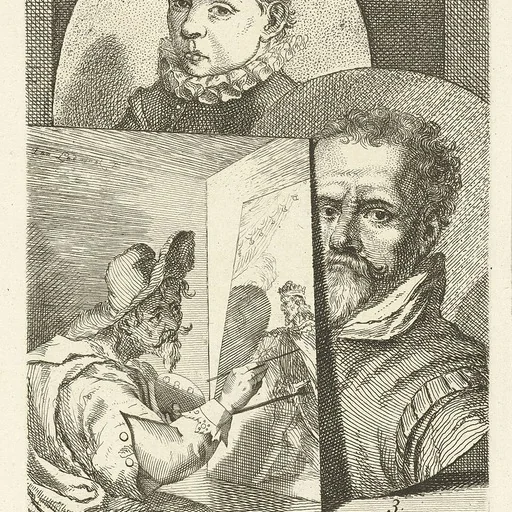
Zacharias Dolendo (1561–1601) was a Dutch engraver. He was the brother of Bartholomeus Dolendo, whom he surpassed both in style and in correctness. He was born at Leyden in 1561, and is said by Huber to have been a…

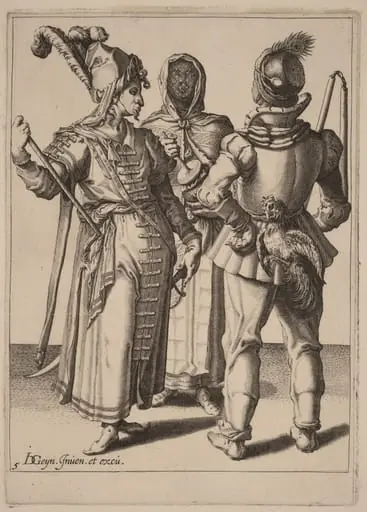 A Grandee, a Peasant, and a Veiled Woman
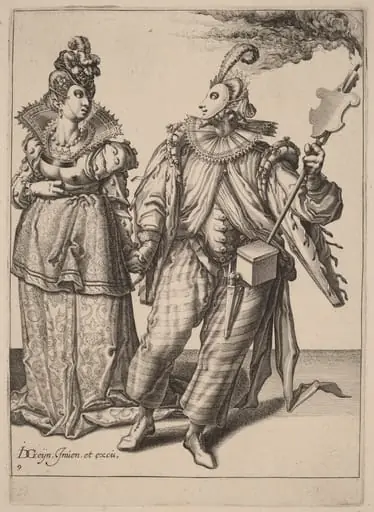 A Woman Led by a Player Holding a Torch
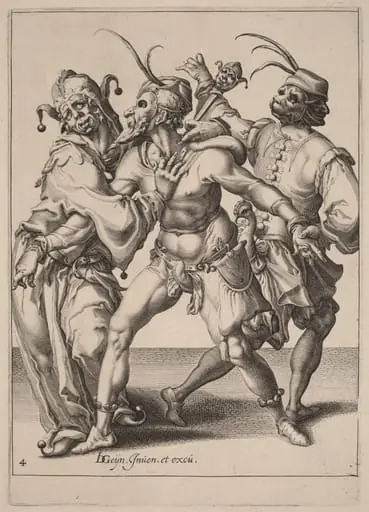 Three Dancing Mummers, Including a Jester
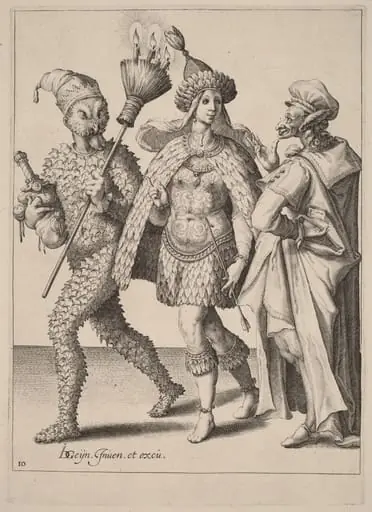 An Old Mummer Addressing a Couple Dressed in Feathers
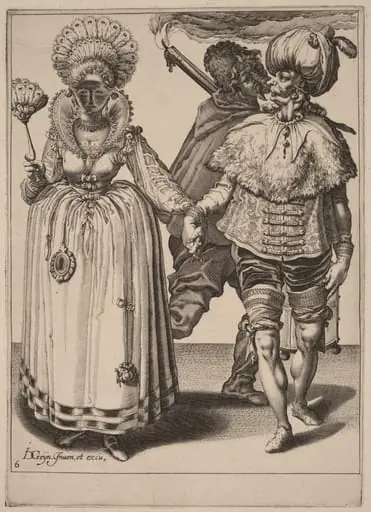 A Man with a Turban Leading a Woman Wearing Peacock Feathers
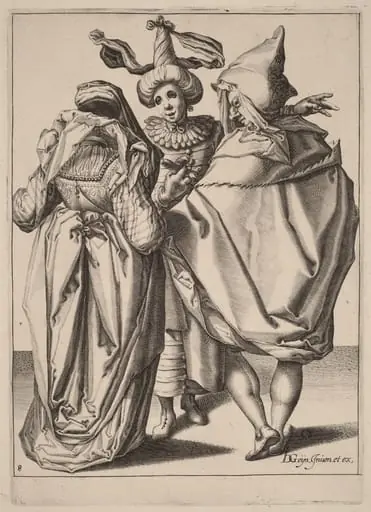 A Couple Addressing a Gesticulating Young Man
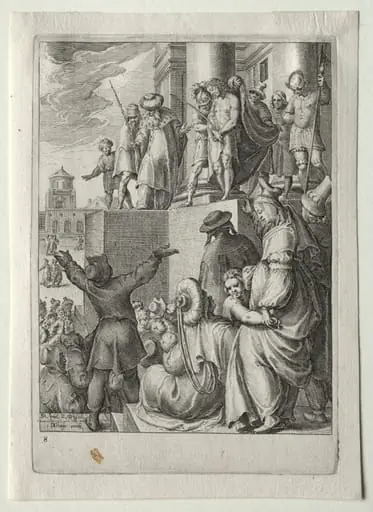 Passion Set: Ecce Homo
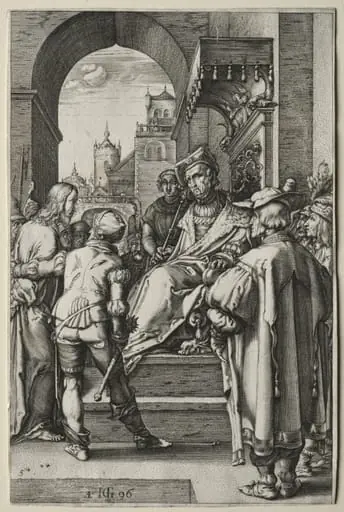
 Passion Set: Christ before Herod