Artwork
The Stable of Augeas
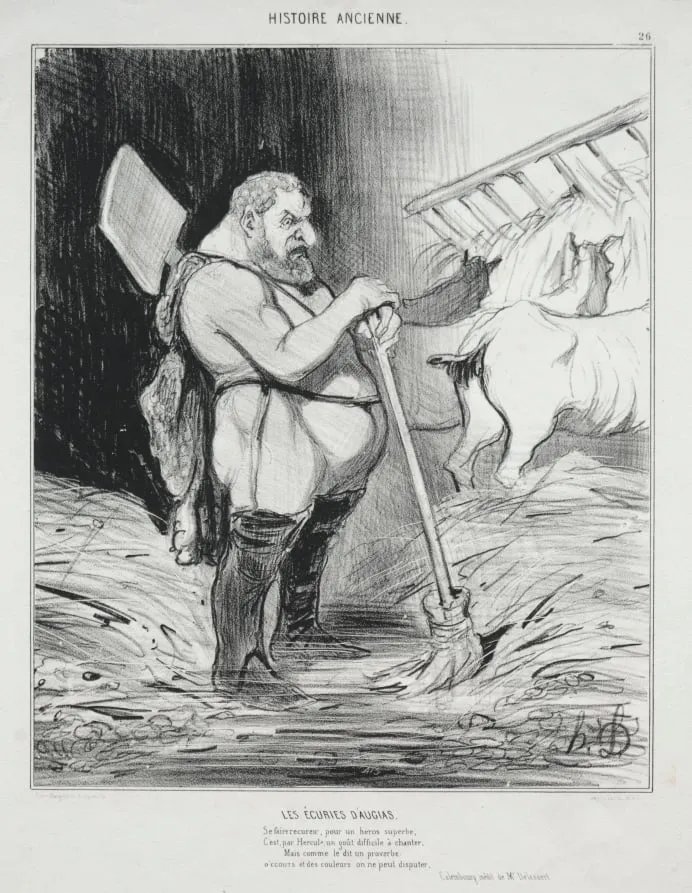
The Stable of Augeas is a print by the Romanticist artist Honoré Daumier. It dates from 1842 and is held in the collection of the Cleveland Museum of Art.
About this work
You see a stable with horses and people in the painting.
The stable is messy and dirty, which is interesting because it shows a different side of ancient stories. This print was published in a series called Ancient History, which is surprising since the scene looks more like everyday life.
Check out the work of artist: Honoré Daumier (French, 1808–1879) for more like this.
Overview
This lithograph, published in Le Charivari on September 25, 1842, is the twenty-sixth plate in Honoré Daumier’s series Ancient History.
This lithograph, published in Le Charivari on September 25, 1842, is the twenty-sixth plate in Honoré Daumier’s series Ancient History. Though titled to evoke classical myth, the image depicts a cluttered, mundane stable scene rather than a grand historical moment. Daumier subverts expectations by applying the weight of antiquity to an ordinary, even squalid, setting, using irony to critique contemporary society through historical allusion.
Subject & Meaning
The scene portrays laborers cleaning a filthy stable filled with horses, evoking the myth of Augeas’s stables but stripping it of heroism. Daumier replaces divine intervention with grueling human toil, highlighting the drudgery of labor. The work mocks the romanticization of antiquity by contrasting its legendary purity with the grim reality of 19th-century work conditions, subtly questioning societal values of the time.
Technique & Style
Daumier employed bold, expressive lithographic lines to render figures and animals with energetic spontaneity. Shading is minimal yet effective, using dense ink washes to suggest dirt and shadow. The composition is crowded and asymmetrical, mirroring the chaos of the stable. His style prioritizes immediacy and emotional resonance over precision, characteristic of his satirical approach in journalistic illustration.
History & Provenance
Created for the weekly satirical journal Le Charivari, this print was part of a broader series by Daumier that reimagined classical narratives as social commentary. Published during a period of political unrest in France, the series allowed Daumier to critique authority under the guise of historical parody. The print circulated widely among urban readers, reinforcing Daumier’s reputation as a sharp observer of public life.
Context
In the 1840s, French satire increasingly used classical references to veil criticism of the July Monarchy. Daumier’s Ancient History series exploited this tradition, juxtaposing mythic grandeur with the banality of everyday struggle. The publication of such images in mass-circulation periodicals reflected growing public engagement with visual satire and the rising influence of the press as a tool for social critique.
Legacy
Daumier’s reworking of classical themes in a modern, unidealized context influenced later realist and satirical artists. His ability to fuse historical reference with contemporary observation set a precedent for using visual irony to challenge cultural norms. Though produced for ephemeral journalism, these prints gained lasting recognition for their incisive commentary and innovative visual language.
Artist & collection
Artist
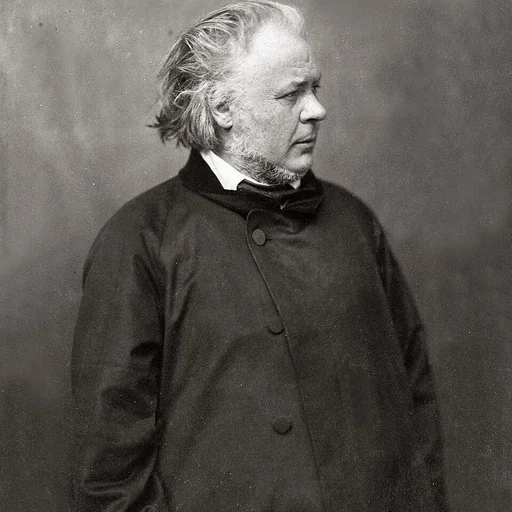
Honoré-Victorin Daumier was a French painter, sculptor, and printmaker, whose many works offer commentary on the social and political life in France, from the Revolution of 1830 to the fall of the Second French Empire in 1870.