Artwork
How strange.... I had planted potatoes, and here I am harvesting truffles!
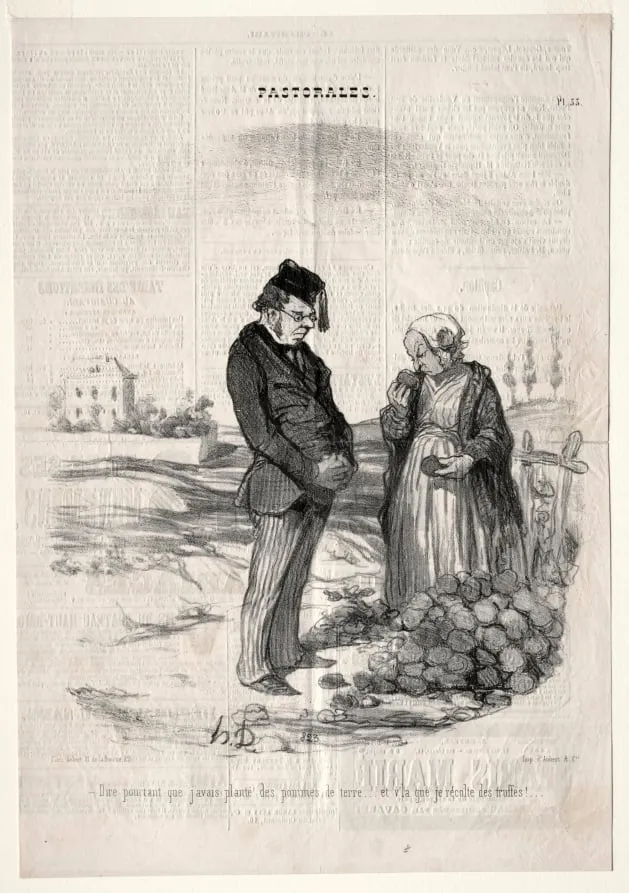
How strange.... I had planted potatoes, and here I am harvesting truffles! is a print by the Romanticist artist Honoré Daumier. It dates from 1845 and is held in the collection of the Cleveland Museum of Art.
About this work
This cartoon shows a farmer in a floppy hat staring at a basket full of muddy truffles instead of the potatoes he expected.
This cartoon shows a farmer in a floppy hat staring at a basket full of muddy truffles instead of the potatoes he expected. The joke comes from turning a common farm chore into a silly mix-up. Daumier made this for a Paris newspaper in 1845.
The print belongs to a series called “Pastorals,” poking fun at country life. It feels like a quick visual joke rather than serious art.
Look up Honoré Daumier (French, 1808–1879) to see more of his sharp cartoons.
Overview
Created in 1845, this lithograph is the thirty-third plate in Honoré Daumier’s series Pastorals, published in the Parisian satirical journal Le Charivari. It captures a moment of rural absurdity: a farmer, surprised by his harvest, confronts a basket of truffles instead of the potatoes he planted. The image functions as a light-hearted visual gag, typical of Daumier’s newspaper cartoons, blending everyday labor with unexpected whimsy.
Subject & Meaning
The print centers on a farmer’s bemused reaction to an agricultural mishap—truffles, a rare and valuable fungus, replacing common tubers. The humor lies in the inversion of expectation: hard labor yields an unintended luxury. Daumier uses this mix-up to gently mock the unpredictability of rural life, not to criticize but to highlight the absurdities that arise from nature’s indifference to human plans.
Technique & Style
Executed in lithography, the image relies on bold, fluid lines and minimal shading to convey expression and movement. Daumier’s loose, almost sketch-like style emphasizes immediacy over detail, capturing the farmer’s startled posture and the messy truffles with swift, economical strokes. The composition is tightly framed, focusing attention on the contrast between the man’s simple attire and the exotic, muddy bounty before him.
History & Provenance
The print was originally issued in Le Charivari on November 19, 1845, as part of a monthly series of satirical pastoral scenes. It was not intended for fine art collectors but for a broad urban readership familiar with rural stereotypes. Its survival in institutional collections reflects later recognition of Daumier’s social observation as significant, though it was then merely ephemeral commentary.
Context
In mid-1840s France, urban audiences consumed illustrated satire as a form of social commentary. Daumier’s Pastorals series tapped into city dwellers’ romanticized yet distant views of peasant life, turning familiar tropes into ironic vignettes. The truffle joke resonated because it played on the contrast between rural toil and urban luxury, a subtle nod to class and economic disparity beneath the humor.
Legacy
Though created as disposable newspaper content, this print now stands as an example of Daumier’s enduring ability to distill human folly into a single, resonant image. His work influenced later generations of cartoonists and social realists by demonstrating how everyday scenes could carry layered meaning. The piece remains a quiet testament to the power of visual wit in documenting ordinary life.
Artist & collection
Artist
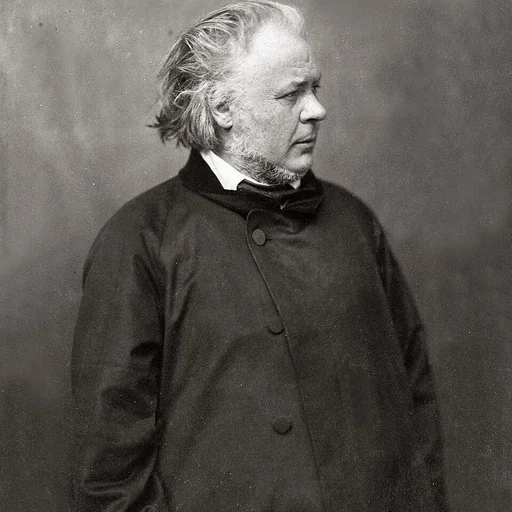
Honoré-Victorin Daumier was a French painter, sculptor, and printmaker, whose many works offer commentary on the social and political life in France, from the Revolution of 1830 to the fall of the Second French Empire in 1870.









 Dire pourtant que j'avais planté des pommes de terre ...
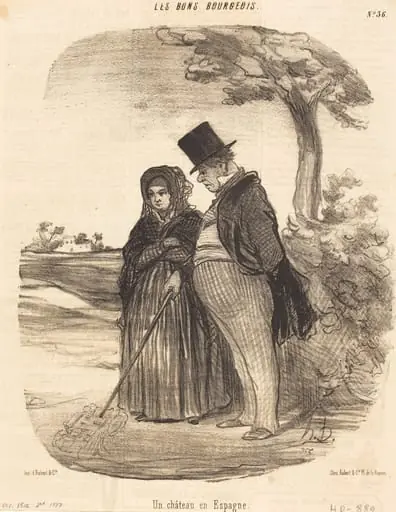 Un Chateau en Espagne
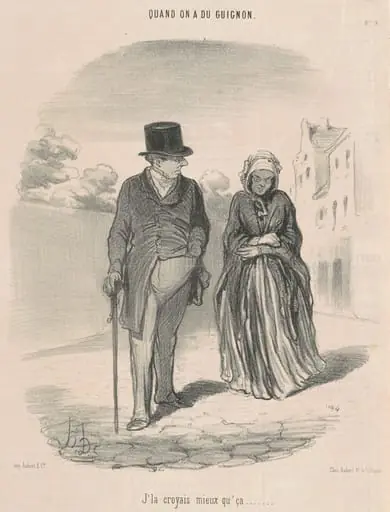 J'la croyais mieux qu'ça ...
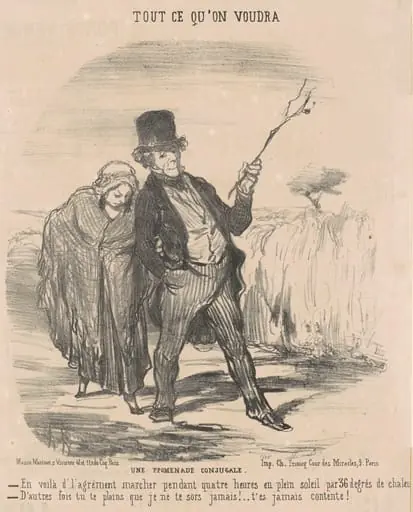 Une promenade conjugale
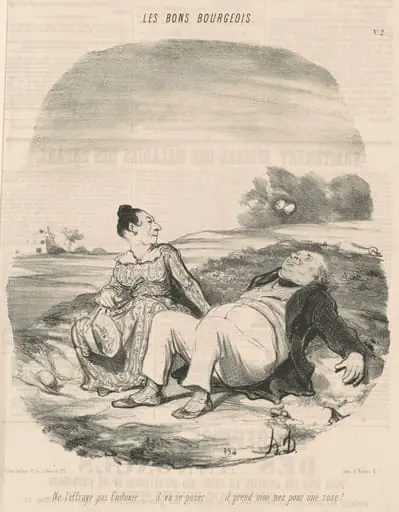 Ne l'effraye pas Eudoxie...
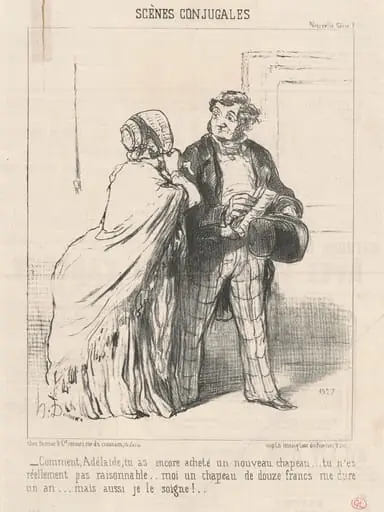 Comment ... tu as encore acheté un ... chapeau ...
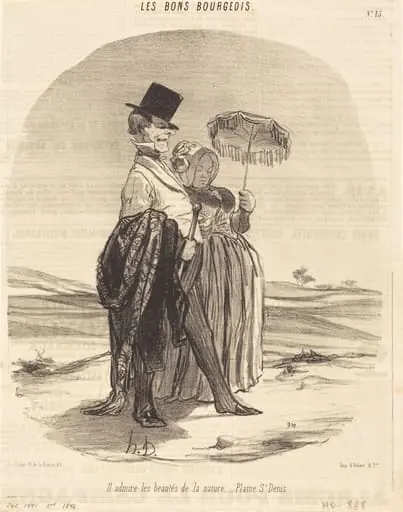 Il admire les beautés de la nature - Plaine St. Denis
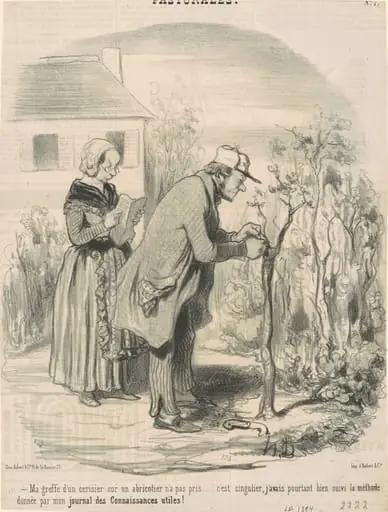 Ma greffe d'un cerisier sur un abricotier n'a pas pris ...
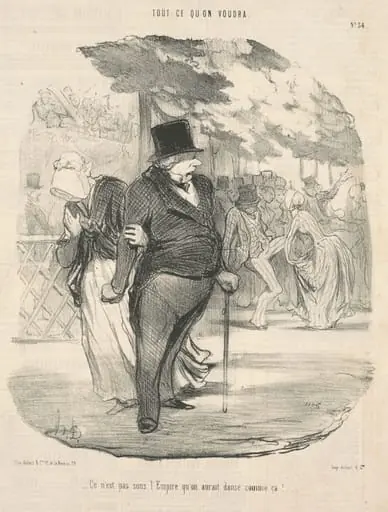 Ce n'est pas sous l"empire qu'on aurait dansé comme ca! ...
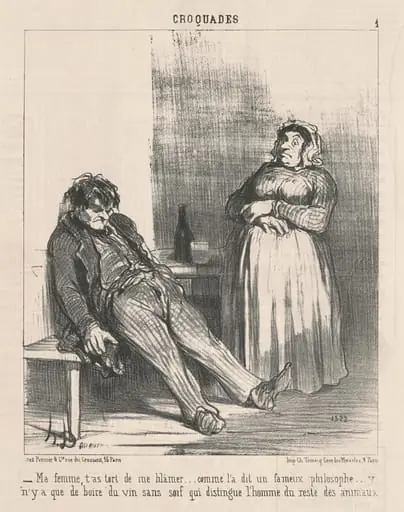 Ma femme, t'as tort de me blamer ...
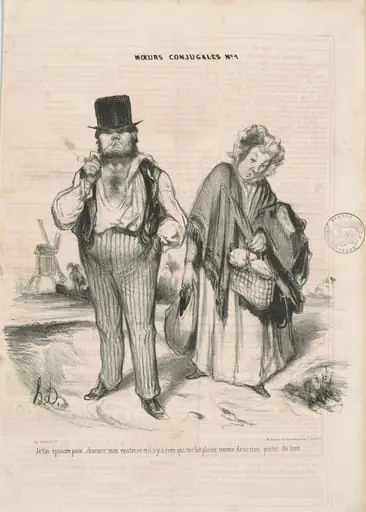 Je t'ai épousé pour charmer mon existence...
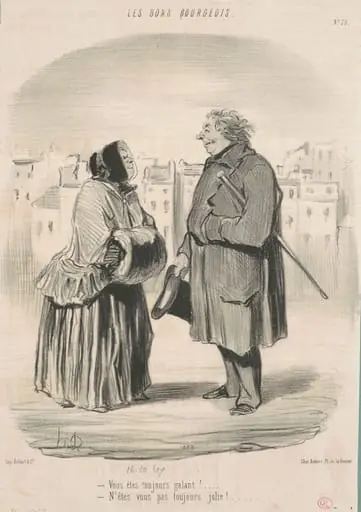 Vous êtes toujours galant! ...