Artwork
Papa contemplates a likeness of his likeness
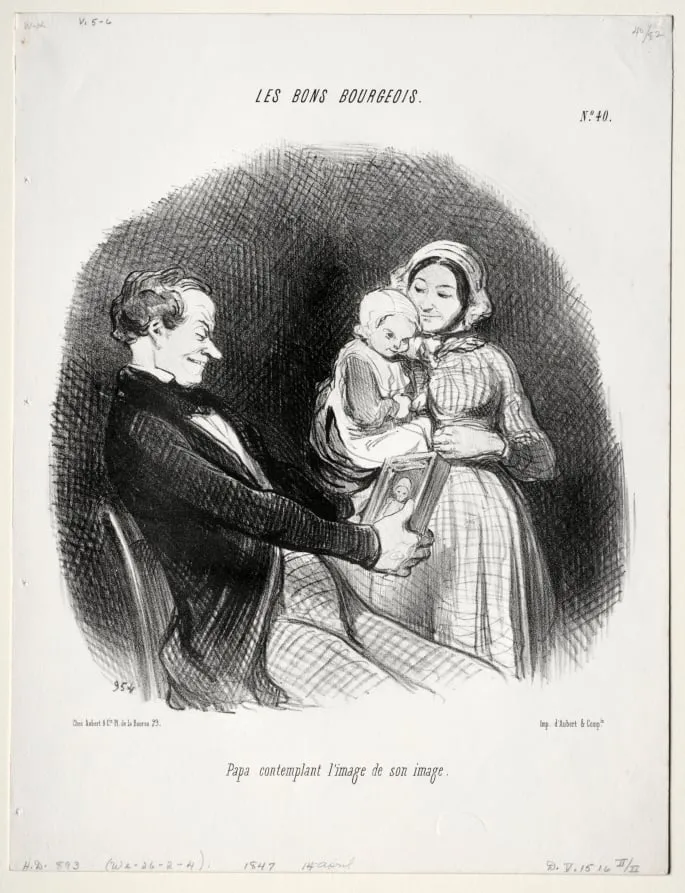
Papa contemplates a likeness of his likeness is a print by the Romanticist artist Honoré Daumier. It dates from 1847 and is held in the collection of the Cleveland Museum of Art.
About this work
You see a man sitting in a chair, looking at a picture of himself.
He's nicely dressed and seems to be thinking deeply.
The man in the picture is likely a bourgeois, a middle-class person, which was a common subject in Daumier's work, often portrayed in a humorous or ironic way.
You can learn more about this style by looking at the work of artist: Honoré Daumier (French, 1808–1879).
Overview
Papa contemplates a likeness of his likeness is a lithographic print from the series The Good Bourgeois, published in Le Charivari on April 14, 1847. It depicts a middle-class man seated in contemplation, gazing at his own portrait.
Subject & Meaning
The subject, likely a bourgeois gentleman, is shown lost in thought while examining his own likeness. This setup may imply introspection or self-perception, common themes in commentary on the middle class.
Technique & Style
Executed in lithography, the print showcases characteristics of Honoré Daumier's style, often marked by humorous or ironic portrayals of the bourgeoisie, though the specific tone here leans towards contemplative observation.
History & Provenance
Published as plate 40 in The Good Bourgeois series within Le Charivari, a French newspaper known for its satirical content, in 1847. Creator attribution is to Honoré Daumier, a prominent French artist of the 19th century.
Context
Part of a broader commentary on 19th-century French middle-class life, the work reflects Daumier's penchant for observing and often satirizing the bourgeoisie, though this piece may suggest a more introspective approach.
Artist & collection
Artist
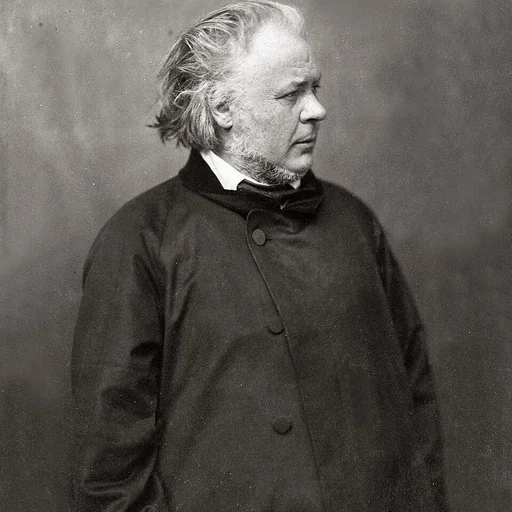
Honoré-Victorin Daumier was a French painter, sculptor, and printmaker, whose many works offer commentary on the social and political life in France, from the Revolution of 1830 to the fall of the Second French Empire in 1870.









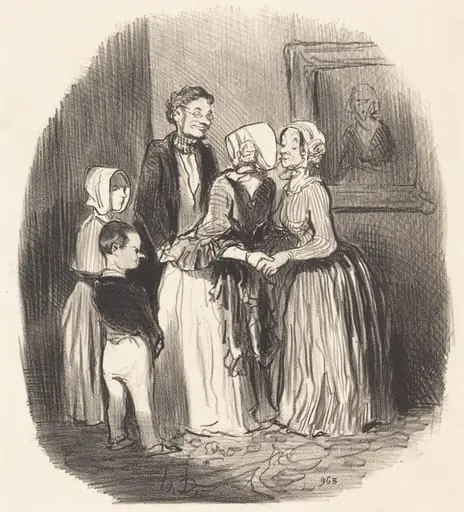 Au novel an, visite... a la tante Rabourdin
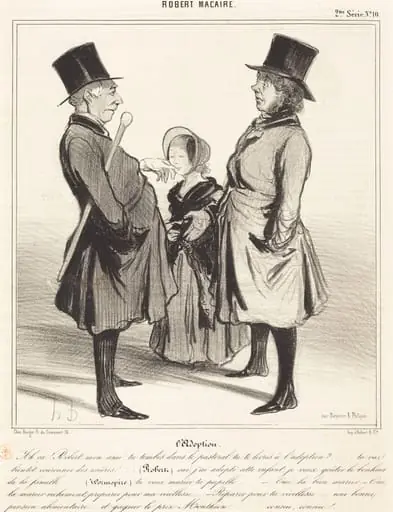 L'Adoption - Ah ça! Robert, mon ami...
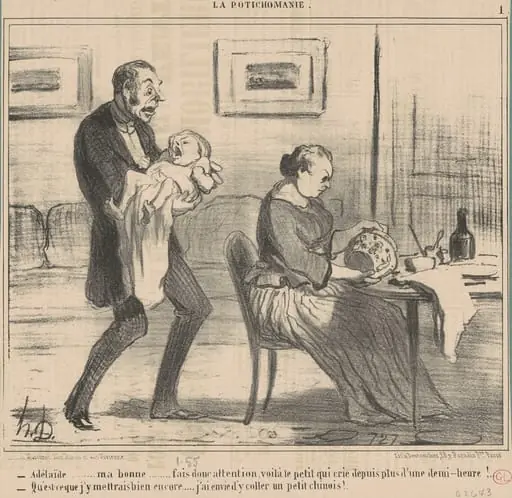 Adélaide ... ma bonne ... fais donc ...
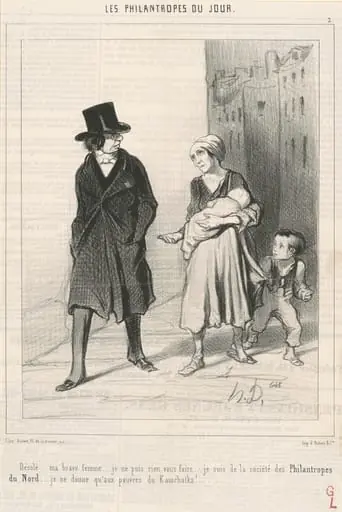 Désolé ... Je suis de la société des philantropes du nord ...
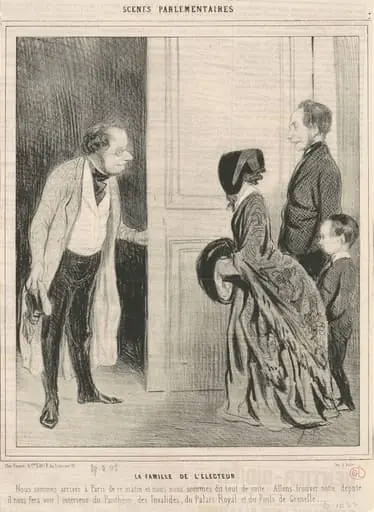 La famille de l'électeur
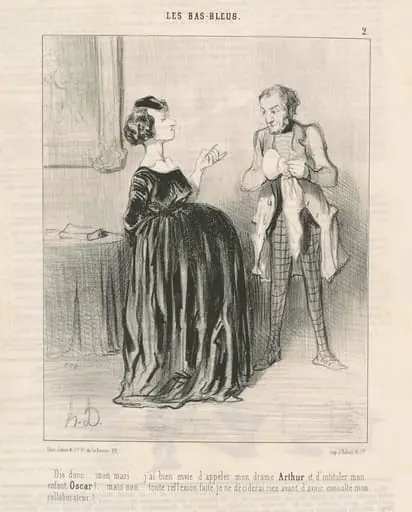 Dis donc ... mon mari ...j'ai bien envie d'appeler mon drama ...
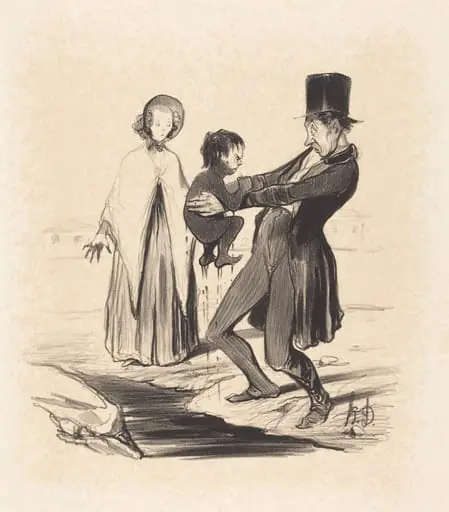 Le Puits de Grenelle
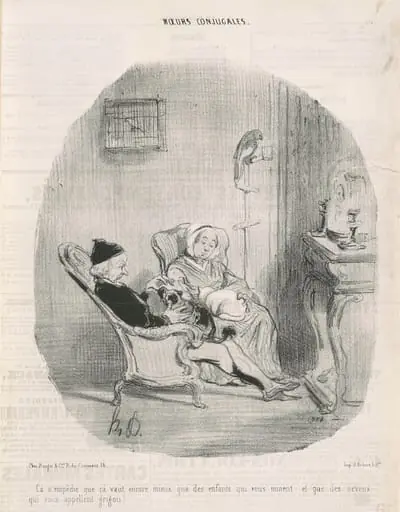 Ça n'empêche que ça vaut encore mieux....