Artwork
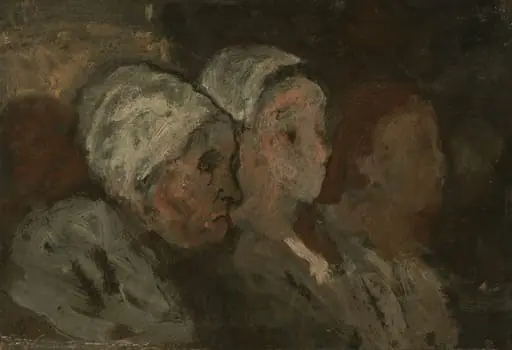
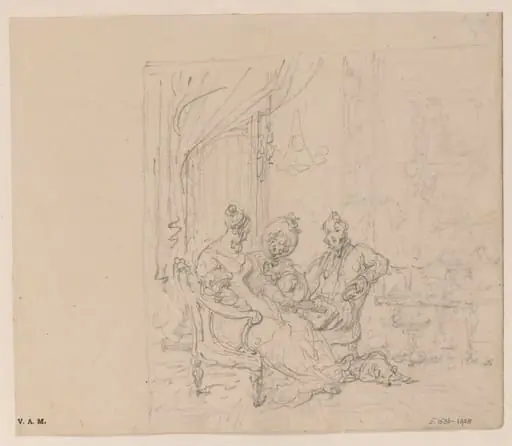
Les trois commères
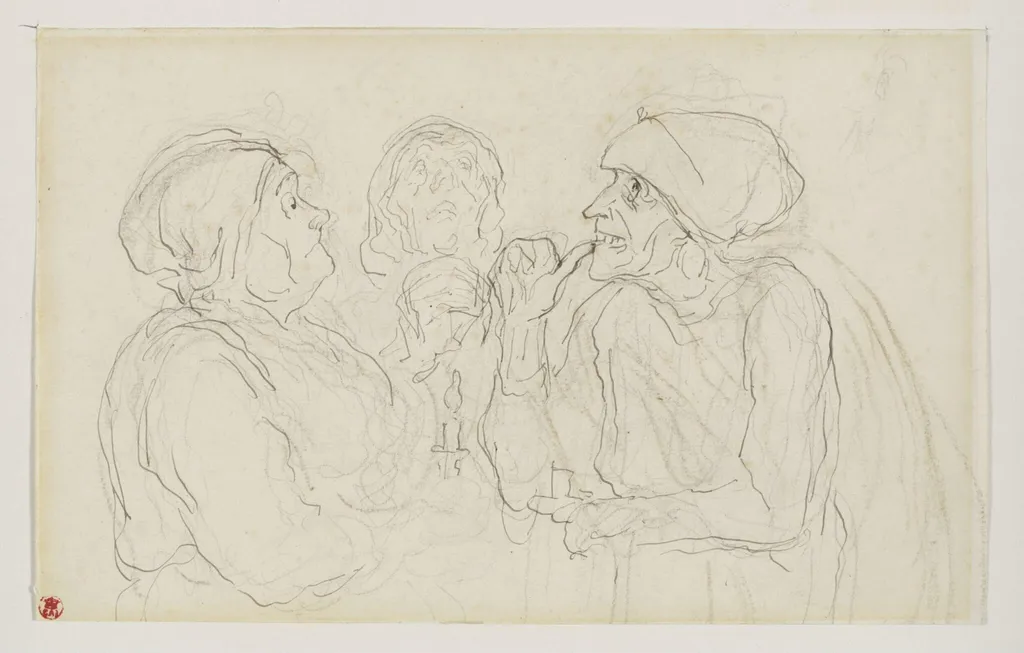
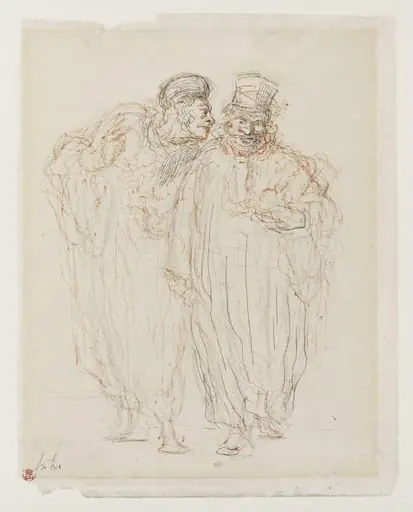
Les trois commères is a drawing by the Impressionist artist Honoré Daumier. It dates from 1854 and is held in the collection of the Victoria and Albert Museum.
About this work
Overview
Created in the late 1850s, this ink drawing by Honoré Daumier depicts three women engaged in conversation, capturing a moment of everyday social interaction.
Created in the late 1850s, this ink drawing by Honoré Daumier depicts three women engaged in conversation, capturing a moment of everyday social interaction. Executed with swift, confident lines, it reflects Daumier’s consistent focus on ordinary life and the nuances of human behavior. Though not a finished print, the work carries the energy and observational precision characteristic of his published caricatures.
Subject & Meaning
The three figures, identified as 'commères'—gossipy women—exemplify Daumier’s interest in the social rituals of the lower and middle classes. Their exaggerated gestures and expressive faces suggest both humor and critique, revealing the performative nature of female camaraderie in 19th-century France. Rather than mocking, the drawing observes with irony, highlighting the quiet dramas of domestic life.
Technique & Style
Daumier employed fluid ink lines and minimal shading to convey movement and personality. Each figure is rendered with distinct posture and facial expression, avoiding idealization in favor of individual character. The composition is tightly grouped, drawing attention to the interplay of glances and gestures. His draftsmanship here is economical yet rich in psychological nuance, typical of preparatory work for lithographic prints.
History & Provenance
The drawing likely served as a study for a lithograph published in one of Daumier’s regular outlets, such as Le Charivari or La Caricature, where he contributed hundreds of satirical images between the 1830s and 1860s. While its exact provenance is undocumented, its style and date align with his output during a period of heightened political and social commentary in French media.
Context
In mid-19th-century Paris, newspapers were primary vehicles for public satire, and Daumier was among the most influential illustrators of his time. His depictions of bourgeois and working-class life offered subtle critiques of social norms. This drawing fits within a broader body of work that used humor to illuminate class dynamics, gender roles, and the performative aspects of urban society.
Legacy
Daumier’s drawings, including this one, helped redefine the role of the artist as a social observer rather than a chronicler of grand narratives. His ability to distill complex human interactions into a few expressive lines influenced later generations of realist and modernist illustrators. Though created for mass reproduction, such sketches are now valued for their immediacy and insight into everyday life.
Artist & collection
Artist
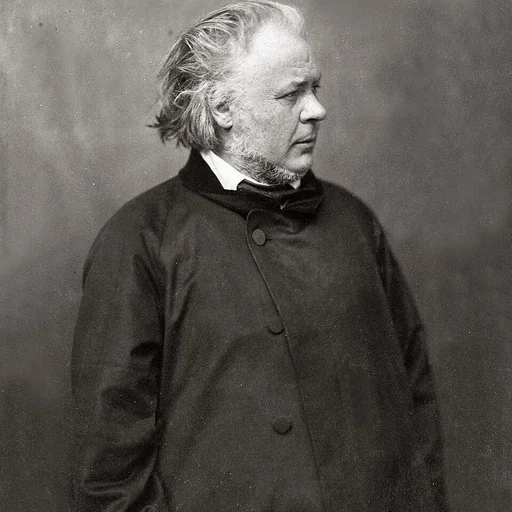
Honoré-Victorin Daumier was a French painter, sculptor, and printmaker, whose many works offer commentary on the social and political life in France, from the Revolution of 1830 to the fall of the Second French Empire in 1870.

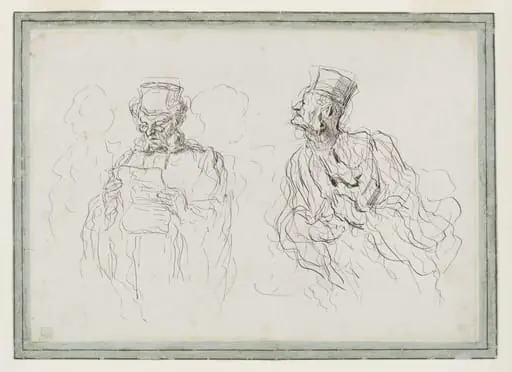 Deux Avocats
 A sketch of three Western figures in a drawing room
 Two Male Figures
 Three studies for a portrait of a Western woman and child
 Two drawings of a boatwoman holding a child
 Christ Disputing with the Doctors: A Sketch
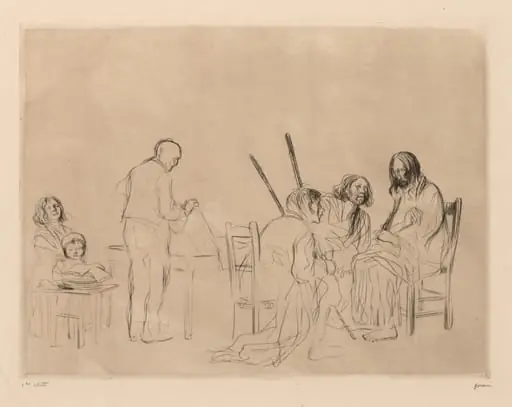 Before the Supper at Emmaus
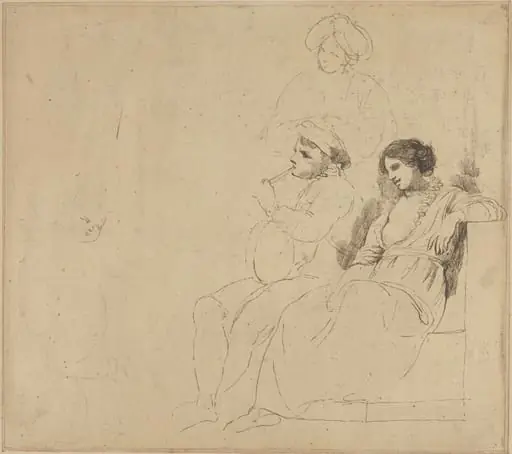 Study for "The Rustic Dancers"
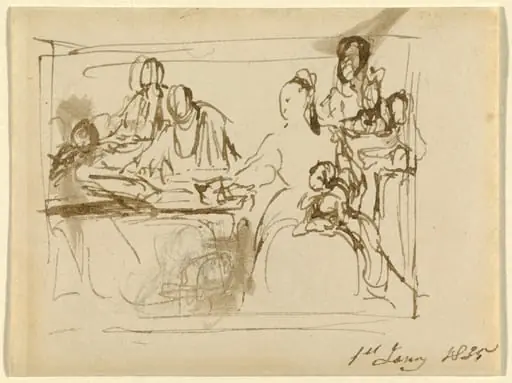 A Family Group
![Figure Studies [recto], by Giovanni Battista Cipriani](https://artifactworldgallery.com/img/giovanni-battista-cipriani--figure-studies-recto--32b47b1a71716a78-w320.webp) Figure Studies [recto]
Figure Studies [recto]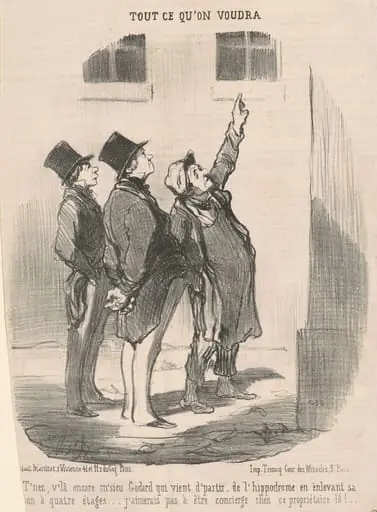 T'nez, v'la encore M'sieu Godard ...
 Une confidence (deux avocats)