Artwork
Le Duo
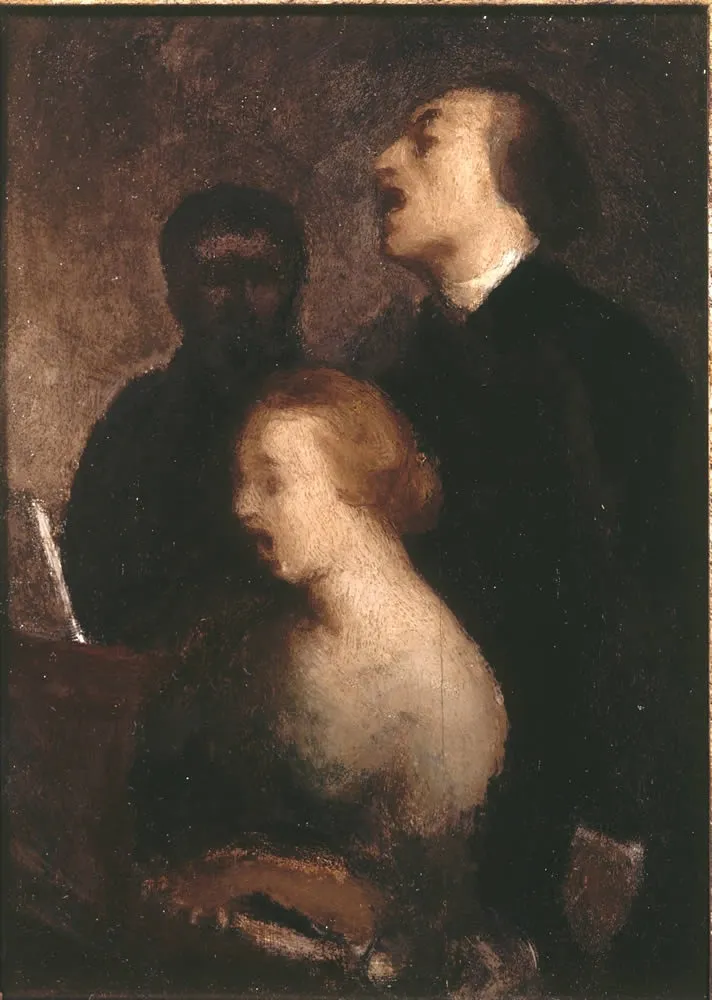
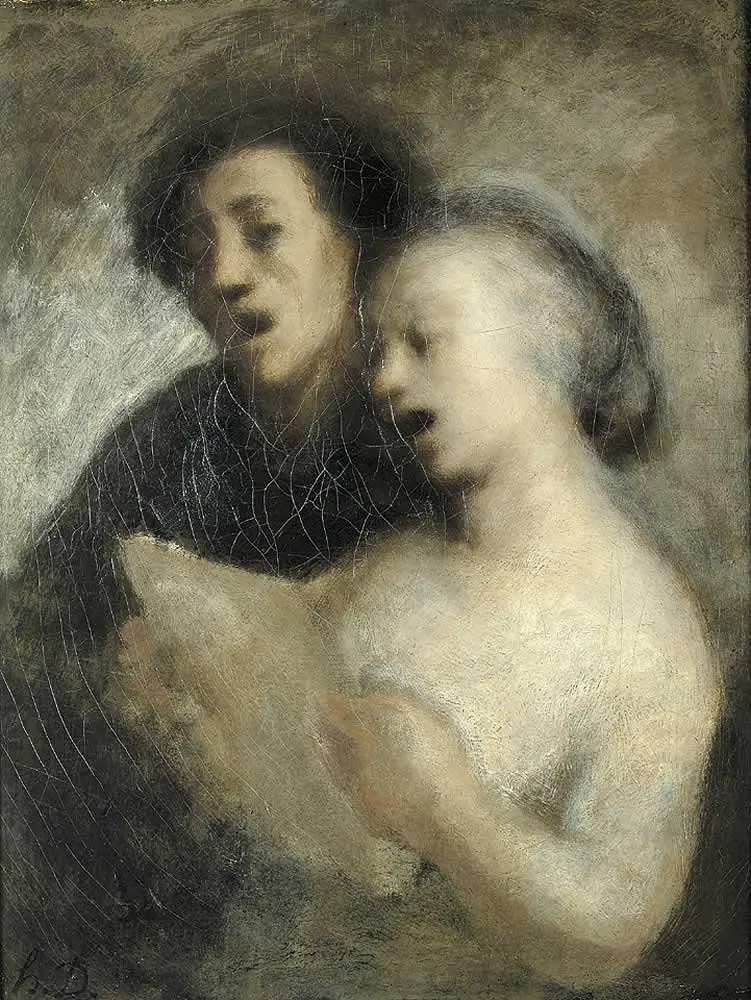
Le Duo is an oil painting by the Realist artist Honoré Daumier. It dates from 1853 and is held in the collection of the Hammer Museum.
About this work
Overview
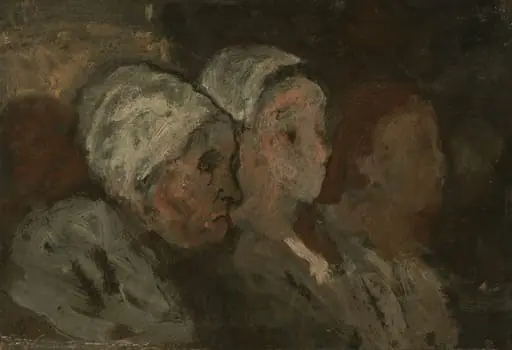
Le Duo is an oil painting by Honoré Daumier, dated around 1853. It is part of the collection at the Hammer Museum in Los Angeles. The work presents two figures in a confined interior space, rendered with a restrained palette and strong tonal contrasts. Daumier’s focus on intimate human presence, rather than narrative detail, reflects his interest in everyday psychological states.
Subject & Meaning
The painting shows a man standing behind a woman, both isolated in a shadowed room. The woman, dressed in white and facing forward, appears still and introspective; the man, cloaked in dark clothing, looms slightly behind, his presence ambiguous. No clear interaction is depicted, leaving their relationship open to interpretation—perhaps companionship, tension, or quiet solitude.
Technique & Style
Daumier employs chiaroscuro to model the figures with sharp contrasts between light and deep shadow. The woman’s white garment catches a faint glow, while the man dissolves into darkness, enhancing the spatial depth. Brushwork is subdued and economical, avoiding detail in favor of atmospheric effect. The composition’s tight framing intensifies the sense of enclosure and emotional restraint.
History & Provenance
Created in the early 1850s, Le Duo emerged during Daumier’s mature period, when he increasingly turned from caricature to easel painting. The work remained in private hands for much of the 20th century before entering the Hammer Museum’s collection. Its provenance reflects the growing recognition of Daumier’s non-caricatural work among American collectors in the postwar era.
Context
In mid-19th-century France, Daumier’s shift toward intimate genre scenes coincided with broader artistic movements exploring psychological realism. While contemporaries like Courbet emphasized social commentary, Daumier focused on quiet, unspoken moments. Le Duo aligns with this trend, avoiding theatricality to convey the weight of ordinary presence in a dimly lit domestic setting.
Legacy
Le Duo exemplifies Daumier’s ability to convey emotional nuance without narrative exposition. Though less known than his political satires, this painting influenced later artists interested in mood and psychological depth over spectacle. Its quiet power endures in collections that value understated realism, affirming Daumier’s range beyond caricature.
Artist & collection
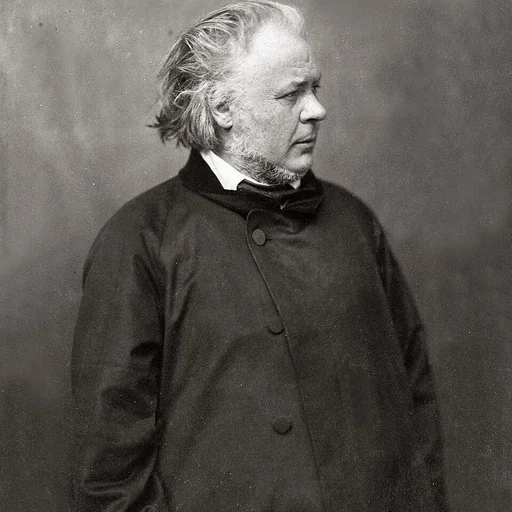
Artist
Honoré-Victorin Daumier was a French painter, sculptor, and printmaker, whose many works offer commentary on the social and political life in France, from the Revolution of 1830 to the fall of the Second French Empire in 1870.