Artwork
Heliogabalus and the Wise Women
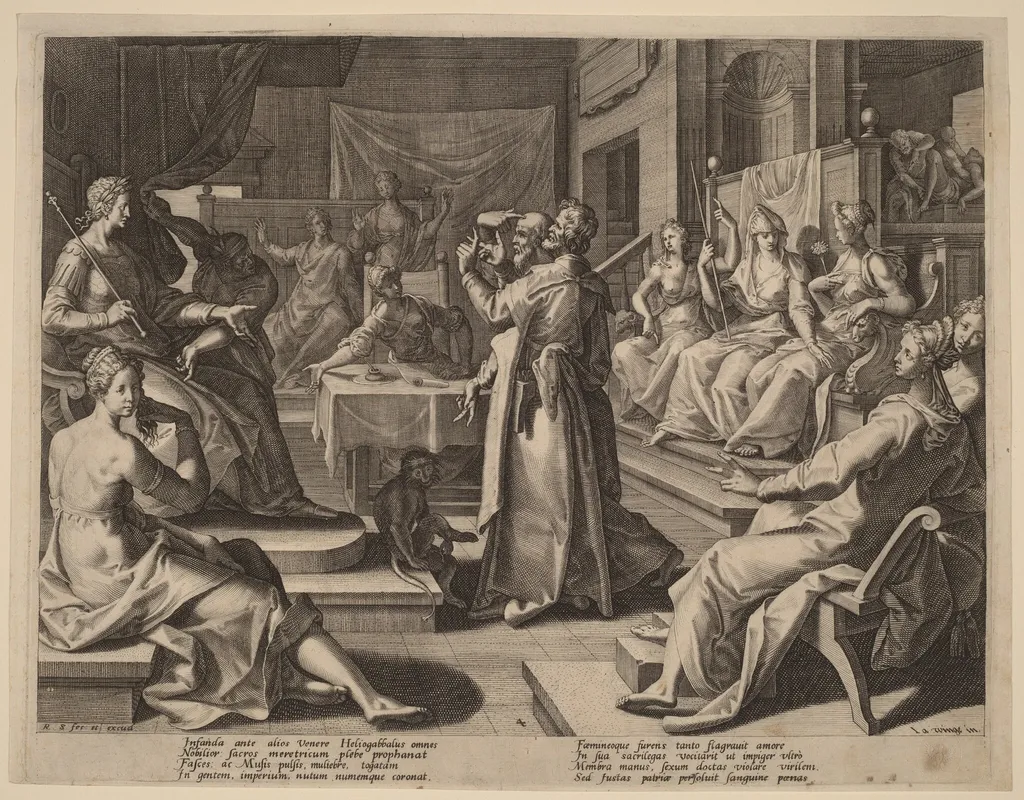
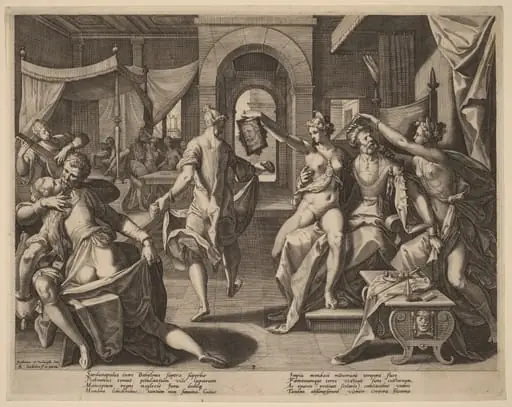
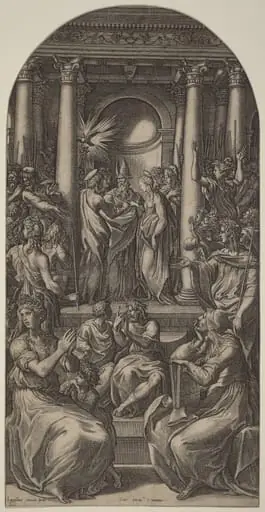
Heliogabalus and the Wise Women is an ink print by the Renaissance artist Raphael Sadeler I. It dates from 1589 and is held in the collection of the National Gallery of Art.
About this work
The use of cross-hatching creates a range of tonal values, from light to dark, which adds to the overall sense of volume and space.
In this engraving, a man stands at the center, wearing a long robe and holding a cup to his lips. He is surrounded by several women, some of whom are seated on steps or benches, while others stand behind him. The women are dressed in flowing robes, and some of them hold objects such as a staff or a bowl. The scene is set in a room with a table and a curtain in the background.
The engraving is highly detailed, with intricate lines and textures that give the image a sense of depth and dimensionality. The use of cross-hatching creates a range of tonal values, from light to dark, which adds to the overall sense of volume and space.
The engraving is a work of Renaissance art, created by Sadeler I, Raphael in 1589.
Overview
Heliogabalus and the Wise Women is an engraving on laid paper created by Raphael Sadeler I in 1589.
Subject & Meaning
The engraving depicts a central male figure, identified as Heliogabalus, surrounded by women in a domestic setting. The women are variously posed and some hold objects such as staffs or bowls, suggesting a narrative or symbolic context.
Technique & Style
The engraving is characterized by intricate lines, detailed textures, and a range of tonal values achieved through cross-hatching, creating a sense of depth and dimensionality.
Artist & collection

 The Symposium
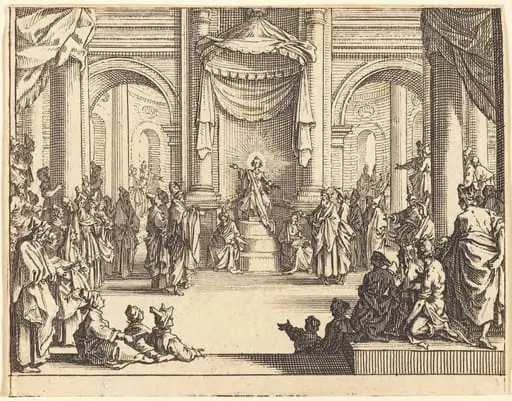 Christ Disputing with the Doctors
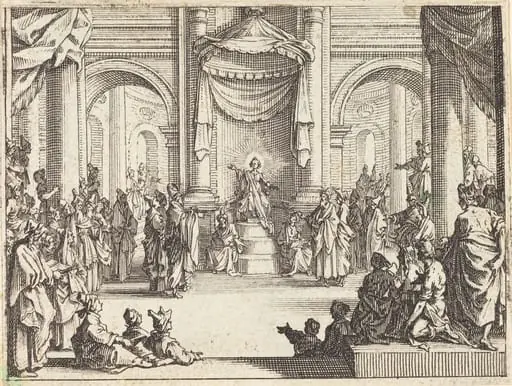 Christ Disputing with the Doctors
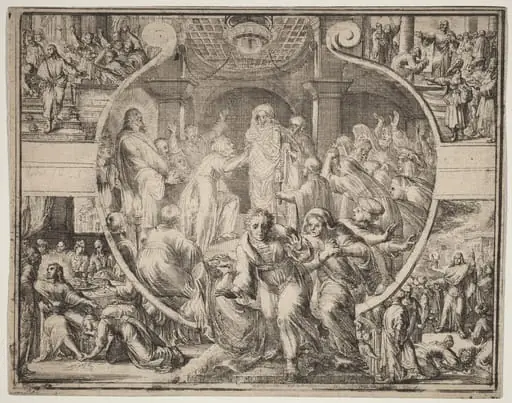 Raising of Lazarus with Scenes from the Life of Christ
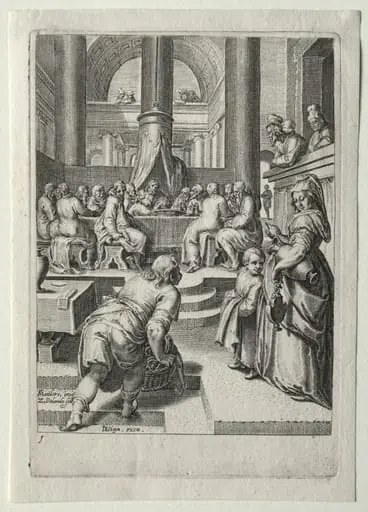 Life of Christ: The Last Supper
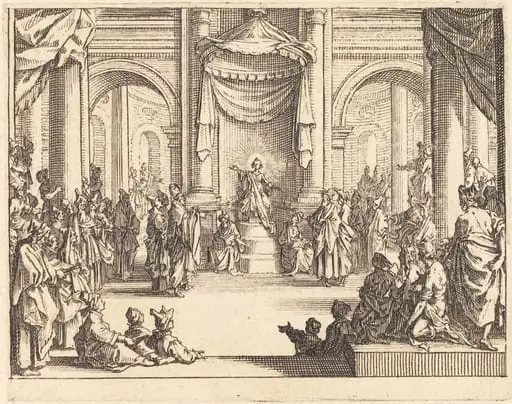 Christ Disputing with the Doctors
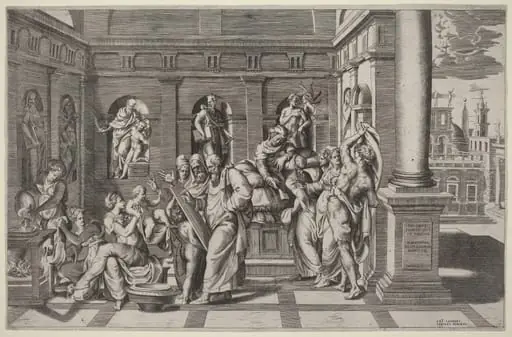 The Birth of Saint John the Baptist
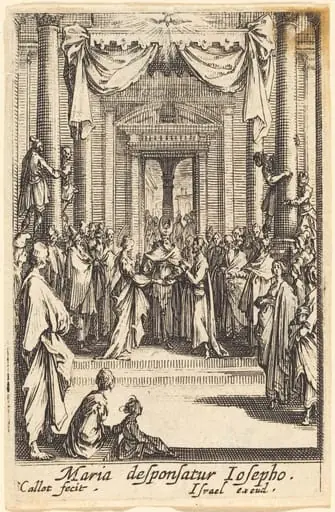 The Marriage of the Virgin
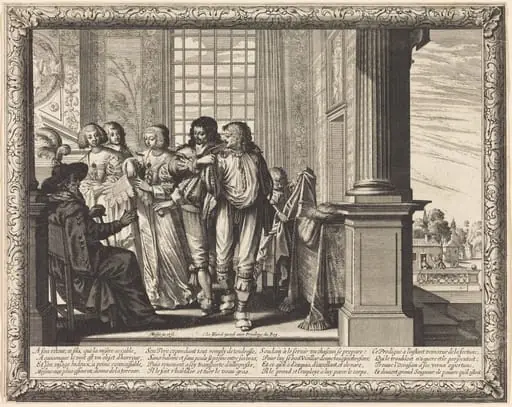 The Prodigal Son's Father Orders the Best Robe and the Slaughter of the Fatted Calf
 The Marriage of the Virgin