Artwork
Hussar at the Door of a Cabaret, or Hussar Embracing a Servant
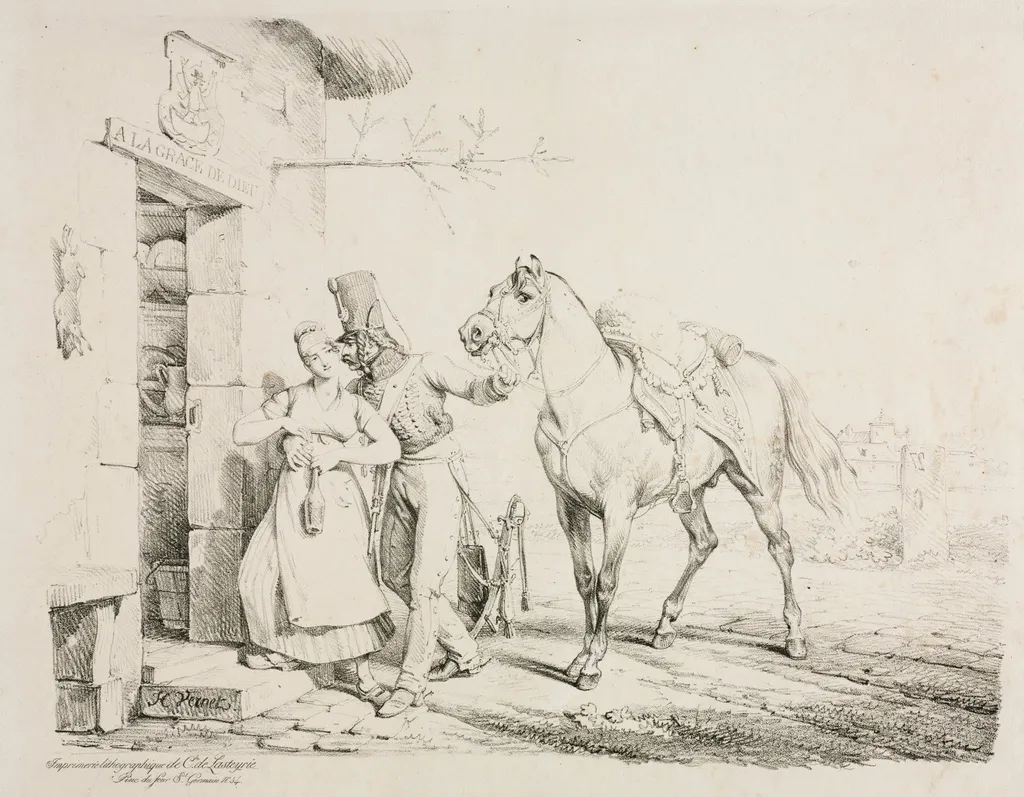
Hussar at the Door of a Cabaret, or Hussar Embracing a Servant is a print by the Romanticist artist Horace Vernet. It dates from 1817 and is held in the collection of the Cleveland Museum of Art.
About this work
Overview
Created in 1817 by French artist Horace Vernet, this print captures a moment of intimate interaction between a hussar and a servant outside a rural cabaret.
Created in 1817 by French artist Horace Vernet, this print captures a moment of intimate interaction between a hussar and a servant outside a rural cabaret. Vernet, known for his military and Orientalist themes, here shifts focus to a quieter, human-scale scene. The work blends genre painting with his established interest in military figures, presenting a candid encounter rather than a grand battle.
Subject & Meaning
The hussar, in full uniform with sword, embraces a servant girl who holds a bottle and glass, suggesting a fleeting, informal moment of connection. The setting—a modest roadside inn marked 'A la Grace de Dieu'—hints at the intersection of military life and civilian spaces. The scene conveys tenderness amid the roughness of post-Napoleonic France, where soldiers often mingled with local populations in transient social settings.
Technique & Style
Rendered with clear lines and restrained detail, the work reflects Vernet’s skill in capturing costume and gesture. The figures are rendered with naturalistic posture and expression, avoiding theatricality. Background elements like the stone wall and dirt road are simplified, directing attention to the central interaction. The composition’s balance and lighting suggest an awareness of Romantic sensibilities without overt emotional exaggeration.
History & Provenance
Produced in 1817, the print emerged during Vernet’s early career, shortly after the Bourbon Restoration. It likely originated as a preparatory study or independent print, possibly intended for wider distribution. While its exact early ownership is undocumented, its subject aligns with contemporary interest in scenes of military-civilian interaction during a period of social reorganization in France.
Context
In the aftermath of the Napoleonic Wars, French society grappled with the reintegration of veterans into civilian life. Cabarets and roadside inns became common spaces where soldiers and locals interacted, often informally. Vernet’s depiction reflects this reality, offering a glimpse into the everyday lives of soldiers beyond the battlefield, contrasting with the heroic narratives dominant in official art of the era.
Legacy
Though less celebrated than Vernet’s large-scale battle paintings, this work contributes to a broader understanding of his range. It exemplifies how artists of the period engaged with ordinary life, subtly challenging the hierarchy of genres. The print remains a quiet testament to the personal, unmonumental moments that defined post-war French society.
Own this work as a print
Artist & collection
Artist
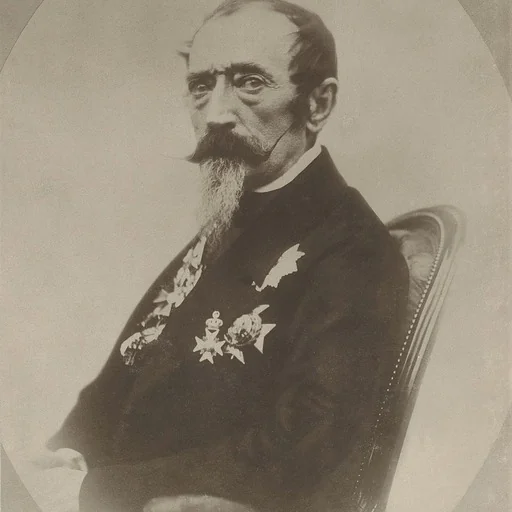
Émile Jean-Horace Vernet (French pronunciation: ; 30 June 1789 – 17 January 1863), better known as Horace Vernet, was a French painter of battles, portraits, and Orientalist subjects.

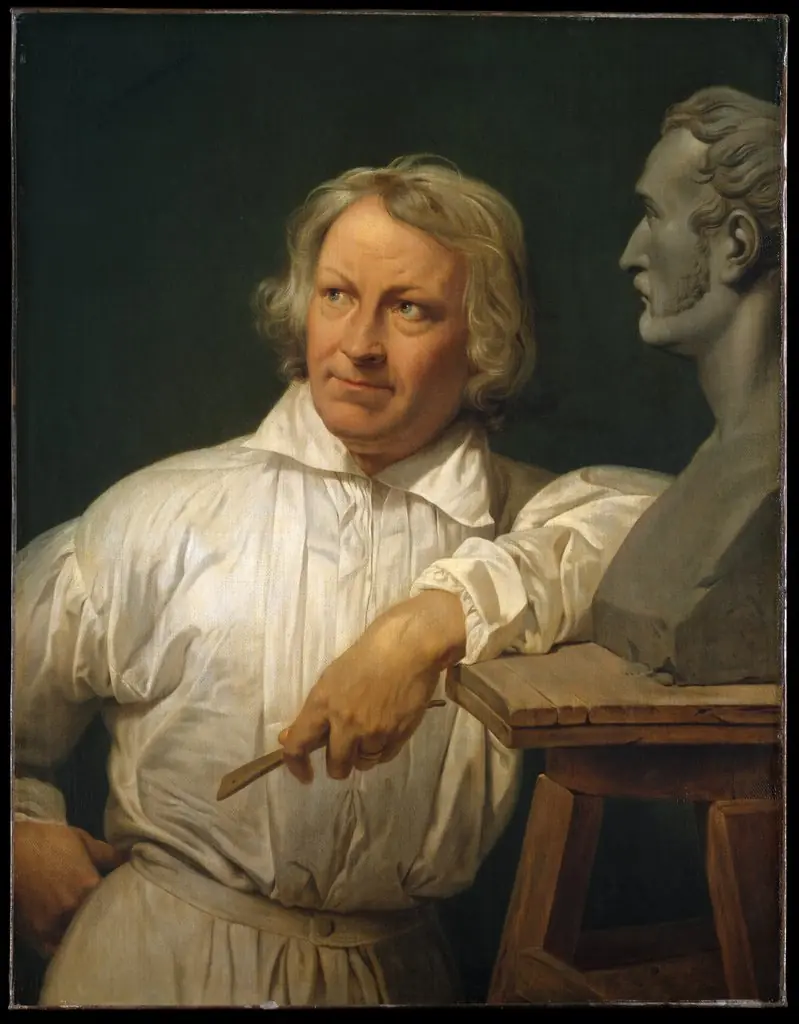 Bertel Thorvaldsen (1768–1844) with the Bust of Horace Vernet
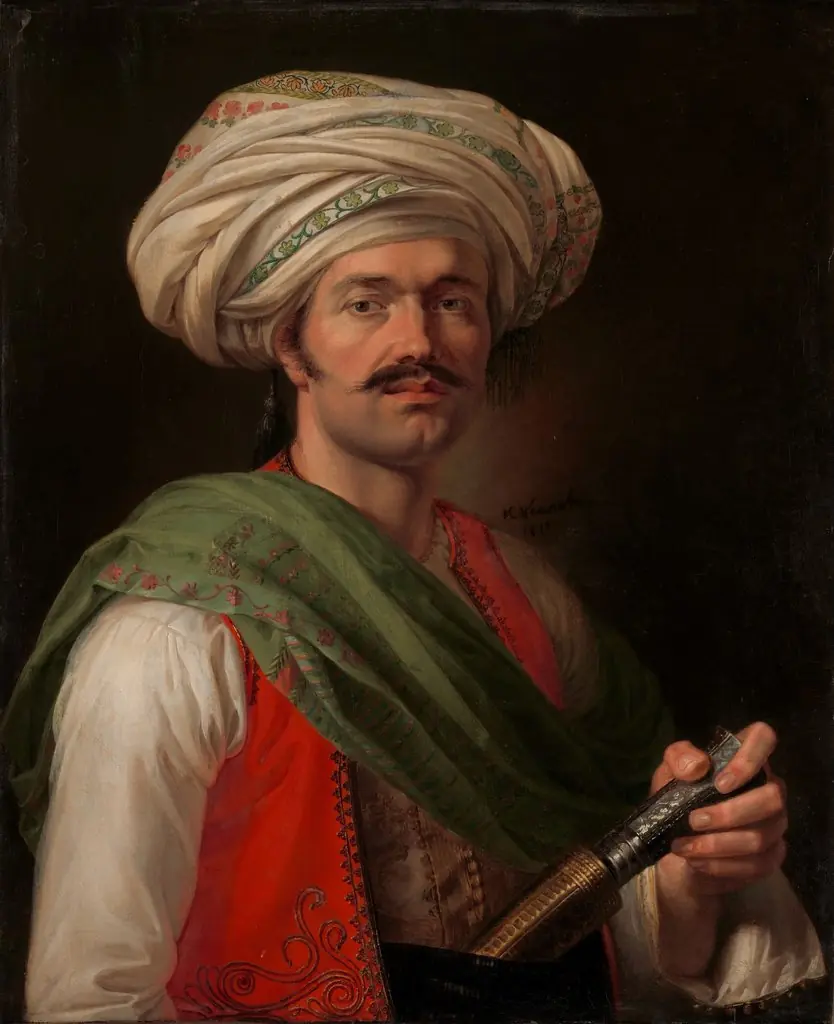 Portrait of a Mameluke, said to be Roustam Raza
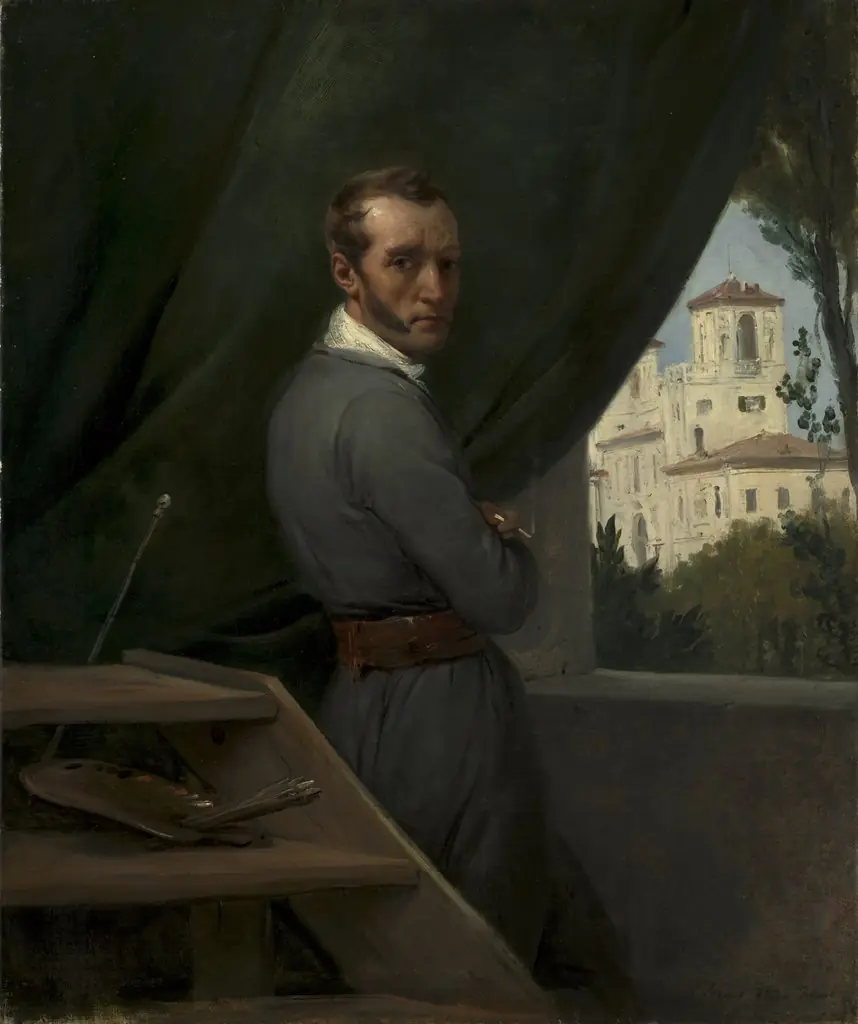 Self-Portrait in Rome
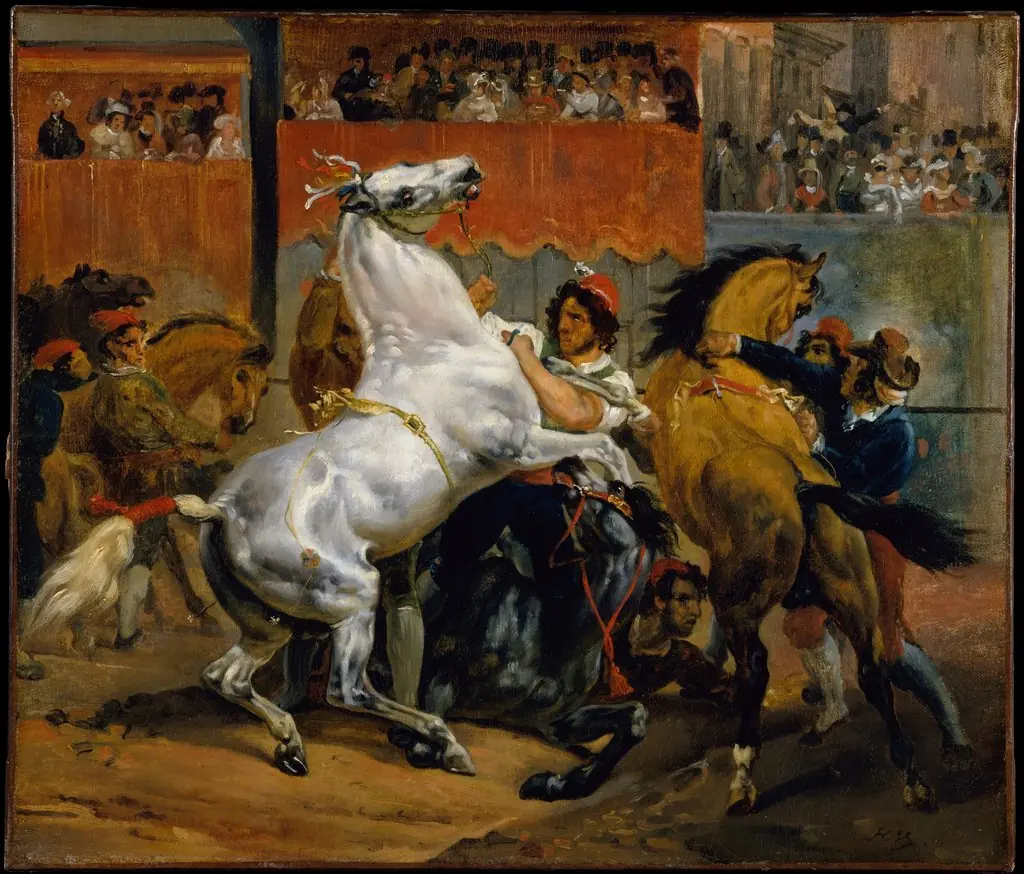 The Start of the Race of the Riderless Horses
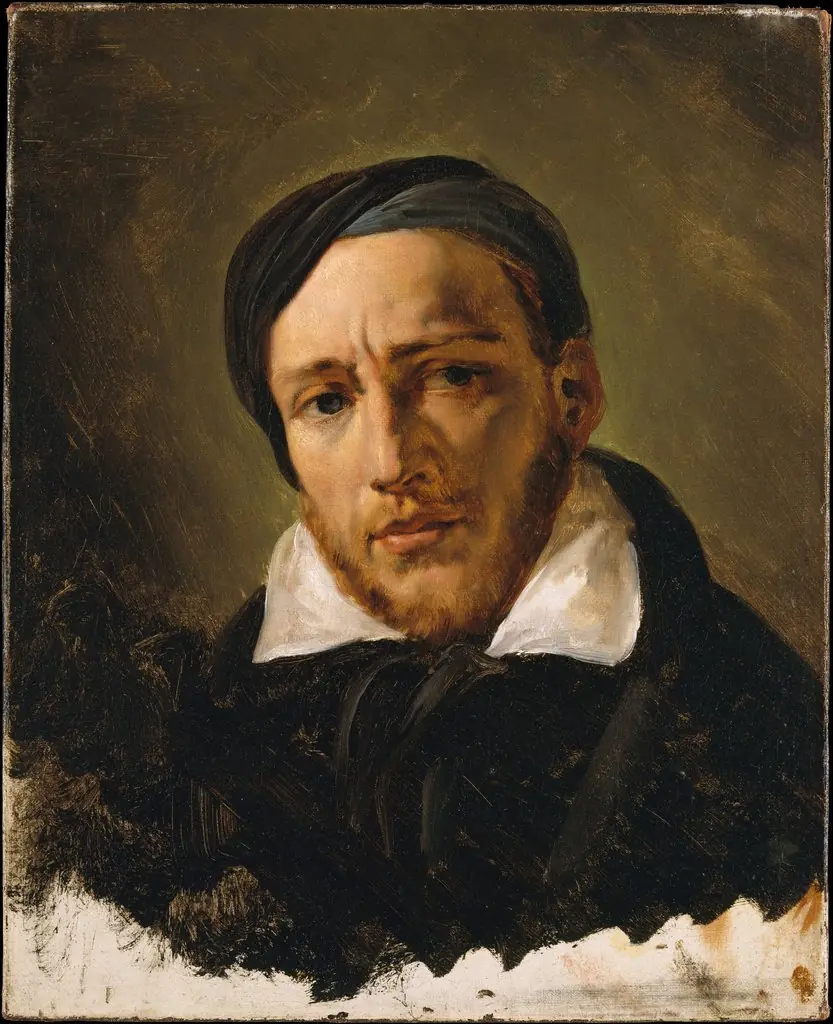 Jean-Louis-André-Théodore Gericault (1791–1824)
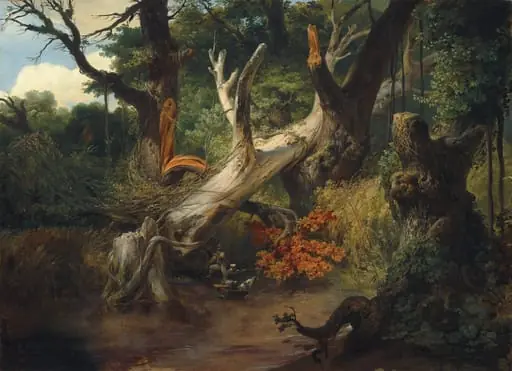 Hunting in the Pontine Marshes
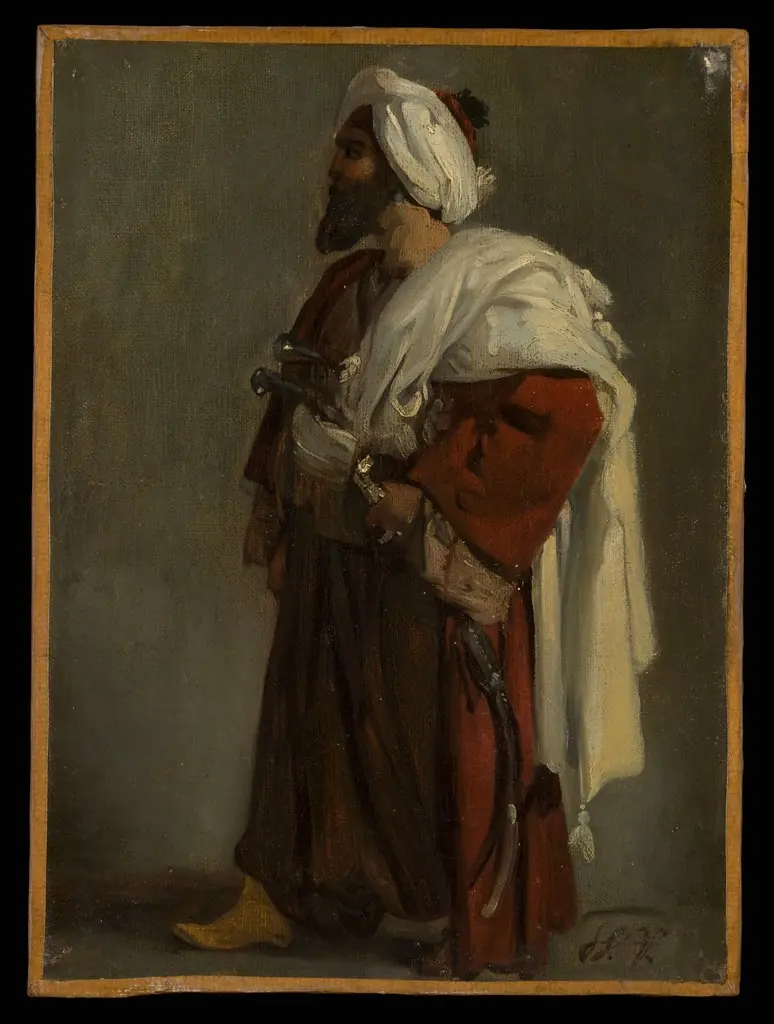 Arab Warrior
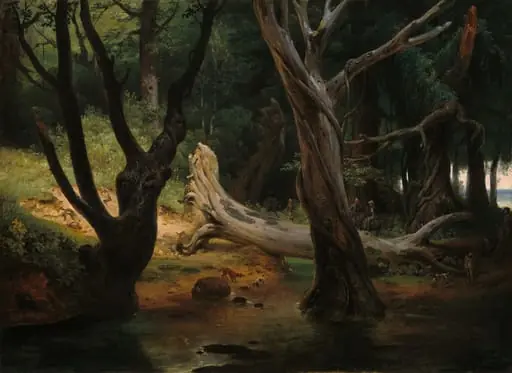 Departure for the Hunt in the Pontine Marshes
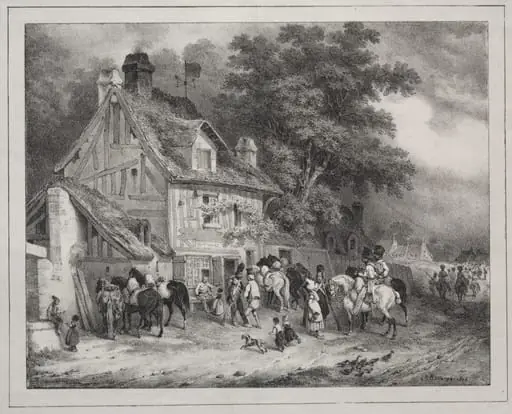 Souvenir of Normandy
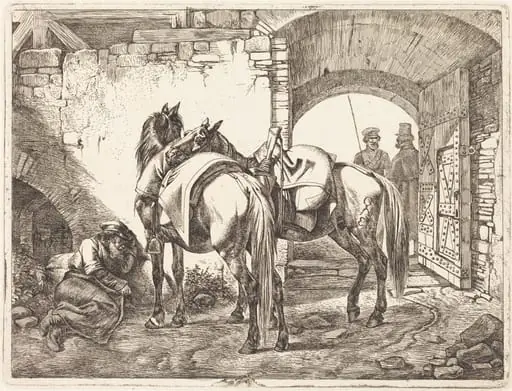 Cossack Horses in a Courtyard
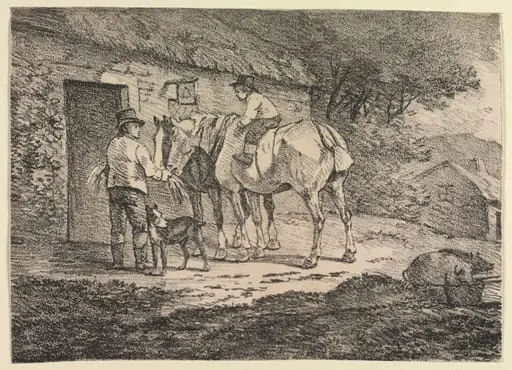 Specimens of Polyautography: Horses at a Cottage Door
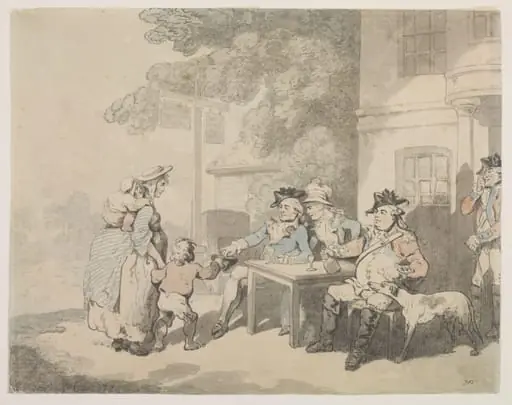 Untitled
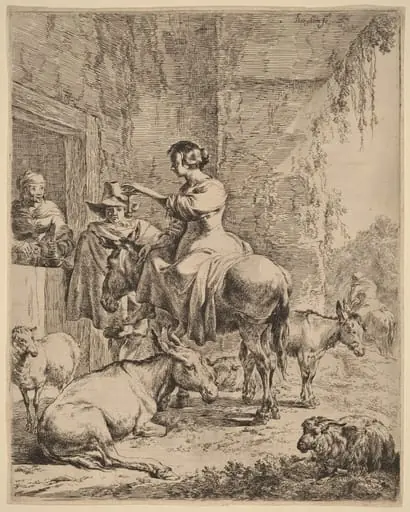 The Rest before the Inn
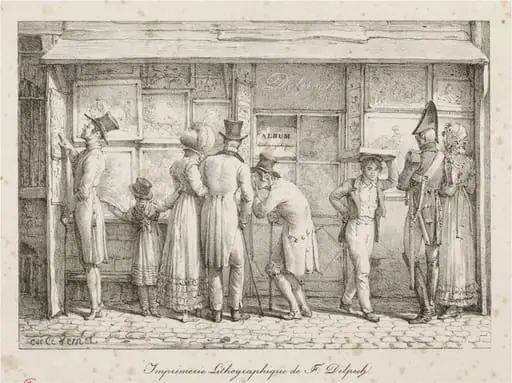 Imprimerie lithographique de F. Delpech (Lithographic Printing House of F. Delpech)
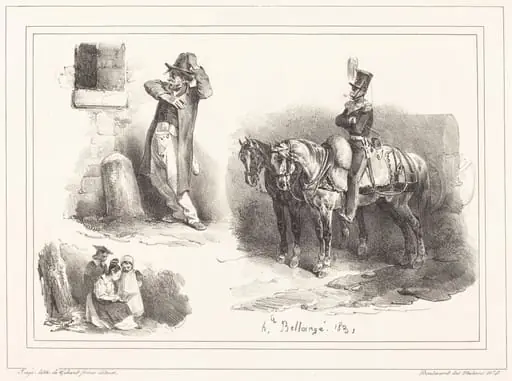 Three Vignettes
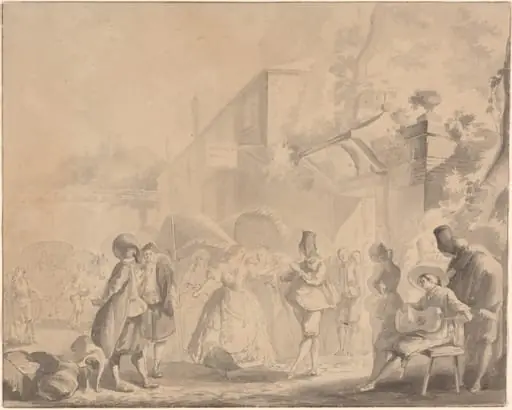 Dance in a Village Square
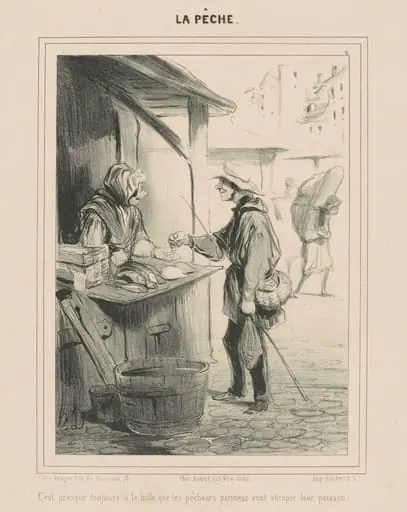 C'est pesque toujours a la halle ...
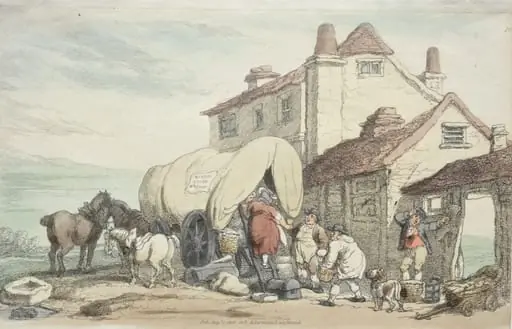 Richardson's Show: A Flying Wagon
 The Escape from Argyle Castle
 Hussard Striking a Mameluck