Artwork
The Escape from Argyle Castle
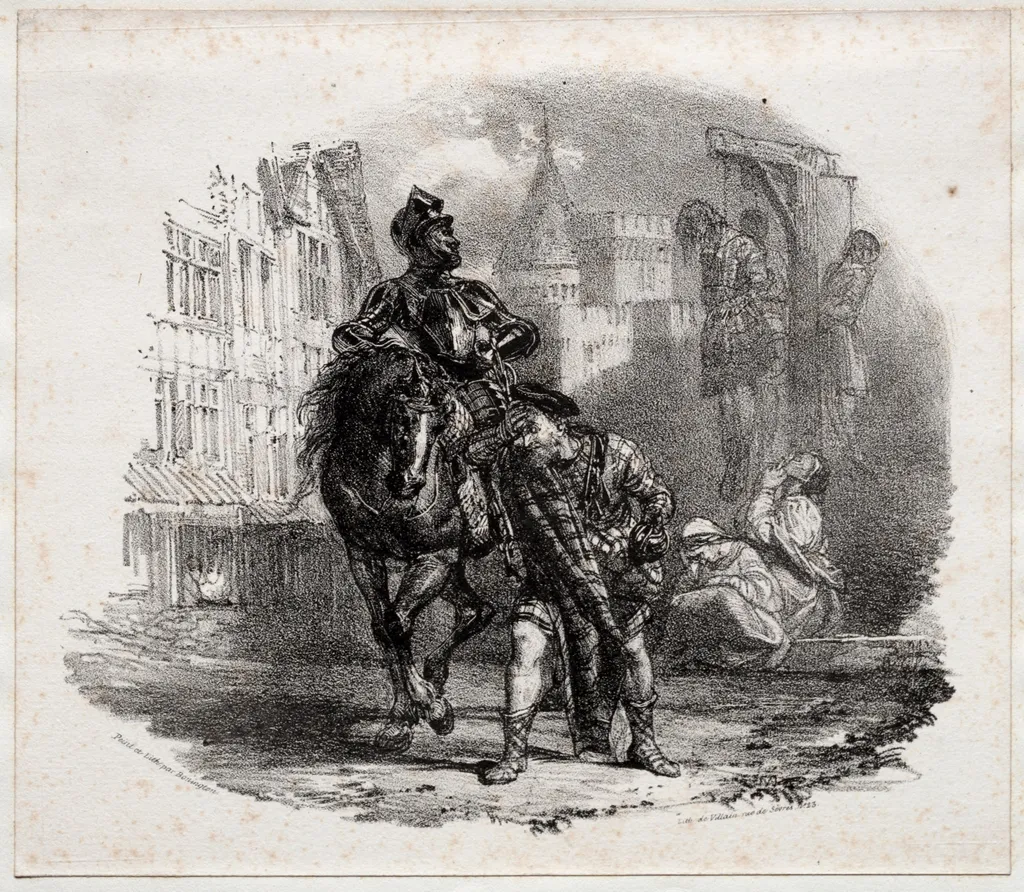
The Escape from Argyle Castle is a print by the Romanticist artist Richard Parkes Bonington. It dates from 1826 and is held in the collection of the Cleveland Museum of Art.
About this work
Overview
Though labeled a print, its appearance resembles a preparatory sketch, emphasizing immediacy and emotional resonance over detail.
Created in 1826 by Richard Parkes Bonington, this print captures a moment of tension within a historical narrative. Executed in a rapid, expressive manner, it reflects the artist’s preference for spontaneous composition over polished finish. Though labeled a print, its appearance resembles a preparatory sketch, emphasizing immediacy and emotional resonance over detail. Bonington’s time in France deeply informed his approach, merging English sensibility with French Romantic tendencies.
Subject & Meaning
The scene depicts a clandestine escape from Argyle Castle, likely referencing a political or military flight. Three figures convey urgency: a standing man in a long coat, sword in hand, appears to assist a kneeling companion, while a third lies exhausted on the ground. The absence of clear context invites interpretation, but the composition suggests desperation and solidarity. The castle’s imposing architecture looms behind, reinforcing the peril of their situation.
Technique & Style
Bonington employed loose, fluid lines and minimal shading to suggest motion and emotion rather than define form. The sketchy quality conveys haste, as if the moment was captured on the spot. Light is implied through tonal contrasts rather than detailed rendering, and the stone structure is suggested with broad strokes. This approach aligns with Romantic ideals of spontaneity and emotional truth over academic precision.
History & Provenance
The work emerged during Bonington’s most productive period in Paris, where he engaged with French artists and developed his signature style. Though not widely exhibited in his lifetime, it was preserved within his personal collection and later entered institutional holdings. Its status as a print suggests it may have been intended for reproduction or study, reflecting Bonington’s interest in disseminating his ideas beyond oil painting.
Context
This piece belongs to a broader wave of Romantic interest in historical drama and emotional intensity. While many contemporaries focused on grand battles or sublime landscapes, Bonington turned to intimate, human moments within historical settings. His focus on fleeting gestures and atmospheric tension aligned with Romanticism’s rejection of rigid Neoclassical norms, favoring personal expression and psychological depth.
Legacy
Bonington’s sketch-like prints influenced later generations of artists who valued immediacy and expressive line over finish. Though less celebrated than his finished watercolors, works like this demonstrated the power of suggestion in visual storytelling. His blending of English and French traditions helped bridge artistic communities, leaving a quiet but lasting mark on 19th-century printmaking and Romantic aesthetics.
Artist & collection
Artist
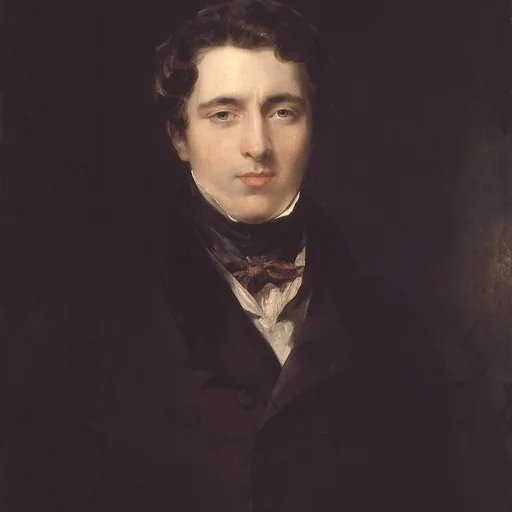
Richard Parkes Bonington (25 October 1802 – 23 September 1828) was an English Romantic landscape painter.

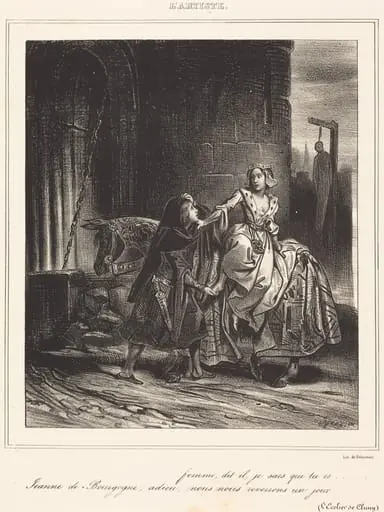 Jeanne de Bourgogne
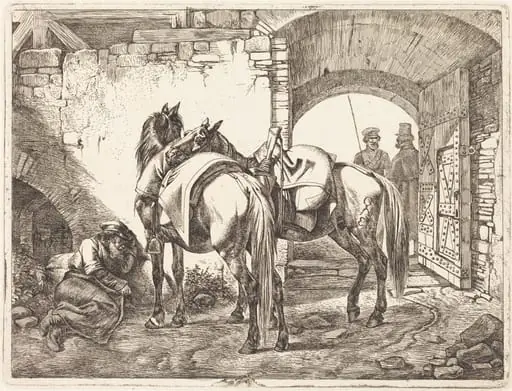 Cossack Horses in a Courtyard
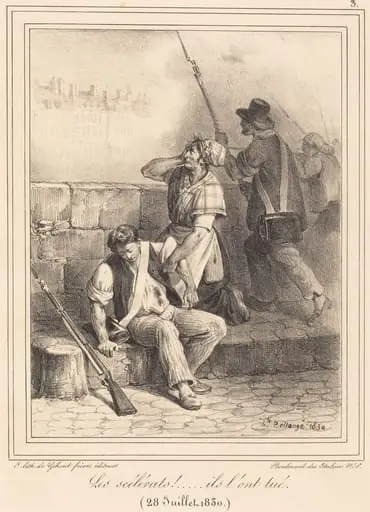 "Les Scélérats!..."
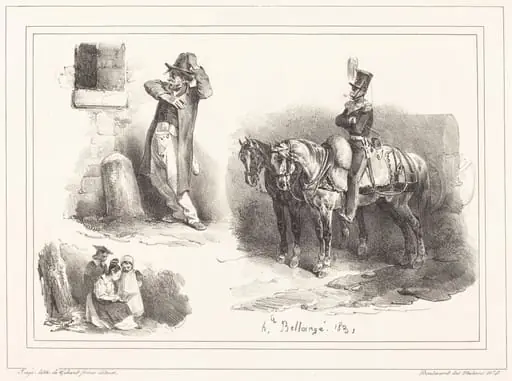 Three Vignettes
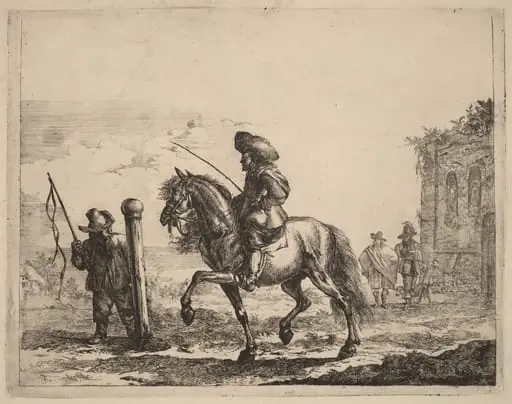 Riding School
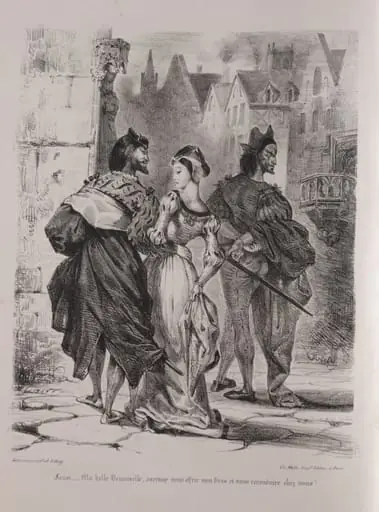 Illustrations for Faust: Faust seeks to allure Marguerite
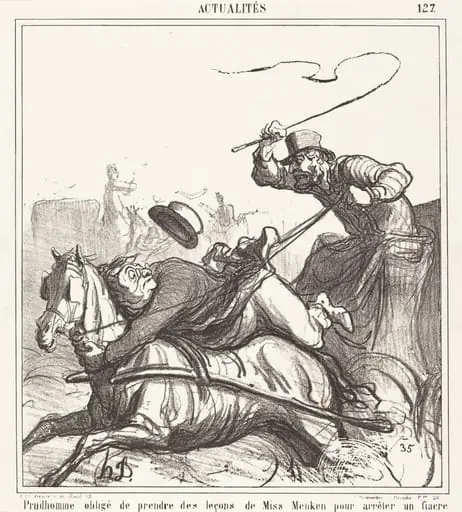 Prudhomme obligé de prendre des leçons...
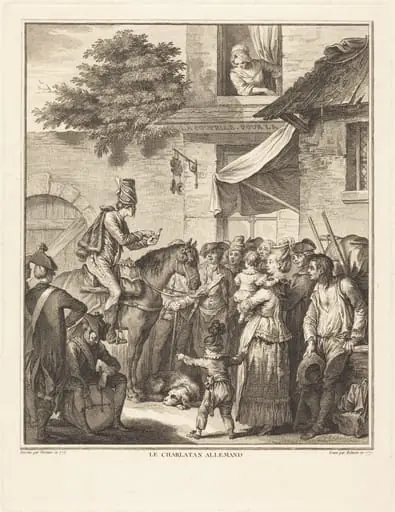 Le charlatan allemand
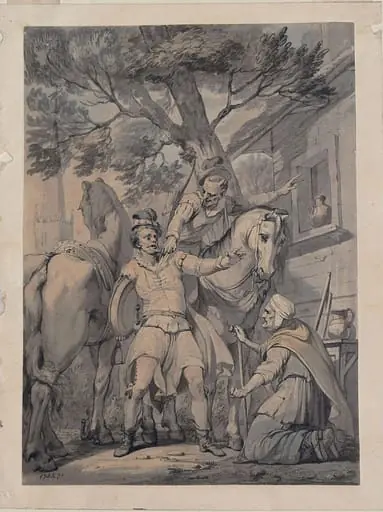 The Sompnour, the Devil, and the Widow
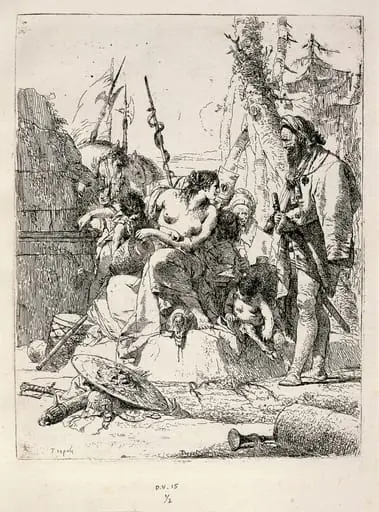 Seated Woman and Standing Man Surrounded by Other Figures and Paraphernalia
 Leaving the castle
 Souvenir of Normandy