Artwork
Labourers carrying coal up a gangway to a ship at Port Said
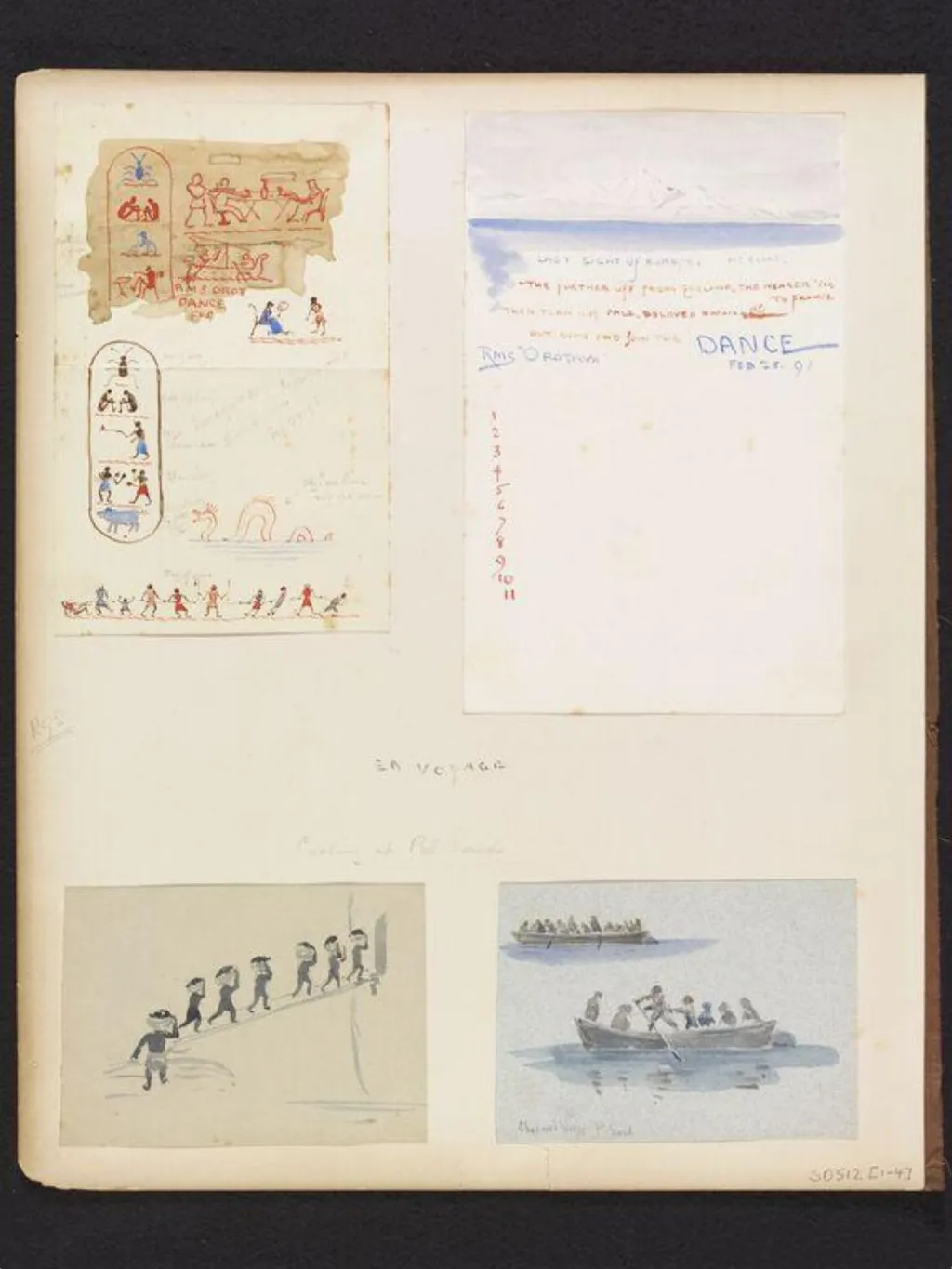
Labourers carrying coal up a gangway to a ship at Port Said is a watercolor work on paper by the Impressionist artist H. E. Howard. It dates from 1891 and is held in the collection of the Victoria and Albert Museum. Created in 1891 during a voyage aboard the RMS Orotava, this watercolour is one of four quick sketches made by H.
About this work
Overview
The piece was later compiled into a personal album, which entered the art market through a Christie’s sale in 1969.
Created in 1891 during a voyage aboard the RMS Orotava, this watercolour is one of four quick sketches made by H. E. Howard as he traveled toward Egypt. It captures a moment of labor at Port Said, focusing on workers ascending a gangway with coal. The piece was later compiled into a personal album, which entered the art market through a Christie’s sale in 1969. Its modest scale and spontaneous execution reflect its function as a travel record rather than a formal commission.
Subject & Meaning
The scene portrays dockworkers transporting coal to a waiting ship, a common but rarely depicted aspect of 19th-century maritime trade. The figures are rendered in minimal detail, emphasizing collective motion over individual identity. The act of labor is presented without romanticization or drama, suggesting an observational intent. The location—Port Said, a key Suez Canal port—hints at the global movement of goods and the human effort underpinning imperial trade routes.
Technique & Style
Howard employed light, fluid watercolor washes and loose brushwork to convey movement and fleeting light. The figures are suggested with quick strokes, their forms barely defined, while the gangway and ship are indicated with minimal tonal shifts. This approach prioritizes immediacy over detail, aligning with the conventions of travel sketching. The transparency of the medium enhances the sense of heat and air, reinforcing the atmospheric conditions of the Egyptian coast.
History & Provenance
The watercolour was part of a small album of sketches Howard made during his 1891 journey to Egypt. After his death, the album remained in private hands until it was offered at Christie’s in 1969. Its inclusion in the sale suggests it was valued as a personal document rather than a major artistic work. No public institution held it prior to this, and its current location is unrecorded in major collections.
Context
Howard’s sketch reflects the broader 19th-century practice of amateur artists documenting colonial and commercial ports during steamship voyages. Port Said, as a critical node in the Suez Canal, attracted observers interested in the intersection of labor, technology, and empire. Such sketches, though informal, offer quiet testimony to the human infrastructure supporting global trade networks of the era.
Legacy
Though not widely exhibited or studied, Howard’s watercolours contribute to a lesser-known archive of British travel art from the late Victorian period. Their value lies in their unembellished record of everyday labor in imperial contexts. The Victoria and Albert Museum holds other works by Howard, preserving a broader, if modest, body of his observational drawings from this period.
Artist & collection
Artist
British artist H.E. Howard filled pocket sketchbooks with quick watercolours of Suez docks and stagecraft in the 1890s. Look at “Labourers carrying coal up a gangway to a ship at Port Said”, a gritty slice of Port Said…

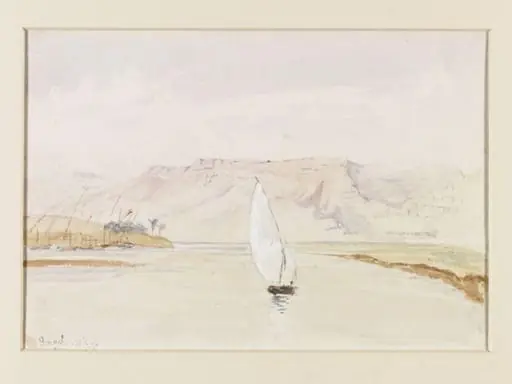 Girgeh
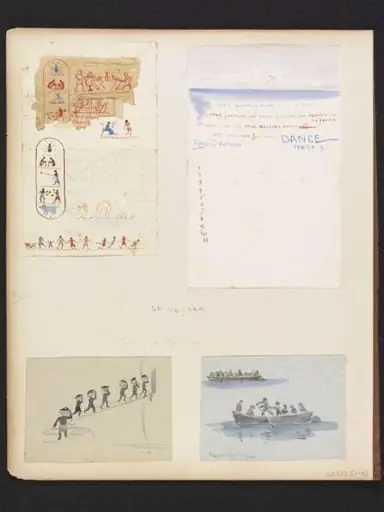 Dance card, including view of Mt. Elias
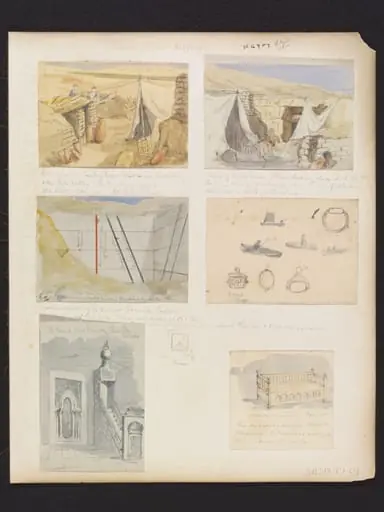 System adopted by the earliest Pyramid builders for setting out their work
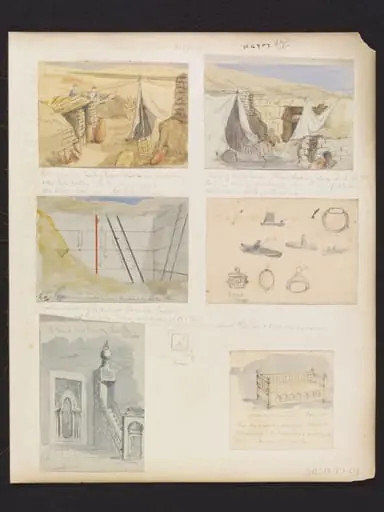 A Mastabah or Dikkeh
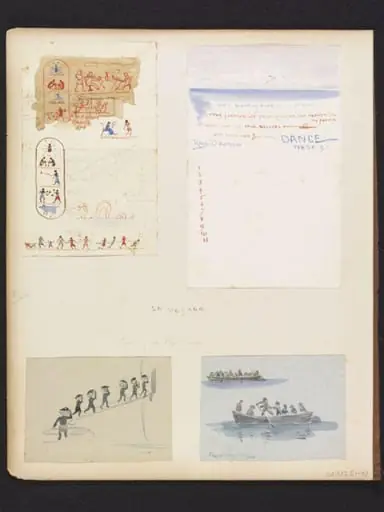 Two rowing boats full of passengers at Port Said
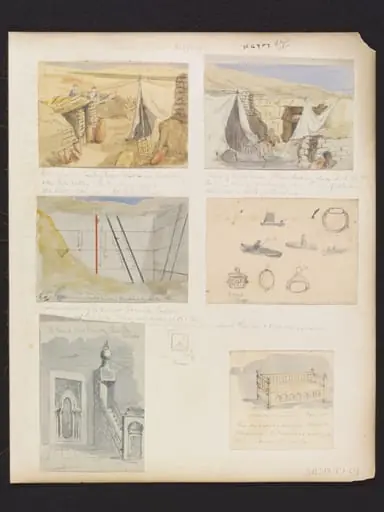 The Mirab & the Minbar Gami Ibn Tooloon
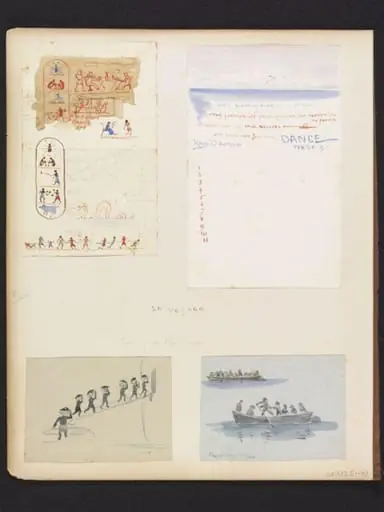 Comic designs for dance programmes, including mock Egyptian hieroglyphs
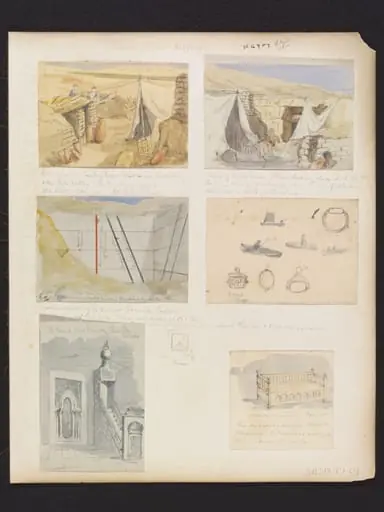 Sketches of boats and jewellery
![Two Figures and a Bench; Three Studies of Men's Heads and One of a Hand [recto], by Paul Gauguin](https://artifactworldgallery.com/img/paul-gauguin--two-figures-and-a-bench-three-studies-of-men-s-heads-and-one--b308c9e6d9f9cfa9-w320.webp)