Artwork
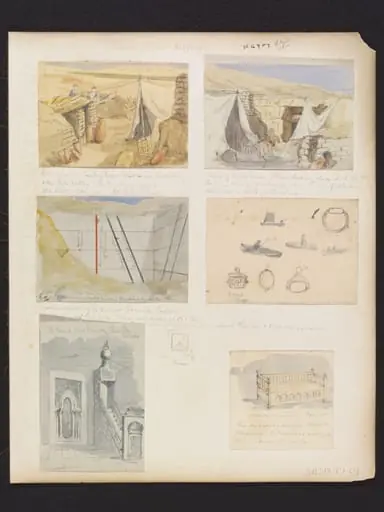
The Mirab & the Minbar Gami Ibn Tooloon
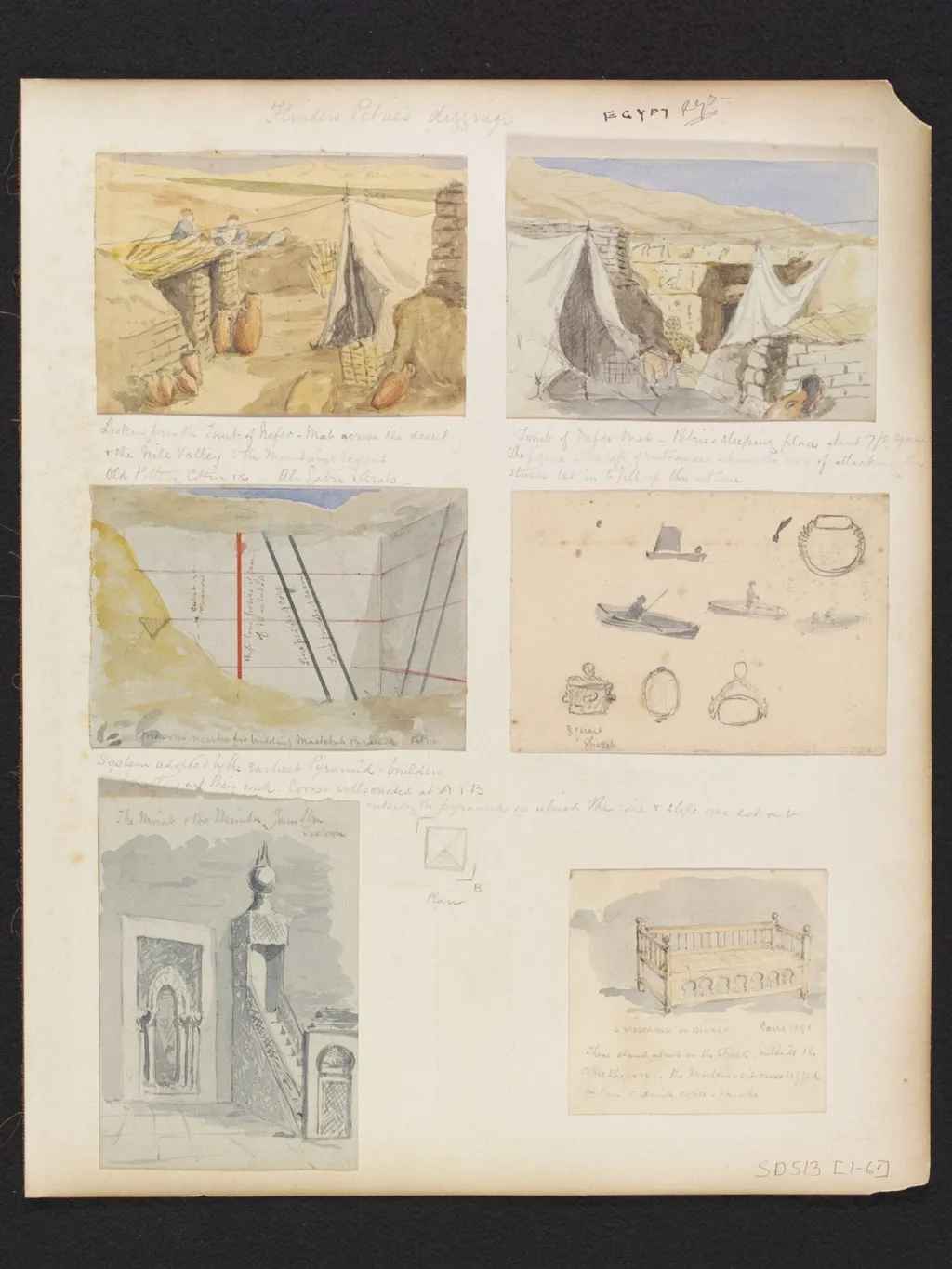
The Mirab & the Minbar Gami Ibn Tooloon is a watercolor work on paper by the Impressionist artist H. E. Howard. It dates from 1891 and is held in the collection of the Victoria and Albert Museum.
About this work
Overview
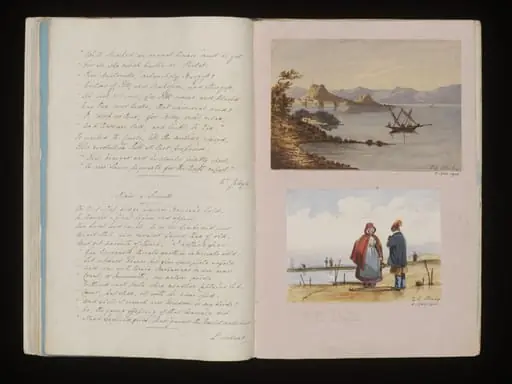
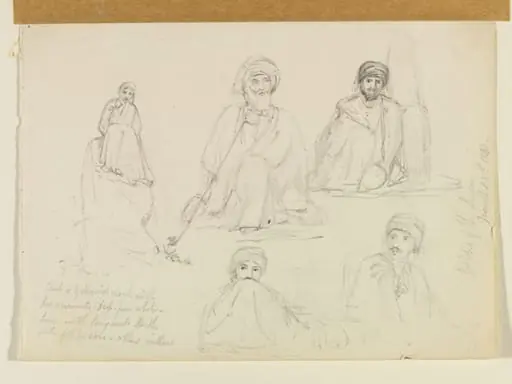
The work comprises a set of six watercolor sketches affixed to a single card, one of which is titled “The Mirab & the Minbar Gami Ibn Tooloon.” Executed by H. E. Howard in 1891, the piece presents a quiet interior scene that juxtaposes a tent‑like enclosure with a raised preaching platform typical of a mosque.
Subject & Meaning
The foreground features an open‑sided tent, its fabric or hide walls suggesting a temporary shelter, while the background reveals a minbar, the elevated pulpit from which an imam would address worshippers. The composition invites contemplation of the ritual space, emphasizing the calm atmosphere of a moment of prayer or sermon.
Technique & Style
Howard employs delicate watercolor washes, allowing soft hues to merge and create subtle gradients of light and shadow. Gentle brushwork renders the texture of the tent’s drapery and the stone or wood of the minbar, producing a sense of depth without harsh contrasts.
History & Provenance
The six sketches, including this watercolor, were part of a collection offered for sale at Christie’s on 11 February 1969, as recorded by auction specialist Rodney Searight. Their provenance traces back to the late‑19th‑century production by Howard, an English illustrator known for travel and architectural subjects.
Context
Created during a period when Western artists frequently documented exotic locales, the image reflects Victorian interest in Islamic architecture and daily life. The minbar, a central element of mosque interiors, serves as a visual anchor for viewers unfamiliar with such spaces.
Artist & collection
Artist
British artist H.E. Howard filled pocket sketchbooks with quick watercolours of Suez docks and stagecraft in the 1890s. Look at “Labourers carrying coal up a gangway to a ship at Port Said”, a gritty slice of Port Said…

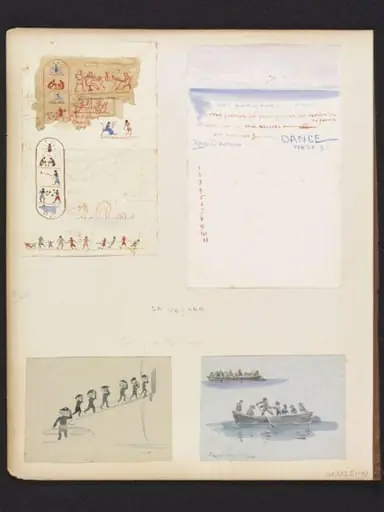 Labourers carrying coal up a gangway to a ship at Port Said
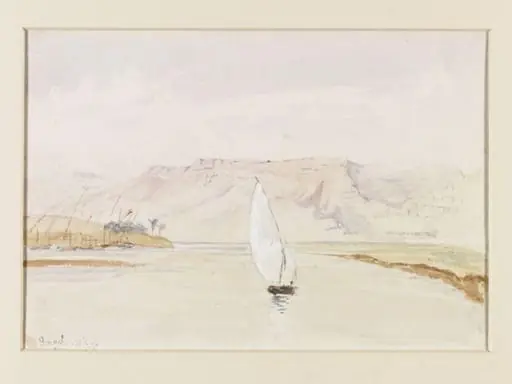 Girgeh
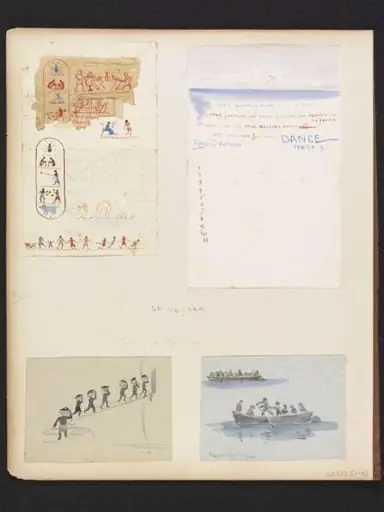 Dance card, including view of Mt. Elias
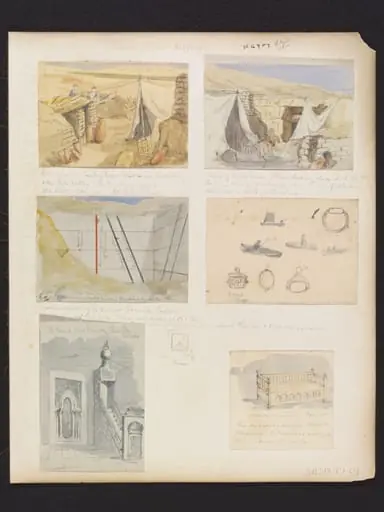 System adopted by the earliest Pyramid builders for setting out their work
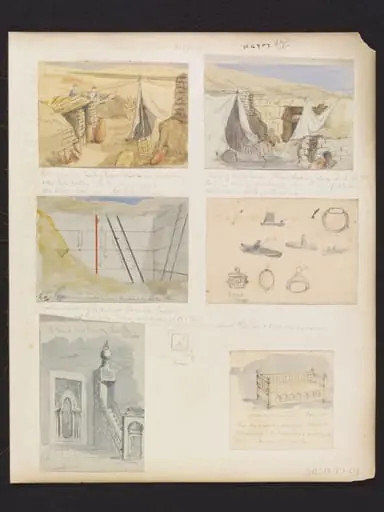 A Mastabah or Dikkeh
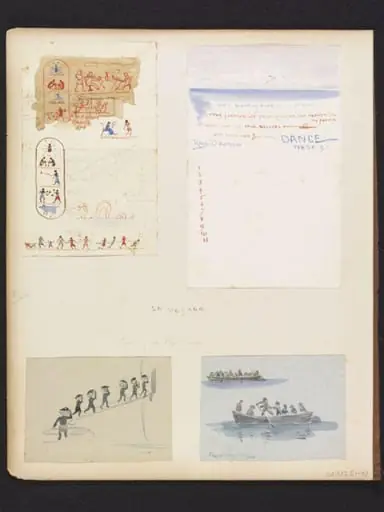 Two rowing boats full of passengers at Port Said
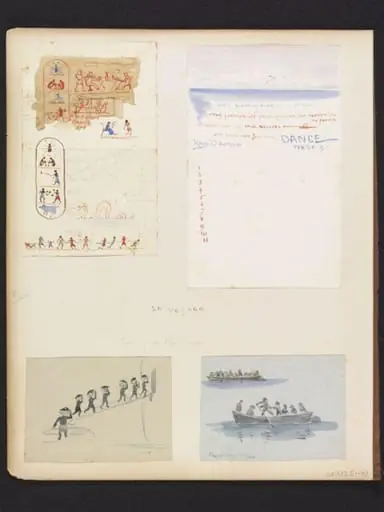 Comic designs for dance programmes, including mock Egyptian hieroglyphs
 Sketches of boats and jewellery