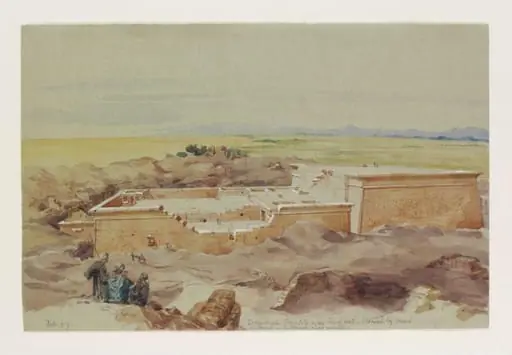
Artwork
A Mastabah or Dikkeh
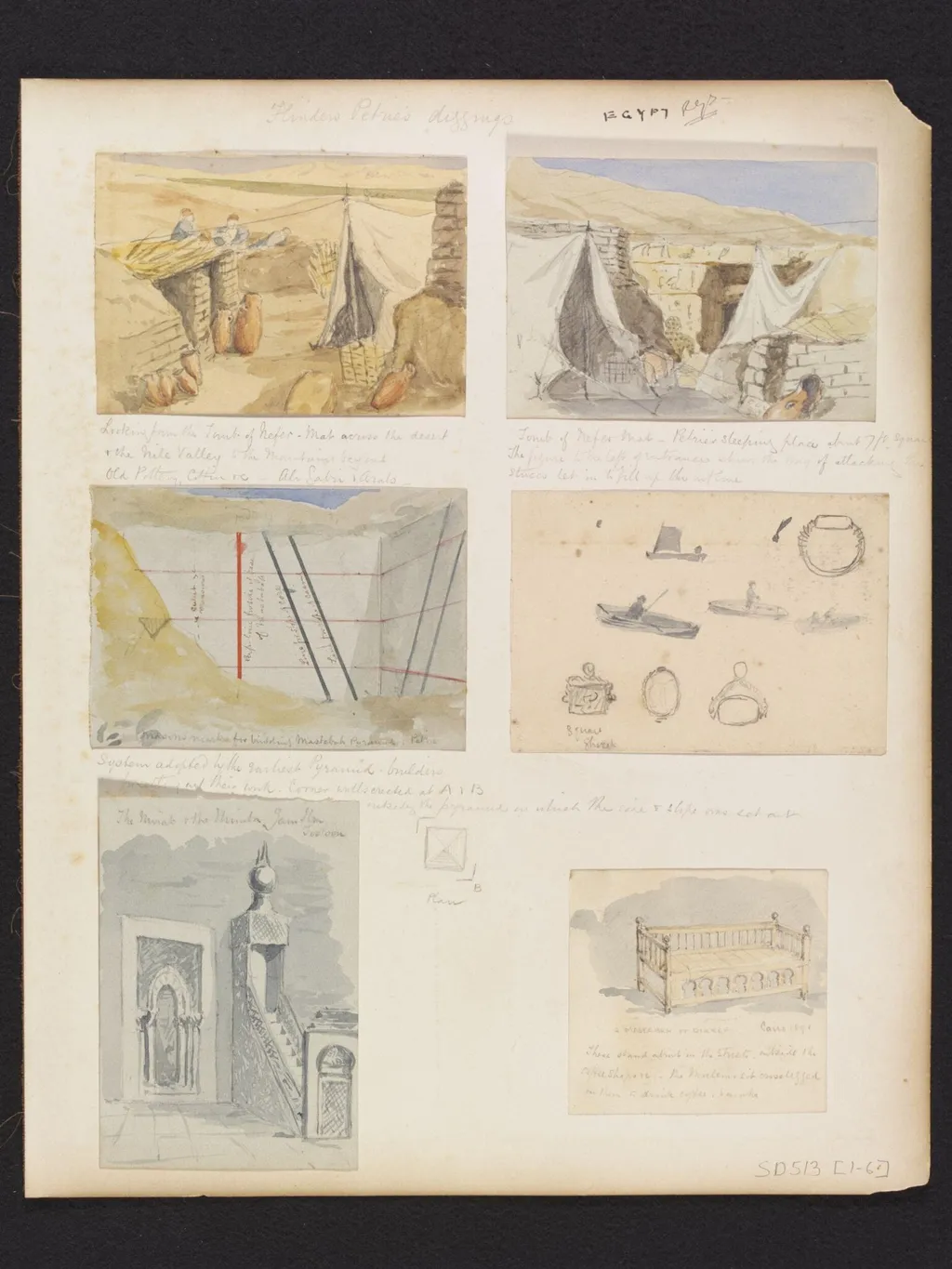
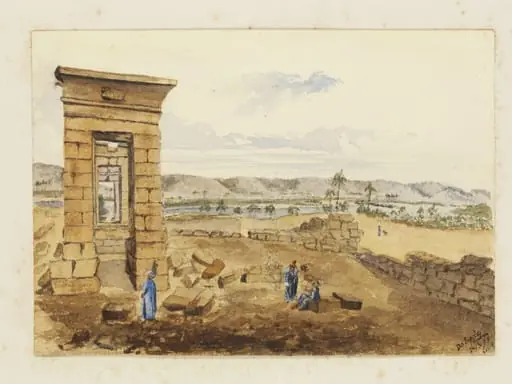
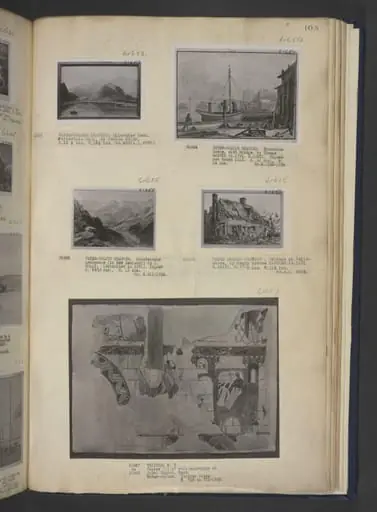
A Mastabah or Dikkeh is a watercolor work on paper by the Impressionist artist H. E. Howard. It dates from 1891 and is held in the collection of the Victoria and Albert Museum. The work comprises six small watercolour sketches mounted together on a single card.
About this work
Overview
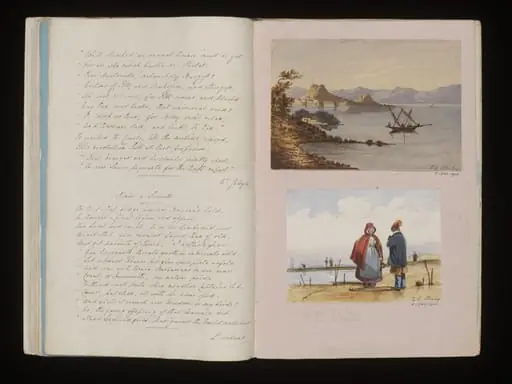
The work comprises six small watercolour sketches mounted together on a single card. Among the images is a representation of a mastaba, sometimes referred to as a dikkeh, alongside other desert and architectural studies. All pieces are executed in watercolor and were offered as a group in a 1969 Christie's auction.
Subject & Meaning
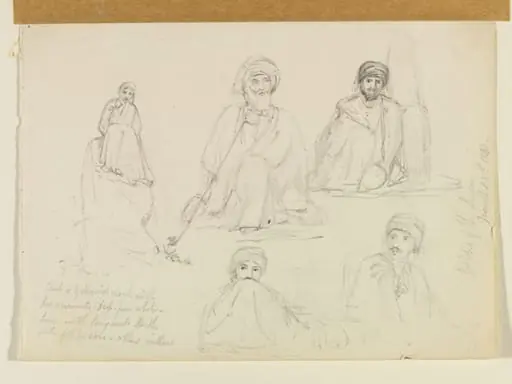
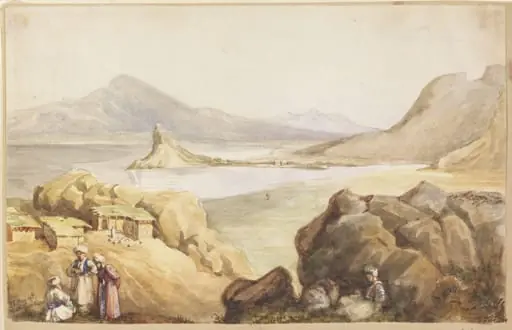
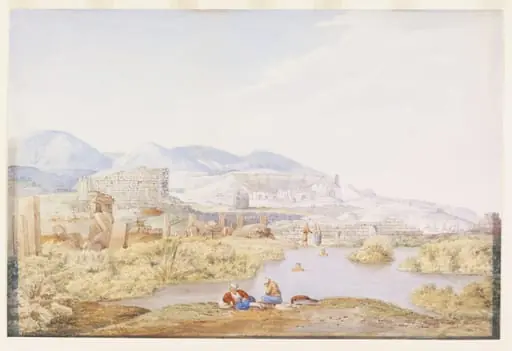
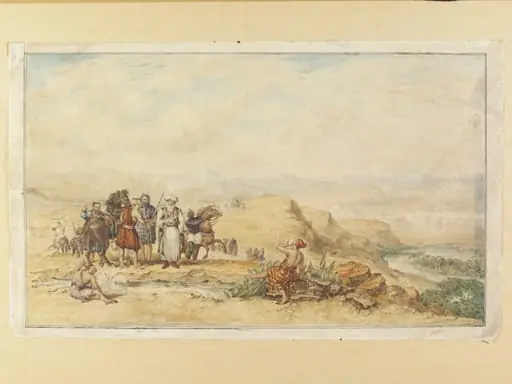
The sketches capture a range of Egyptian field observations: a modest tent set against sand and rocks, a stepped, pyramid‑like tomb, a riverboat, and fragments of pottery. The artist’s eye turns to quotidian objects and modest ruins, providing a visual record of everyday archaeological material rather than solely monumental architecture.
Technique & Style
Rendered in delicate watercolor washes, each drawing balances line and muted pigment to convey texture—whether the roughness of stone, the softness of sand, or the sheen of water. The compact format and rapid brushwork suggest on‑site documentation, emphasizing clarity over decorative embellishment.
History & Provenance
The collection of six sketches was listed in Christie's auction catalogue on 11 February 1969, appearing as lots SD.509 through SD.513. Their appearance in this sale indicates they entered the art market as a cohesive group, likely originating from a single field expedition.
Context
Such sketchbooks were common tools for early‑20th‑century archaeologists and illustrators working in Egypt, serving both as field notes and as visual supplements for reports. The inclusion of both monumental and mundane subjects reflects a broader scholarly interest in everyday life and material culture of ancient Egypt.
Artist & collection
Artist
British artist H.E. Howard filled pocket sketchbooks with quick watercolours of Suez docks and stagecraft in the 1890s. Look at “Labourers carrying coal up a gangway to a ship at Port Said”, a gritty slice of Port Said…

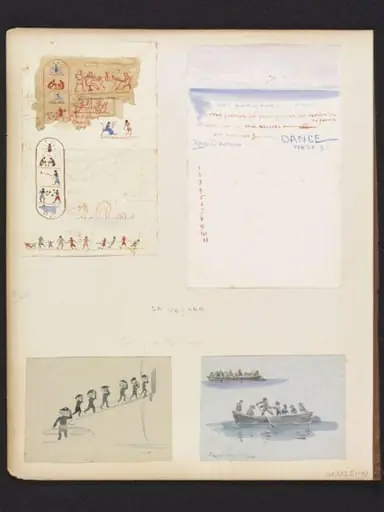 Labourers carrying coal up a gangway to a ship at Port Said
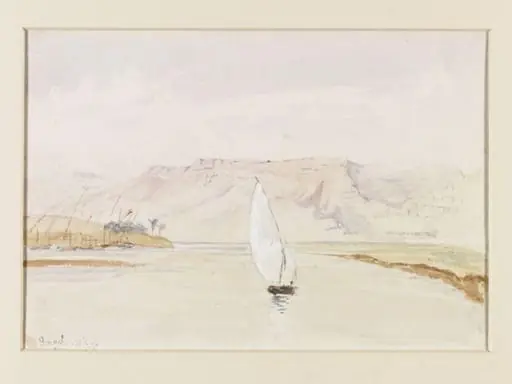 Girgeh
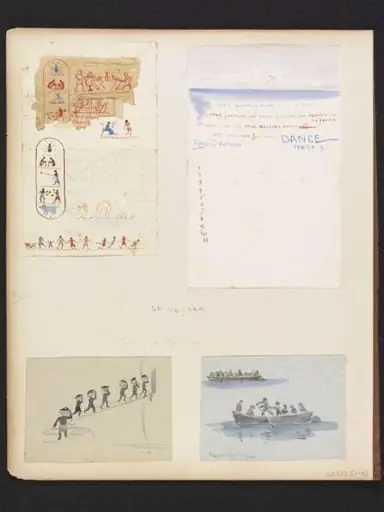 Dance card, including view of Mt. Elias
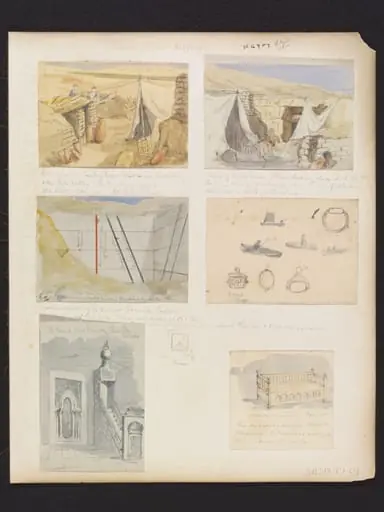 System adopted by the earliest Pyramid builders for setting out their work
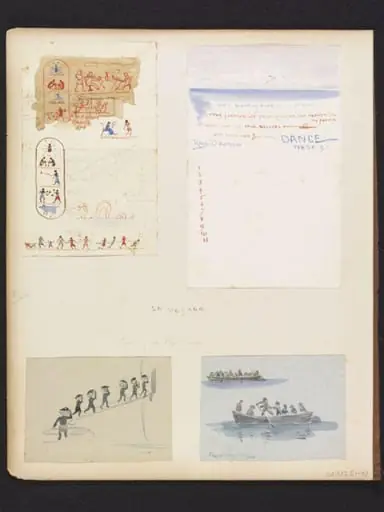 Two rowing boats full of passengers at Port Said
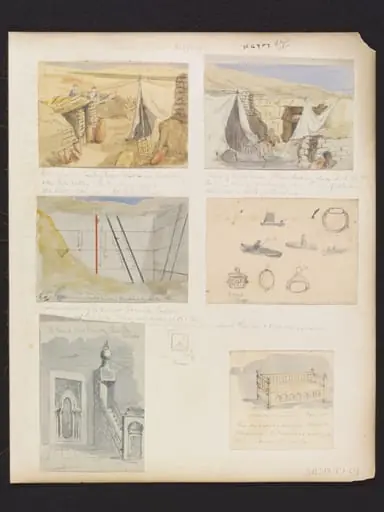 The Mirab & the Minbar Gami Ibn Tooloon
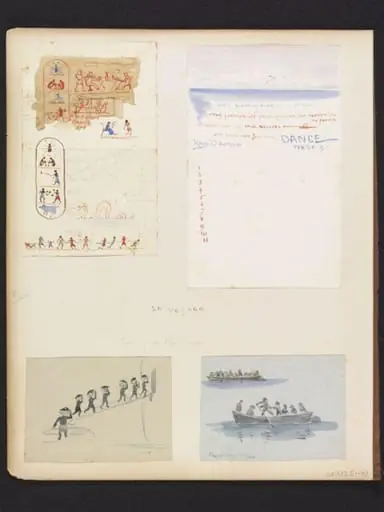 Comic designs for dance programmes, including mock Egyptian hieroglyphs
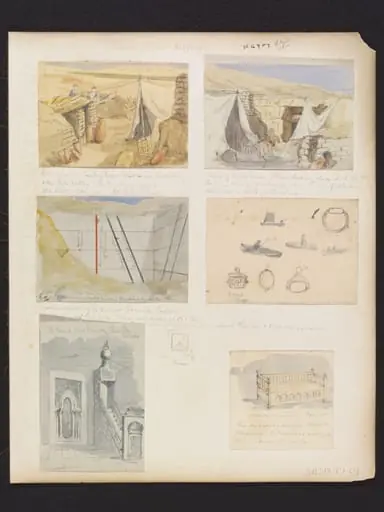 Sketches of boats and jewellery