Artwork
Michelangelo în atelierul său - Copie
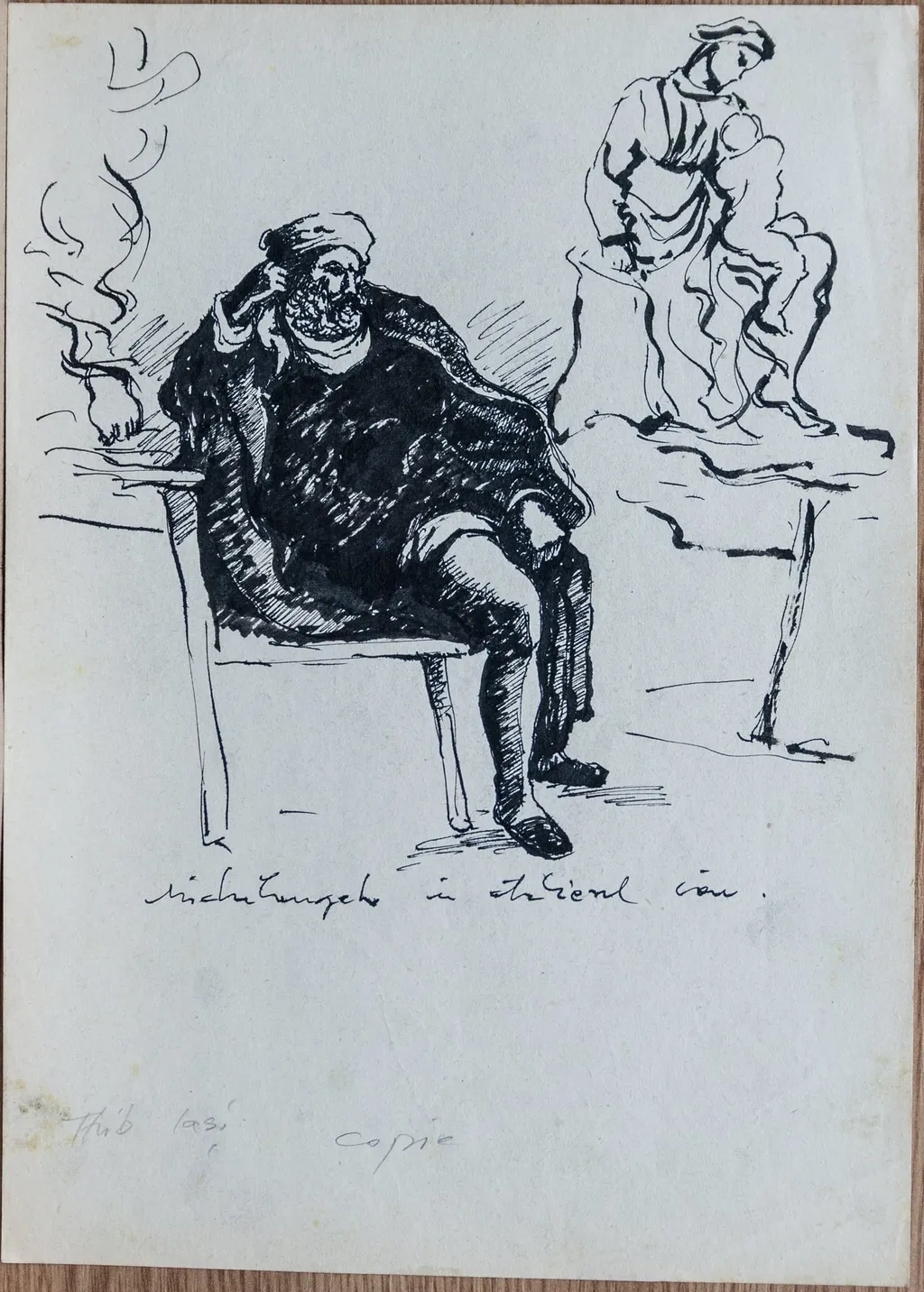
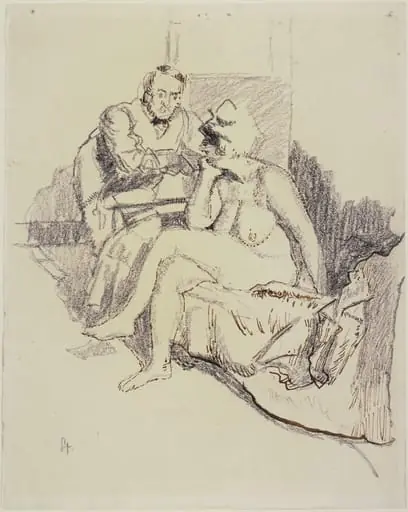
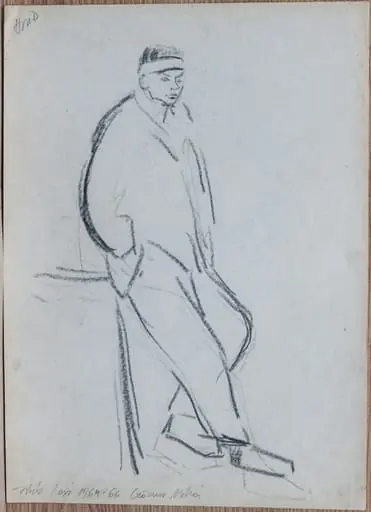
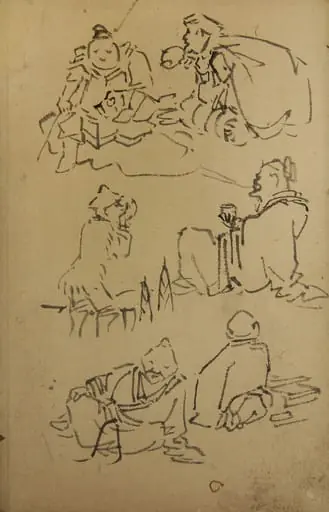
Michelangelo în atelierul său - Copie is a drawing by Teodor Hrib. It dates from 1950 and is held in the collection of the Gavrila Simion Eco-Museum Research Institute Tulcea.
About this work
Overview
Executed with rapid, uneven lines and minimal shading, it lacks the polish of a finished piece, suggesting it was made as a quick observational sketch.
This drawing, created around 1950 by Teodor Hrib, is a loose, informal study depicting two figures in a studio setting. Executed with rapid, uneven lines and minimal shading, it lacks the polish of a finished piece, suggesting it was made as a quick observational sketch. The artist’s name and a Romanian note appear in the corner, reinforcing its personal, working nature. It resides in the collection of the Museum of Ethnography.
Subject & Meaning
The scene portrays two men in a studio: one seated, adjusting a hat; the other standing, cradling a round object, possibly a sculptor’s model or tool. The figures are unnamed, their identities left ambiguous, but their postures imply a moment of pause or preparation. The setting evokes an artist’s workspace, though no direct link to Michelangelo is confirmed—title and content appear to be loosely connected.
Technique & Style
Hrib employed a spontaneous, gestural approach, using rough, unrefined lines and sparse hand-applied shading. The drawing’s immediacy suggests it was made in real time, likely from life or memory. The lack of detail and deliberate irregularity in the strokes align with the tradition of the esquiss—a preparatory sketch valued for its rawness over finish.
History & Provenance
The work was produced by Teodor Hrib circa 1950 and entered the collection of the Museum of Ethnography at some point after its creation. No documentation exists regarding its commission or prior ownership. Its presence in an ethnographic museum, rather than an art museum, suggests it was collected for its cultural or documentary value rather than its aesthetic status.
Context
In mid-20th century Romania, artists often produced informal studies as part of their daily practice, especially during periods of limited resources or institutional constraints. Hrib’s sketch reflects this habit, capturing a moment of quiet labor without pretense. Its ethnographic placement may reflect broader efforts to document artistic life as part of national cultural heritage.
Legacy
The drawing survives not as a celebrated artwork but as a quiet record of artistic process. It offers insight into the informal habits of Romanian artists in the postwar era. While not influential in broader art history, it remains a tangible example of how sketches functioned as working tools, preserving the rhythm of daily creative life.
Artist & collection
Artist
Teodor Hrib shaped small plaster figures and ink drawings in the 1800s academic tradition.
Museum
Gavrila Simion Eco-Museum Research Institute Tulcea
Continue through works from the same source collection.
![Figure of a Man [recto], by Ventura Salimbeni](https://artifactworldgallery.com/img/ventura-salimbeni--figure-of-a-man-recto--31a0299707350915-w320.webp)