Artwork
Înălțarea la cer a lui Iisus
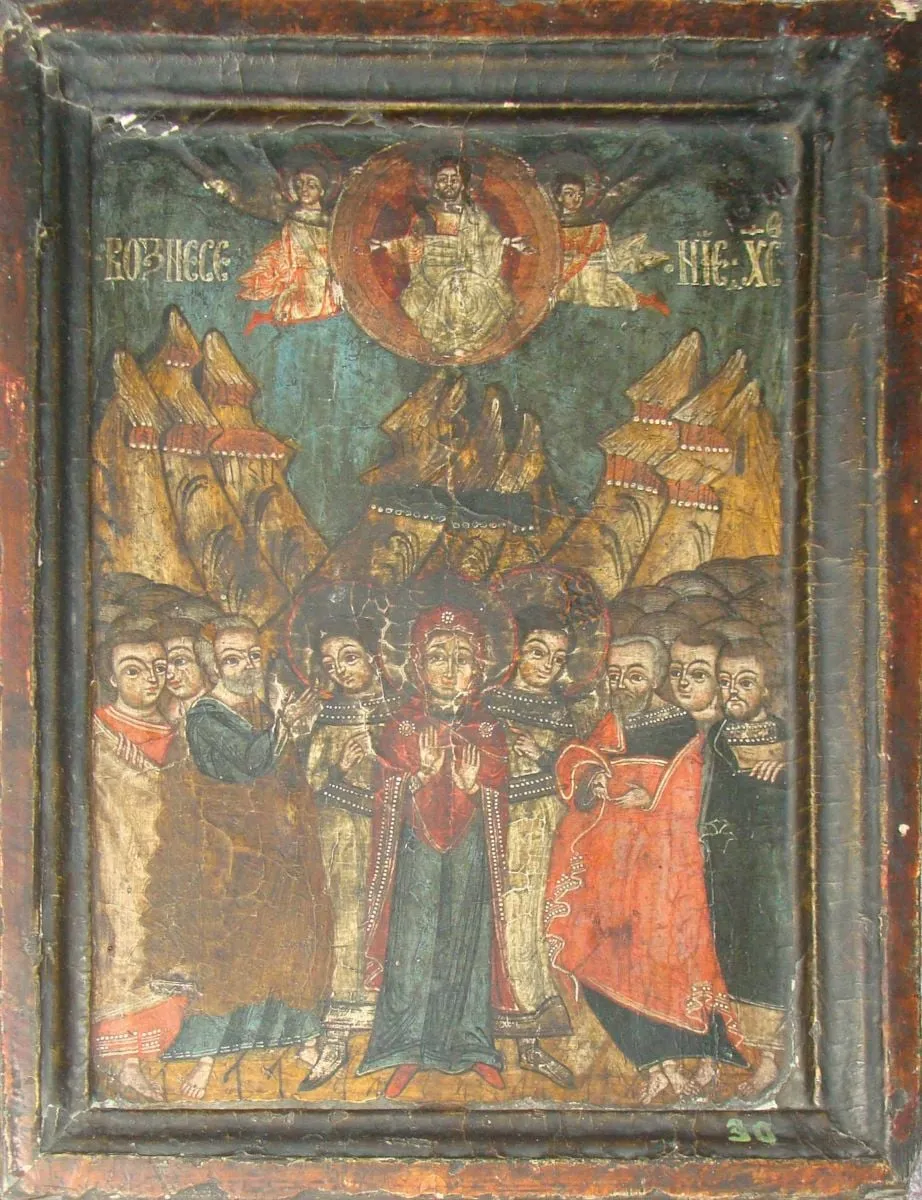
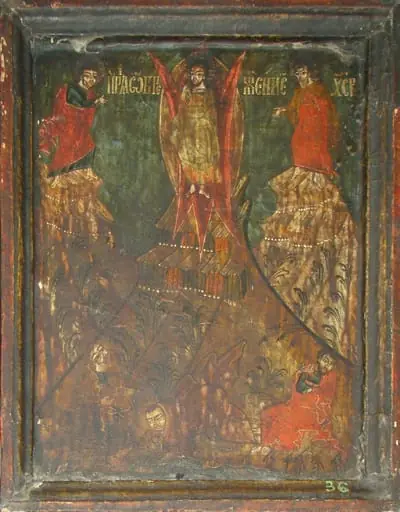
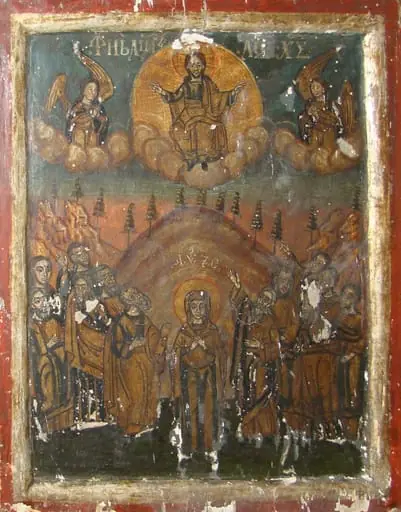
Înălțarea la cer a lui Iisus is a drawing by Iacov Zugravul. It is held in the collection of the Alba Iulia Orthodox Archdiocese. This religious painting depicts the Ascension of Christ, a moment when Jesus rises toward heaven in the presence of his disciples.
About this work
Overview
The muted background enhances the spiritual focus, directing attention to the ascending form and the emotional stillness of the onlookers.
This religious painting depicts the Ascension of Christ, a moment when Jesus rises toward heaven in the presence of his disciples. Rendered in a traditional iconographic style, the central figure is distinguished by a halo and a red robe, while the surrounding figures gaze upward in quiet awe. The muted background enhances the spiritual focus, directing attention to the ascending form and the emotional stillness of the onlookers.
Subject & Meaning
The scene illustrates the biblical Ascension, marking Christ’s departure from Earth and transition to divine glory. The disciples, arranged in a semicircle, embody witness and reverence, their postures reflecting contemplation rather than motion. The halo and red garment signify divinity and sacrifice, common symbols in Eastern Christian art. The composition emphasizes spiritual elevation, inviting viewers to share in the moment of sacred transition.
Technique & Style
The painting employs flat, stylized forms typical of medieval ecclesiastical art, with minimal modeling and no perspective depth. Figures are outlined clearly, and drapery folds are simplified into rhythmic lines. Color is used symbolically—red for Christ’s humanity and sacrifice, softer hues for the disciples. The muted background avoids distraction, reinforcing the otherworldly nature of the event through restraint and clarity.
History & Provenance
Attributed to Iacov Zugravul, a 17th-century Romanian icon painter, the work reflects the liturgical traditions of Moldavian and Wallachian churches. It entered the collection of the Museum of Ethnography as part of a broader effort to preserve religious artifacts from rural communities. Its survival suggests continued local veneration, even as artistic styles evolved under Ottoman and later Habsburg influence.
Context
Created during a period when Orthodox Christian communities in Eastern Europe maintained distinct visual traditions despite political upheaval, this image served both devotional and didactic purposes. In villages without access to clergy, such paintings functioned as focal points for prayer and teaching. The Ascension theme reinforced hope in divine transcendence, resonating with communities under foreign rule or hardship.
Legacy
The painting remains a representative example of Romanian ecclesiastical art from the early modern era. It contributes to scholarly understanding of how local artists adapted Byzantine models to regional tastes. Preserved in a museum of ethnography rather than a church, it now speaks to cultural continuity and the endurance of spiritual imagery beyond its original liturgical context.
Artist & collection
Artist
Iacov Zugravul’s small surviving body of work shows biblical scenes painted on wood or drawn in ink, made in the mid-1700s.