Artwork
Crucifixion
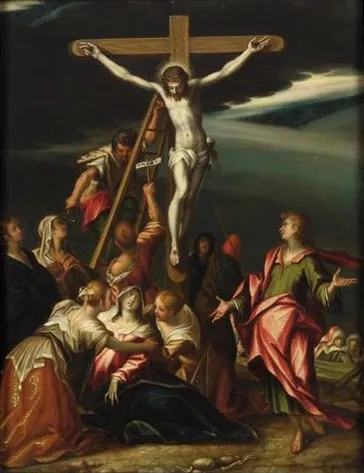
Crucifixion is a paint painting by the Early Baroque Italian artist Hans von Aachen. It dates from 1600 and is held in the collection of the Kunsthistorisches Museum.
About this work
Overview
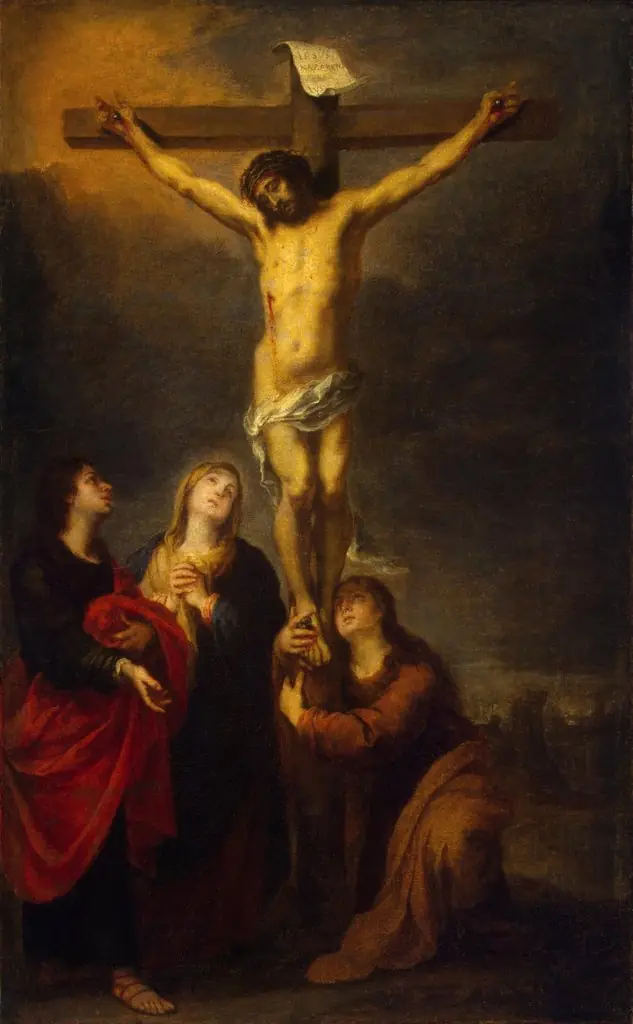
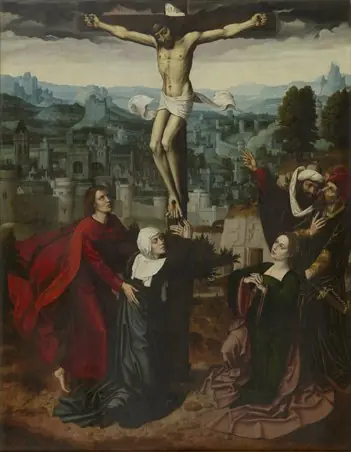
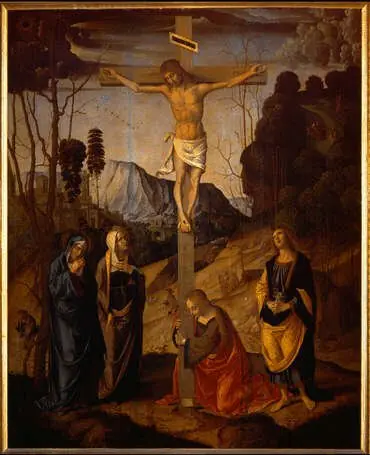
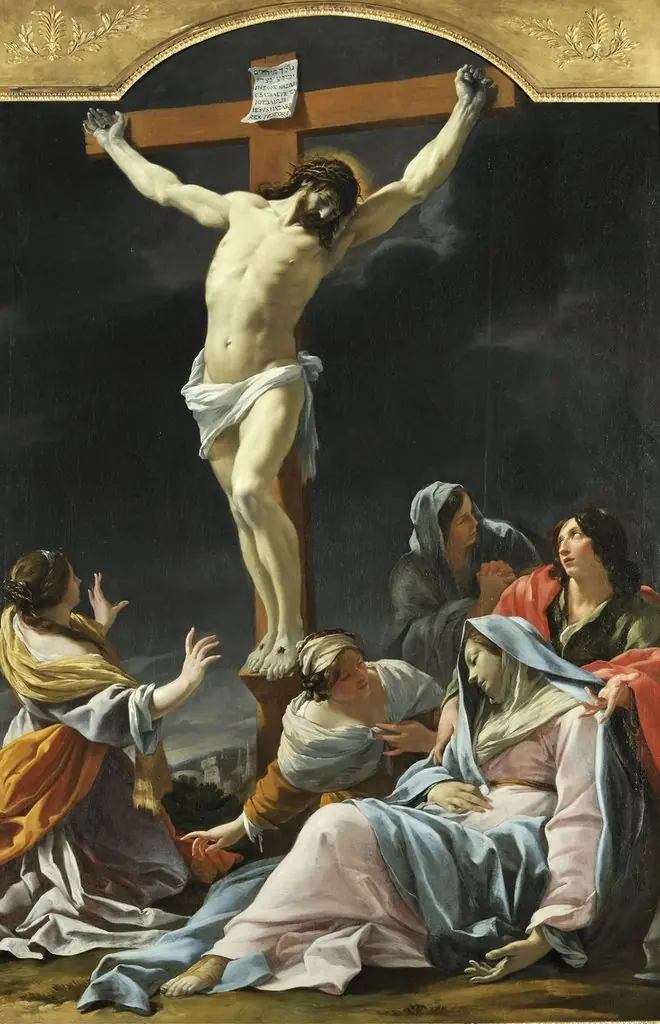
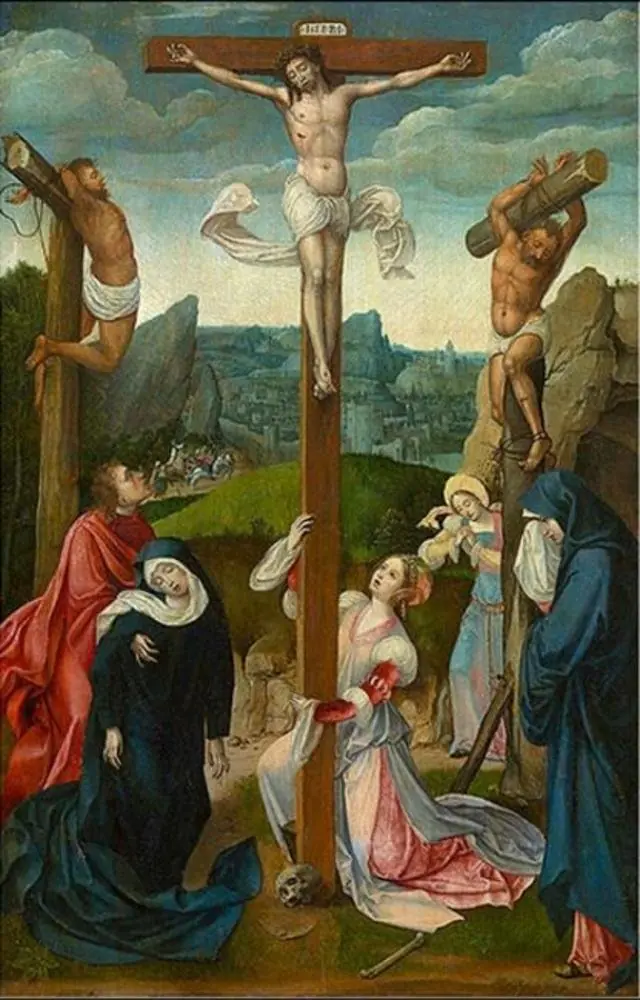
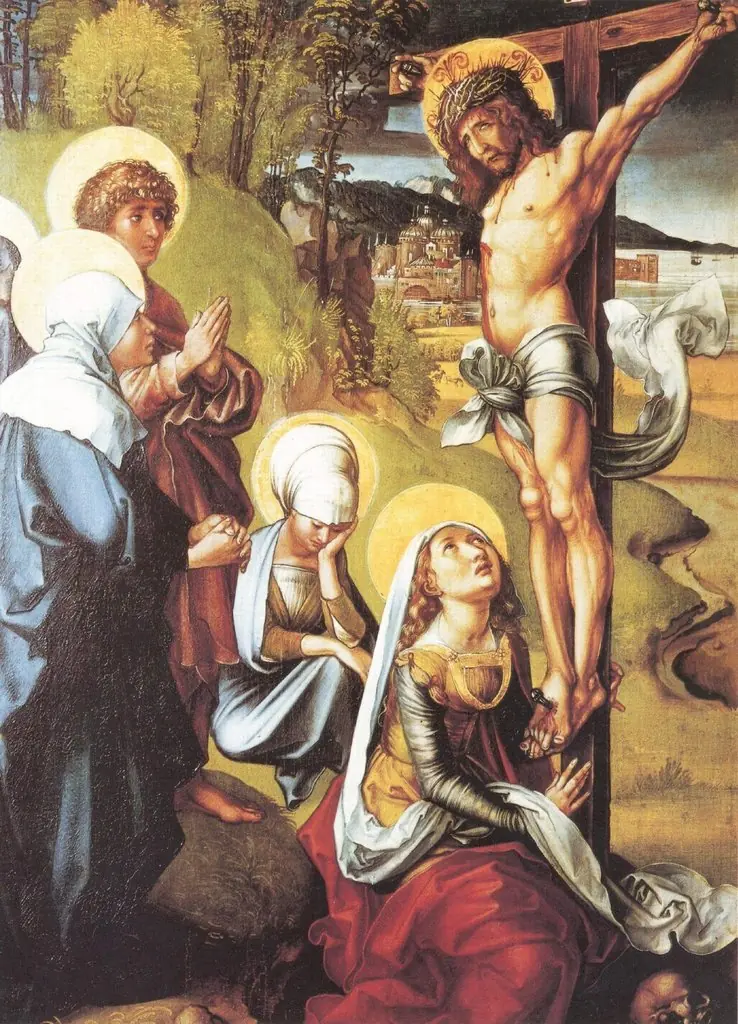
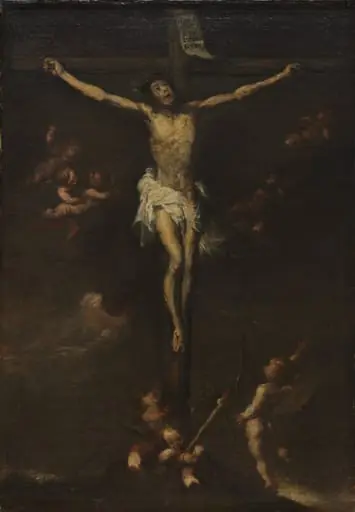
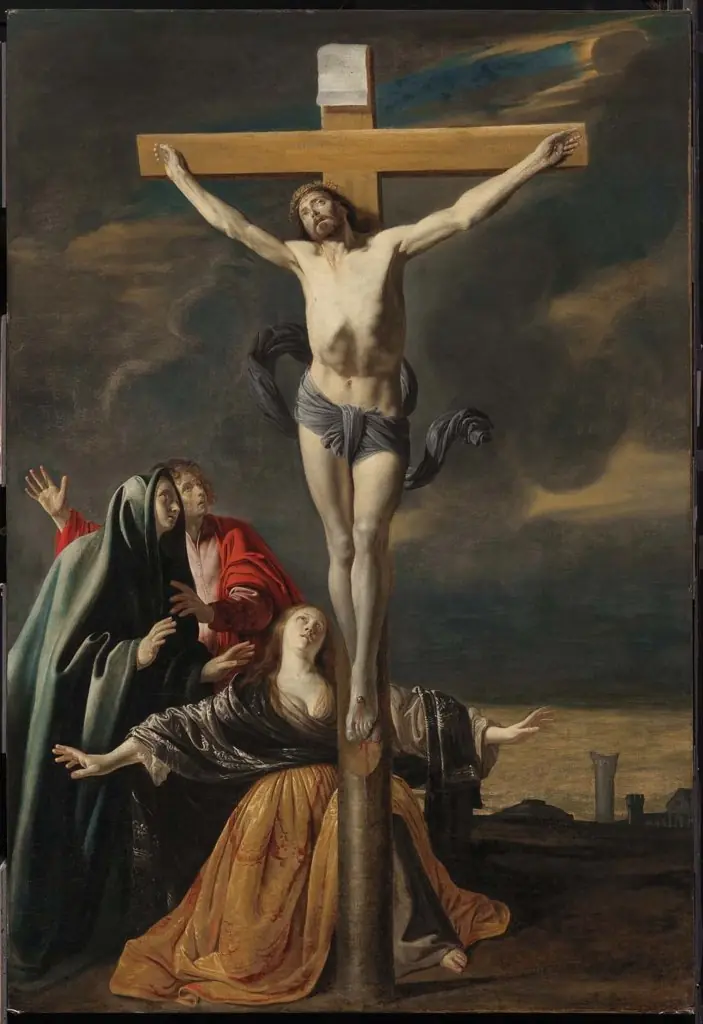
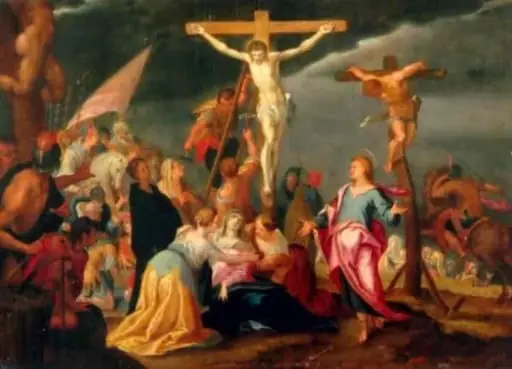
Hans von Aachen’s *Crucifixion* (1600) is a copper painting that presents the biblical scene of Christ on the cross. Executed in the Northern Mannerist style, the work is part of the Kunsthistorisches Museum’s holdings and reflects the artist’s engagement with religious subjects for elite patrons such as Emperor Rudolf II.
Subject & Meaning
The composition centers on the crucified Jesus, clad in a simple white loincloth, his arms outstretched on the cross. Surrounding figures—clad in contemporary robes—gaze upward or converse, some holding implements like a ladder or a cloth, underscoring the solemnity of the moment and the collective response to the sacrifice.
Technique & Style
Rendered on copper, the painting benefits from the medium’s smooth surface, allowing fine detail and luminous color. Von Aachen employs a restrained palette dominated by deep tones, creating a dramatic chiaroscuro that heightens the emotional intensity of the scene.
History & Provenance
Created at the turn of the seventeenth century, the work was likely commissioned for a court or private devotional setting. It entered the Kunsthistorisches Museum’s collection, where it remains displayed as an example of the artist’s religious output during his service to the Habsburg court.
Artist & collection
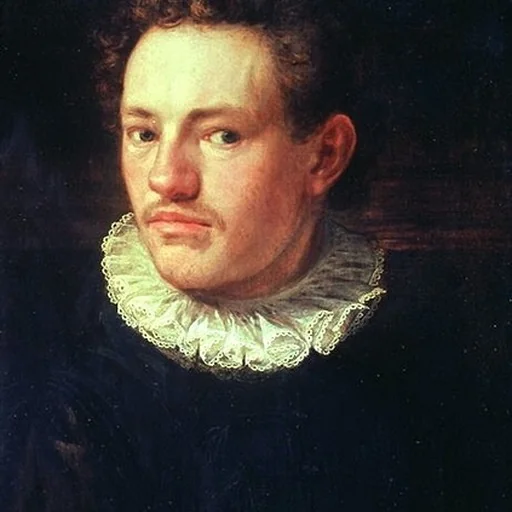
Artist
Hans von Aachen (1552 – 4 March 1615) was a German painter who was one of the leading representatives of Northern Mannerism.