Artwork
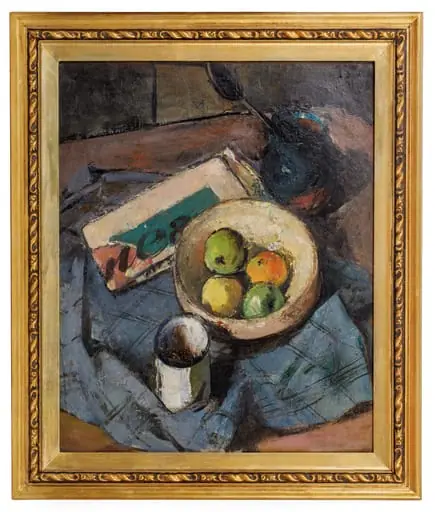
Cutia cu portocale
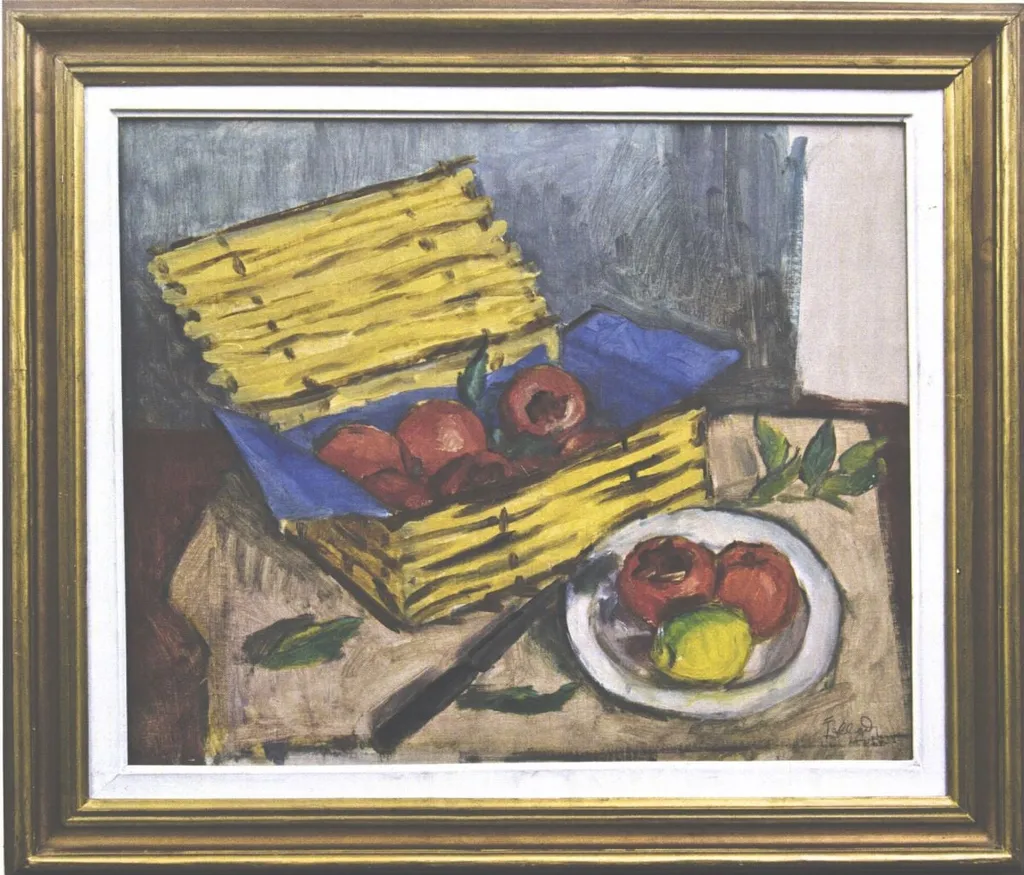
Cutia cu portocale is an unspecified painting by Theodor Pallady. It dates from 1941 and is held in the collection of the National Museum of Art of Romania.
About this work
Overview
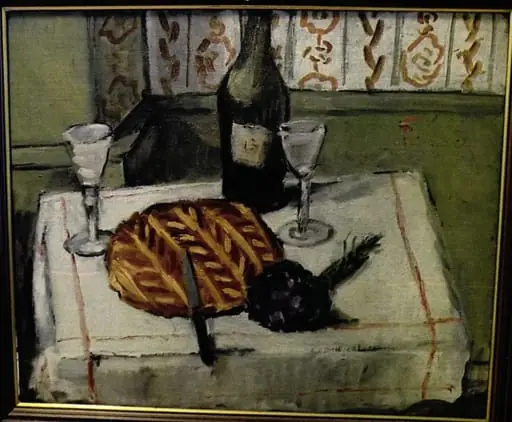
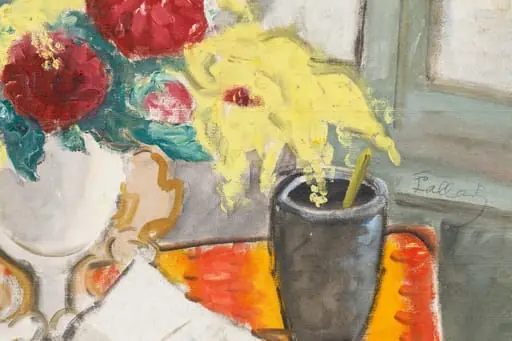
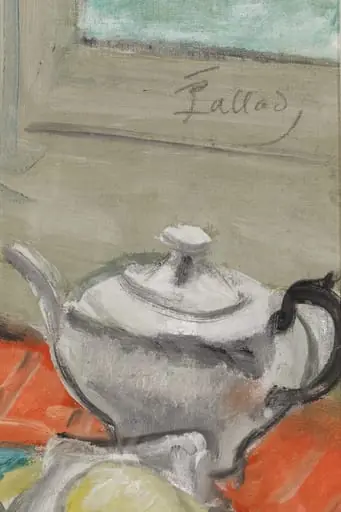
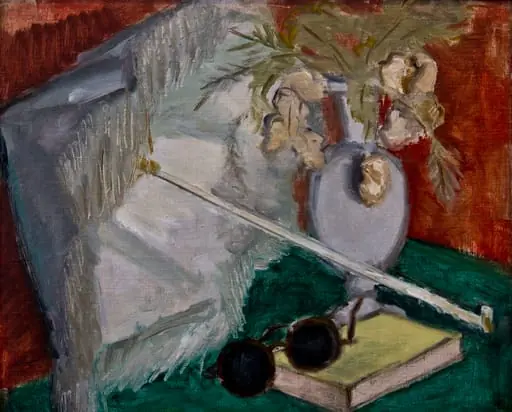
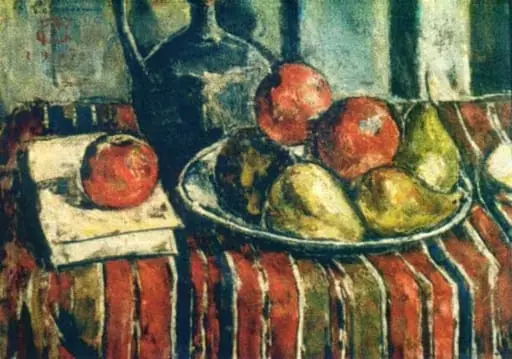
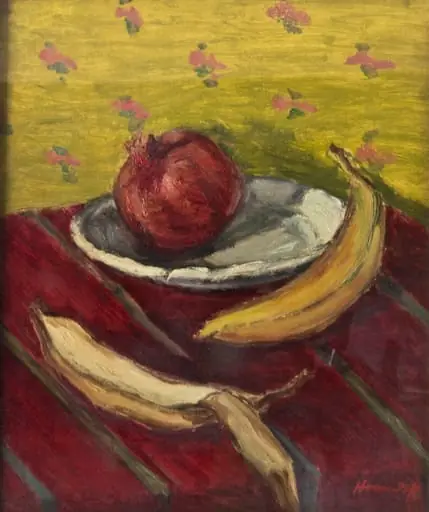
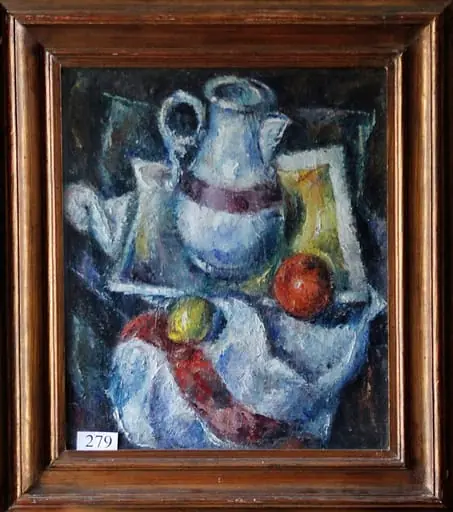
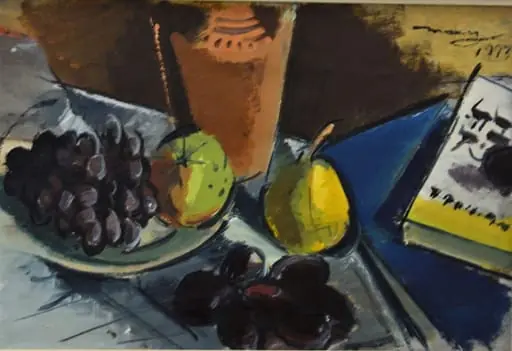
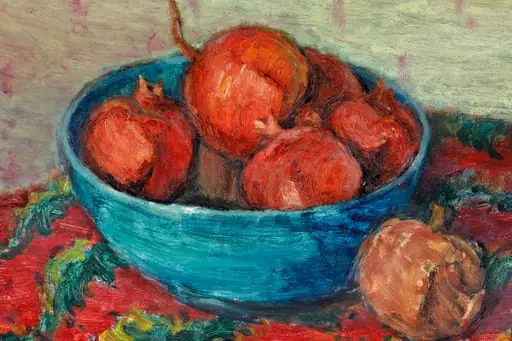
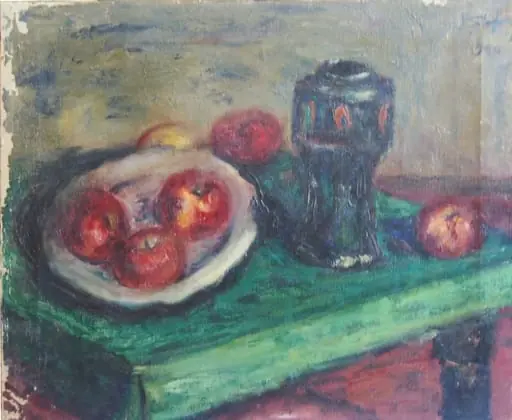
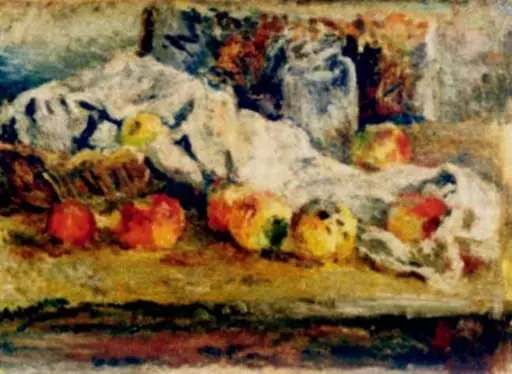
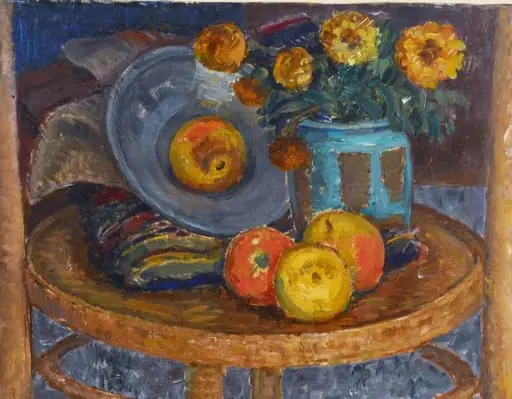
Painted around 1941 by Theodor Pallady, this still life presents a modest arrangement of fruit on a tabletop. The composition is deliberately uncluttered, with no background detail to distract from the objects. The artist’s approach favors immediacy over precision, capturing the essence of the scene through swift, visible brushwork and a restrained palette.
Subject & Meaning
The subject consists of common domestic items: a woven basket overflowing with red apples, a blue cloth draped loosely over its edge, and a white plate holding additional fruit, including a single green lemon. These elements suggest a quiet, everyday moment, possibly drawn from the artist’s own surroundings. There is no overt symbolism; the focus lies in the quiet dignity of ordinary things.
Technique & Style
Pallady employed loose, energetic brushstrokes that prioritize movement and tone over fine detail. Colors are applied with clarity—vivid reds, deep blue, and warm yellow—without blending or smooth transitions. The surface shows traces of impasto, where paint is laid thickly, enhancing texture and light reflection. The dark background isolates the forms, heightening their presence.
History & Provenance
The work dates from Pallady’s later period, after his return to Romania following years in Paris. While specific ownership records are not widely documented, it aligns with his post-war interest in simplified still lifes and domestic scenes. The painting reflects a personal, introspective phase in his career, away from earlier academic influences.
Context
Created during a time of political upheaval in Romania, the painting stands apart from grand historical narratives. Its quiet focus on humble objects may reflect a retreat into private, contemplative space. Pallady’s style here echoes post-impressionist tendencies, yet remains distinctly his own, rooted in observation rather than theory.
Legacy
This work exemplifies Pallady’s mature approach to still life, emphasizing emotional resonance through simplicity. It influenced later Romanian painters who sought to balance modernist techniques with local subject matter. Though not widely exhibited, it remains a quiet touchstone in understanding his shift from European modernism to a more personal, introspective visual language.
Artist & collection
Artist
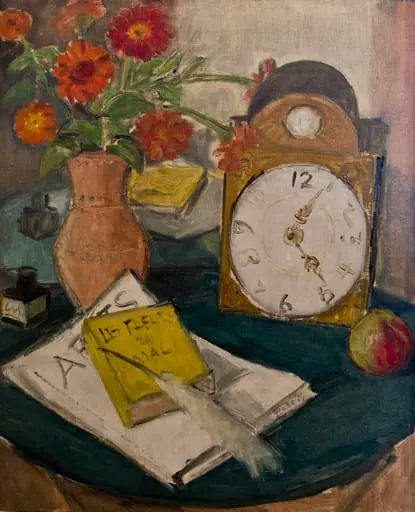
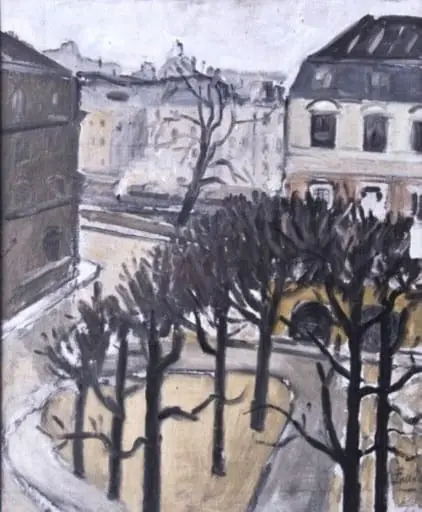
Theodor Pallady made still lifes and interiors in early 20th-century Bucharest. His Place Dauphine shows a quiet Parisian square, while Natură moartă (Ulcică cu flori și chibrituri) piles everyday objects on a table.…