Artwork
Natură moartă cu mere și ceainic
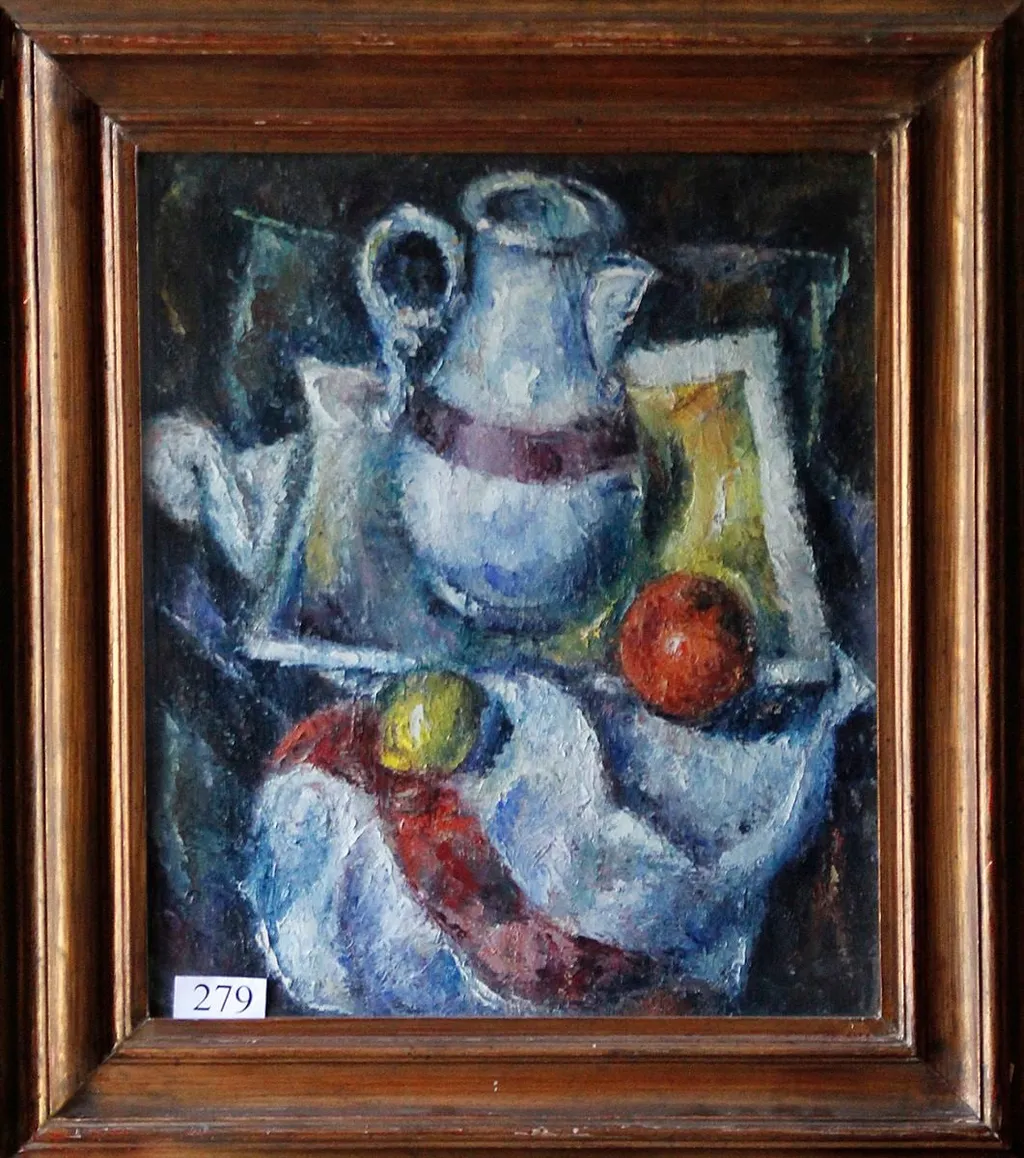
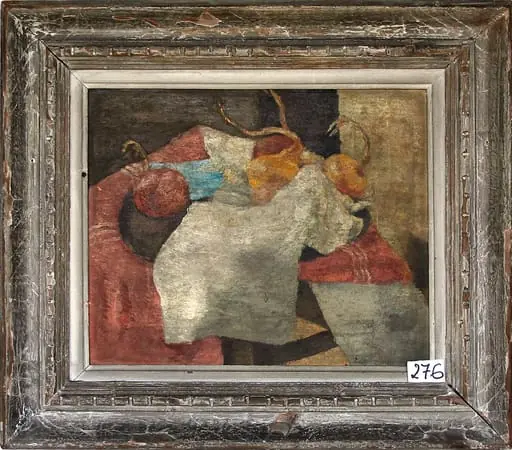
Natură moartă cu mere și ceainic is an unspecified painting by Corneliu Michăilescu. It dates from 1936 and is held in the collection of the National Museum of Romanian Literature.
About this work
Overview
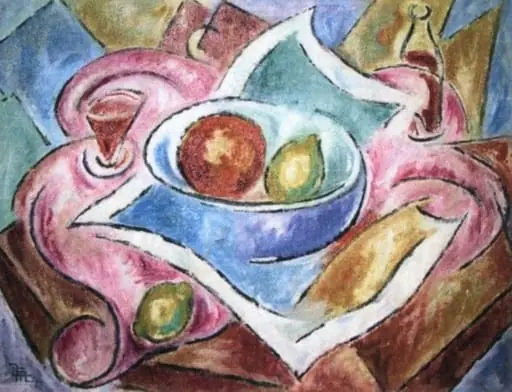
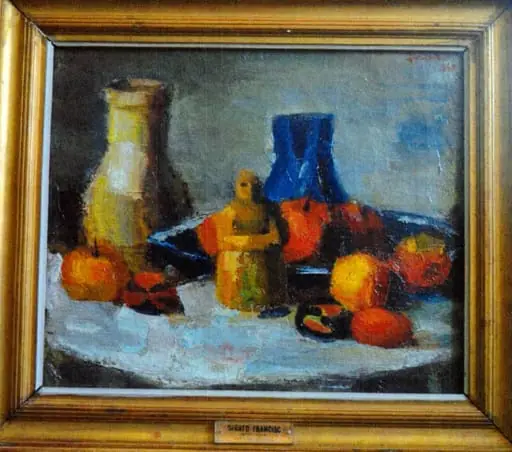
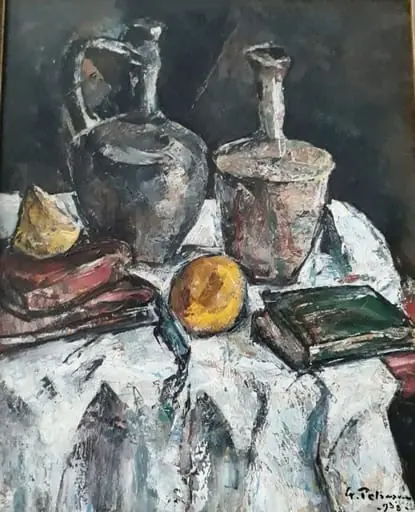
Painted around 1936 by Corneliu Michăilescu, this still life presents a modest arrangement of everyday objects on a darkened surface.
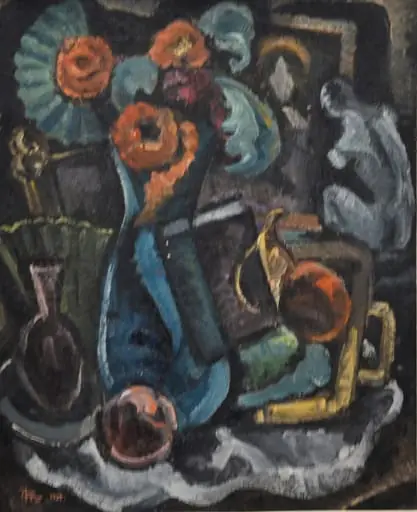
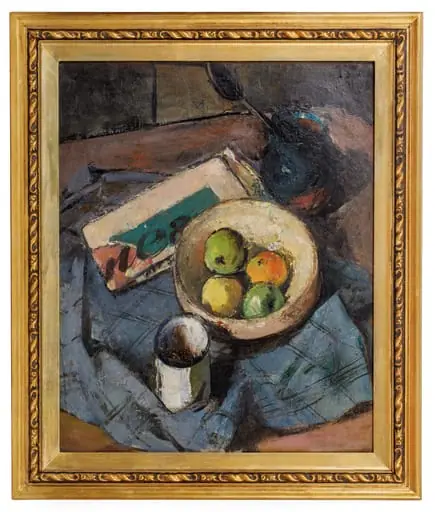
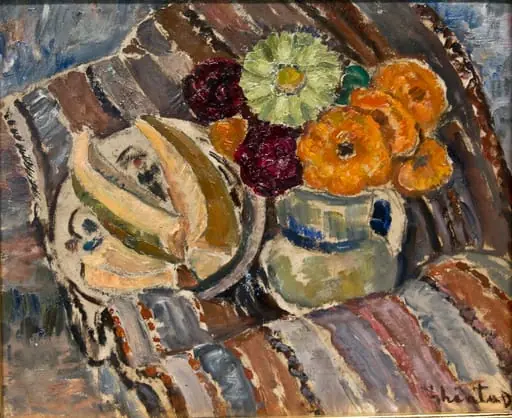
Painted around 1936 by Corneliu Michăilescu, this still life presents a modest arrangement of everyday objects on a darkened surface. A white teapot, a red apple, a yellow lemon, and a small glass jar are arranged with little regard for traditional composition. The palette is restrained yet intense, dominated by deep blues and purples that contrast sharply with the vivid fruit and ceramic. The surface is built up with heavy, uneven strokes, suggesting a direct and urgent approach to the act of painting.
Subject & Meaning
The objects—teapot, apple, lemon, and jar—are common household items, stripped of symbolic or narrative weight. Their simplicity invites attention to form and material rather than metaphor. The absence of context or human presence emphasizes their physicality. The painting does not seek to convey abundance or decay, but rather the quiet presence of ordinary things rendered with unembellished honesty.
Technique & Style
Michăilescu applied paint thickly and irregularly, using a scraping or dragging motion that leaves visible ridges and gaps. The brushwork is unrefined, with edges left raw and surfaces uneven. The teapot’s handle bends unnaturally, and the lemon’s hue is applied in flat, saturated patches. These choices prioritize tactile presence over illusionism, aligning the work with expressive modernist tendencies that valued process over polish.
History & Provenance
The painting’s early history is undocumented, and its ownership prior to institutional acquisition remains unclear. It was likely created during Michăilescu’s formative years, when he was experimenting with post-impressionist and expressionist approaches. No exhibition records or contemporary reviews from the 1930s have surfaced, suggesting it was not publicly displayed during the artist’s lifetime.
Context
In 1930s Romania, artistic movements were shifting between academic tradition and emerging modernism. Michăilescu’s work diverged from prevailing realism, embracing a more personal, gestural language. While European avant-garde trends influenced his approach, his style remained distinct—neither fully aligned with Fauvism nor Cubism, but rooted in a local, introspective response to material presence.
Legacy
Though not widely known outside Romania, this painting exemplifies Michăilescu’s commitment to raw, unmediated expression. It reflects a quiet rebellion against polished academic norms, favoring emotional immediacy over technical perfection. Later Romanian modernists would cite such works as evidence of an indigenous path toward expressive abstraction, grounded in everyday observation.
Artist & collection

Museum
National Museum of Romanian Literature
Continue through works from the same source collection.